Immerse Yourself in History at the National Museum of the Marine Corps


Making Marines is the first gallery visitors encounter in their journey through the National Museum of the Marine Corps (NMMC). It describes the 13-week Marine Recruit Training program where young men and women begin their journeys to become United States Marines. 

The gallery floor is lined with painted yellow footprints. These footprints demonstrate for the new recruit exactly where to place their feet to stand at the position of attention. Visitors are invited to also place their feet in these yellow figures, literally following in the footsteps of generations of Marines who have gone before. 

The yellow footprints at the Marine Corps Recruit Depot Parris Island, South Carolina

The yellow footprints at the Marine Corps Recruit Depot Parris Island, South Carolina (July 2004)

-USMC Photo by Lance Corporal Brian Kester

This is one of the main themes of the Marine Corps’s fine museum where the exhibits and displays are designed to immerse the visitor in the Marine Corps’s distinguished history and cherished traditions. 

The NMMC opened in 2006 in Triangle, Virginia. The town is located near Marine Corps Base Quantico, about 32 miles south of Washington, DC. The museum is tremendously successful, attracting over 500,000 visitors each year. 

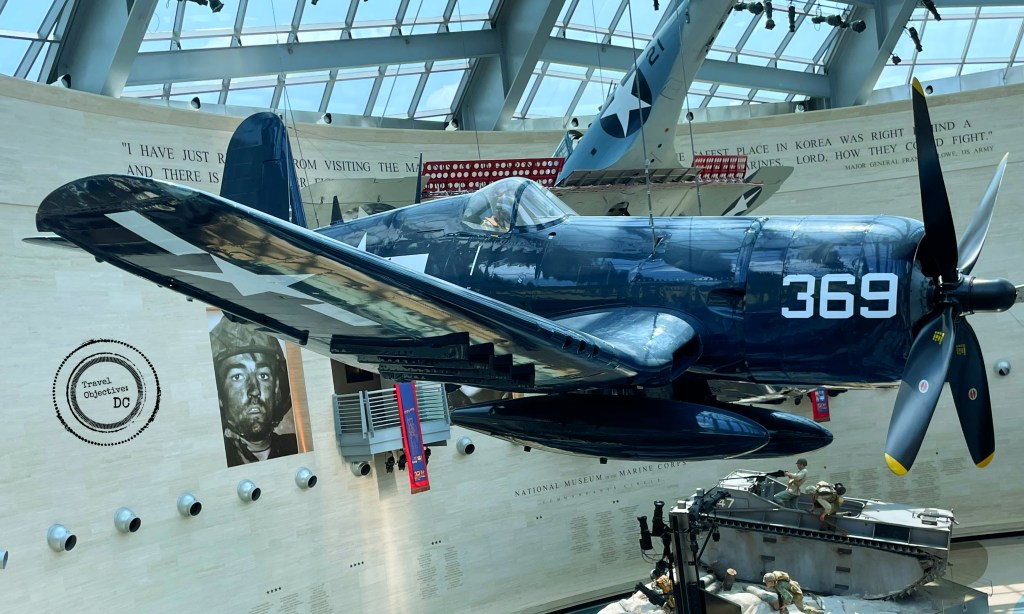
Visitor immersion starts upon walking in the front door and entering the open Leatherneck Gallery housed under the uniquely designed roof.  Seven restored Marine aircraft are suspended from the ceiling and inspirational quotes regarding the Marine Corps line the walls.

The front entrance of the National Musuem of the Marine Corps
The front entrance of the National Museum of the Marine Corps

The conical roof of the NMMC with its protruding shaft, reminiscent of the flagpole depicted in the famous photograph of the Iwo Jima flag raising, has been a familiar site to motorists on Interstate 95 in Northern Virginia for the past two decades. 

NMMC has expanded steadily through the years, adding new features and displays. In October 2024,  two new galleries opened focusing on Iraq and Afghanistan. NMMC now features twelve galleries and two theaters encompassing the Marine Corps’s 250-year history.

Curators and exhibit designers used a wide variety of tools and techniques to tell the Marine Corps’s story. More than one thousand artifacts are on display, including weapons, aircraft, vehicles, uniforms and various pieces of Marine gear. These historic objects are skillfully supplemented by interpretive signage, historic photos, period newsreels, modern videos and films, posters and works of art.

USMC F4U-4 Corsair on display at the National Museum of the Marine Corps

USMC F4U-4 Corsair on display at the National Museum of the Marine Corps

After learning about Marine Recruit Training (vistors can test their marksmanship on a laser rifle range), the Legacy Walk corridor leads to the chronologically arranged historical galleries. The galleries explain the Marine Corps’s role in shaping American history. 

On November 10, 1775, Congress directed the raising of two battalions of Continental Marines. From the start, the Marines were designed to be an expeditionary force, accompanying the US Navy on warships and providing a ground-based fighting capability.

Early Marines provided security onboard US Navy ships for the captain and other officers, while also enforcing discipline among the crew. During ship-to-ship combat, Marines were posted on the ships masts and rigging, acting as sharpshooters targeting the opposing captain and crew. 

A display showing early Marines positioned on a ship's mast.

A display showing early Marines positioned on a ship’s mast.

Marines also acted as infantry conducting a raid on Nassau, Bahamas in early 1776 and attacking a barbary pirate fortress in Libya at the Battle of Derna in 1805 (wherein comes the reference to the “Shores of Tripoli” in the Marine Corps Hymn). 

Marines fought alongside the US Army in the Mexican War and helped to suppress John Brown’s raid on Harpers Ferry in 1859. A 350-Marine battalion engaged Confederate forces at the first Battle of Bull Run in June 1861. 

Through the 19th and early 20th centuries, the Marines performed a number of expeditionary missions in various parts of the world where American interests were deemed threatened. Well-trained Marines were easily deployed and avoided the political ramifications of sending the Army, which could be equated with declaring war on another country.

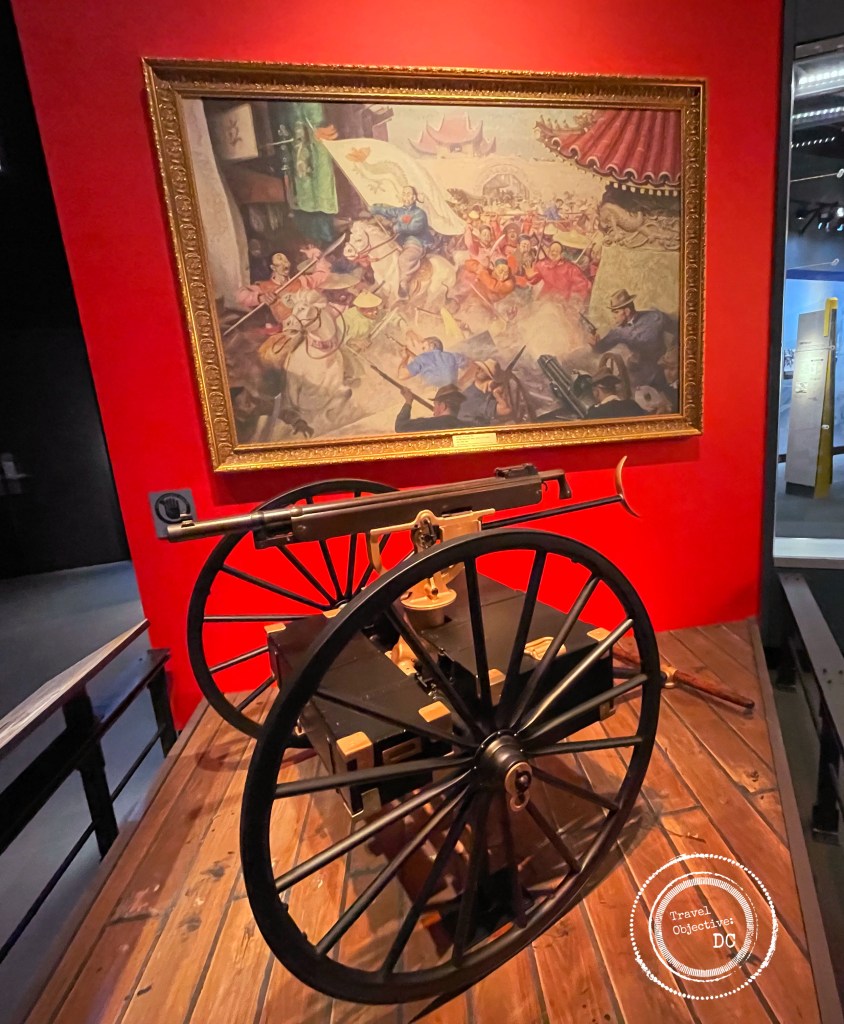
M1895 Colt Machine Gun in front of The Defense of Peking-1900 by Staff Sergeant John Clymer, USMCR

M1895 Colt Machine Gun in front of The Defense of Peking-1900 by Staff Sergeant John Clymer, USMCR

While the decision to deploy Marines may have been easy, the missions were not. Marines were expected to establish order, disarm insurgents and train local military or police forces. The Marines referred to these operations as Small Wars.

Difficult as they were, these deployments were covered extensively by American newspapers at the time and provided a positive portrayal for the Marines to the American public. That narrative grew exponentially for the Marine Corps following the Battle of Belleau Wood in 1918.

To tell the story of of Belleau Wood and later Marine battles, the NMMC galleries covering World War I through today all incorporate large-scale immersive exhibits. Sight, sound and other effects (such as cold air in the Chosin Reservoir exhibit) are combined to draw the visitor into the Marine Corps’s story. 

These large immersive scenes are a major feature of the museum. 

Life-sized cast figures depicting hand-to- hand combat during World War I

Life-sized cast figures depicting hand-to- hand combat during World War I

Visitors can step right into the scenes and experience an attack at Belleau Wood, a pre-deployment briefing before the invasion of Iwo Jima, deploying from a CH-46 helicopter at Khe San in Vietnam, and patrolling the streets in Iraq. The scenes convey a potent sense of realism with posted signs advising visitors of the intensity of these exhibits.

In a scene depicting the Battle of Hue, a Navy corpsman treats a Vietnamese girl beside an M50A1 Onos anti-tank vehicle.

In a scene depicting the Battle of Hue, a Navy corpsman treats a Vietnamese girl beside an M50A1 Onos anti-tank vehicle.

To NMMC’s credit, it understands its displays may overwhelm some visitors. In 2024, a restroom was converted into the Respite Room, a quiet, private space away from the galleries. 

Decorated in wood tones and calm colors, the room has soundproofing, soothing music and is devoid of any military symbols or references. Museum staff are trained on the best ways to steer visitors to the room as appropriate.

As proud as the Marines are of their heritage, the museum’s displays are not just about the past. In 2020, the Museum opened exhibits on contemporary missions such as Marines performing humanitarian operations, providing security at US embassies, and about the structure and functions of Marine Air Ground Task Forces, the principal organizational unit for today’s Marine Corps forces.

There is also an important display on Marine Corps families, which emphasizes how service in the Marine Corps is a family-wide commitment deserving of the Corps’s continued support and dedication.

Inside the Semper Fidelis Memorial Chapel

Inside the Semper Fidelis Memorial Chapel

While there is much to see, the NMMC experience is not confined to the building. On the museum grounds is the 40-acre Semper Fidelis Memorial Park. A 1.2-mile paved walking trail through this manicured green space is dotted with plaques, sculptures, benches and other features commemorating individual Marines, units and battles, as well as Marine families and broader communities. 

The centerpiece of the park is the Semper Fidelis Memorial Chapel, which serves as a quiet place for reflection and community events. 

An immersive visit to the NMMC is well worth the investment of several hours to explore its offerings. Those interested in history or who have a connection to the Corps will find it especially intriguing. Young people considering joining the Marine Corps will find it informative. They will leave knowing what Marine Corps service is about and what their leaders will expect from them. 

However, the Marine Corps Museum isn’t just for Marines–It’s a museum for everybody.

Any visitor should leave with a good understanding of how the Marines fit uniquely into American history, and what their role is today.

A World War I era US Marine Corps recruiting poster

A World War I era US Marine Corps recruiting poster

* * *

Route Recon

The National Museum of the Marine Corps is located at 1775 Semper Fidelis Way, Triangle, VA 22172.

The Museum is open every day from 9:00 AM until 5:00 PM except Thanksgiving and Christmas. Visit the museum’s website for more information about temporary exhibits and special programming.

Triangle, VA is located just off I-95, about 36 miles south of Washington, DC and 76 miles north of Richmond, VA.

From I-95 heading south, take Exit 150A to Route 1 (Richmond Highway); turn right (south) onto Route 1; travel approximately ¼ mile; the Museum’s entrance is on the right.

From I-95 heading north, take Exit 150 (619 East Triangle/Quantico); turn right (south) onto Route 1; travel approximately ¼ mile; the Museum’s entrance is on the right.

Admission is free and there is no charge for parking at the Museum. 

Mess Call

There are two dining options at the National Museum of the Marine Corps.

The Devil Dog Diner provides cafeteria service with a selection of hamburgers, hotdogs and chicken sandwiches. It is open 10:00 AM – 4:00 PM daily.

The Tun Tavern is a full-service restaurant with an 18th century colonial atmosphere. It is open 11:00 AM – 4:00 PM daily.

Find the menus for both restaurants on the museum’s concessions webpage.

Navy Pride on Pennsylvania Avenue: The United States Navy Memorial


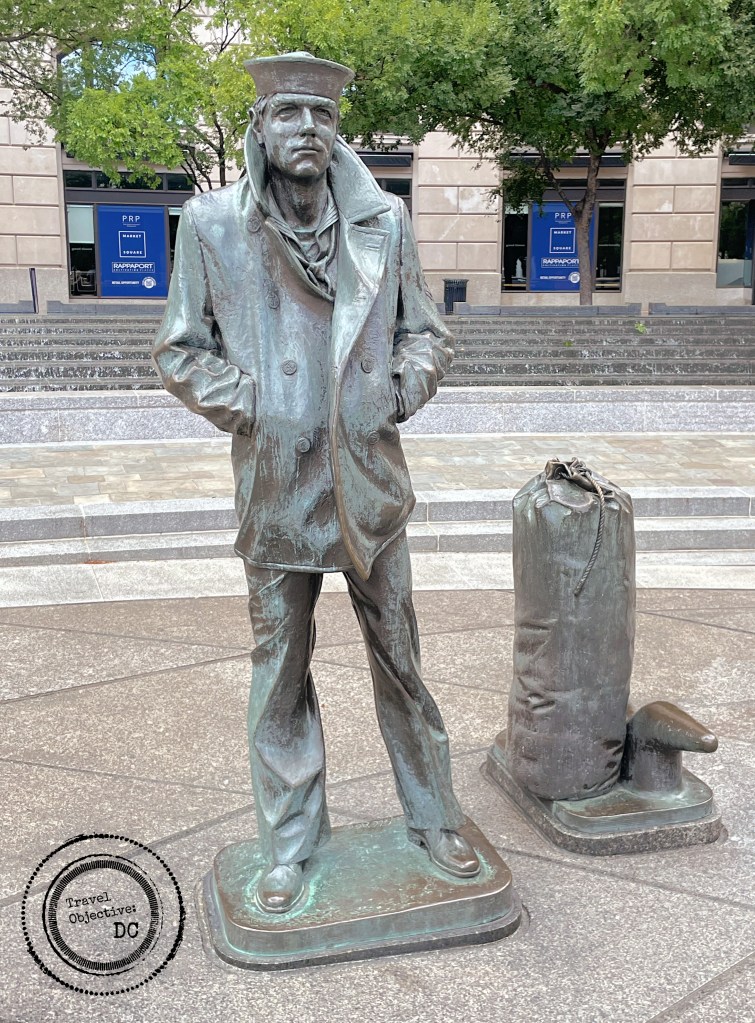
In a large open plaza stands a statue of a solitary figure.

He is a sailor in a dress unform. He stands straight and tall wearing a service “dixie cup” sailor hat. A buttoned up peacoat with a flipped up collar protects him from the chill of the ocean air. His hands are plunged deep into his pockets. His packed sea bag stands by his side. The determined look on his face denotes his readiness to deploy anywhere and perform his duty.

The statue is known as The Lone Sailor and serves as the centerpiece of the US Navy Memorial.

The Lone Sailor Statue at the US Navy Memorial

The Lone Sailor Statue

For centuries, considerable discussion was had regarding a suitable monument paying tribute to the United States Navy. Pierre L’Enfant had included a Memorial Column for the Navy in his original plans for Washington, DC.  Other memorials were built to honor the Navy during specific conflicts, but nothing existed to honor all American sailors. 

This all began to change in the spring of 1977 as Admiral Arleigh Burke urged Navy senior leaders and veterans to get serious by proclaiming: “We have talked long enough about a Navy Memorial, and it’s time we did something about it.”

When Admiral Burke–a distinguished World War II war hero and three-time Chief of Naval Operations–spoke, Navy personnel listened. The Navy Memorial Foundation was quickly organized and Rear Admiral William Thompson was named its first president. Admiral Thompson proved an excellent choice for the job and quickly set to work.

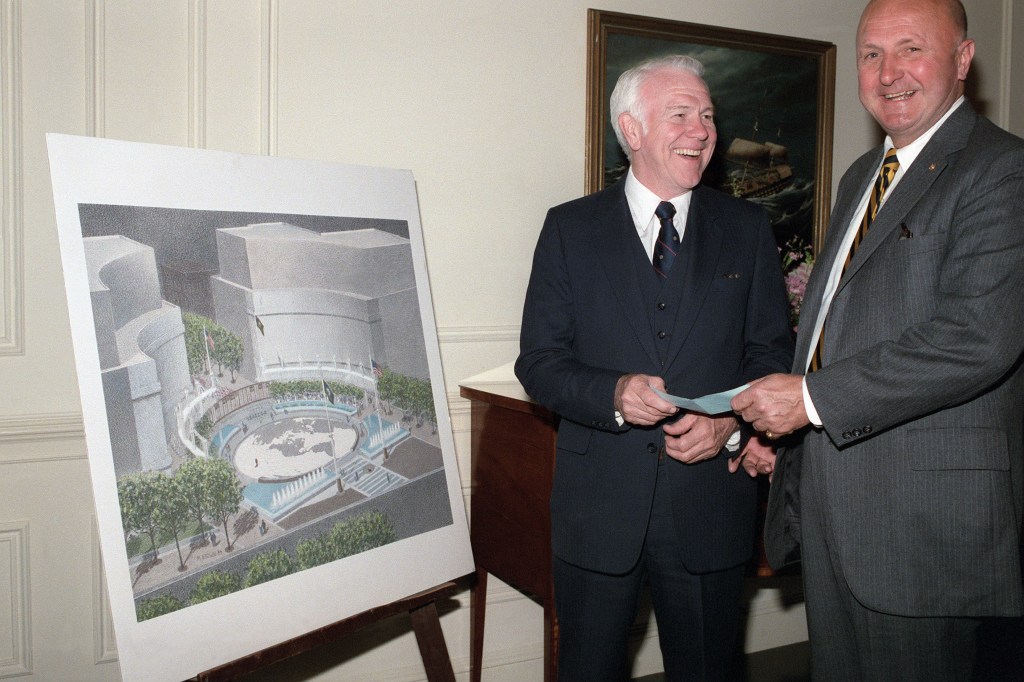
Rear Admiral William Thompson (ret.), on left, receiving a donation for the US Navy Memorial. Note the artist’s rendition of the Memorial.

-Department of Defense Photo

Rear Admiral William Thompson (ret.), on left, receiving a donation for the US Navy Memorial.

He first helped shape the enabling legislation Congress would pass in 1980. He then led the foundation through selecting the memorial’s designers, determining the memorial’s location, raising money and overseeing construction.

Admiral Thompson also helped select the sculptor Stanley Bleifeld to design and sculpt The Lone Sailor Statue. In recognition of Admiral Thompson’s significant contributions to building the memorial, Bleifield included Thompson’s initials on the Lone Sailor’s sea bag. 

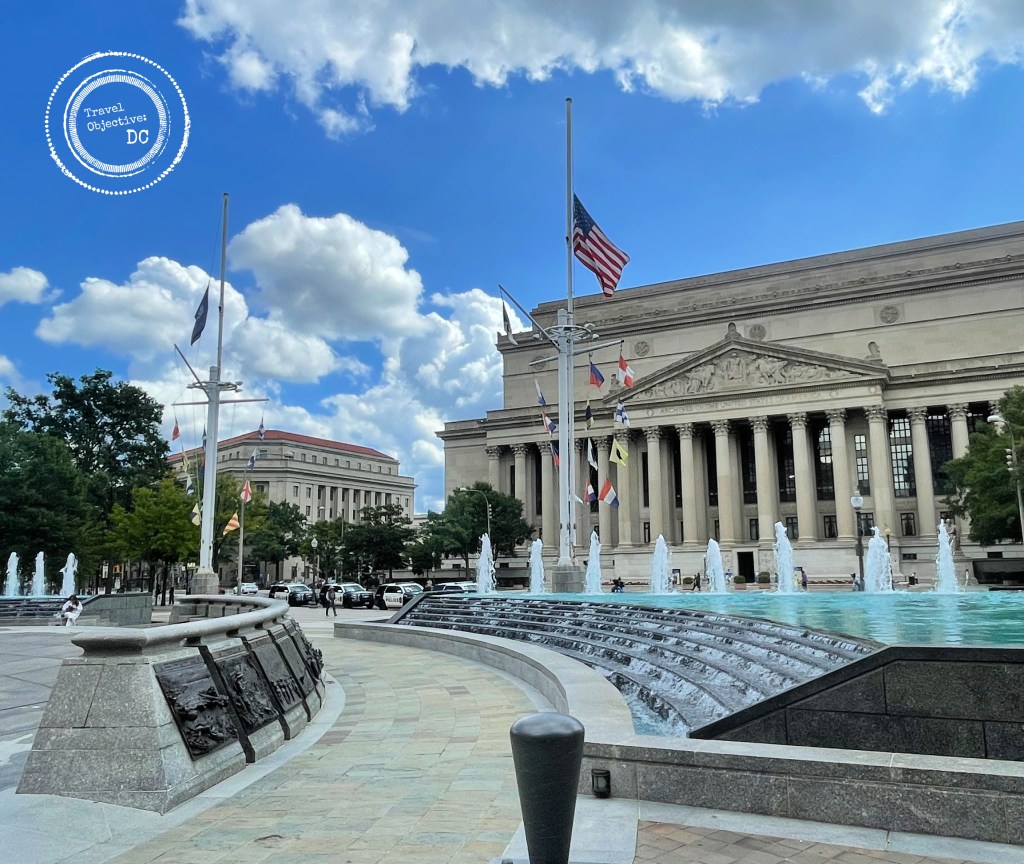
The Navy Memorial Plaza

The Navy Memorial Plaza looking south toward the National Archives

The whole process from the founding of the memorial to its completion stretched to almost a decade. The Navy Memorial was formally dedicated on October 13, 1987 by President Ronald Reagan. He devoted it to all who have served, are serving or will serve in the United States Navy, Marine Corps, Coast Guard and Merchant Marine. 

The memorial is set within a broad circular plaza to the northwest of the intersection between 7th Street and Pennsylvania Avenue. Early designs for the memorial favored a more traditional approach, but they were discarded in favor of a memorial with a more open space resembling a seascape.

The floor or base of the plaza depicts a large world map.  With a diameter of 100 feet, it is said to be the largest map in the world.

Fountains at the US Navy Memorial

A set of fountains at the US Navy Memorial

Fountains skirt the southern perimeter of the map. The water flowing through the fountains comes not from Washington DC’s water supply but is collected from the world’s oceans and the Great Lakes.

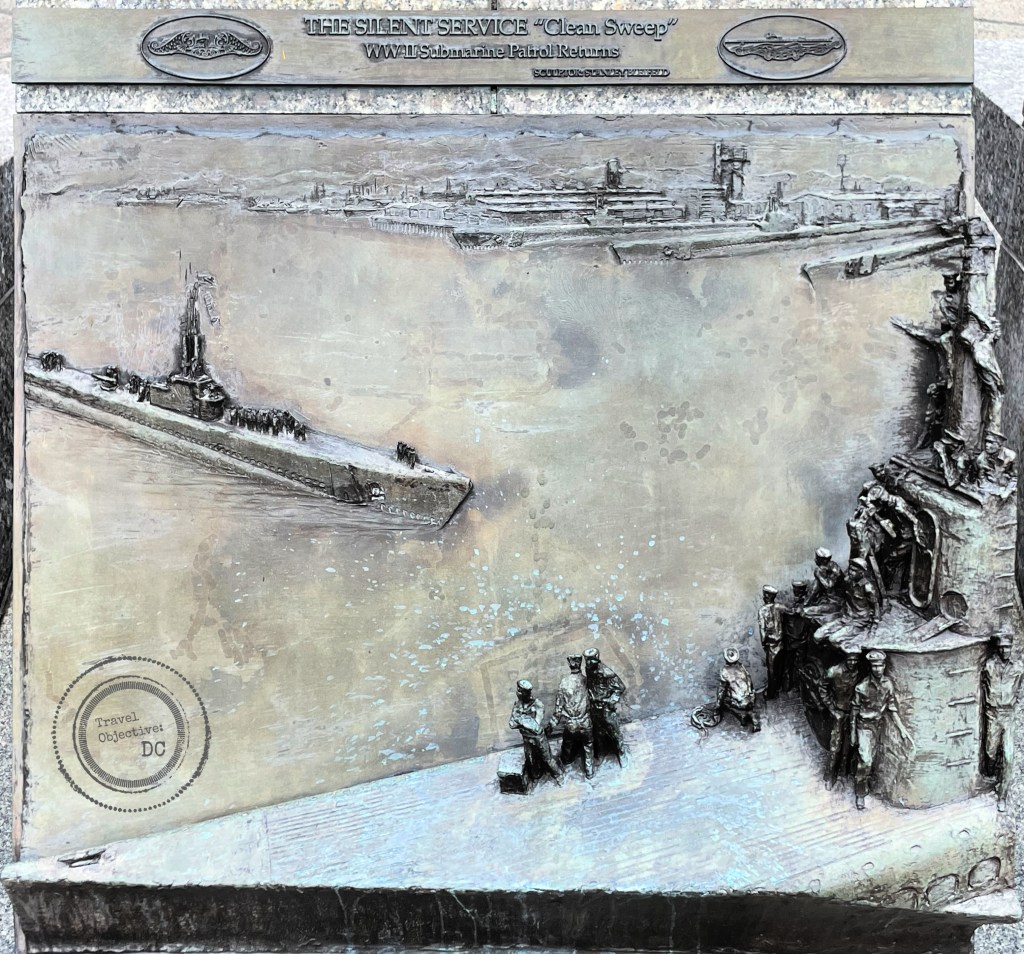
A semicircular wall inside the fountains contains a series of 26 bas-relief figures depicting scenes of Navy history and Navy life as well as the contributions of maritime partners. 

Arrayed around the memorial are quotes about the Navy from sailors at all levels. Six masts fly the flags of the United States, the Navy, Marine Corps, Coast Guard, Merchant Marine and the POW/MIA flag.

Bas Relief sculpture of Navy submarines in World War II.

Bas Relief sculpture of Navy submarines in World War II

Sweeping arches incorporated into the design of two mixed-use commerical buildings suggest a northern perimiter to the memorial, balancing the fountains and sculpture walls on the southern side. The neoclassical design of these buildings seemingly provides a sense of the shore or anchorage to the airy, open plaza.

Amidst all this stands The Lone Sailor. The statue has been so enthusiastically received by the Navy community, there are 18 more Lone Sailor statues across the United States (and one at Utah Beach in Normandy). In each location, the statue reminds the community of the dedication and professionalism of the American sailor. 

Bas Relief Sculpture of Captain John Paul Jones

Bas Relief Sculpture of Captain John Paul Jones

Early in the design phase, the Navy identified a desire to have a “living memorial,” a place where people would gather and return to time and again. The open space makes the memorial a popular venue for summer concerts, reenlistments, promotion ceremonies, wreath layings and reunions.

In keeping with the desire for a living memorial, the Navy Memorial Foundation located a visitor center in one of the adjoining buildings. Part research facility, part musuem and part community center, the visitor center brings the Navy experience alive for the landlubber while instilling pride in all Navy sailors. There are exhibits on the missions of the post 9/11 Navy, multiple Navy leaders, and the important role played by chief petty officers.

The visitor center also houses the Arleigh Burke Theater. In addition to running several short movies on Navy life throughout the day, as well as periodic feature films, the theater hosts guest speaker programs. Visitors can find a variety of mementos from all the US military services at the Ship’s Store gift shop.

A video screen displays the Navy Log.

A video screen displays the Navy Log throughout the day.

There is also a feature known as the Navy Log, an online archive with details of the men and women who have served in all the sea services. There are currently over 750,000 entries. Active members, veterans or their loved ones are invited to add to this number and enter a service member’s information as an ongong tribute to their time in uniform.

As the US Navy observes its 250th Anniversary, the US Navy Memorial is a place for everyone to discover and honor America’s rich naval heritage. Whether you are active, retired, reserve or the relative or friend of someone who has served, the Navy Memorial is an important and worthwhile destination for any visit to Washington, DC.

***

 I can imagine no more rewarding a career. And any man who may be asked in this century what he did to make his life worthwhile, I think can respond with a good deal of pride and satisfaction: ‘I served in the United States Navy.’

President John F. Kennedy

Route Recon

The US Navy Memorial is located at 701 Pennsylvania Ave, NW Washington, DC 20004. 

The Memorial is accessible 24 hours a day.

The Visitor Center is open seven days a week from 9:30 AM to 5:00 PM.

The Navy Memorial hosts numerous events throughout the year. Some events may close the Visitor Center to the public. Be sure to check the Memorial’s website and find additional information about upconing events on the calendar

The closest Metro Station is Archives-Navy Memorial-Penn Quarter on the Green and Yellow Lines.

Parking:
Validated parking is available at PMI Garage, 875 D Street, NW.
Parking can be validated for $13 inside the Ship’s Store, located in the Navy Memorial Visitor Center.

Remembering President James Garfield


Today, few Americans could tell you very much about James Abram Garfield, our 20th President. A few people with an interest in history might recall that Garfield was assassinated early in his presidency by a “disgrunted office seeker”. Professional historians generally rank his shortened presidency as “below average” or do not rank him at all. 

This is rather regrettable as Garfield was a courageous and dedicated leader who died for fighting what he believed in. Fortunately, he has one distinction the vast majority of presidents will never have: his own memorial on the US Capitol grounds. 

One of three monuments on the west side of the Capitol building adjoining the National Mall–along with the Ulysses S. Grant Memorial and the Peace Monument–Garfield’s monument is located within a traffic circle at the intersection of First Street SW and Maryland Avenue near the US Botanic Garden.

The Garfield Memorial on the west grounds of the US Capitol

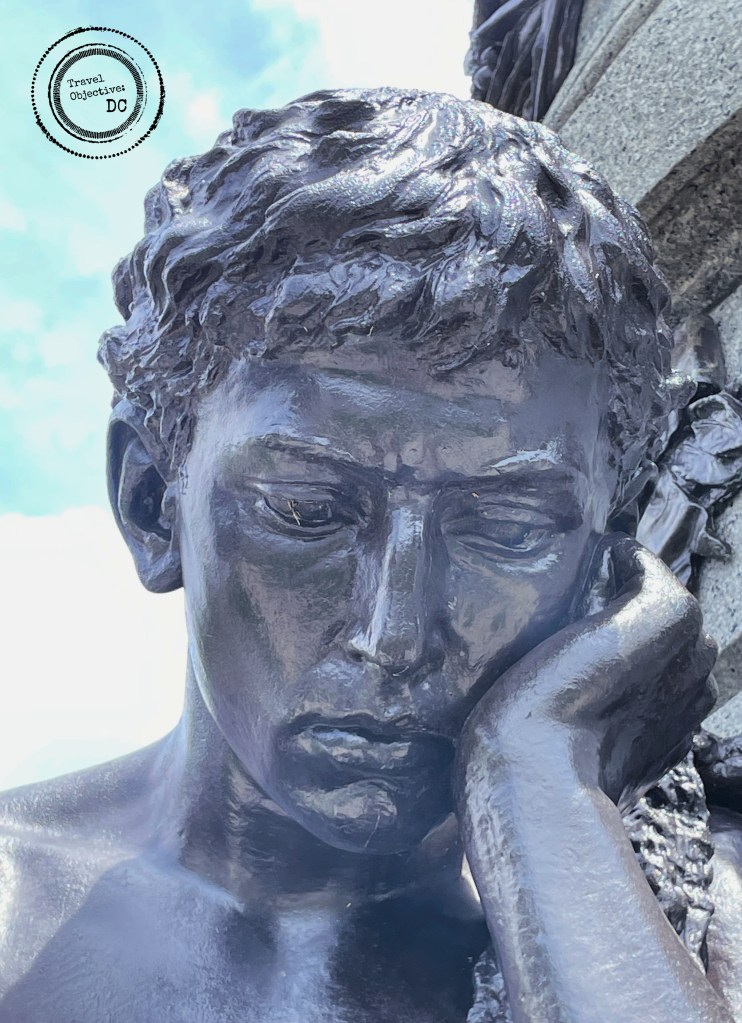
John Quincy Adams Ward, a prominent 19th century sculptor and friend of Garfield designed the monument. Ward depicted Garfield in bronze atop a round, tapered granite pedestal. He is shown giving a speech, grasping a scroll in his left hand and gazing intently at his audience. His foot is placed slightly off the platform and meant to symbolize Garfield as a man of action. At the base of the pedestal are three classical Roman figures representing the key phases of Garfield’s life as a young scholar, military leader and statesman.

Garfield personified the American success story, so much so that renowned author Horatio Alger wrote his biography. Alger published From Canal Boy to President in 1881.  

James Garfield was born in 1831 in a log cabin in northeastern Ohio. His family was poor and his father died when Garfield was a young man. He went to work to support his family, taking a variety of jobs including helping tow canal boats. While recovering from a serious bout of malaria contracted on the canal, Garfield’s mother convinced him to return to school. Garfield was an excellent student with a strong work ethic. He took to his studies and worked his way through the Western Reserve Eclectic Institute as a janitor and school teacher.  After graduation, he became a preacher. Garfield then studied law at Williams College in Williamstown, MA. 

The face of the young scholar figure on the Garfield Monument

Between his jobs as a preacher, teacher and lawyer, Garfield became a skilled orator. He entered politics and was elected to the Ohio State Senate as a Republican in 1860. As the Civil War broke out, Garfield was an abolitionist dedicated to the Union’s cause. He led fundraising and recruitment efforts for Ohio volunteer regiments. 

Eager to enter the Army, Garfield began studying military tactics.

Garfield commanded a Union Army brigade at the Battle of Middle Creek near Prestonsburg, KY in January 1862. Under his steady leadership, Garfield’s troops routed the rebel forces who retreated into Virginia. Although not considered a major battle today, the victory was an important boost to Union morale and brought Garfield widespread recognition. 

After the battle, Garfield was promoted to brigadier general. He was later assigned as Chief of Staff to General William Rosencrans of the Army of the Cumberland. After the decisive Union loss at the Battle of Chickamauga, Ulysses S. Grant relieved Rosencrans of command. Rather than Garfield, Grant appointed George H. Thomas to succeed Rosencrans. Although Garfield was later promoted to Major General, being passed over for the army command led him to consider a return to politics.

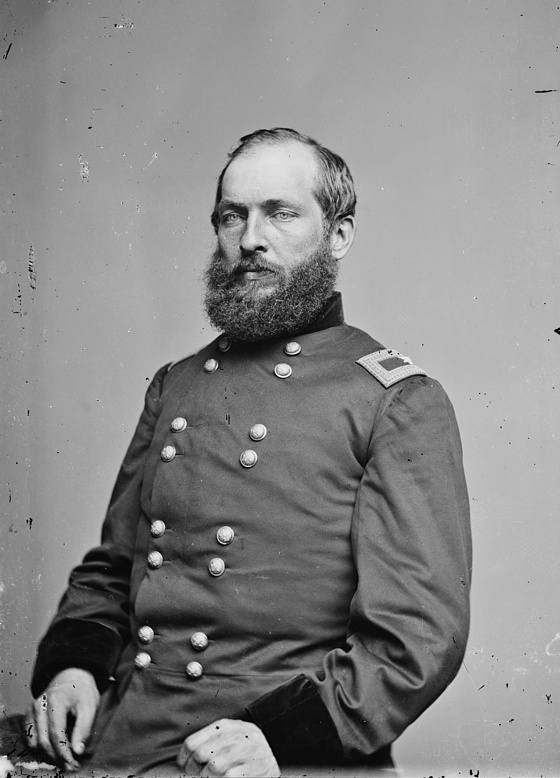
Photograph of James Garfield as Brigadier General

Brigadier General James Garfield, circa 1862

-Retrieved from the Library of Congress

In 1862, Garfield won an election for a seat in the House of Representatives. Garfield would serve nine terms in the House representing his home state of Ohio. While in Congress, Garfield was known for supporting civil rights for African Americans, the gold standard for the US dollar, and improving education for all. He helped establish the Federal Bureau of Education in 1870 to study and enhance educational methods across the country.

Garfield excelled as a Congressman, chairing powerful committees and mastering the nuanced details of legislation, especially on financial matters. At the same time, he was affable, a good conversationalist and considered one of the nicest men in Washington. 

At the deadlocked Republican presidential convention in 1880, Garfield was nominated on the 36th ballot. He defeated his fellow veteran Winfield Scott Hancock in the general election and was sworn in as the 20th President of the United States on March 4, 1881.  (He is the only president to be elected while a serving member of the House).

Republican Campaign Poster from the 1880 Presidential Election

During his presidency, Garfield fought one very significant battle.

His victory in that battle still impacts us today.

It had long been the practice in America that Federal employees were selected based on their demonstrated loyalty to political parties. Senators and representatives from a newly elected president’s party would act as “patrons” and recommend party workers, relatives and financial backers to the administration for government jobs.  

In the 1870’s, the issue of patronage was splitting the Republican party. Many wanted to maintain patronage while others wanted reform. Garfield opposed the patronage system and was a proponent of a professional, apolitical civil service. He knew it would make the Federal government much more efficient, limit corruption, and relieve elected officials from constant demands for jobs.

Garfield staged a showdown with New York’s two powerful Republican senators who were both savvy practitioners of the patronage system. Garfield nominated his own candidate for the important position of customs collector in the Port of New York. The two New York senators resigned in protest fully expecting to be quickly returned to office by the New York legislature. However, during their absence from Washington, Garfield pushed his nomination through the US Senate, embarrassing the two senators.

Sadly, this important victory over patronage directly contributed to Garfield’s death.

On July 2, 1881, Garfield was preparing to board a train at Washington’s Baltimore and Potomac Railroad Station. Suddenly, two shots rang out, striking Garfield in the arm and back.  Garfield’s assailant was Charles Guiteau, who may forever be known in history books as the “disgruntled office seeker”.  

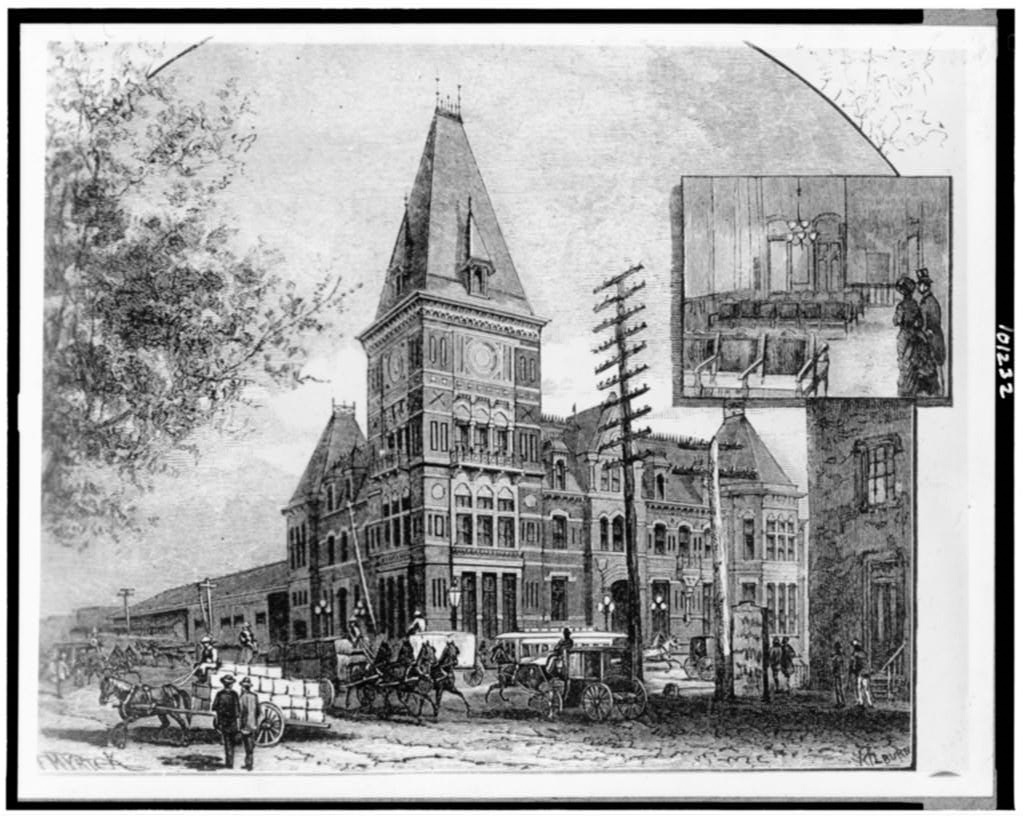
The old Baltimore and Potomac Railroad Station. The station was demolished in 1907 after Union Station was opened. The station was located where the West Building of the National Gallery of Art stands today. [Undated photo]

-Retrieved from the Library of Congress

Photograph of the old Baltimore and Potomac Railroad Station in Washington, DC

Guiteau had written, delivered and published a speech supporting Garfield in the election. He thought this entitled him to a consular job at the US Embassy in Paris. While Guiteau had no dislike for Garfield as a person, he believed he would help preserve the patronage system by killing the president. Guiteau was quickly apprehended in the train station. He was later found guilty of murder and executed about 18 months after the shooting. 

The cover of Puck, a 19th century satirical magazine from July 13, 1881 with an image of Garfield's assassin Charles Guiteau

The cover of Puck, a 19th century satirical magazine from July 13, 1881 with an image of Garfield’s assassin Charles Guiteau holding an extortion note.

Garfield would linger on for the next two months. On September 19, 1881, he died from sepsis poisoning, just five and an half months into his presidency.

In the wake of Garfield’s death, Congress passed the Pendleton Act, which established a merit-based system for hiring and promoting Federal employees. The Pendleton Act was signed into law by the new president, Chester A. Arthur, who previously had been a supporter of the patronage system. As a surprise to many, Arthur quickly set about implementing its provisions to reform the civil service. 

The country closely followed Garfield’s deterioration and he was widely mourned after his death. Work then quickly began on building him a suitable memorial. The Society of the Army of the Cumberland, a Union veterans’ organization, formed a fundraising committee and ultimately raised over $28,000. They also successfully lobbied Congress for additional funds for the statue and the pedestal.

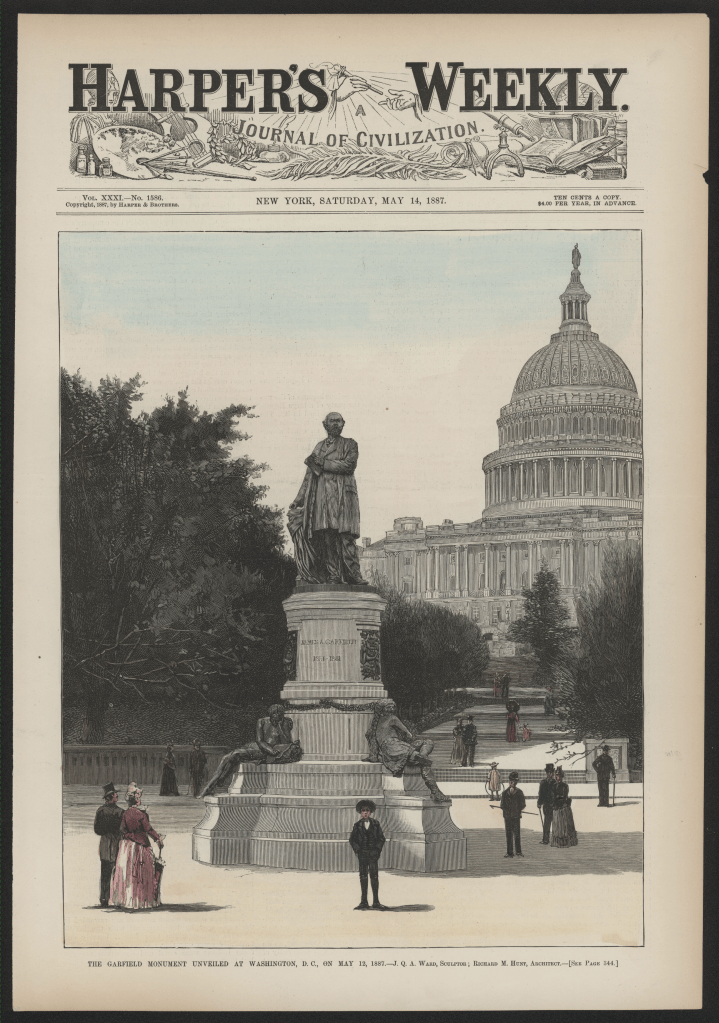
The newly unveiled Garfield Memorial was prominently placed on the cover of Harper’s Weekly on May 14, 1887.

The cover of Harper's Weekly from May 14, 1887.

The memorial was dedicated on May 12, 1887, in a grand ceremony attended by President Grover Cleveland, many senior government officials, military leaders and veterans from the Society of the Army of the Cumberland and the Grand Army of the Republic. Cannon salutes were fired and the US Marine Corps Band played stirring patriotic music.

Today, the Garfield Memorial remains a prominent and visible reminder of the talented, resourceful and considerate man who was our 20th president. 

* * *

Route Recon

The Garfield Memorial is located within a traffic circle at the intersection of First Street SW and Maryland Avenue near the US Botanic Garden.

There is limited street parking nearby near the Botanic Garden.

The closest Metro Station is at L’Enfant Plaza. Exit the station through Entrance A for 7th Street and Maryland Avenue. Follow Maryland Avenue to the northwest, pass the Dwight D. Eisenhower Memorial and the US Botanic Garden.

They Answered the Call to Arms

As the smoke cleared at Lexington and Concord on that fateful April day in 1775, supporters of American independence relished in the successes of the brave militia forces. 

But they well understood the cause for independence would take a well-trained regular army capable of defeating the British on an open battlefield. Furthermore, this army needed to represent all of America and not dominated by a single colony or region. 

On June 14, 1775, the Continental Congress established the Continental Army and appointed George Washington as its commander in chief. In recognition of the Army’s 250th Anniversary, the National Museum of the US Army, at Fort Belvoir, Virginia has opened a special exhibit entitled Call to Arms: The Soldier and the Revolutionary War. 

A pair of epilettes belonging to Jeddidiah Huntington of Connecticut.

This pair of major general epilettes belonged to Jeddidiah Huntington of Connecticut. Huntington had encouraged George Washington to adopt this design for general officers’ epilettes.

To tell their stories, museum curators sought and received an abundance of unique and important Revolutionary War era pieces from state governments, private collectors and international organizations. The resulting assemblage of weapons, uniforms, colors and everyday articles includes items that have not before been on public display in the United States. 

The 5,000 square foot exhibit is laid out in roughly chronological order. Two innovative topographical battle maps–one of Bunker Hill, the other of Yorktown–bookend the exhibit representing the first and the final battles for the Continental Army.  Similar to the twinkle light maps of the past, these three dimensional representations depict the operational plans and troop movements of each battle, accompanied by slick videos providing additional context. 

Other battles and campaigns are briefly described with corresponding artifacts, maps and illustrations to connect the visitor to the period. The early struggles in New York and Pennsylvania, the successes in New Jersey, the turning point at Saratoga and the Southern Campaign are put in context and placed in a timeline. Videos enhance these displays describing aspects of 18th century warfare, such as weapons and battlefield tactics.

These displays with brief summaries are a reminder that these battles were fought by soldiers from across the new country. In an era when few people traveled very far from their homes, New Englanders fought in South Carolina and Virginians fought in Pennsylvania. The seeds of our national identity were planted on the battlefields of the Revolutionary War.

A British 3-Pounder gun tube captured at the Battle of Saratoga

A British 3-Pounder gun tube captured at the Battle of Saratoga

Those interested in 18th century weaponry will not be disappointed in their visit. There are many splendid muskets, rifles, carbines, pistols, swords and bayonets. However, the real focus of Call to Arms is the lives of Continental Army soldiers, their motivations, successes, experiences and how they emerged as an effective fighting force.

The lot of a soldier in the Continental Army was a difficult one. Living conditions were challenging, pay was inconsistent, rations and supplies were usually in short supply. These rigors of military life were shared by soldiers from every state.

Still, Americans from the north and south, coastal cities and frontier homesteads answered the call. Then, as now, soldiers enlisted for different reasons. They fought for independence, but also for their communities, comradery, pay, a sense of adventure or because other family members or friends also enlisted.

A plaster casting of Anna Maria Lane, wife of Private John Lane.

A plaster casting of Anna Maria Lane, wife of Private John Lane. She followed her husband to camp when he enlisted in the Continental Army in 1776. She took up arms herself and was wounded at the Battle of Germantown in 1777.

Over the eight years of Revolutionary War, about 231,000 men (and some women) served in the Continental Army.  Enlistments would ebb and flow based on any number of factors, such as the time of year, local economic conditions and success of the army in the field. The maximum size of the army at any one time was about 48,000 troops.

A portion of the exhibit entitled Camp Life explores the life of the Continental Army soldier away from the battlefield. What soldiers ate, where they lived and their daily activities, such as drill, guard duty and the building of fortifications, are all examined.

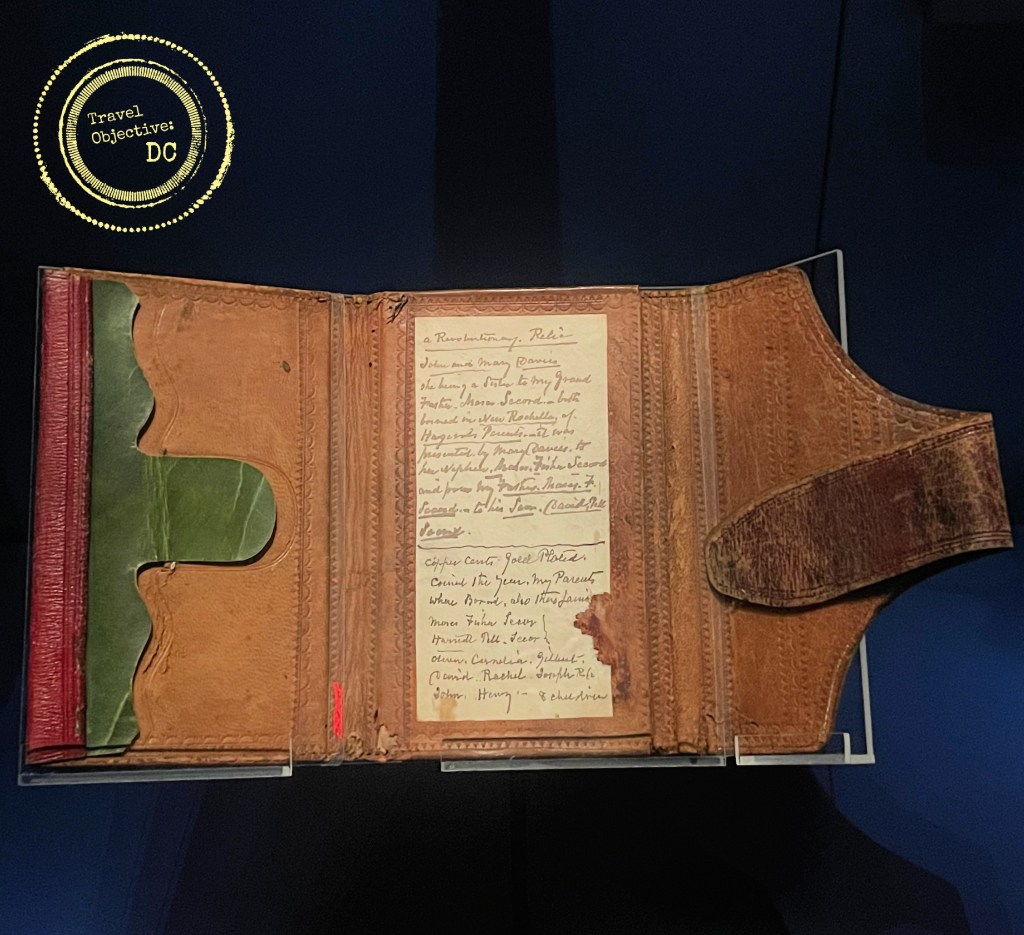
A notebook belonging to British Major John Andre. His capture in 1780 led to the identification of General Benedict Arnold as a traitor.

A notebook belonging to British Major John Andre.

One of the more intriguing group of artifacts are a display of powder horns. These hollowed-out animal horns were essential kit for 18th century soldiers, allowing them to quickly add gunpowder to the flashpans of their flintlock muskets.  Soldiers often decorated their powder horns or used them to record important dates or locations.

Accompanying the display is a video screen where digitized images of the complete powder horns can be viewed by visitors to more clearly see the intricate designs. Information about the original owner is also available. The richly decorated powder horns remind us these early soldiers were more than faded names on yellowed muster rolls, but real people fighting for something they believed in. 

A powder horn belonging to Private John Bond of Massashusetts.

A powder horn belonging to Private John Bond of Massachusetts. Bond enlisted in the Continental Army on July 4, 1775 and served for five years. He fought at the Battle of Bennington in 1777.

Also included in the exhibit are several very detailed cast figures representing specific individuals who served with the Continental Army. There is southern aristocrat, a Native American tribal chief, even a married couple who served together. They add an important human element to the exhibit’s interesting array of artifacts, well-designed graphics and use of technology.

Continental Army soldiers met many struggles during their service. Sadly, they encountered more upon returning home.

At the end of the exhibit is a collection of documentation which mark the beginning of the process well known to today’s veterans and their families, applying for benefits.  At the end of the war, many soldiers went home with promissory notes in lieu of their pay and they struggled economically. Legislation to provide pensions to veterans was slow in coming.

Congress did not pass legislation providing pensions to common soldiers until 1818, thirty-five years after the end of the Revolutionary War. By this time, many veterans had died or lost important records that proved their service.  This display though shows pension applications and examples of the documents that Continental Army veterans or their survivors would provide, such as muster roles, discharge papers, and pay records.

The discharge document of Drummer Benjamin Loring of the 2nd New York Artillery.

Discharge document of Drummer Benjamin Loring

Call to Arms artfully tells the story of the Continental Army, with its wonderful artifacts and state of the art technology. It reminds us of an important lesson first demonstrated by the Continental Army and continued in today’s United States Army.

George Washington reflected on it in his farewell message to his troops as he wrote: Who that was not a witness would imagine … that Men who came from different parts of the Continent … would become but one patriotic band of Brothers.

Washington well understood the unity forged among his soldiers was crucial for achieving their shared goal of victory.

250 years later, it is still a lesson to remember.

* * *

Route Recon

Call to Arms is on display at the National Musuem of the United States Army until June 2027. The musuem is open daily from 9:00 AM – 5:00 PM except on Christmas Day. Visit the museum’s website for free entry tickets.

The musuem is located in a publically accessible portion of Fort Belvoir, Virginia. The museum address is 1775 Liberty Drive, Fort Belvoir, VA 22060, but be aware not all GPS systems recognize the Museum’s street address.

You can download a map with directions here.

Military History on the Mall


For the past 250 years, Americans have consistently answered the call to war.  

To answer that call, they often left behind civilian lives, families, and communities. Wars are never fought in a vacuum. With each conflict, there are corresponding impacts on American life and society.

On Veterans Day, 2004, the Smithsonian Institute’s National Musuem of American History, located on the National Mall, opened an ambitious military history exhibit to explore not just battles and campaigns, but rather the many ways wars have physically, culturally and economically shaped America throughout its history.

French cannon

A French four pounder field cannon, a gift to the Americans from the Marquis de Lafayette

Entitled The Price of Freedom, Americans at War, the exhibit was designed to be extensive, occuping over 18,000 square feet and examining 16 conflicts in nine different galleries. Visitors follow a maze-like path through these chronologically arranged galleries, from the French and Indian War through Iraq and Afghanistan.

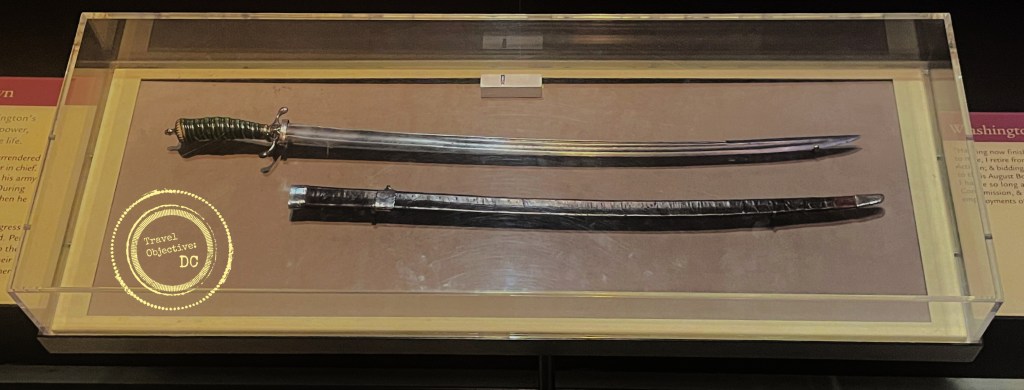
In designing The Price of Freedom, curators stayed away from displays comprised largely of weapons and uniforms (although there are still plenty of those). Rather, they identified over 800 unique artifacts from the Smithsonian’s extensive collection. Some of the more notable items on display include George Washington’s sword and scabbard, the chairs used by Ulysses S. Grant and Robert E. Lee at Appomattox and a Willys Jeep from World War II.

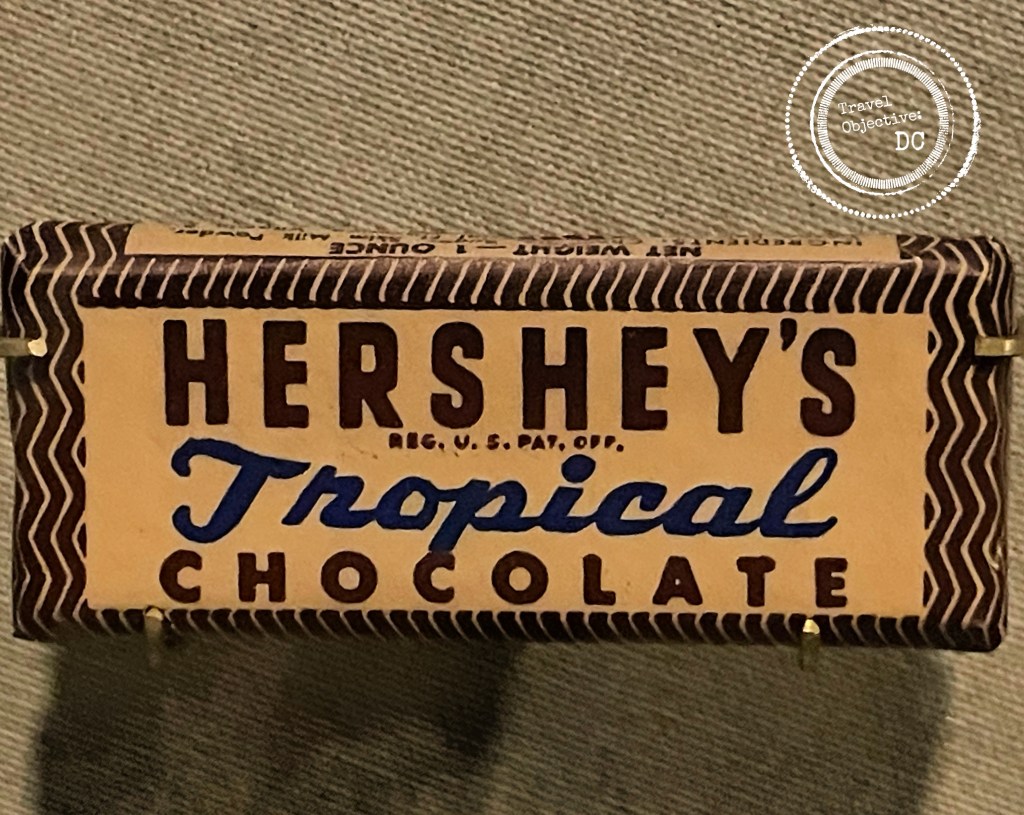
A melt resistant chocolate bar developed by the Hershey Company and provided to US servicemembers in the Pacific Theater during World War II

Hershey's Tropical Chocolate Candy Bar

However, head curator David Allison sought a symmetry in the selection of the artifacts. He wanted to display noteworthy items along with more common articles reflecting the service members and their times, such as rations, books and playing cards.

In addition to the artifacts, exhibit designers use photographs, contemporary illustrations, videos, interactive stations, and other features to help interpret the wartime experience and immerse the musuem visitor in the time. 

The most unique display is in the Vietnam War gallery where 16 different 1960’s-era television sets show contemporary footage and commentary depicting how Americans experienced the Vietnam War at home. The viewing area for the televisions is reminiscent of a mid-century living room, complete with a blocky couch and chair covered in thick clear plastic as your grandmother or aunt might have had. 

1960's era televisions
An array of 1960’s era televisions used in a display in the Vietnam War gallery in the Price of Freedom exhibit at the Smithsonian National American History Musuem

The Revolutionary War, Civil War, World War II and Vietnam War galleries are the largest. These spaces immerse you in the story of the war and how it impacted soldier and civilian alike.

The Wars of Expansion Gallery is smaller, but provides important context and accounts for a series of 19th century conflicts, such as the Battle of Little Bighorn and the Spanish-American War, which may be less familiar to many visitors.

The mix of artifacts and displays broadens the appeal of The Price of Freedom to a wider audience. Those with less interest in military subject matter should still enjoy viewing some of the more unique items while serious students of history are sure to come away having learned something new. 

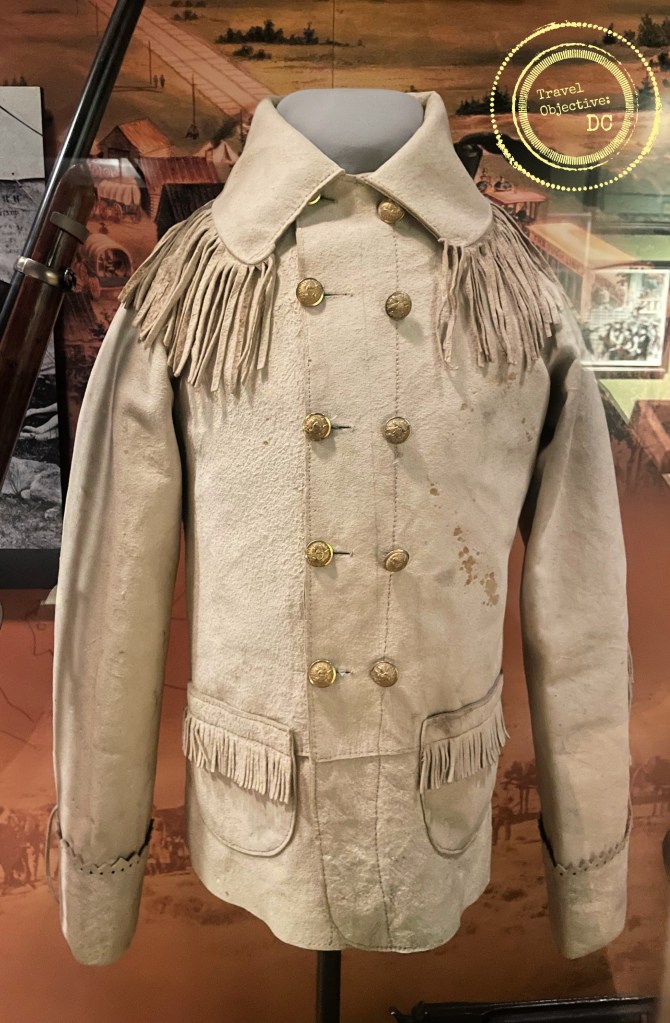
General George Custer’s buckskin coat

Custer's Buckskin Coat

While in most cases The Price of Freedom achieves its aims, there are a few shortcomings. 

Unfortunately, the exhibit space for World War I is too limited. The display misses or minimizes some important themes, such as the rapid expansion of the Army, the mobilization of the American economy, the changing role of women in the military, and the emergence of the United States as a world power. 

The Gulf War display is similarly small, seemingly limited to uniforms worn by Colin Powell and Norman Schwarzkopf. 

There is also an unfinished feel to the exhibition space for the wars in Iraq and Afghanistan. This is understandable as the original exhibit opened in 2004 before those conflicts ended. However, there is space for a more complete examination of both those conflicts than is currently provided. 

Chairs used by Grant and Lee at Appomattox.

The chairs used by Ulysses S. Grant and Robert E. Lee at Appomattox.

At the conclusion of The Price of Freedom is a short film with veterans reflecting on their motivations and sacrifices of their service in the American military. The film concludes with scenes from U.S. military cemeteries showing orderly tombstones and listing the number of interments. 

There are also recurring references to casualites throughout the galleries in keeping with the intent of the exhibit principal funder, Kenneth Behring. He desired the exhibit specifically to recognize the ultimate sacrifices made by American men and women who died in wartime. 

Even with a few flaws, two decades after its opening, the Price of Freedom remains true to its original mission. As America prepares to celebrate its 250th anniverary, this important exhibit gives visitors a thorough synopsis of America’s military heritage and its significant influence on our national character. 

Washington's sword and scabbard
George Washington’s sword and scabbard from the American Revolution

* * *

Route Recon


The Smithsonian National Museum of American History is located at 1300 Constitution Avenue N.W., Washington, D.C. 20560

The nearest Washington DC Metro Stations are Federal Triangle and Smithsonian. Both stations are on the Metro Blue, Orange and Silver lines.

There is no public parking facility for the Smithsonian museums on the National Mall. A limited number of city-operated metered parking spaces along adjoining streets are available.  

The Musuem is open daily (except Christmas Day) from 10:00 AM to 5:30 PM.

Consult the Musuem’s website for more information about other exhibits.

Please note: The Price of Freedom, Americans at War exhibit includes some graphic images of war and casualties.

A guide to the exhibit is available here.

The National Native American Veterans Memorial, A Welcoming Place


In 1942,  the US Marine Corps recruited Chester Nez, and twenty-eight fellow members of the Navajo tribe for a special mission. After basic training, they were sent to Camp Elliot, California where they developed a cipher code for transmitting radio messages based on the Navajo language. Each member committed the straightforward code to memory. 

With the code complete, the platoon members then deployed to units in the Pacific Theater. Nez was assigned to the 1st Marine Division on Guadalcanal. His first encoded transmission led to an artillery strike which destroyed an enemy machine gun nest. 

Nez would later see combat at Bougainville, Guam and Peleliu, all the while relaying messages in a radio code the Japanese could never crack. For their contributions in developing such an unbreakable code, as well as their bravery in the field,  Chester Nez and his twenty-eight fellow Marines were awarded the Congressional Gold Medal in 2001. 

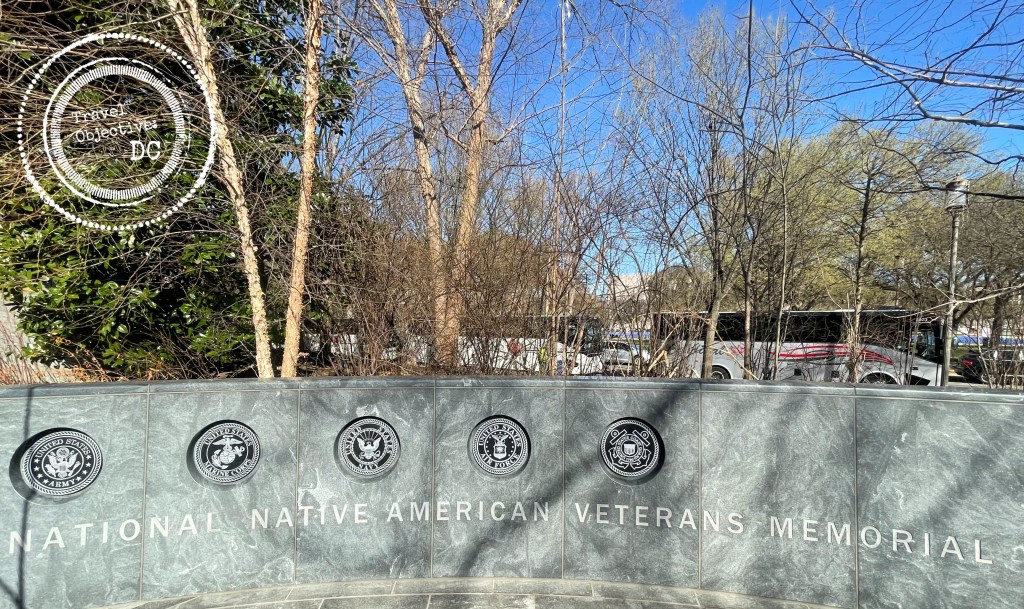
A stone wall with the seals of five of the armed forces marks the entryway to the National Native American Veterans Memorial.
Native Americans have served in all branches of the American military throughout our history.

The code talkers, as these men were known, are today one of the better known examples of Native Americans serving in the American military. However, Native Americans, Alaskans and Hawaiians have long served in the Armed Forces, from Valley Forge through Iwo Jima to Iraq and Afghanistan. Today there are approximately 140,000 veterans of Native heritage. 

In 2013, Congress amended legislation to direct the National Museum of the American Indian to build a memorial so all Americans can learn “of the proud and courageous tradition of service of Native Americans”.

As part of a nationwide competition, a design committee selected a proposal entitled Warrior’s Circle of Honor submitted by Harvey Pratt, a self-taught artist and Marine veteran from Oklahoma and a member of the Cheyenne and Arapahoe Tribes.  As the name suggests, the circle is the prominent shape of the memorial’s features.

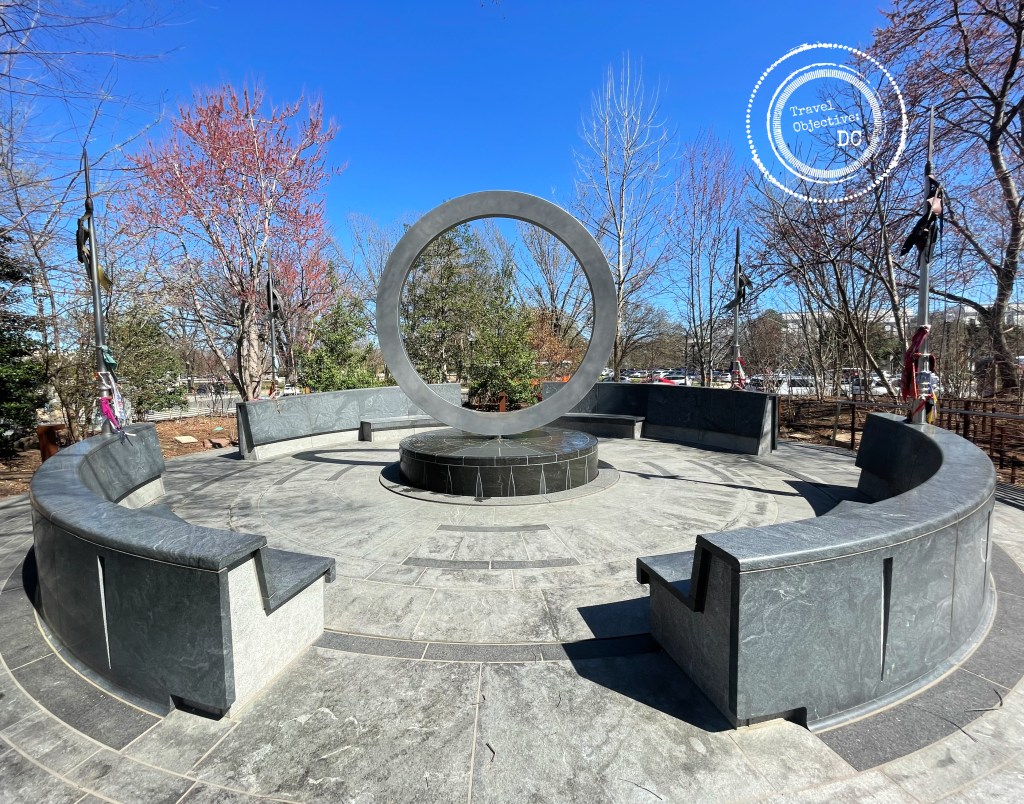
The focus of the memorial is a vertically oriented stainless-steel circle, situated on a carved stone drum surrounded by circular seating area

The focus of the memorial is a vertically oriented stainless-steel circle, situated on a carved stone drum surrounded by circular seating area and gathering space.

The circle is relevant in many Native American cultures. It represents the cycle of life, as well as the four seasons, the sun, the moon and the orbits of the planets and stars. Native communities also gather in circles for ceremonies, festivals and storytelling. 

The memorial design is about more than the circle of course. Pratt also sought to create a space for servicemen and women, veterans and their families to heal by combining the elements of water, wind, and earth into the memorial’s design. 

Water glistens as it flows over the carved stone drum at the National Nafive American Veterans Memorial.

Flowing water glistens atop the carved stone drum at the National Native American Veterans Memorial

Water pulses across the surface of the stone drum and flows down its side creating a central fountain. The stone work around the drum contains a visual echo of the water, with concentric rings in the stone walkways around the drum. The depiction represents the beating of the drum, hearkening all to gather in the space.

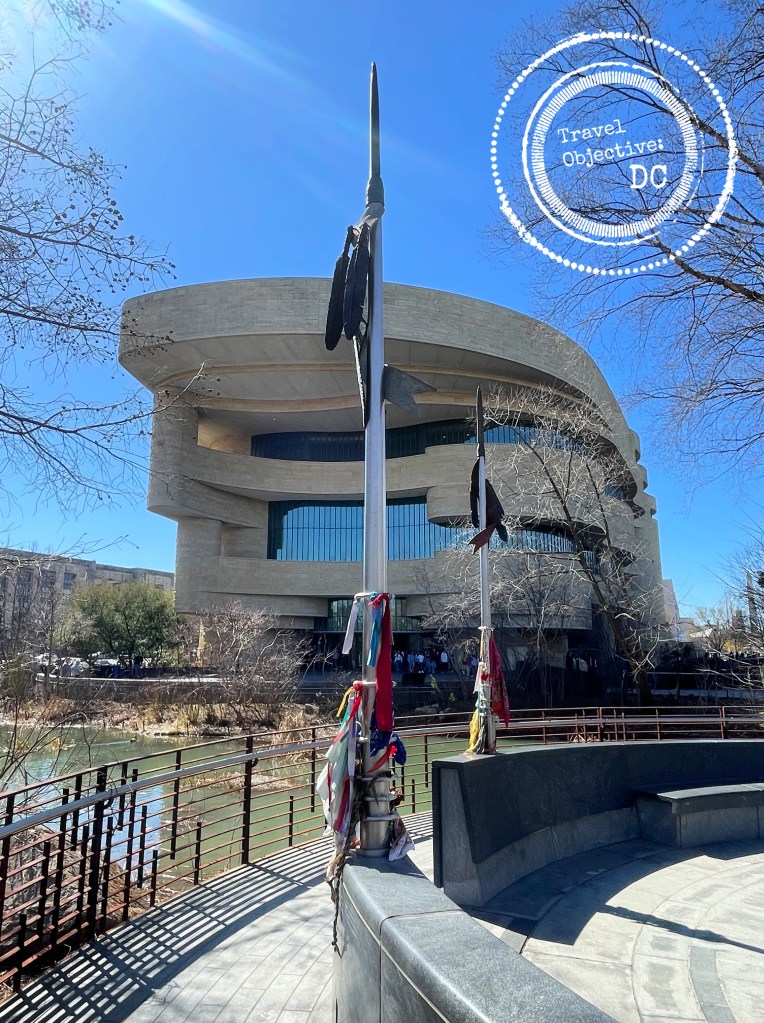
Around the seating area are four spears pointed skyward. The spears hold prayer cloths visitors have tied to the base of the spears allowing the wind to carry the intentions of the prayer cloths to the heavens.

Finally, a park-like setting is built around the memorial combining hardwood trees and a wetland pond. The setting is intended to provide privacy for visitors while a soundtrack of Native American veterans songs aids in reflection. 

Two spears, pointed toward the heavens with prayer cloths tied to their bases.

Two spears, pointed toward the heavens with prayer cloths tied to their bases.


The memorial is located to the east of the main entrance plaza of the National Museum of the American Indian. A large stone marker with the emblems of the five branches of the Armed Forces marks the way.

Within the museum, an exhibit entitled Why We Serve provides background, rationale and compelling examples through history of the military service of Native Americans, Alaskan Natives and Native Hawaiians to the United States. The exhibit is also available online.  

The memorial is above all a welcoming place. Welcoming to Native Americans and their families to heal and reflect. Welcoming to other visitors as well to learn, to rest and also to consider the meaning of service to country and community. 

A white ribbon prayer cloth tied to the base of a spear.

* * *

Route Recon

The National Museum of the American Indian is located on the south side of the National Mall at the intersection of Fourth Street & Independence Avenue, SW Washington, DC 20560. The main entrance faces east toward the US Capitol Building. 

The nearest Metro stations are L’Enfant Plaza and Federal Center SW.

The museum does not have parking. There is limited metered public parking on the surrounding streets. There are also several commercial parking garages nearby the museum.

The National Native American Veterans Memorial is accessible 24 hours a day. 

Learn more about Chester Nez and his fellow Navajo Code Talkers from the Veterans History Project of the Library of Congress.  

Mess Call

The Mitsitam Cafe, located within the National Museum of the American Indian offers a very broad menu of entrees, sandwiches and desserts reflecting Native American cuisines from across the country, such as grilled salmon, bison burgers and lobster roll. The cafe offers some of the tastiest food to be found on the National Mall. 

Command Reading

Why We Serve by Alexandra N. Harris and Mark G. Hirsh.  Why We Serve was published by the National Museum of the American Indian to commemorate the opening of the National Native American Veterans Memorial in 2020. The book explores the complex history of Native Americans serving in the US military with intriguing photographs, maps and artwork combined with compelling first person accounts.

A Moment on Iwo Jima Became a Monument for All Time

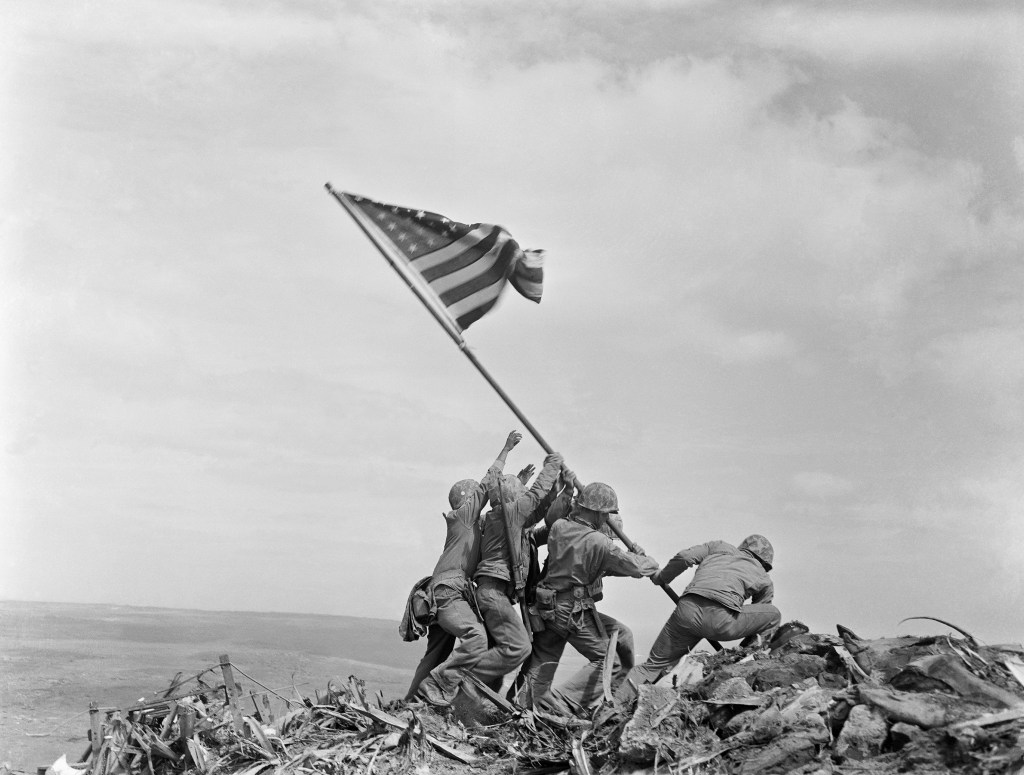
You may not know the name Joe Rosenthal, but you have seen his work. Rosenthal was a photographer for the Associated Press (AP). On the afternoon of February 23, 1945, in 1/400th of a second, Joe Rosenthal took one of the most iconic photographs in American history. Seven decades later, his image of six United States Marines in combat gear raising an American flag still captivates the mind and stirs the soul. 

The photograph inspired a famous sculpture that is now recognized around the world as a symbol of the United States Marines. Known officially as the United States Marine Corps War Memorial, it is dedicated “For the Marine dead of all wars, and their comrades of other services who fell fighting beside them, since the Marine Corps’ founding in 1775”. 
The memorial is located in Arlington Ridge Park, a broad, open green space on the edge of the busy Arlington neighborhood of Rosslyn and in close proximity to Arlington National Cemetery. Situated on high ground overlooking the Potomac River, the park is a natural venue for the memorial.

Upon approaching the memorial, the first impression is of its size.  The entire monument is more than five stories high. The thirty-two foot bronze figures of the Marines stand on a polished, black granite oval base. A green patina on the bronze adds color to the figures’ carefully sculpted fatigue uniforms.  

Around the base of the statue, notable battles fought by United States Marines from the Revolutionary War through the present day are engraved in gold lettering. Fleet Admiral Chester Nimitz’s observation that among those Americans who served on Iwo Jima, “uncommon valor was a common virtue” is prominently inscribed on the west side of the memorial. 

A circular trail around the park features interpretive signs providing background information on the Battle of Iwo Jima, the famous photograph, facts about the statue, and the history and missions of the US Marines.

A miniature statue for the vision impaired included on an interpretive sign near the memorial.

The Marine Corps traces its history back to 1775 when the Continental Congress authorized the recruitment of two battalions of Marines to provide the fledging Continental Navy with a ground operations force.  Since then, the Marines have engaged in every major conflict and a number of expeditionary operations. As the Marine Corps Hymn declares, the Marines have “fought in every time and place…” including some places you might not expect, such as the Civil War’s First Battle of Bull Run and the Battle of Belleau Wood during World War I.   

In the decades before World War II, the Marine Corps developed and refined the doctrines, tactics and training for amphibious landing operations, where Marines would storm ashore from landing craft prepared to fight. Their proficiency in these complicated maneuvers was instrumental to the success of the Allied “island hopping campaign” in World War II’s Pacific theater. In early 1945, the island of Iwo Jima became the next strategic objective. By this time in the war, US B-29 Superfortress bombers could reach the main Japanese islands from airstrips on Guam and Saipan. However, both the airstrips and the B-29 in-flight formations were often attacked by Japanese fighters based on Iwo Jima.

As they prepared, the Marines knew Iwo Jima would be a tough fight. Unlike earlier battles, the Marines would be landing on Japanese territory, not an occupied island. The Imperial Japanese Army had approximately 23,000 soldiers on Iwo Jima, occupying an extensive tunnel and fortification system. 

On February 19, 1945, approximately 70,000 Marines and Navy support personnel landed on Iwo Jima. After days of heavy fighting, Marines of the 2nd Battalion, 28th Marine Regiment made steady progress in their mission to capture Mount Suribachi, a dormant volcano that was the highest point on the island. By the morning of February 23, they reached the summit. 

The first Iwo Jima flag raising. A small flag carried ashore by the 2nd Battalion, 28th Marines is planted atop Mount Suribachi on February 23, 1945.

– Staff Sergeant Louis R. Lowery, USMC

At the top, an American flag was raised so that troops across the island would see the Marines now held the high ground. At the sight of the flag, Marines cheered and Navy ships sounded their horns. 

But the flag was only about 4-feet-long and not quite visible at a distance. A few hours later, an 8-foot-long flag was acquired and sent up to the Marines on Mount Suribachi.  As six Marines quickly planted the second flag, Joe Rosenthal captured the moment for posterity.

Once the flag was raised, the Marines quickly dispersed as fierce fighting continued. Four more weeks of intense combat were yet to come. The landing force sustained 24,053 causalities, roughly one third of those who landed. Three of the men in the photo were among the 6,140 Marines and Navy corpsmen who would lose their lives on Iwo Jima, the deadliest battle ever for the Marine Corps.

But there were instances of great heroism as well. Twenty-seven men were awarded the Medal of Honor for their service at Iwo Jima (about half of them were presented posthumously). 

Joe Rosenthal’s famous photograph of the second flag raising on Iwo Jima.

Joe Rosenthal was carefully balancing himself on some rocks and sandbags as he quickly snapped his famous photograph without using the viewfinder. 

He was unaware of how the picture would turn out as he sent the film to Guam for developing a few hours after taking the photo. The developed pictures crossed the desk of an AP photo editor named John Bodkin. Bodkin’s job was to scan through the photos submitted by his photographers across the Pacific theater for use in American newspapers. Upon seeing Rosenthal’s picture, he knew it was special, proclaiming “Here’s one for all time!”

He immediately arranged to transmit the picture to the AP Headquarters in New York. It arrived in time to be printed on the morning of February 25th in the Sunday editions of newspapers all over the United States. The photograph was an instant sensation. The previous week’s grim news of the terrible combat and heavy casualties on Iwo Jima were now replaced by a picture showing American progress and determination. Rosenthal won the Pulitzer Price for the photo and it would become the main symbol of the 7th US War Loan campaign. 

US Department of the Treasury poster for the 7th War Loan. The campaign would raise over $26 billion during the spring of 1945.

Sculptor Felix W. de Weldon, an artist on active duty with the US Navy, was one of the millions who saw the image. Captivated by the photograph, he began modeling the image in clay, then building a life size representation. 

He proposed building a grand monument based on Rosenthal’s photograph. With the consent of both Congress and the Marine Corps he began working on plaster models from which bronze castings for the statue were made. 

A private fundraising campaign was begun to build the statue based on de Weldon’s work. Over $850,000 was raised from Marines, veterans, and other supporters. He modeled the faces, frames and other features of three men who survived the battle and were believed at the time to be in the photo. He used photographs and information about the fallen Marines to model their images. 

After years of hard work, the memorial was dedicated by President Dwight D. Eisenhower on November 10, 1954.  In 1961, President John F. Kennedy signed a proclamation authorizing the US flag to be flown at the memorial 24 hours a day. 

Shortly after the photo was taken, there were issues with identifying the men in the picture. Rosenthal did not record the names of his subjects and his picture shows no faces. An event that took about ten seconds became a distant memory in the face of the intense fighting on Iwo Jima. The initial efforts to identify the figures lead to unfortunate errors. The first misidentification was corrected in 1947 as Corporal Harlan Block was identified as the Marine planting the flag pole into the ground. For many decades it was believed a Navy Corpsmen named John Bradley and a Marine named Rene Gagnon were in the photograph.

In the 2010’s researchers studying Rosenthal’s and other photographs (there were both Army and Marine Corps photographers present at the time) of the flag raising carefully examined the uniforms and equipment of the flag raisers. They concluded that two different Marines and neither John Bradley nor Rene Gagnon were actually in the photograph. The Marines convened two official Boards of Inquiry, one in 2016 and another in 2019. After thorough examinations of the evidence to include some previously unknown photographs of the second flag raising, the boards concurred.

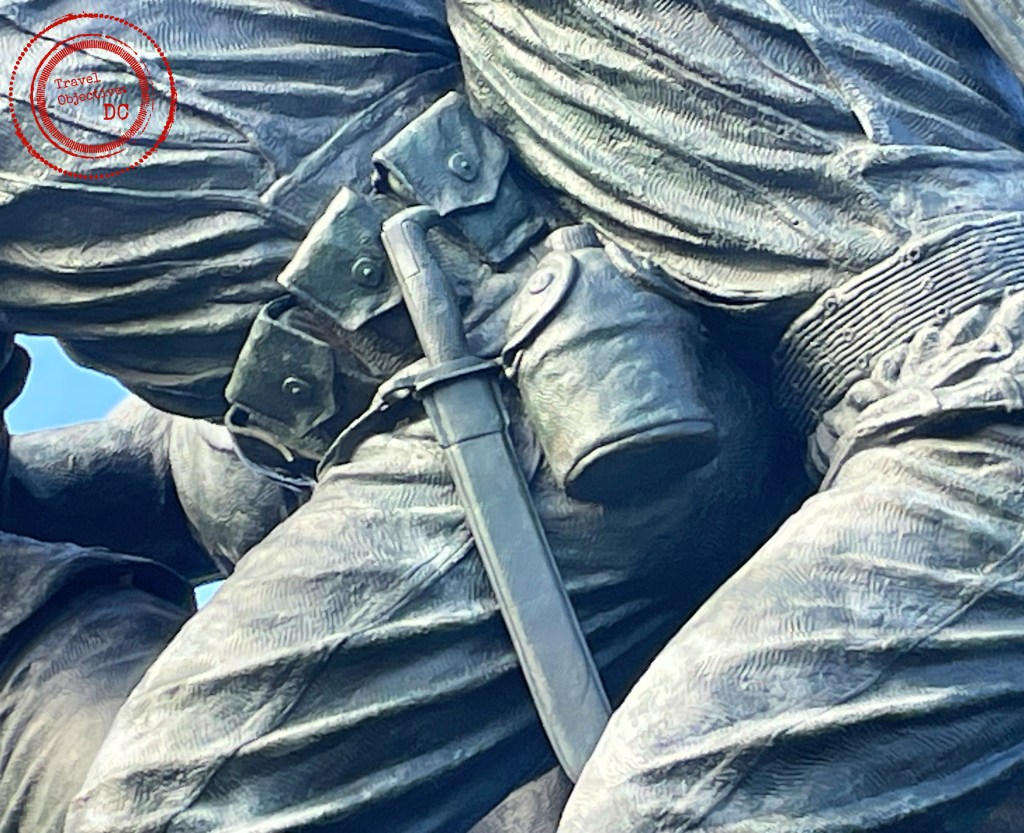
Note the sculptor Felix de Weldon’s precise detail on the Marines’ uniforms and equipment. Given the large size of the statues, the canteen would hold eight gallons of water.

In public statements, the Marines explained the importance of being factually correct, but noted that nothing in the historians’ research nor the boards’ findings diminishes any of the contributions of the Marines and other servicemen who fought on and around Iwo Jima.

Visitors to Washington, DC should include the US Marine Corps War Memorial on their short list of destinations to visit, especially if they have a connection to the Marine Corps. Unlike many other Washington-area landmarks, visiting the Marine Corps Memorial is fairly straightforward. Unless there is a special ceremony, the park is often quiet and peaceful. Free parking is available and the Rosslyn Metro Station is a ten-minute walk away.  

But ease in visiting an iconic sculpture is only one reason. Joe Rosenthal’s photograph and the memorial it inspired gained fame for what their subjects represent: critical values, such as teamwork, dedication and sacrifice. These values made the Marine Corps an effective fighting force throughout its history.

Indeed, these values–like the photograph and the monument–are for all time.

* * *

According to the US Marine Corps, the following six Marines are depicted on the memorial (from right to left):

Corporal Harlon Block, (depicted at the base of the flag pole)

Private First Class Harold Keller

Private First Class Franklin Sousley

Sergeant Michael Strand

Private First Class Harold Schultz

Private First Class Ira Hayes 

* * *

Route Recon

The US Marine Corps War Memorial is located in Arlington Ridge Park. The address is 1000 Marshall Drive, Arlington, VA 22209.

Park Hours are 6:00 AM – Midnight daily. Restrooms are located at the park. 

By Car

From VA 110 south turn right onto Marshall Drive, then follow signs for the US Marine Corps War Memorial.

From US 50 east take the exit for Rosslyn and the Key Bridge. Turn right onto Meade Street at the top of the ramp. Turn left on Marshall Drive, then follow the signs for the US Marine Corps War Memorial.

From US 50 west cross into Virginia on the Roosevelt Bridge and take the exit for Rosslyn and the Key Bridge. Turn left onto Meade Street at the top of the ramp. Turn left on Marshall Drive, then follow the signs for the US Marine Corps War Memorial.

Parking is available at the US Marine Corps War Memorial. Special events may limit parking.

By Metro

The memorial is a 10-15 minute walk from the Rosslyn Metro Station on the Blue Line. 

Arlington National Cemetery 

Arlington Ridge Park adjoins Arlington National Cemetery. Use Arlington National Cemetery’s Ord & Weitzel Gate gate to access the park and the memorial. 

Sunset Parades

On designated Tuesday evenings during the summer, the US Marine Corps holds Sunset Parades at the memorial.  The Sunset Parades are a 45-minute performance featuring the US Marine Band, the United States Marine Drum and Bugle Corps and the Marine Corps Silent Drill Platoon.

Command Reading

Flag of Our Fathers – This book was authored by James Bradley, son of Navy Corpsman Jack Bradley who was believed to be one of the flag raisers in Joe Rosenthal’s famous picture. The younger Bradley set out to write a book telling the life stories of the individuals associated with the flag raising. Published in 2000, long before it was concluded that two of the book’s subjects did not actually take part in the flag raising, the book provides compelling background on the lives of these Marines and gripping accounts of the combat on Iwo Jima. Bradley also provides details on how Joe Rosenthal took the famous photo as well the 7th War Loan fundraising campaign.

African American Military History on the National Mall

From Bunker Hill in 1775 to Bagdad in 2005, African Americans have served in the American military throughout our history.  Their experiences are told as part of the larger African American saga at the Smithsonian’s newest museum, the National Museum of African American History and Culture.

Decades in the making, this museum opened in 2016 and attendance has now grown to over 1.6 million annual visitors. With over 3,500 artifacts on display, the museum’s broad expanse of exhibits reflect critical aspects of African American life such as slavery, civil rights, sports, music and military service. 

A “soup bowl” style helmet worn during World War I. Soldiers of the US 369th Infantry Regiment, the Harlem Hellfighters, are pictured behind the helmet.

Situated on the National Mall, the exterior features a distinctive bronze colored filigree, a tribute to the timeless work of African American metal artisans. It sets this structure apart from the neoclassical and modernist designs of the neighboring government buildings.

The bright, spacious lobby, known as Heritage Hall, features diverse artwork with copper metallic and gray walls, complimenting the museum’s unique exterior. From here, the visitor may choose their entryway into the African American experience presented in the museum. The escalator down leads to the History Galleries while upstairs are the Community and Culture Galleries, which reflect more contemporary times and themes.

Tracing African American military history will ultimately lead in both directions. 

Begin the journey in the downstairs galleries, which present over 400 years of African American history, from the establishment of the African slave trade through the Civil Rights era. African American military service during America’s wars is presented chronologically as part of the larger narrative of African American life. The galleries and exhibits devoted to four major conflicts all convey the recurring theme of how time and again African Americans fought bravely in wars for freedoms they themselves did not possess.

A large gallery dedicated to the Revolutionary War explores how enslaved Blacks served on both sides, motivated by promises of freedom. 

The flag of the Bucks of America, a Black paramilitary group founded in the Boston area. It is believed the group protected the property of Patriot merchants who had left Boston to fight in the Revolutionary War.

Historians estimate approximately 5,000 –  6,000 Blacks served in the Continental Army or in colonial militias. They were involved in every major Revolutionary War battle and most smaller engagements. Units such as the First Rhode Island Regiment, comprised mostly of Blacks, gained renown for their discipline and skills as soldiers. Additionally, experienced Black seamen were actively recruited by the Continental and Royal Navies and served in many different operational capacities.

The war’s conclusion in 1783 brought freedom for some Black soldiers and sailors, but many were returned to slavery, either in America or other portions of the British Empire. 

The Civil War gallery focuses largely on the many contributions of the US Colored Troops to the Union war effort. While newly freed slaves could receive paid work from the Army as early as 1861, they could not serve as Army soldiers until January 1863.  

A kepi cap worn by a soldier from the 4th Regiment Heavy Artillery, US Colored Troops

Ultimately, about 179,000 African Americans enlisted in the Army from both the North and South. They were organized into segregated infantry, cavalry and artillery regiments with white officers and designated as US Colored Troops. Initially, they were paid less than white soldiers and given menial jobs to perform. In time though they earned full pay and distinguished themselves in many battles. Sixteen African American soldiers would earn the Medal of Honor. 

Unlike the Army, the Navy was integrated before the Civil War. About 20,000 African Americans served aboard U.S Navy ships during the Civil War alongside White sailors.

The exhibits devoted to World War I and II are notably smaller than the Revolutionary and Civil War galleries.  They broadly describe the segregated service of African Americans during these wars and the hostile environment to which they often returned.

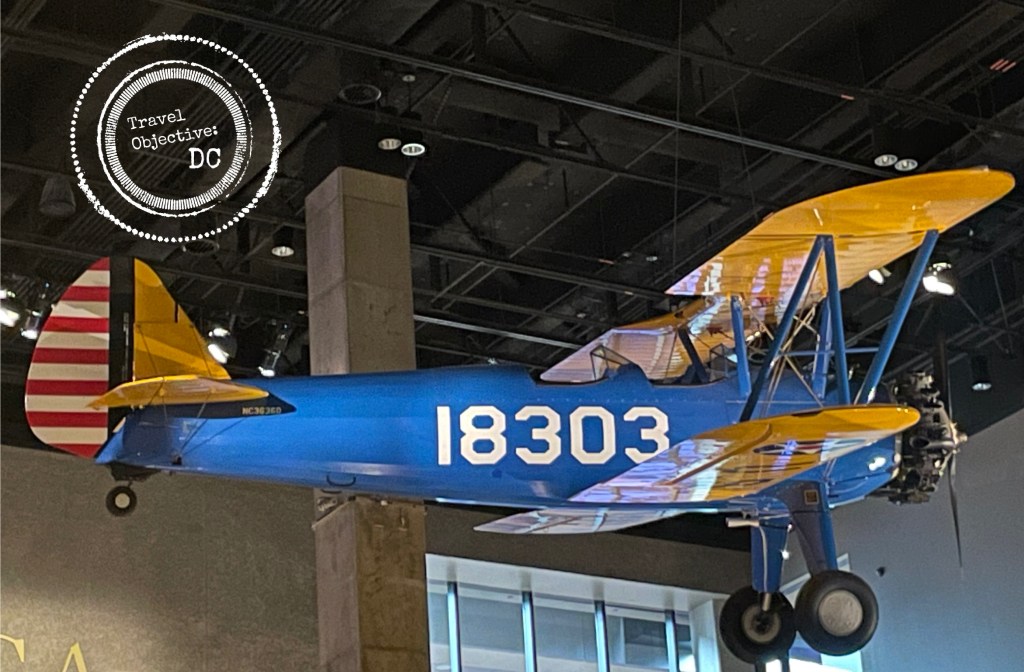
One of the highlights in the History Galleries is a beautifully restored Stearman Keydet training aircraft used by the Tuskegee Airmen. The two seat bi-plane was the primary pilot training aircraft for the US Armed Forces in the 1930’s and 1940’s. The accompanying display also includes an excellent five minute introductory video on the origins and accomplishments of the Tuskegee Airmen, which was established in 1941 to demonstrate that African Americans could perform the jobs required in the Army Air Forces. The Tuskegee Airmen included pilots, as well as navigators, flight engineers, bombardiers, mechanics and other essential support positions. 

A PT-13D Stearman Kaydet training aircraft used to train Tuskegee Airmen

One of the most notable units comprised of Tuskegee Airmen was the 332nd Fighter Group. From their base in Italy, the 332nd escorted heavy bombers on raids into central Europe from May 1944 through April 1945. They flew more than 15,000 sorties, losing but 25 escorted bombers to enemy fire. 

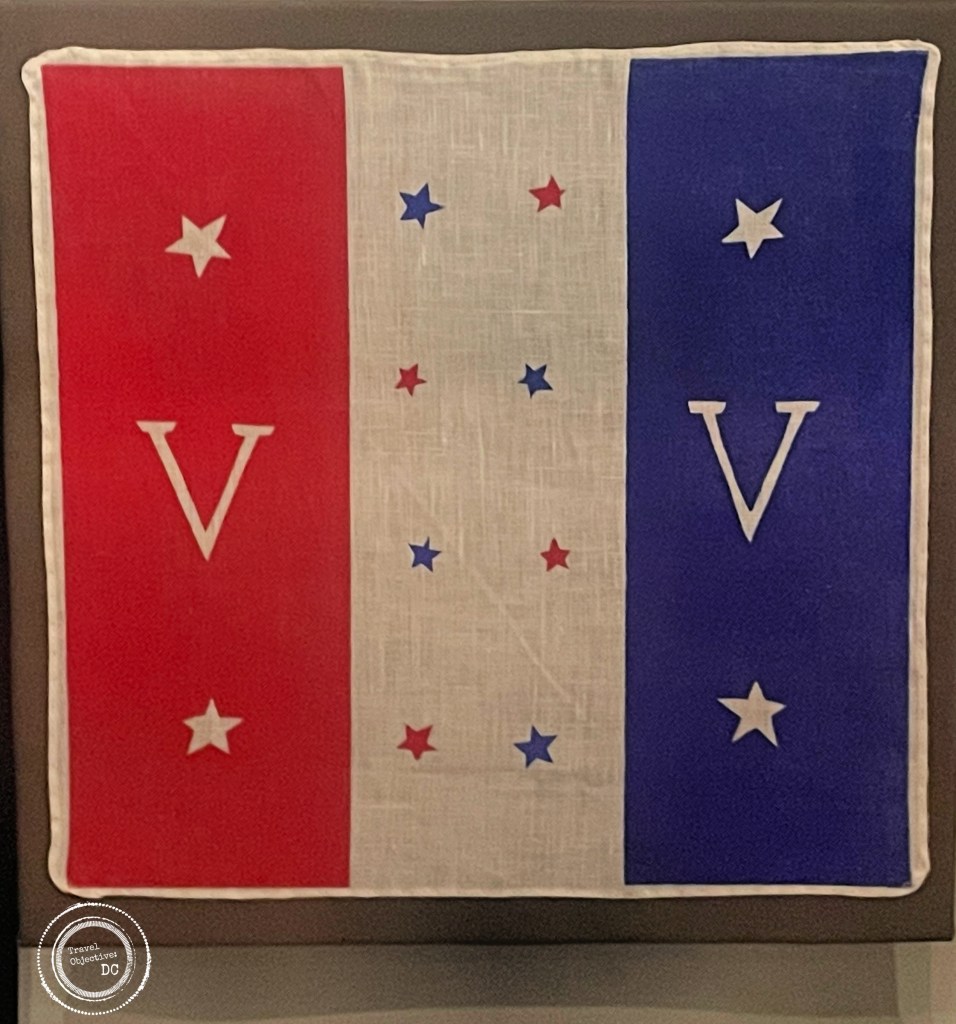
In the museum’s Community Gallery on the third floor is an exhibit entitled Double Victory: the African American Military Experience. The gallery takes its name from the Pittsburg Courier’s Double Victory campaign during World War II, which promoted America’s victory over the Axis Powers and an African American victory over discrimination at home. 

This exhibit expands on the themes first introduced in the below-ground History Galleries. Here the emphasis goes beyond historical facts of African American military service to how that service changed through the years and its impact on the larger African American community. 

A handkerchief with the emblem of the Pittsburgh Courier’s Double Victory campaign.

Also included are more artifacts, such as documents, weapons and equipment. These highlight what military service for African Americans entailed at the time, such as a seaman’s certificate issued in 1826 to a Black sailor named Robert Barnaby. Barnaby carried the certificate with him at all times to prove he was a sailor in the US Navy and avoid being seized as a runaway slave. 

This exhibits introduces the accomplishments of some notable African American units such as the 54th Massachusetts, the Buffalo Soldiers, the Harlem Hellfighters, and the Red Ball Express, among others. 

President Harry Truman officially ended segregation in the US Armed Forces in 1948, upon signing Executive Order 9981. Change came, but slowly. Racial tension continued in the following decades in parallel with the civil rights movement occurring across American society. However, the integration of the services opened new opportunities for African American service members.  

A horse saddle used by B Troop , 9th US Cavalry Regiment (A Buffalo Soldiers Regiment)

The final part of the Double Victory exhibit portrays one of the most important of those opportunities, the long rise of African Americans to senior ranks within the military. Two hundred years after the Battle of Lexington and Concord, Daniel “Chappie” James, a fighter pilot and Tuskegee Airman became the first African American four star general in history.

The exhibit includes Colin Powell’s dress uniform from his tenure as Chairman of the Joint Chiefs of Staff. It denotes the pinnacle of that long rise and attests to what is now possible in the military.

Although they might not have always been treated fairly, military service has long been an important part of African American life. Today, African Americans comprise 17% of the ranks of soldiers, sailors, airmen and Marines and continue a tradition begun over 200 years ago. Through that time, the unique relationship between African Americans and the American military was a rather complex picture. Curators have designed and assembled some revealing exhibits exploring the nuances of those complexities. It is an important collection and well worth seeing for anyone desiring a more complete picture of American military history. 

* * *

Route Recon

The Museum is located on the National Mall at Constitution Avenue, NW, between 14th and 15th Streets, Washington, D.C. The street address is 1400 Constitution Avenue, NW, Washington, DC, 20560.

Click here for a map of all the Smithsonian Institute Museums around the National Mall.

The museum is open Tuesdays – Sundays from 10:00 AM until 5:30 PM. On Monday, the museum is open from 12 Noon until 5:30 PM.

 Free timed-entry passes are required for entry.

Using public transportation is advised for those visiting the museum.

Metrorail – The closest Metro station is Federal Triangle, along the blue, orange, and silver lines.

Metrobus – Bus stops are located on Constitution Avenue. Visit the Washington Metropolitan Area Transit Authority for more information.

Circulator Bus – The National Mall Circulator Loop bus provides easy access around the National Mall and convenient connections to other Circulator buses for visits to uptown sites.

Mess Call

If your schedule allows, plan for lunch or a snack at the Sweet Home Café, the museum’s restaurant. It features a variety of food items reflective of African American culinary traditions as well as many modern day favorites. The Sweet Home Café is open daily, from 11:00 AM to 3:00 PM with the exception of Mondays (12:00 Noon – 3:00 PM).

Walking Through History at Fort Washington

On a hot summer day, five authentically dressed men reenact a 19th century US Army artillery detail. The solider in charge of the detail, or gunner, calls the commands while the cannoneers crisply and meticulously execute the drill. The highly polished barrel of the M1841 mountain howitzer shines brightly in the sun. The gunner shouts the final command: Fire! A cannoneer pulls the lanyard, a spark ignites the powder charge within the cannon. Brilliant flashes of flame shoot from the breech of the cannon’s barrel.  Booms echo off the brick walls while smoke fills the sultry air.

National Park Service volunteers reenact a 19th century cannon drill at Fort Washington.

The reenactors are National Park Service volunteers demonstrating the skills of artillery soldiers at Fort Washington Park in suburban Prince George’s County, Maryland, just east of Washington, DC. Mention Fort Washington Park to an area resident and you are likely to get a blank stare or a vague reference to the local neighborhood of the same name. Many are unaware of this national park, hugging the eastern shore of the Potomac River just south of Alexandria, Virginia. Indeed, a recent sunny day found mostly local residents visiting the park, jogging, walking dogs and biking along the park’s avenues and trails. 

The story of Fort Washington is really the story of four different forts spanning almost 140 years. The first three of which were built specifically to defend Washington, DC from an enemy naval attack via the Potomac River. In today’s era of jet aircraft and precision guided missiles, we do not think much about coastal defense. Yet in the first 150 years of the United States, it was an important strategic and sometimes political issue. 

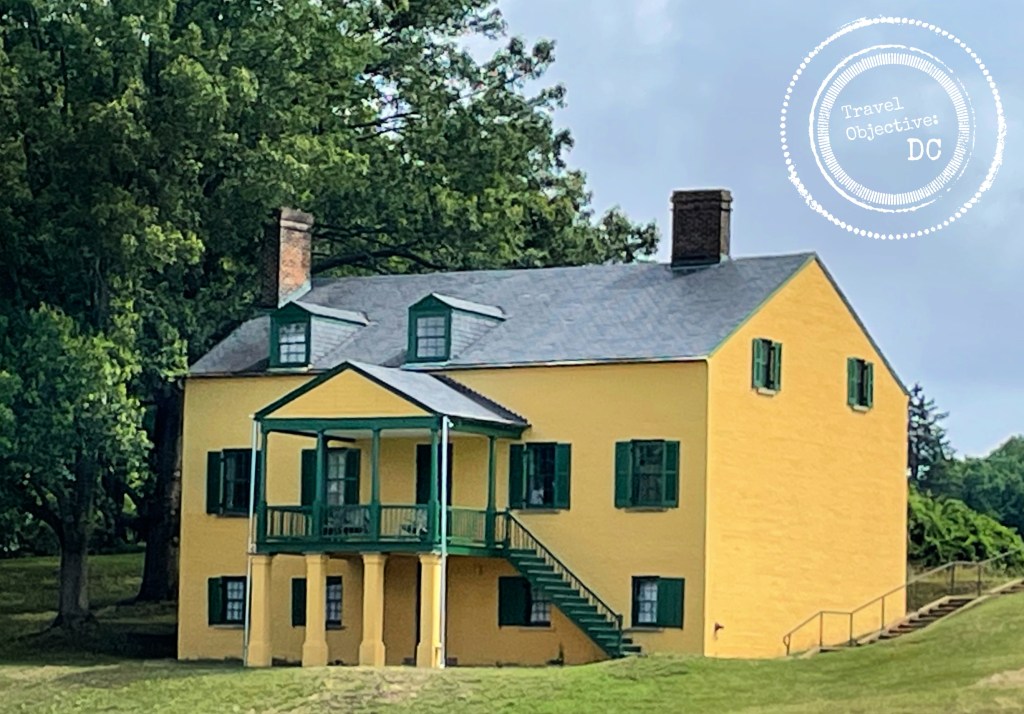
The Fort Washington Park Visitor Center building was originally the post commander’s quarters. It dates from 1822.

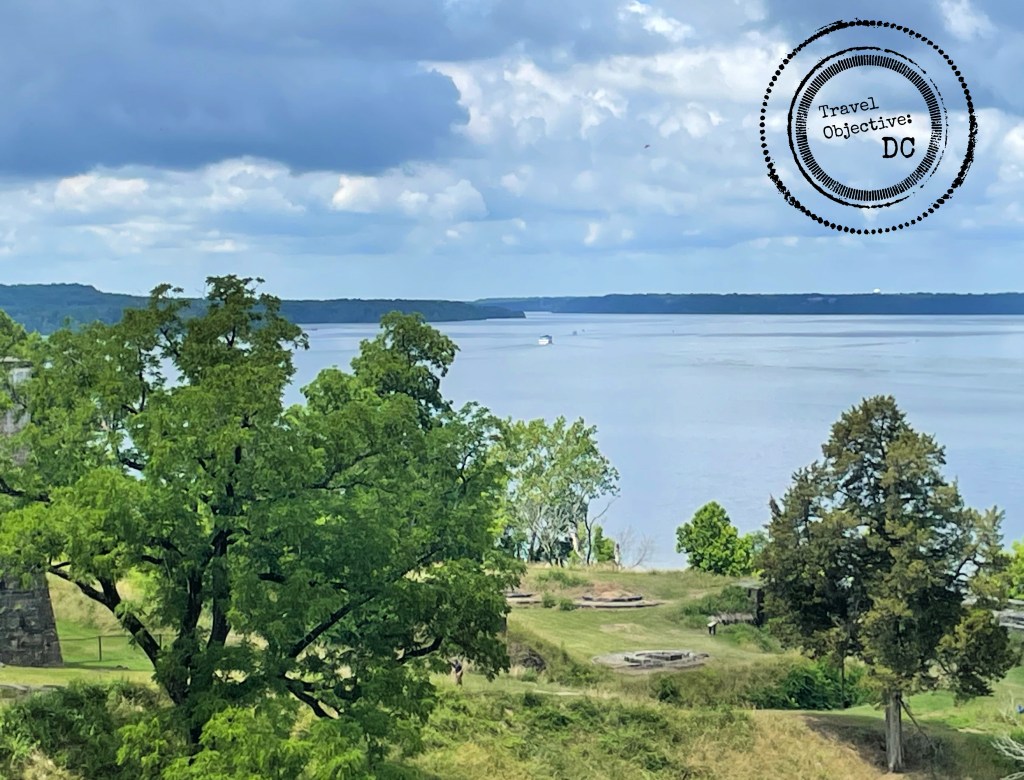
The Fort Washington Park Visitor Center is the worthwhile first stop for new visitors to Fort Washington.  Housed in the original post commander’s quarters, the visitor center provides helpful background on how America’s approach to coastal defense changed through history. Displays detail nearly 140 years of Army life at Fort Washington, describing the four different forts, the various weapons deployed as well as the different Army units posted here. Make sure to step out onto the back deck. The commanding views of the Potomac River reveal why this location was selected for Washington, DC’s defense. 

Near the visitor center, two concrete relics are reminders of the “third” Fort Washington. After the Civil War, the world’s navies began building warships with iron and steel, rather than wood. In the 1880’s, the Army developed the Endicott System for coastal defense which included concrete structures and rifled guns and other armaments that could penetrate the armored plating of these new combat vessels. 

The present day ruins of Decatur Bunker.

Between 1891 and 1902 the Army built a series of eight concrete bunkers around Fort Washington to position these weapons. Adjoining the parking lot is Decatur Bunker. While today is looks like a set for a post-Apocalyptic movie, it was originally built to house two 10-inch “disappearing guns” named because the cannons would drop down behind the bunker wall after firing, allowing for safe reloading. 

The bunkers were electrified and had telephones connected to a central tower where an officer directed the fire of the batteries as necessary. The Fire Control Tower is located right next to the visitor center.  Although the bunkers are visible, they are fenced off and entry is prohibited. However, similar Endicott System bunkers across the Potomac River at nearby Fort Hunt in Virginia are open for public exploration.   

The Fire Control Tower

A short walk from the visitor center is the “second” Fort Washington, the main attraction at Fort Washington Park today. Built after the War of 1812, it was finished in 1824, but largely unused until a renovation in the 1840’s allowed the fort to be sufficiently armed. 

Approaching the main gatehouse with a dry moat and large drawbridge, the fort feels almost medieval. But it really is the product of careful military engineering reflecting the defensive technology and combat tactics of the time. The fort is distinctive as one of the few remaining coastal fortifications in its original form.

Designed to thwart attacks by land as well as by water, the fort’s massive brick walls have many angles and turns so defending solders could have multiple positions to fire on attackers. Parapets on the western wall facing the river provided firing positions for the sizable cannons to engage enemy ships. Several types of cannons in use at the fort are on display, including an original 24-pounder cannon so named because the solid cannonballs it fired weighed 24 pounds (with a range of 1900 yards)! 

The parade field at Fort Washington. Note the enlisted barracks building on the left and the 24 pounder cannon on the right.

A large parade field dominates the interior of the fort. The parade field was a center of daily life for the soldiers. Here troops would parade, stand inspections, answer daily roll calls, organize work parties, and conduct drills.  Adjoining the parade field are two long brick buildings, one housed officers and their families, the other was the enlisted barracks.  

A left turn down the hill from the fort’s main gate leads to the river and an area known as Digges Point. In the century before the Army built fortresses on this ground, the Digges family, transplants from Virginia, maintained a tobacco plantation named Warburton on today’s parkland. Thomas Digges was a contemporary and friend of his neighbor George Washington. George and Martha Washington regularly visited Warburton, traveling by riverboat from Mount Vernon and disembarking at Digges Point. A US Coast Guard channel marker stands in the area today.

The Potomac River looking south from Fort Washington.

As concern about another war with Britain continued growing in the early 1800’s, Congress allocated money for a system of fortifications to protect the Eastern Seaboard. The Army built the first fort near Digges Point in 1809. Originally known as Fort Warburton, it had 14-foot-high brick walls and up to 26 cannons. 

Unfortunately, Fort Warburton did not fare well in its first and only engagement. On August 27, 1814, a ten ship Royal Navy flotilla sailed up with Potomac River towards Alexandria. A day earlier, Washington, DC had been attacked and burned by other British forces. With only enough soldiers to crew five cannons, and sensing defeat, the fort’s commander, Captain Samuel Dyson took drastic action.

He ordered the cannons be destroyed, the magazine with all its black powder blown up, and the garrison to withdraw. The magazine’s explosion left most of the fort heavily damaged before Royal Navy guns destroyed the rest. Not surprisingly, Captain Dyson’s chain of command considered this a very poor decision. He was courtmartialed and dismissed from the Army. There is not much of the original fort remaining today, but its original location on a grassy, level piece of ground near Digges Point is evident.

The introduction of the airplane in World War I made the idea of large forts with cannon for coastal defense obsolete. In the decades following the war, the fourth Fort Washington served as a garrison for the 3rd Battalion, 12th Infantry Regiment, the Army’s ceremonial unit (a role played by the 3rd Infantry Regiment today). During World War II, the Adjutant General Corps located its training school at Fort Washington and the 67th Women’s Army Auxiliary Corps detachment also called it home.  

There are few remaining buildings from this time. In 1946, Fort Washington was turned over to the Department of the Interior to become a national park and over 300 buildings were removed.

This brick building served as a post exchange and gymnasium. It is one of the few surviving buildings at Fort Washington from the 20th Century.

With the soldiers long departed, Fort Washington’s mission today is to provide a place for recreation. Beyond history, the park’s expansive green spaces and proximity to the water provide a unique natural setting. Several walking trails traverse the grounds with varied habitats. Bird and wildlife are abundant. Watch for deer, foxes, and raccoons. In the open areas, a variety of songbirds can be observed while bald eagles, osprey, herons, and mallards are seen along the river. Fishing is an option as well with dozens of fish species in the adjoining waters. 

While the Washington region teams with many significant sites in US military history, Fort Washington is unique. Where other sites are related to a single event or era, Fort Washington chronicles the period from wooden ships to World War II. A “must see” for those interested in defensive fortifications, Fort Washington is also a most pleasant place to spend some quiet time on the Potomac River. So, pack a picnic, bring your binoculars for the views, and walk through some history at Fort Washington. 

* * *

Route Recon

The Fort Washington Park Visitor Center and the historic fort are open Thursday – Sunday from 9:00 am – 4:30 pm, except on Christmas and New Year’s Day. The Visitor Center and historic fort are closed on Monday, Tuesday and Wednesday. 

The park grounds are open through sunset each day. From October – April, park grounds open at 8:30 am. From May – September, park grounds open at 6:30 am. 

Fort Washington hosts living history as well as conservation programs on a recurring basis. Check the Fort Washington Park website for more information and schedules.  

There is no charge to visit Fort Washington. 

A State of Maryland fishing license is required to fish at Fort Washington. 

Fort Raleigh National Historic Site, Where History Abounds on the Outer Banks

In 1590, Captain John White eagerly sailed from England anxious to return his family and friends living on Roanoke Island, a barrier island part of today’s Outer Banks of North Carolina. Due to a war with Spain, three long years had passed since his departure to procure additional resources for the fledging settlement. Upon his return however, he found the dwellings and working areas abandoned. There were no signs of the English settlers.  The only clues were two inscriptions; CROATAN on a wooden post and CRO carved into a tree. White never learned what happened to his community and the search for their fate continues today.

An engraving from the 1870’s depicting Captain John White’s return to the Roanoke Colony.

-Design by William Sheppard; engraving by William James Linton.

Modern  visitors to Roanoke Island can learn more about the “Lost Colony” at the Fort Raleigh National Historic Site, located on the northern end of Roanoke Island, near Manteo, North Carolina. The site’s large open green spaces and broad ribbons of wooded areas are a stark contrast to the sand of the Outer Bank’s renowned beaches.  

Fort Raleigh was designated a historic site in 1941 after archeological evidence confirmed the English colonists once occupied a portion of the land. Today there is a modern visitor center, renovated in 2015, with exhibits about the history, archeology and artifacts of the early settlement. Some recent discoveries include fragments from ointment containers, olive jars and indigenous pottery. 

Reproductions of maps and illustrations drawn by Captain John White hang on the historical wood paneling in the Elizabethan Room.

An “Elizabethan Room” within the visitor center is decorated with intricately carved wood paneling from an actual Elizabethan-era English manor house. The room features an innovative electronic display that dramatizes the circumstances and conversations of Roanoke Colony leaders, investors and settlers. The scenes offer some intriguing insights into Captain John White’s intent to leave England for North America and his hopes for the future. A 17-minute film in the visitor center theater provides additional context on the settlers’ lives. A reconstructed earthen fort depicting the original Fort Raleigh’s walls lies a short walk from the visitor center. 

Although it did not happen on the grounds of Fort Raleigh, the National Historic Site also interprets the story of the Civil War Battle of Roanoke Island, an early and strategic Union victory during a time when Confederate forces appeared ascendant.  

US Army Brigadier General Ambrose Burnside won a decisive victory on Roanoke Island in February 1862.

After Federal losses in 1861, Union strategists and planners identified the thinly defended North Carolina coast for a military operation.  Roanoke Island was identified as the principal objective. If Roanoke Island could be taken, then shipping to and from the port cities along the North Carolina coast and Norfolk, Virginia could be blocked. Union Brigadier General Ambrose Burnside, with the support of his boss Major General George McClellan, began assembling a “coast division” capable of landing on and occupying Roanoke Island. The division would then establish a foothold for further action in eastern North Carolina. 

Burnside recruited 14 infantry regiments (approximately 13,000 troops) for his division. He also contracted a large fleet of private commercial ships to transport his troops. In an early example of a joint forces’ operation, Burnside coordinated closely with US Navy Flag Officer Louis Goldsborough. Goldsborough’s flotilla would subdue Confederate warships and pepper coastal fortifications with covering fire in advance of Burnside’s ground operations.    

View of Ashby’s Harbor looking west, where Union forces landed on Roanoke Island.

Through the afternoon and into the evening of February 7, 1862, the Union Army landed 11,500 men at Ashby’s Harbor, on the western side of Roanoke Island. This was one of the US Army’s first amphibious operations in hostile terriroty. After a rainy night, the division’s three brigades marched east through swampy and difficult terrain. 

Confederate forces established their defensive line along the island’s main road to the northeast, centering it on a battery of three field guns.  As Union brigades deployed, they attacked the Confederates on the left, right and the center. The rebels were soon overwhelmed and withdrew to the north. However, with no way to leave the island, they ultimately surrendered. The Union Army captured over 2,500 soldiers along with 42 artillery pieces and large quantity of small arms.  

After taking Roanoke Island, Burnside then moved against other port cities through the spring. By summer, the cities of New Bern, Beaufort, Fort Macon and even Norfolk, Va., had all fallen to Union forces. 

Battle of Roanoke Island historical marker.

Another significant outcome of the battle was a surge in the African American population on Roanoke Island. Considered “Contraband of War” by the Army, enslaved African Americans were emancipated as they entered Union controlled territory. As the numbers of arriving African Americans steadily rose, the Army confiscated local land to provide an area for the newly freedmen to settle and established a Freedmen’s Colony in 1862.    

A chaplain from the 25th Massachusetts Volunteer Infantry Regiment named Horace James was placed in charge of the colony. Reverend James was a skilled organizer and administrator, focusing the colony’s efforts on supporting the Union Army.  In exchange for rations and wages, newly freed African Americans worked in a variety of jobs such as carpenters, blacksmiths, stevedores, fishermen, or as domestic staff. The more daring served as scouts, spies and guides, gathering critical intelligence and accomplishing important missions.

This stone memorial was placed at the Fort Raleigh National Historic Site to commemorate the Freedmen’s Colony.

During the war, the colony kept growing with a total population reaching almost 4,000 at its peak. A lumber mill was built, along with schools, churches and over 500 houses. After the war though, Federal policy returned impounded lands back to the original owners. Most of the freedmen moved away, although some remained. The colony was officially dissolved in 1867. Today a granite marker at the historic site commemorates the Freedmen’s Colony and the refuge it provided on Roanoke Island. 

The attraction of Fort Raleigh is more than its displays and stories of the past. Indeed history on Roanoke Island is kept very much alive. 

Adjoining Fort Raleigh is the Elizabethan Gardens, an initiative of the Garden Club of North Carolina. The brick gatehouse serves as a portal to a collection of different types of gardens inspired by the Elizabethan era and beautifully arranged over ten lush acres. 

The garden’s design combines trees, shrubs and flowering plants carefully selected and placed so that seasonal variations result in a constantly changing appearance. Italian statuary from the Renaissance period is displayed throughout the gardens adding to the classical look and feel. One of the garden’s main features is a massive 400-year-old oak, a living connection to the earliest English colonial times and the four and a half centuries that followed.  

An ancient oak tree in the Elizabethan Gardens which grew during the times of the “Lost Colony”.

Forth Raleigh also houses the Waterside Theater, home of the long running production of The Lost Colony. Now in its 86th season, the outdoor play is one of the most prominent cultural experiences on the Outer Banks. More than just a drama, the story of the early English settlers is told with music and dancing, along with comedy, fight scenes and a dash of English pageantry. 

Although it has seen some modifications through the years, the Roanoke Island Historical Society, producer of The Lost Colony, used the pause due to the recent pandemic to rework portions of the production. A special focus was the portrayal of Native Americans. The Historical Society worked with the local Lumbee tribe to ensure the Native American characters’ dialogue and dance scenes are accurate. Additionally, all actors playing Native Americans on stage have indigenous heritage.  More modern staging effects have also been incorporated; 3-D images projected onto the stage sets provide very realistic backdrops to scenes set in gardens, forests and onboard ship. Audiences have enthusiastically returned, keeping The Lost Colony an Outer Banks tradition.  

Each year millions of people visit the Outer Banks. They come for the beach life, water sports, ocean breezes and the wild horses on Corolla. Some also come for the history, as history abounds on the Outer Banks. They come for stories of the Wright Brothers, pirates and the U.S Live Saving Service. Add some history to your Outer Banks trip with a visit to the Fort Raleigh National Historic Site, where Outer Banks history is carefully preserved and made relevant for today.

* * *

Route Recon

Fort Raleigh National Historic Site is located on the north end of Roanoke Island, about four miles north of the town of Manteo, North Carolina. The Visitor Center address is 1500 Fort Raleigh Road, Manteo, North Carolina 27954. The phone number is 252 473-2111. Call ahead for information on daily historical talks.

The Elizabethan Gardens is located at the Fort Raleigh National Historic Site. The address is 1411 National Park Drive, Manteo, North Carolina 27954. The gardens are also a short walk from the Fort Raleigh Visitor Center. Visit the Elizabethan Gardens website for more information, including current admissions rates.

The Waterside Theater, home of the The Lost Colony production, is located at 1409 National Park Drive, Manteo, North Carolina 27954. Visit The Lost Colony for more information on scheduling and ticket pricing.

Ashby’s Harbor is located at the end of Skyco Road about 4.5 miles from the Fort Raleigh National Historic Site. From the Visitor Center, head south on US Route 64 past the village of Manteo. Continue straight at the intersection with North Carolina Route 345. After .7 miles, make a right onto Skyco Road.

The Historical Marker for the Battle of Roanoke Island is located on the southeast corner of the intersection of US Route 64 and North Carolina Route 345. There is a small parking area on the southside of the intersection. This is a busy intersection so use caution when viewing the marker.

Mess Call

The Hungry Pelican is a local Manteo deli offering excellent sandwiches as well as salads, ice cream and great desserts. The Hungry Pelican is located at 205 Budleigh Street in the historic center of Manteo. Visit their website for menus and operating times.