Virtually Marking Victory with the Imperial War Museums

By the Spring of 1945, Germany had been on the defensive for approximately a year. Allied forces continued a steady advance across German occupied territory, and ultimately into Germany itself. 

Finally, with Hitler dead and Berlin under Red Army control, on May 7 and again on May 8, senior representatives of Germany’s High Command signed documents declaring an unconditional surrender to the Allied Powers. May 8 was declared Victory in Europe (V-E) Day in the United States and the United Kingdom — and celebrations erupted in large cities and small towns alike.

Unfortunately, on the 75th Anniversary of V-E Day, many large-scale public observances of the day are being cancelled or postponed due to the COVID-19 coronavirus. Like many other aspects of life during this pandemic, some events are being moved online. Such is the case for V-E Day as well.

True to its mission, although its physical locations are closed, the United Kingdom’s Imperial War Museums (IWM) have assembled an extensive and informative website to guide viewers through the major events and themes surrounding V-E Day.

The Imperial War Museums have an extensive collection of wartime artifacts such as this Willys Jeep. It was a gift to the British Red Cross in Italy by the Commander of the US 5th Army. 

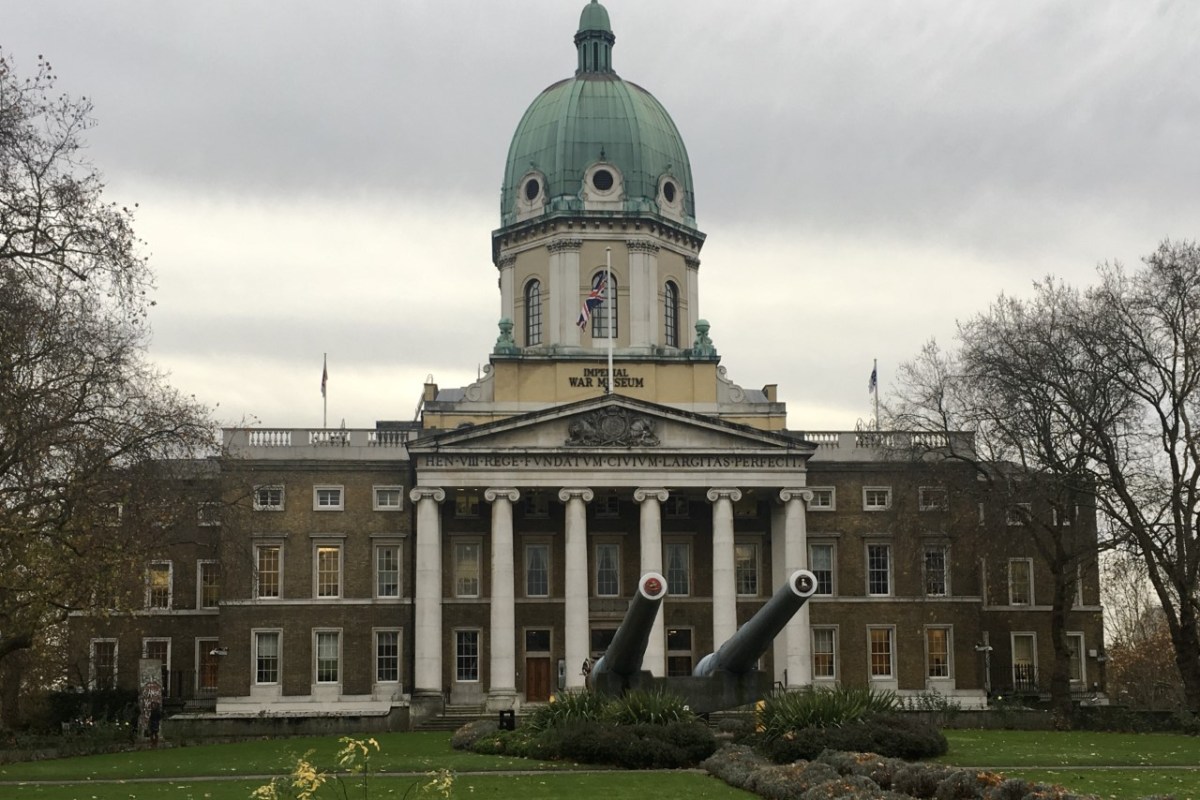
The IMW have a long history of documenting war and its consequences. Founded as the National War Museum in 1917, even before the Allied victory in World War I was certain, the museum was established to recognize the contributions of all elements of British society in both fighting the war and supporting the war effort. 

The name was quickly changed to the Imperial War Museum to also acknowledge the critical role played by the militaries, governments and peoples of the British Empire. A committee was formed to begin collecting artifacts, weapons, documents, photographs and other items of interest. King George V formally opened the museum’s first exhibits in London’s Chrystal Palace in 1920. 
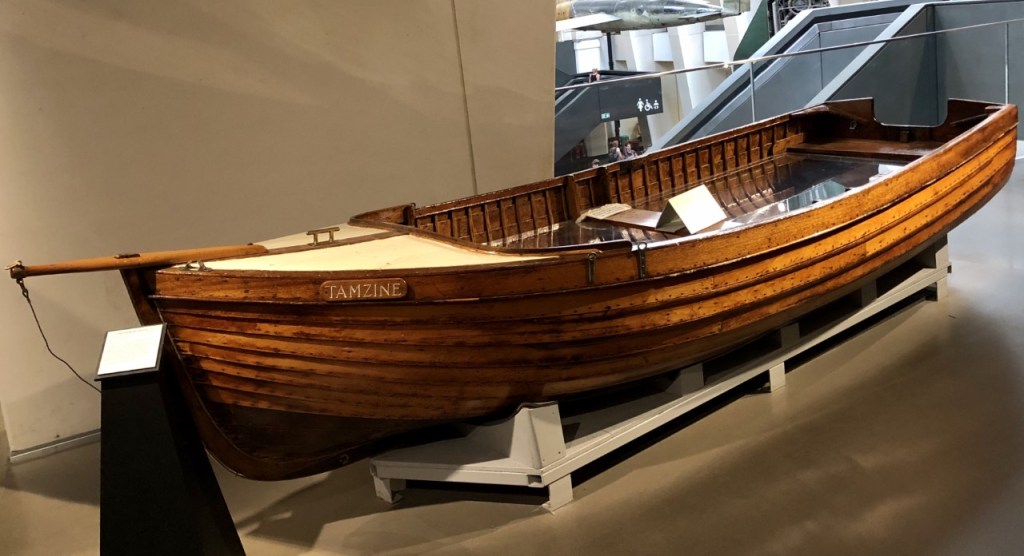
This small fishing boat, named the Tamzine, was used in the evacuation of the British Army from Dunkirk in the spring of 1940.

Through the years, the scope of the IWM broadened to include preserving the stories and chronicling the experiences related to all armed conflicts fought by British, Empire and Commonwealth forces, as well as studying the impact wars and armed conflict have upon societies.  Naturally, as the mission grew  so did the collections. Today there are five distinct museum locations now comprising the Imperial War Museums. The main museum is located in a former mental hospital in the London neighborhood of Lambeth.

In preparation for the centennial of World War I, the IWM – London underwent a $67 million renovation in 2014 to update elements of the museum building and redesign the exhibits. Visitors now enter a four story atrium adorned with articles of war from the past one hundred years, among them a WWI era cannon, a Spitfire fighter aircraft, a V2 Rocket, a Harrier jet, and a car destroyed in a Baghdad bombing.  Wrapping around the atrium are five floors housing the exhibits which transport you through ten decades of British military history, heroics, frustrations, adventures and struggles. The focus though is not a dry and seemingly endless litany of facts about dates, battles, units and weapons, but rather a detailed examination of the impact of wars as told through contemporary accounts and a tremendous collection of artifacts.

This Spitfire fighter aircraft hangs in the open atrium of the IWM – London. It reportedly flew 57 combat missions during the Battle of Britain in 1940.

The IMW’s specially crafted website to commemorate the end of World War II is designated V75. The site’s design aligns very neatly to the overall approach taken by the IWM to developing its physical exhibits and other special programming on war and its impact. Historical summaries, pictures, accounts and cross references to multiple artifacts associated with the end of World War II from the IWM archives are brought together to paint a picture of the experience of war — usually through the eyes of ordinary soldiers and civilians — in order for the viewer to consider, assess and contemplate. While that is more challenging for a two dimensional website, V75 still provides thoughtful overviews and interesting insights.

A German Enigma Machine, which was used to encrypt German diplomatic and military communications. British cryptographers were able to decipher German communications which greatly assisted the Allied war effort.

V75, like other detail rich IWM websites, spreads out like a spider web. Subjects such as the origins of the famous “V” for wartime victory, civilian celebrations in London on V-E Day, or the general election of 1945 lead the viewer to a trove of additional information about other events surrounding the end of World War II and its aftermath.

On Friday, May 8, the V75 website will feature a four-minute audio compilation combining first hand observations and recollections from V-E day, drawn from the extensive archives of the IWM. Britons are being asked to take time to listen to the recordings and reflect on the sacrifices of the World War II years and what the ultimate victory means for them today. 

On the same day, the V75 site will also unveil several new works of art providing contemporary examinations by various artists, including visual arts, spoken word, music and poetry. Later this summer, the V75 website will be updated to include materials and references related to the bombing of Hiroshima on August 6 and Victory in Japan (V-J) Day on August 15.

This Union Jack was carried by the British delegation that surrendered Singapore to the Japanese in February 1942. During the war, it was hidden by British prisoners. On September 12, 1945, it was raised over the Municipal Building in Singapore after the Japanese surrendered their forces in southeast Asia.  

Commemorations allow us to look back at what was lost, but also at what was gained — and what brought us to where we are today. Spending some time at the Imperial War Museums V75 site reminds us of the sacrifices and losses sustained by an earlier generation in the fight against fascism. It also reveals to us that the world we live in today is still shaped by that war and those sacrifices.

Remembering the Liberators

…we were actually hit by a stench that we immediately knew had to come from burning flesh… everybody who saw what was going on there was literally stunned into silence. The only thing that was spoken after that were when orders were given to move food and blankets into the camp… 

– Sergeant Paul Lenger – 8th Armored Division


On April 13, 1945, elements of the 8th Armored Division assisted in the liberation of the Langenstein-Zwieberge concentration camp, a subcamp of the much larger Buchenwald camp in nearby Weimar, Germany.  More than 7000 prisoners from 23 countries were held at Langenstein-Zwieberge between April 1944 and April 1945. 

The division colors of the 8th Armored, along with the colors of 35 other US Army divisions, are displayed each April at the United States Holocaust Memorial Museum’s annual Days of Remembrance ceremony held in the US Capitol, providing a stately backdrop to the day’s proceedings. These 36 divisions were acknowledged by the US Army Center for Military History has having liberated a Nazi concentration camp. 

The division colors of the 1st Infantry Division. Military units having their own flag, colors, standard or guidon is an ancient military tradition which continues today. US Army colors for infantry divisions have two wide horizontal stripes, one red and one blue with the division’s distinctive shoulder insignia in the middle. On May 8, 1945, the 1st Infantry division liberated Zwodau and Falkenau an der Eger, two subcamps of the larger Flossenbürg concentration camp. 

The first Allied liberation of a Nazi concentration camp occurred on July 24, 1944 as Red Army units advancing west came upon the Majdanek Concentration Camp, located near Lublin, Poland.  Several news outlets, including the New York Times, reported to the world some firsthand accounts of the atrocities the soldiers had found. The Times reporter, W.H. Lawrence referred to Majdanek as “the most terrible place on the face of the earth”.

Grisly discoveries would continue through the Spring of 1945 as Allied armies continued their ground campaigns across German held territory. Red Army units, moving west through German held territory in Ukraine, Belorussia, Poland, and the Baltics liberated many camps, notably Treblinka, Auchwitz, Sachsenhausen and Ravensbrueck. British Army units moving west through northern Germany liberated Neuengamme and Bergen-Belsen. Further south, the U.S. Army liberated Buchenwald, Dora-Mittelbau, Flossenbuerg, Dachau and Mauthausen. 

The division colors of the 4th Armored Division. During World War II, colors for armored divisions had horizontal stripes of red and green. On April 4, 1945, the 4th Armored overran Ohrdruf, a subcamp of the Buchenwald concentration camp, near the German city of Gotha. It was the first Nazi concentration camp liberated by the US Army. One week later, General Eisenhower would visit Ohrdruf to see first-hand the conditions there. He would write to the Chief of Staff, General of the Army George Marshall, “The things I saw beggar description”.

Forty years later, the US Holocaust Memorial Museum in Washington, DC, was in the planning stages. Museum leaders approached the Secretary of the Army to ask permission to display the colors of US Army units involved in liberating the camps in the museum building, as well as at the annual Days of Remembrance ceremony. The Army agreed to the project. The Holocaust Memorial Museum and the US Army Center for Military History quickly recognized ten divisions as camp liberators: the 3rd, 4th, 6th, 10th and 11th Armored Divisions and the 42nd, 45th, 80th, 90th and 103rd Infantry Divisions.

45th Infantry Division – The “Thunderbird” Division was first organized in 1924 consisting of National Guard units in the southwest. In 1940, the division was reactivated and in June 1943 deployed to North Africa. On April 29, 1945, the 45th, along with the 42nd and 20th Armored divisions met at the Dachau Concentration Camp near Munich. At that time, they discovered more than 30,000 prisoners in the overcrowded camp. 

As awareness of the project grew, more veterans’ associations sought to become involved. Ultimately, the Center for Military History established some additional parameters. Recognitions would remain at the division level, official records of the division’s involvement in liberating the camp needed to be held by the National Archives and Records Administration, and the division needed to arrive at a camp within 48 hours of the first division unit’s detection of a camp’s presence. A division’s specialized units with support missions involving medical care, mess operations, logistics, displaced persons, and public health were often brought in to provide initial support to survivors.  

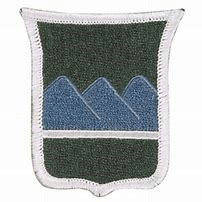
80th Infantry Division – The “Blue Ridge” Division’s insignia was adopted in 1918 and represents the Blue Ridge Mountains of Pennsylvania, Virginia and West Virginia. The 80th Infantry Division would relieve the 6th Armored Division at Buchenwald concentration camp on April 12, 1945. It later turned south into Austria where it liberated Ebensee, a subcamp of the Mauthausen concentration camp, on May 6, 1945.

Unfortunately, due to the coronavirus, the museum is currently closed to visitors and 2020’s Days of Remembrance Ceremony is a virtual, online event. But both the Holocaust Memorial Museum and the Center of Military History maintain excellent websites with detailed history of the roles these divisions and subordinate units played in liberating the concentration camps. Unit profiles, riveting firsthand accounts, maps, videos and photographs are all available. Bibliographies for additional reading are also included.  

First organized in 1979, the annual Days of Remembrance as observed in the United States is an 8-day period, designated by the United States Congress. It includes various ceremonies and educational programs held nationwide to mark the catastrophic events of the Holocaust and inform current generations.   

This initiative to recognize the US Army units helps us all to remember the liberators as well as the liberated. 

104th Infantry Division – The “Timberwolf” Division was first organized within the Reserves in 1921. It arrived in France in September 1944. The 104th logged almost 200 days of fighting in northwestern Europe, fighting in France, Belgium, and western Germany. It participated in the Battle of the Hürtgen Forest, the Battle of the Bulge and the encirclement in the Ruhr Pocket. On April 11, 1945, the Timberwolves liberated the Dora-Mittelbau Concentration Camp near Nordhausen in Thuringia, Germany.

The World War II Memorial Marks a Nation’s Victory and a Generation’s Sacrifice

“Time is short!” is a maxim often repeated by military planners. It was similarly intoned by the planners and organizers of the World War II Memorial on the National Mall.

2019 marked the 15th anniversary of Memorial’s dedication. While there had long been consensus on the need for a national memorial in Washington, DC to commemorate America’s victory in World War II, the initial progress was slow. Yet the WW II veterans were aging. As most WWII veterans were entering their late 60’s or 70s, there was a growing concern within the broader veteran community about the need to build a memorial before that generation passed away. 

Congressional legislation authorizing the project stalled several times, finally passing in 1993. Once signed into law, an advisory board was formed, a sight selected, funds raised, designs submitted and construction begun.

The image of Nike, from the World War II Victory Medal, under the Atlantic and Pacific pavilions at the World War II Memorial

Finally, on May 29, 2004, as part of the largest reunion of US World War II veterans, President George W. Bush dedicated the World War II Memorial. In his speech that day, President Bush remarked that winning the war “would require the commitment and effort of our entire nation. To fight and win on two fronts, Americans had to work and save and ration and sacrifice as never before”. 

The memorial, over ten years in the making, honors that two front victory, that commitment, that sacrifice and the unity of the American people who achieved it. That honor is reflected in part by the memorial’s location, on the National Mall between the Washington Monument and the Reflecting Pool, with the Lincoln Memorial appearing in the distance. The location signifies how the struggle to win World War II is comparable with the contributions of Lincoln and Washington in American history. 

The Lincoln Memorial with the World War II Memorial in the foreground.

Approaching from its 17th Street entrance, the memorial greets you, a broad expanse of granite, water and metal. It can be confusing at first. Its neoclassical design incorporates a jumble of names, figures, and symbols.  But slowly, the imagery becomes cohesive and themes emerge — victory of course, but also unity and reverence. 

The visitor’s eyes are first drawn to the oval shaped Rainbow Pool with its twin fountains. This feature was originally designed in 1923 by Frederick Law Olmstead and was part of the National Mall for many decades. It was later incorporated into the World War II Memorial’s design.  Arranged in a semi-circle around the pool are 56 granite columns, one for each US state and territorial possession during World War II.  Alternating victory laurels of wheat and oak leaves (signifying agricultural plenty and industrial capacity respectively) adorn each column while a bronze rope, indicating unity, ties the columns together. 

The Rainbow Pool with the Atlantic Pavilion and several state columns.

On each end of the pool are two 43-foot-tall pavilions, representing the victories in the Atlantic and Pacific theaters. Major campaigns and battles of each theater are inscribed at the base of the pavilions. Four stately bronze eagles, one for each branch of the US Armed Forces are perched inside. They hold aloft a large victory wreath representing how the combined efforts of the armed forces secured victory on the land, on the sea and in the air. On the pavilion’s floor is a bronze disk with an image of the Greek goddess Nike, the same image depicted on the World War II victory medal issued to US service members after the war. 

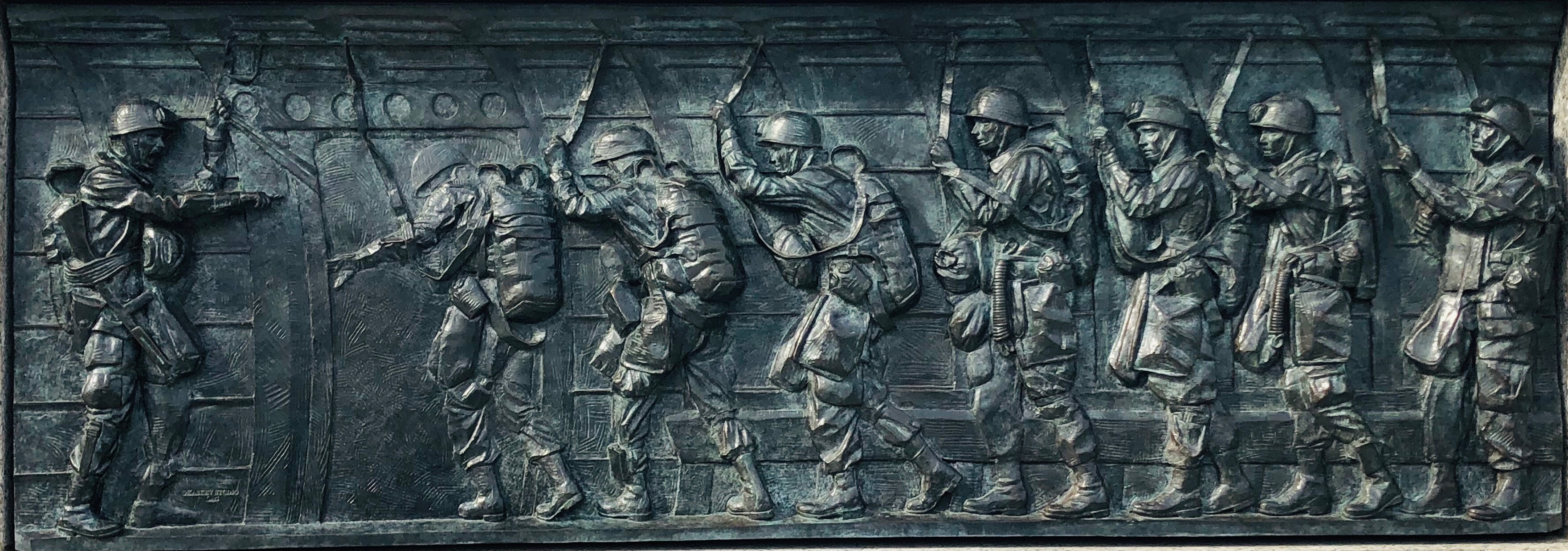
An Atlantic Theater bass relief scene depicting US paratroopers preparing to jump.

Aligned along the entry walkway are two series of bronze bass relief plaques rendering period images from the World War II era.  Scenes from the war in Europe are found on the north side, aligned to the Atlantic Pavilion. Scenes from the Pacific are found on the south side, aligned to the Pacific Pavilion. Depictions from both the battlefront and home front are included, showing the unity of the American people in the war effort. The last two plaques denote victory — U.S. and Russian soldiers linking up in Europe and civilians celebrating the end of the war in the Pacific.

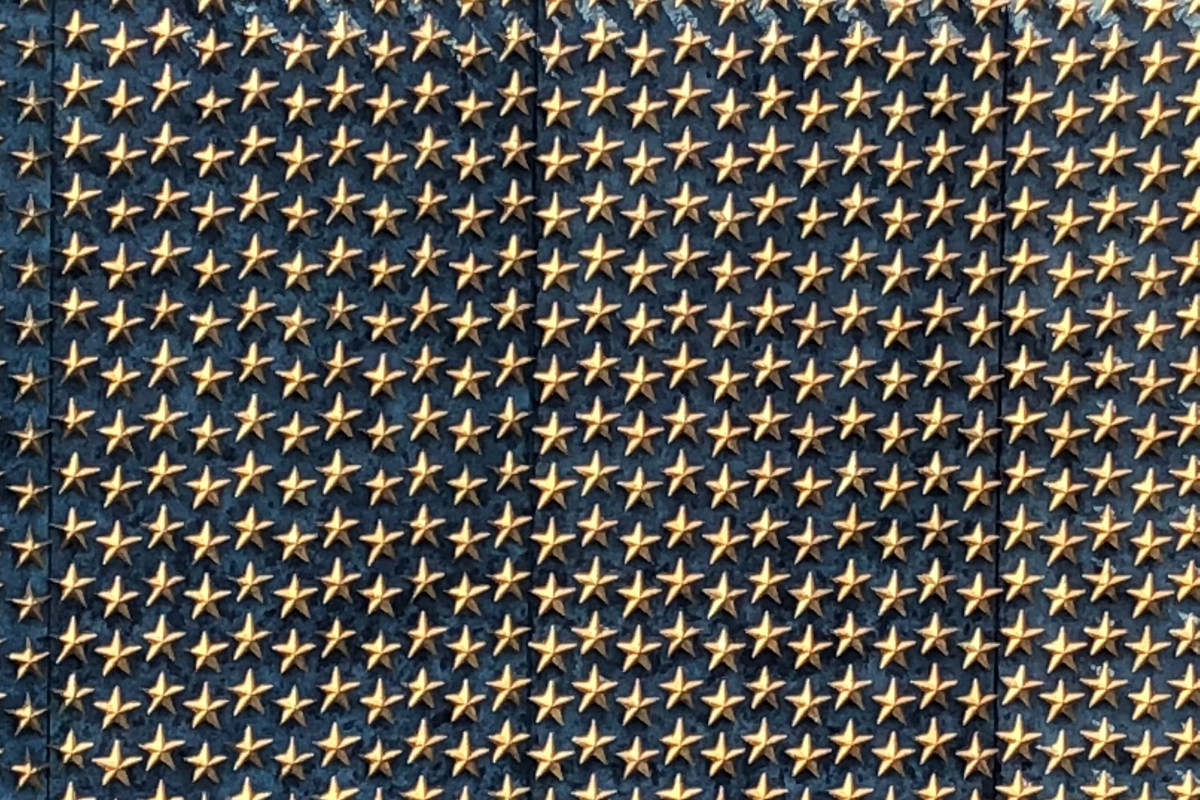
While the memorial is meant to honor the 16 million Americans who served in World War II, there is a special section to honor the approximately 400,000 American servicemen and woman who died during the war. The Remembrance Wall on the western edge of the memorial is composed of over 4,048 gold stars on a blue background, each gold star representing 100 fallen service members. On either side of the Remembrance Wall are two small waterfalls which, along with the Rainbow Pool’s fountains, muffle the sounds of the many boisterous pedestrians, vehicles and overhead aircraft transiting the area. The cascading waters allow for quiet contemplation before this visual reminder of the price of war.

Over 4,000 Gold Stars adorn the Remembrance Wall. The tradition of displaying the Gold Star to mark the death of a US service member goes back to World War I.

Naturally, the process to build the memorial was not without some contention. While there was a sense of urgency among some, there were also objections raised to the memorial’s prominent location on the National Mall, its design, and the accelerated approval and construction timeline. (Congress exempted the World War II Memorial from certain legal requirements other groups needed to follow out of concern for the aging World War II veterans.) Despite these controversies, today the World War II Memorial is one of Washington’s most visited sites. The National Park Service estimates the memorial drew about 4.8 million people in 2018. 

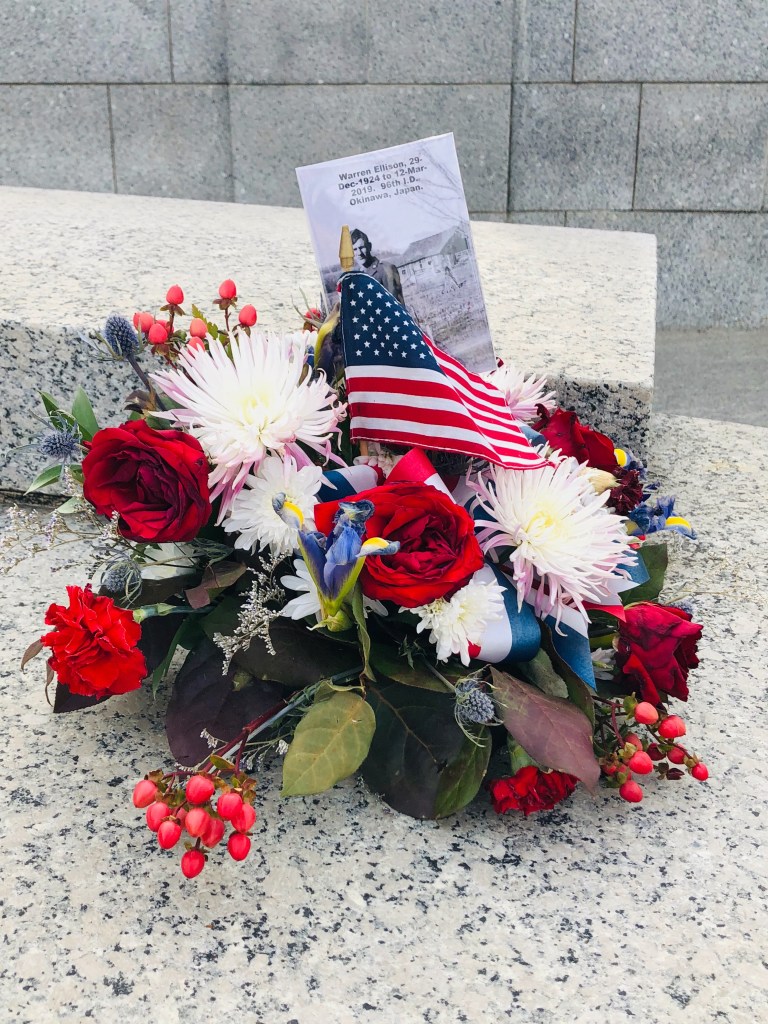
A bouquet left at the memorial in memory of a World War II veteran.

The memorial has even spawned a nationwide organization known as the Honor Flight Network, dedicated to transporting veterans from around the country to Washington DC to see those memorials dedicated to their service and sacrifice. Since 2005, the Honor Flight Network has transported over 220,000 veterans, along with 163,000 escorts, to Washington. The memorial draws many other organized visits by veterans groups and survivors organizations leading to emotional reunions and the presentations of long overdue awards such as this one recently recounted in the Washington Post. Events such as this, as well as the many wreathes, flowers, notes, pictures, and other mementoes left at the Memorial are testament to its effect as being a meaningful tribute to the legacy of our WWII generation.

* * *

Computer Registry 

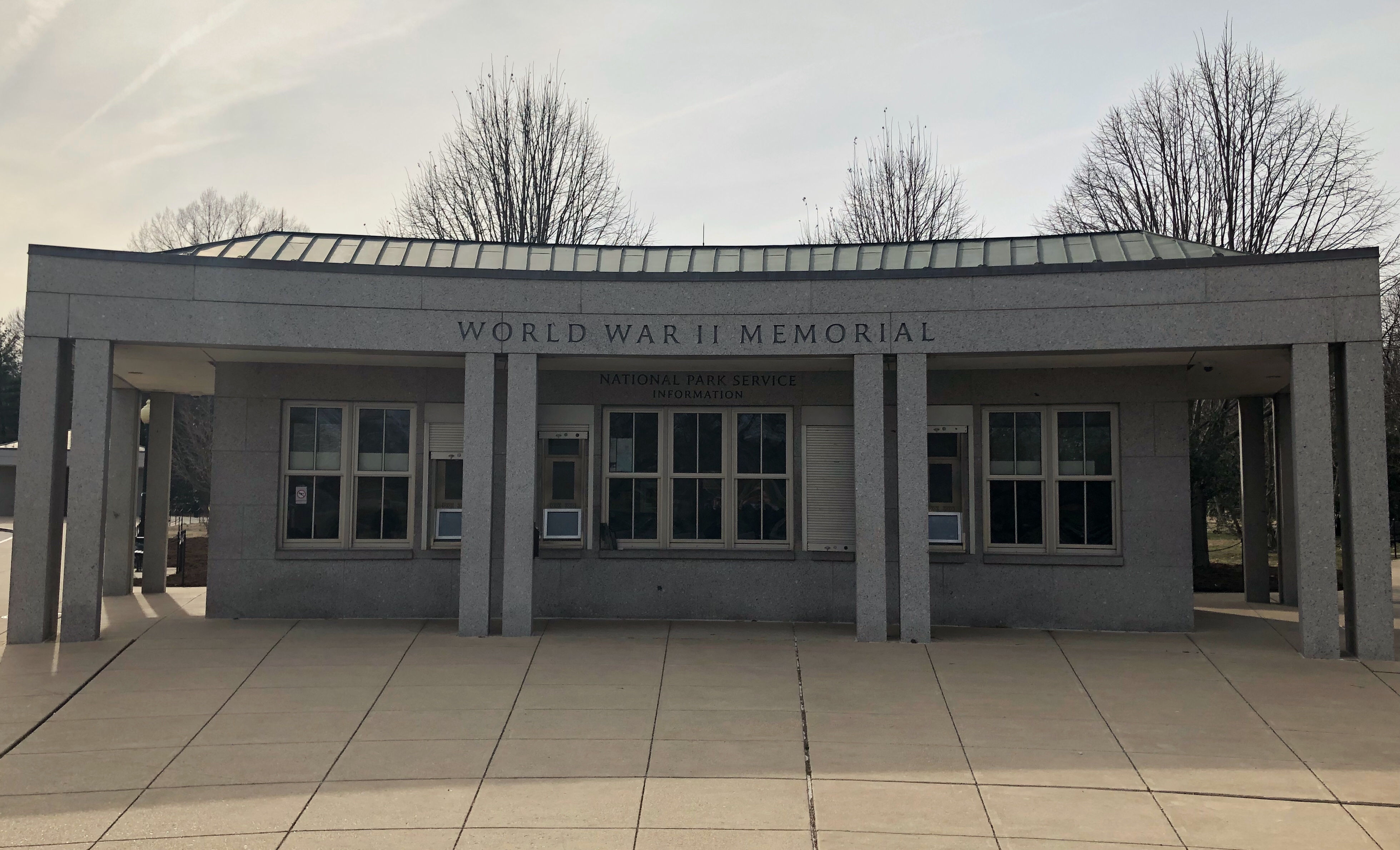
Adjoining the Memorial is a small National Park Service building with computer kiosks where the visitors can access the Registry of Remembrances, an unofficial compilation of names, units and events entered by members of the public to honor US service members who helped to win the Second World War. More information on the registry and how to enter information about someone you know can be found here. 

Route Recon

The World War II Memorial is located at 1750 Independence Ave. SW, Washington, D.C., near the intersection of 17th Street and Independence Avenue. Very limited parking is available on West Basin Drive, on Ohio Drive SW, and at the Tidal Basin parking lot along Maine Ave., SW.  

A better option to access the National Mall is the Washington Metro System. The nearest station for the World War II Memorial as well as the Washington Monument is Smithsonian Station. Use the Mall Exit when leaving the station.

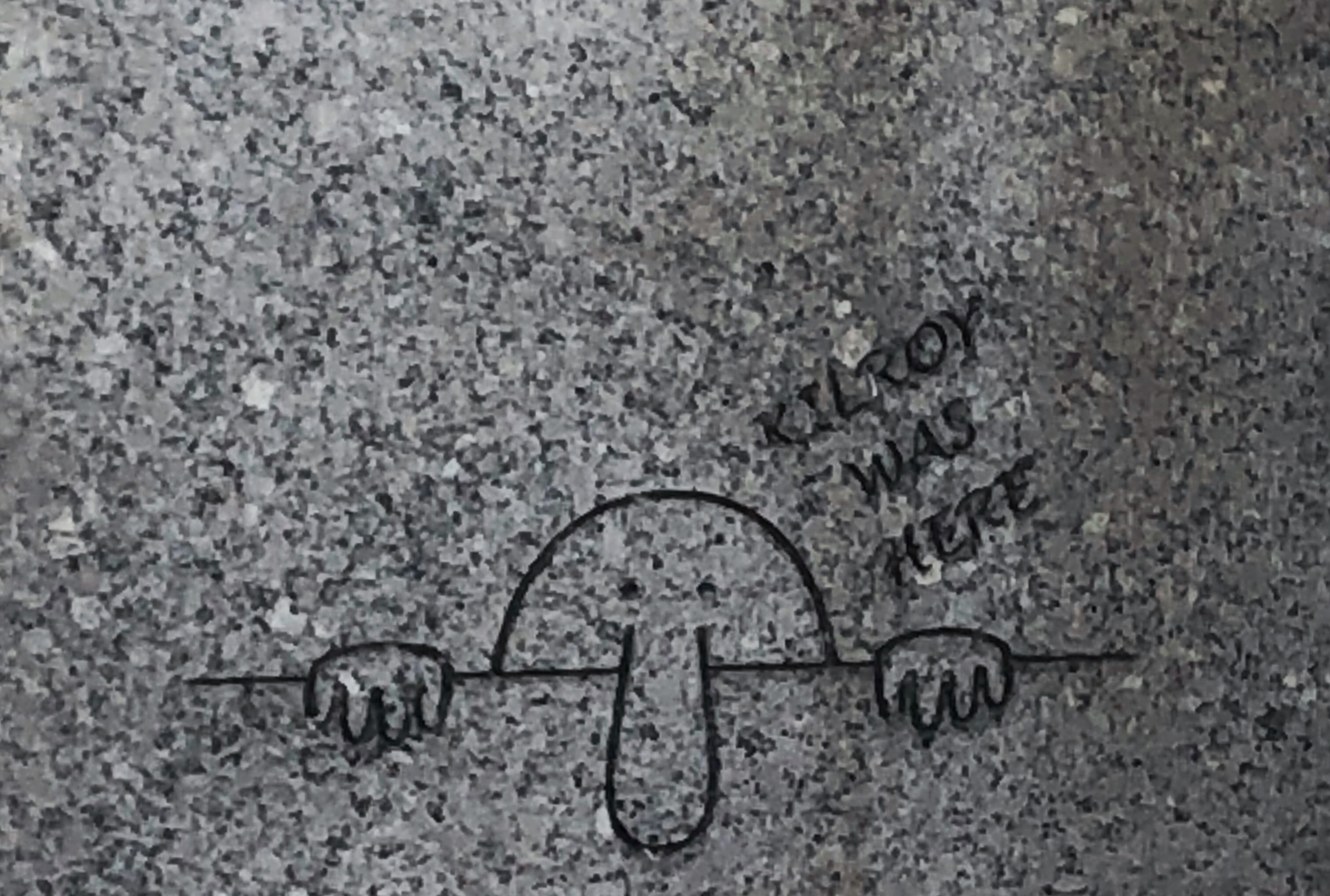
Two images of Kilroy are hidden within the World War II Memorial. The Kilroy image was widely drawn by American servicemen in both theaters. See if you can find Kilroy when you visit.

“Better Soldiers Never Shouldered a Musket”

So said US Army Major General Benjamin Butler after observing the keen proficiency in marching and drilling demonstrated by a unit of newly enlisted soldiers of African descent. It was mid-1862 and Butler was organizing the 1st Louisiana Native Guards, one of the first regiment of African American soldiers that would serve in the Union Army.

Butler at the time was on the leading edge of change. When the Civil War began in April 1861, the Militia Act of 1792 prohibited men of African descent from serving in the US Army. As it became clearer to military and political leaders that this war would not be a short one, this exclusion was seriously reconsidered.   

African American Civil War Museum| Frederick Douglas| Men of Color|
1863 Recruitment Poster. The poster was endorsed by Frederick Douglas and other African American leaders, encouraging men of African descent to enlist.

In the summer of 1862, Congress passed two laws, the Second Confiscation Act and the Militia Act of 1862, which would create the legal framework for receiving certain freed slaves and others of African descent into the Army. President Lincoln’s Emancipation Proclamation, signed on January 1, 1863, further expanded and clarified their roles in military service. The War Department began actively preparing to receive African Americans into the Army. Recruitment was slow at first, then grew steadily as African American community leaders encouraged action. 

African American Civil War Museum | Washington DC | Travel Objective DC| U Street| Vermont Avenue

Today, this service is commemorated at the African American Civil War Museum and Memorial in Washington, DC.  This year the museum marks 20 years of chronicling the story of how African Americans, both slaves and freemen, took up arms and discharged their duties with dignity during the Civil War.  

The museum and memorial are located along Washington, DC’s famous U Street corridor, the traditional center for African American culture in Northwest Washington. Today the corridor is revitalizing with new stores, restaurants, clubs and other development complimenting such historic landmarks as the famed Howard Theater.  In 2011, the museum moved into the auditorium of the Grimke School, formerly a neighborhood school built in 1907 and named for a prominent African American family.  

African American Civil War Museum| Vermont Avenue| U Street
Life sized banners greet visitors to the museum.

The entrance to the museum is tucked away down an alley lined with banners depicting the military duties African Americans performed. Once inside, a succession of display panels along with select artifacts trace the history of Africans and their descendants in early America, their military experiences during the American Revolution and War of 1812, and ultimately, their service in the Civil War.

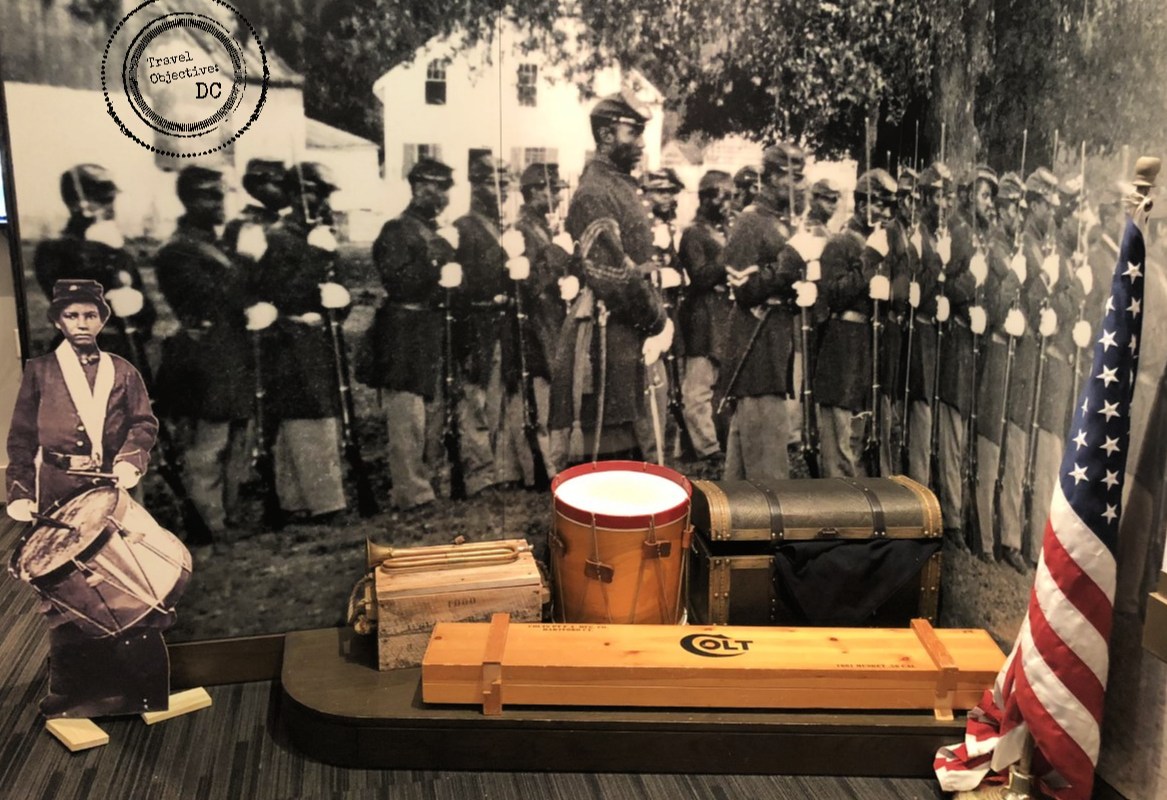
As recruitment steadily grew, the War Department established the Bureau of Colored Troops in May of 1863 to provide the administrative support necessary to induct, equip and train the soldiers, who would serve in separate units from whites. Ultimately, about 178,000 men of African descent enlisted and 175 U.S. Colored Troops (USCT) regiments were formed, comprising 10% of the Union Army. USCT regiments also included mixed race individuals, Hispanics, and Native Americans. White officers generally filled the leadership ranks of these units, although some regiments did have African American officers at the company level. The Bureau of Colored Troops established guidelines and panels to identify and select USCT officers; those with advanced education and prior military experience were especially recruited. 

United States Colored Troops| Training Manual| Infantry Tactics|
Title page of a training manual on infantry tactics developed for US Colored Troops units.

USCT units often performed non-combat missions – referred to as “fatigue duty”- such as digging trenches, building bridges, and cutting new roads. Since many USCT soldiers were Southerners and possessed a specialized knowledge of local geography, USCT units were sometimes given scouting and reconnaissance missions. When they were assigned to combat, USCT regiments won praise for their gallantry. More prominent engagements for USCT regiments include Fort Wagner (as depicted in the movie Glory), the Siege of Petersburg, Virginia and the Battle of Nashville. At Vicksburg, General Ulysses S. Grant wrote of his USCT soldiers “All that have been tried have fought bravely.”

Unlike the Army, the Militia Act of 1792 did not apply to the Navy which had long enlisted sailors of African descent. During the Civil War, approximately 19,000 African American sailors served throughout the Union Navy, generally aboard the same ships as white sailors.

African American Civil War Memorial| African American Sailor| U Street| U Street Metro
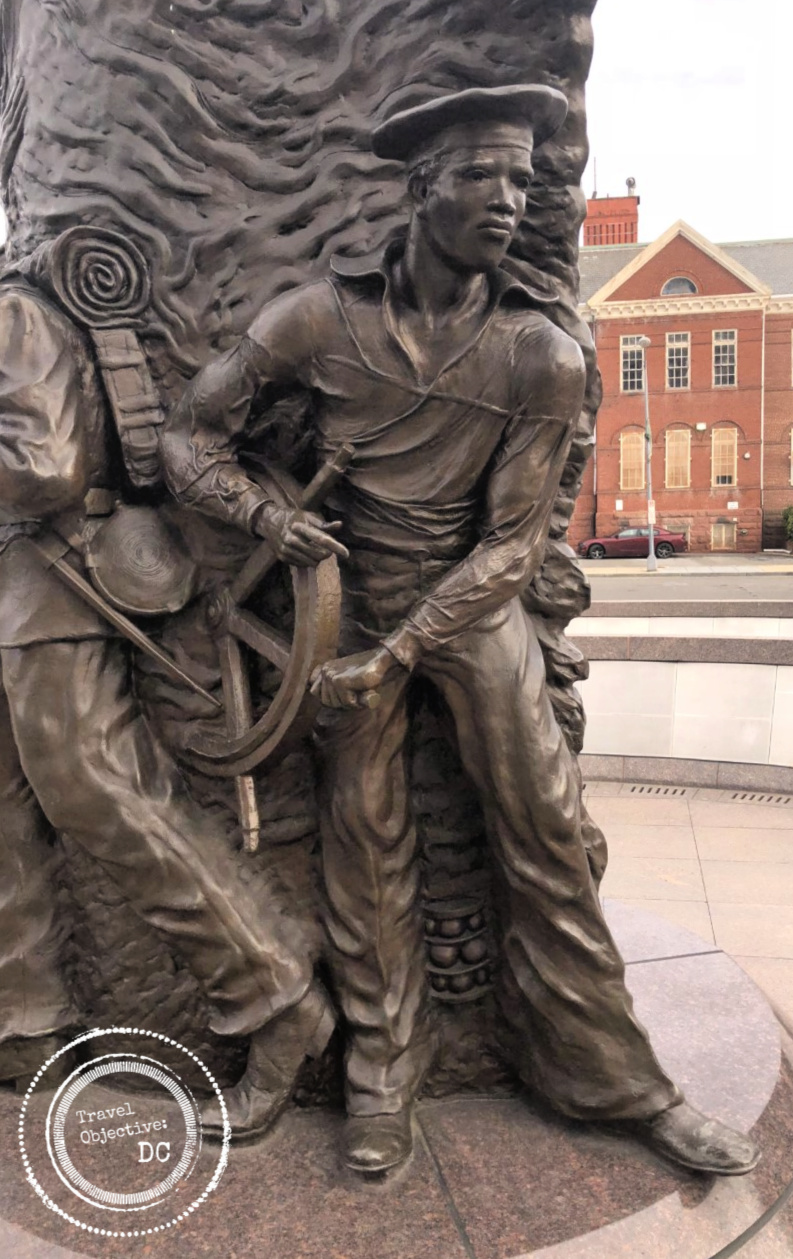
A US Navy Sailor depicted on the African American Civil War Memorial. 

The individual gallantry demonstrated by soldiers and sailors of African descent was recognized by many unit commanders. The museum introduces 18 soldiers and two sailors who won the Medal of Honor during Civil War combat.

African American Civil War Museum| John Lawson

One is Navy Landsman John Lawson.

While serving aboard the USS Hartford at the Battle of Mobile Bay, Landsman Lawson was “Wounded in the leg and thrown violently against the side of the ship when an enemy shell killed or wounded the 6-man crew as the shell whipped on the berth deck, Lawson, upon regaining his composure, promptly returned to his station and, although urged to go below for treatment, steadfastly continued his duties…”.

At war’s end, some USCT regiments were disbanded, but many were assigned to occupation duty. As the Regular Army was reorganized, four regiments of African American soldiers were ultimately established and maintained. Members of those regiments, the 24th and 25th Infantry, and 9th and 10th Cavalry, would become renown as “the Buffalo Soldiers”. 

While the museum’s current space in the former school’s auditorium is rather confining, a recently announced redevelopment of the Grimke School building will provide a larger 10,000-12,000 square foot area into which the museum will expand.  The new space will allow for the display of additional artifacts, two new exhibits and a theater. This news is undoubtedly welcome for the museum’s staff, patrons and visitors. 

African American Civil War Memorial| U Street| Vermont Avenue| U Street Metro
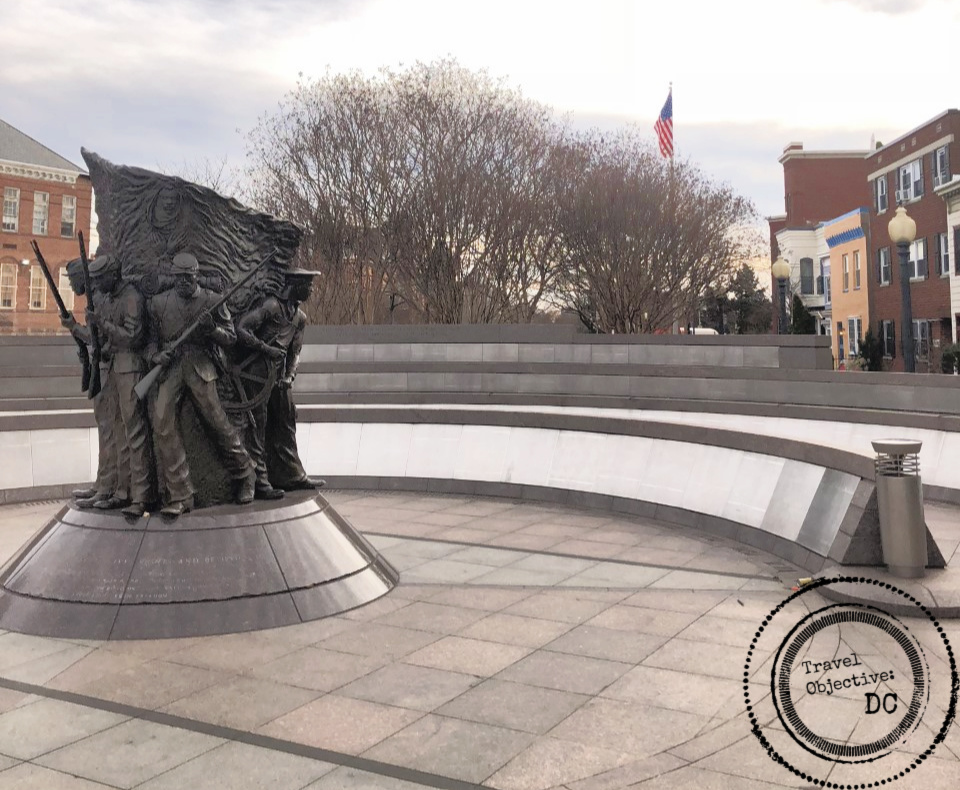
The African American Civil War Memorial. The metal panels wrapping around the sculpture contain the names of those who served in USCT regiments. 

Across the street from the museum placed in a wide stone plaza is a bronze statue entitled The Spirit of Freedom by sculptor Ed Hamilton. The statue depicts three Union soldiers and one sailor of African descent on one side and an African American soldier with his family on the other. The statue was completed in 1997. Curved metal panels, inscribed with the names of the 209,145 officers and soldiers who served in USCT units, encircle the sculpture to one side. 

A visit to the African American Civil War Museum and Memorial provides a compelling introduction to how USCT soldiers went from slaves and civilians to a professional force, fighting for their freedom, their rights and for the Union. They not only changed the tide of the Union war effort, but also secured a lasting place for African Americans in the US military. Today, African Americans comprise approximately 18% of the ranks of the US Armed Forces. Their continued service is a legacy of the US Colored Troops and their naval counterparts. 

African American Civil War Memorial| U Street| U Street Metro| Vermont Avenue| Frederick Douglas

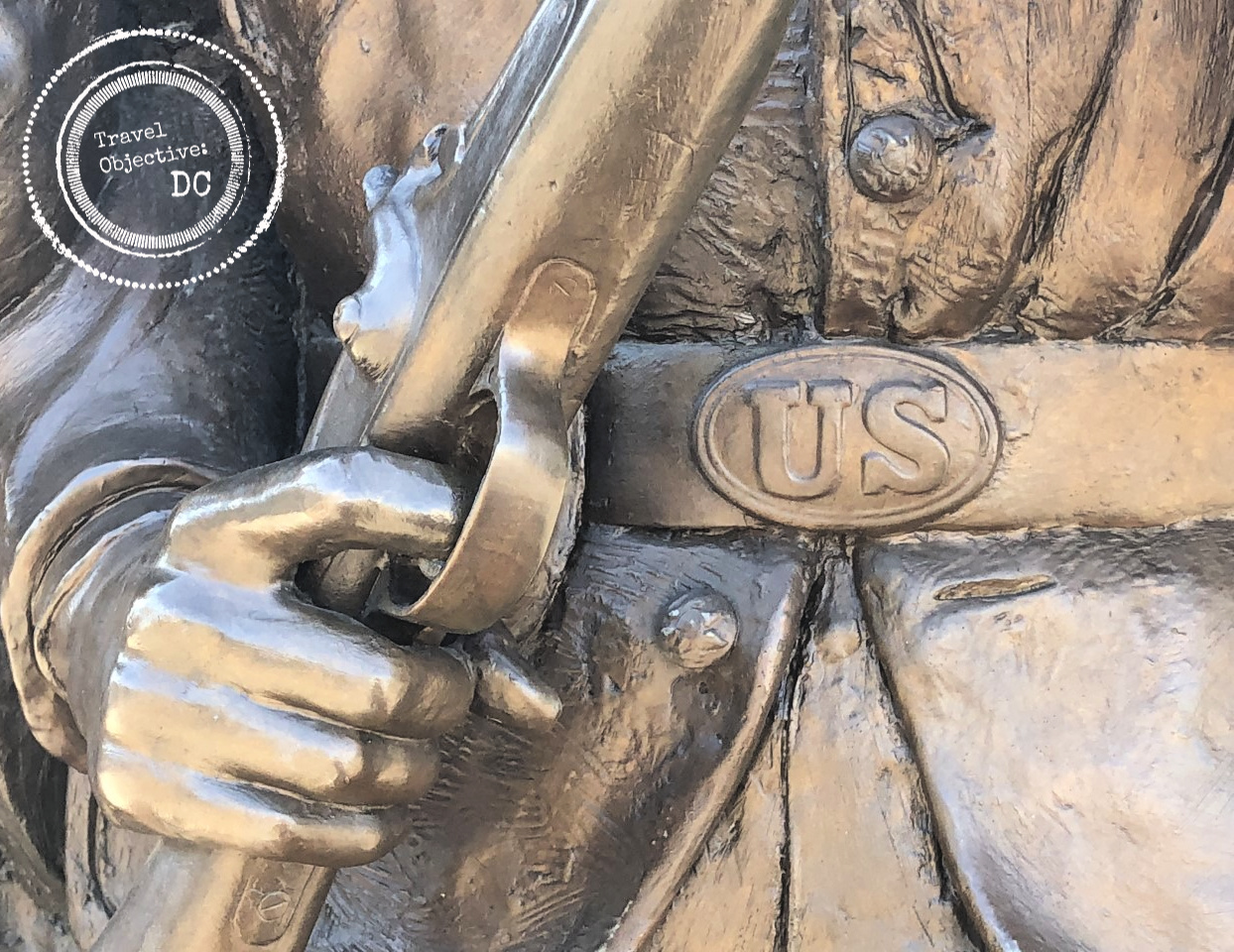
The courage displayed by soldiers and sailors of African descent during the Civil War played a critical role in African Americans gaining new rights. As the abolitionist Frederick Douglass wrote: “Once let the black man get upon his person the brass letter, “U.S”., let him get an eagle on his button, and a musket on his shoulder and bullets in his pocket, there is no power on earth that can deny that he has earned the right to citizenship”. 

***

Route Recon:

The African American Civil War Museum is located at 1925 Vermont Avenue, NW in Washington, DC, near the intersection with U Street. The hours are Monday from 1000 to 1700, Tuesday – Friday 1000 to 1830, Saturday 1000 to 1600 and Sundays 1200 to 1600. Admission is free. There is limited street parking near the museum. Visit the African American Civil War Museum website for more information.

The museum and memorial are easily accessible from Metro. Use the 10th Street exit from the U Street/African American Civil War Memorial/Cardozo station on the Green and Yellow lines. The memorial plaza is at the top of the escalator. 

Mess Call:

Bens| Bens Chili Bowl| Half Smoke| U Street|

Ben’s Chili Bowl

Just two blocks down U Street from the museum and memorial is Ben’s Chili Bowl, a local favorite since 1958. Ben’s has seen some challenging times as an eatery, to include the riots following Martin Luther King’s assassination in 1968 and the construction of Metro in the 70s. Yet it has persevered and today proudly serves their signature dish, the half-smoke sandwich, to celebrities, politicians and locals alike. There are a variety of other menu items as well such as burgers and vegetarian chili. (Note: They do not accept credit cards, but there is an ATM on premises).

 Ben’s Chili Bowl

1213 U Street, NW (between 12th and 13th Street)

Monday-Thursday: Breakfast: 0600-1045; Lunch/Dinner: 1045-0200 

Friday: Breakfast: 0600-1045; Lunch/Dinner 1045-0400

Saturday: Breakfast: 0700-1045; Lunch/Dinner 1045-0400

Sunday: 1100-0000

Can You Read the Writing on the Wall?

Upon hearing the word graffiti, spray painted tags, stencils, or other designs on buildings, overpasses and other fixtures might come to mind.

At Historic Blenheim in Fairfax, Virginia, however, researchers study a very different type of graffiti.  These graffiti were written in graphite, crayon and charcoal by Union soldiers over one hundred years ago. The graffiti and the stories of the soldiers who wrote them provide insight into the lives of the Union Army recruits who early on answered the call to fight to preserve the Union.

Historic Blenheim | Fairfax Virginia | Civil War Graffiti | Travel Objective DC
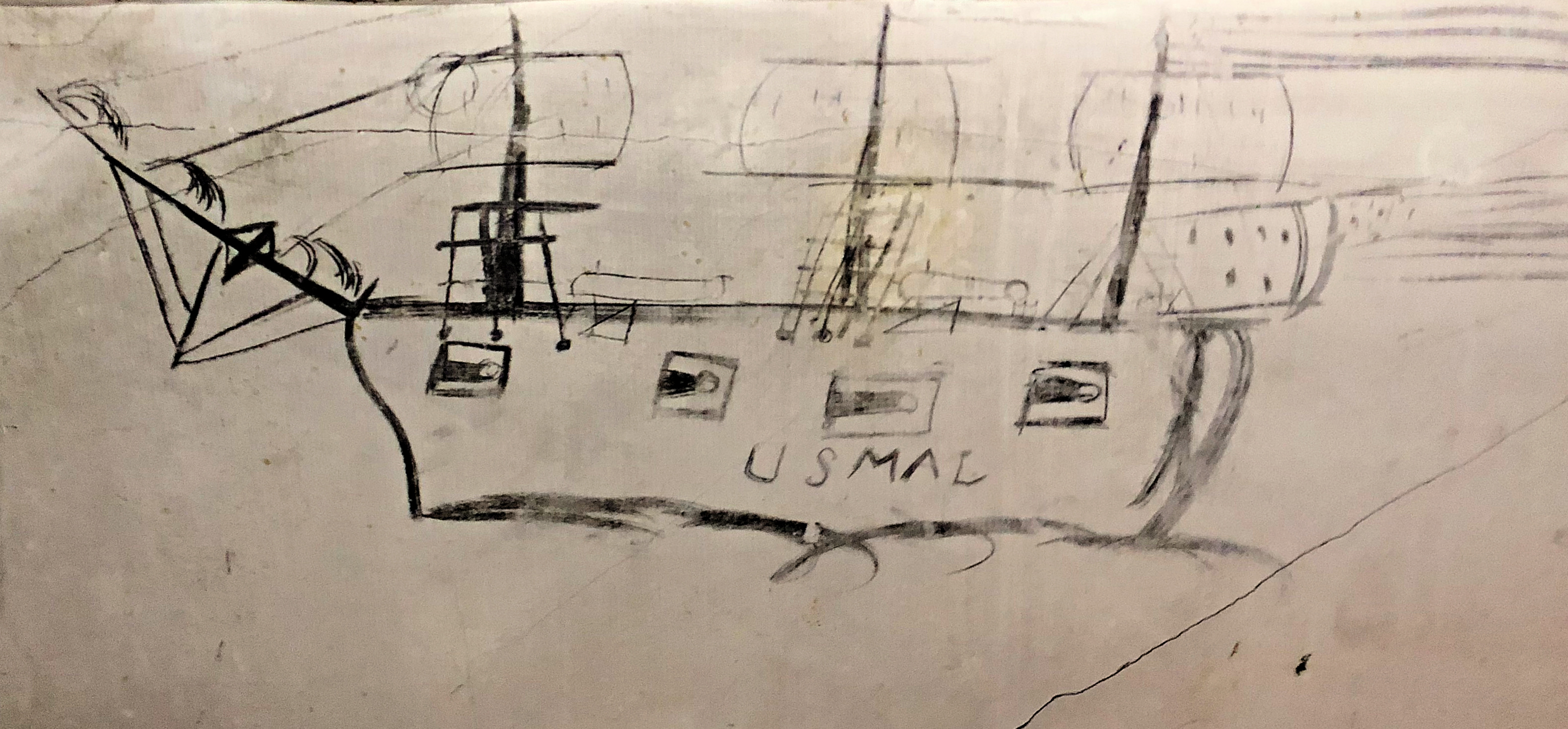
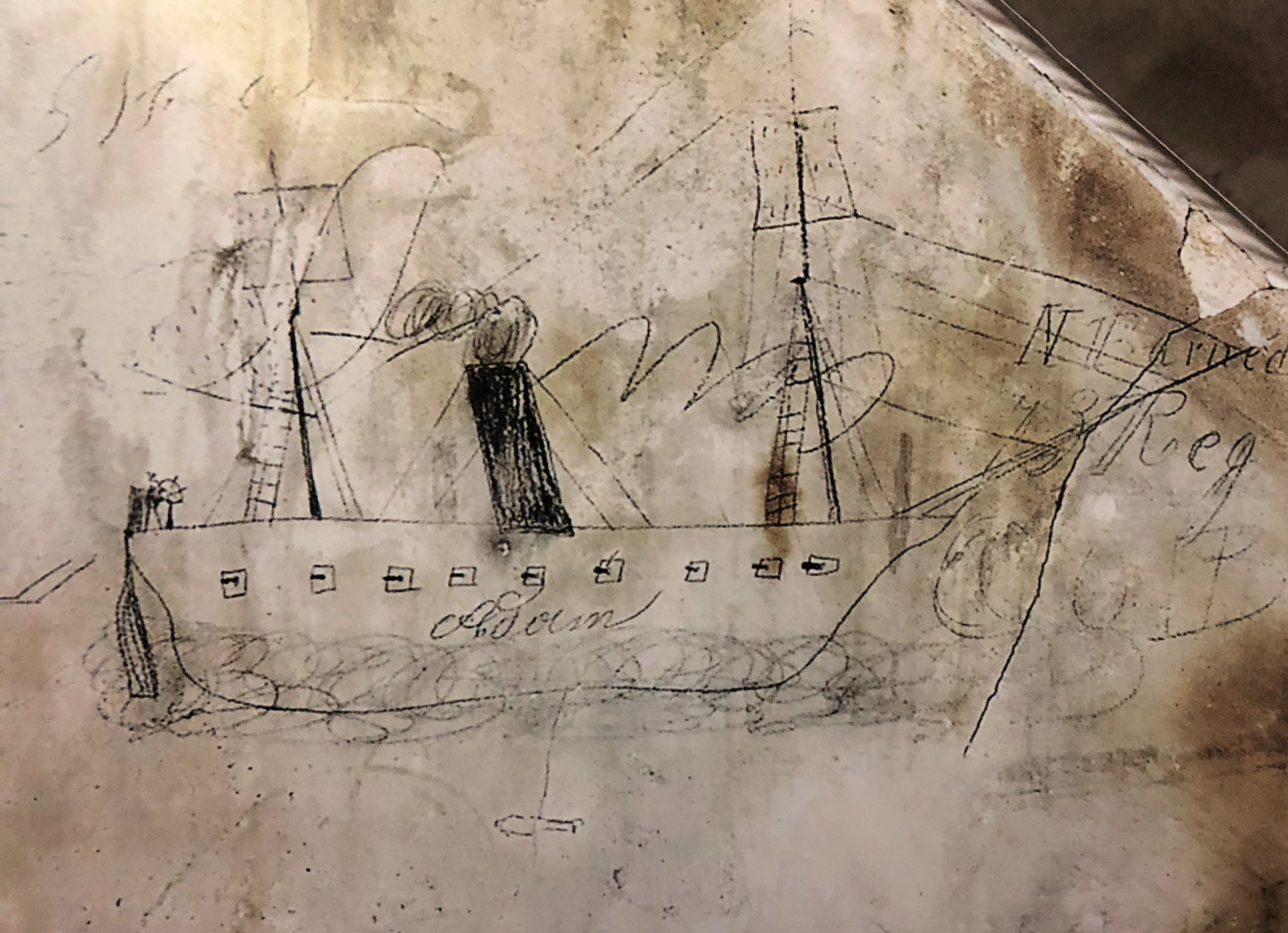
In addition to their names and units, soldiers also made drawings. Ships such as this one were common. 

The centerpiece of Historic Blenheim is a brick farmhouse, built by Albert and Mary Wilcoxon on their a 300+ acre farm near what was then known as the village of Fairfax Courthouse, Virginia, about 17 miles west of Washington, DC The house was built around 1859 on the site of their previous home which had been destroyed by fire. 

Historic Blenheim | Fairfax County Virginia | Civil War site | Military tourism | Travel Objective DC
The Farmhouse at Historic Blenheim

In July of 1861, an article in the Richmond Dispatch described how Union soldiers, en route to Manassas, vandalized the home, breaking windows, tearing doors off hinges and destroying furniture. Those Union soldiers moved on and Confederate forces held the area until March of 1862, when they evacuated toward Richmond.

Once the Southern troops withdrew, the Army of the Potomac moved from Washington, DC to occupy parts of Northern Virginia, including Fairfax Courthouse.  The Wilcoxon’s, who favored succession, departed their home and resided elsewhere in the area sometime between July 1861 and March 1863.

Vase on display from Historic Blenheim Civil War site in Fairfax Virginia
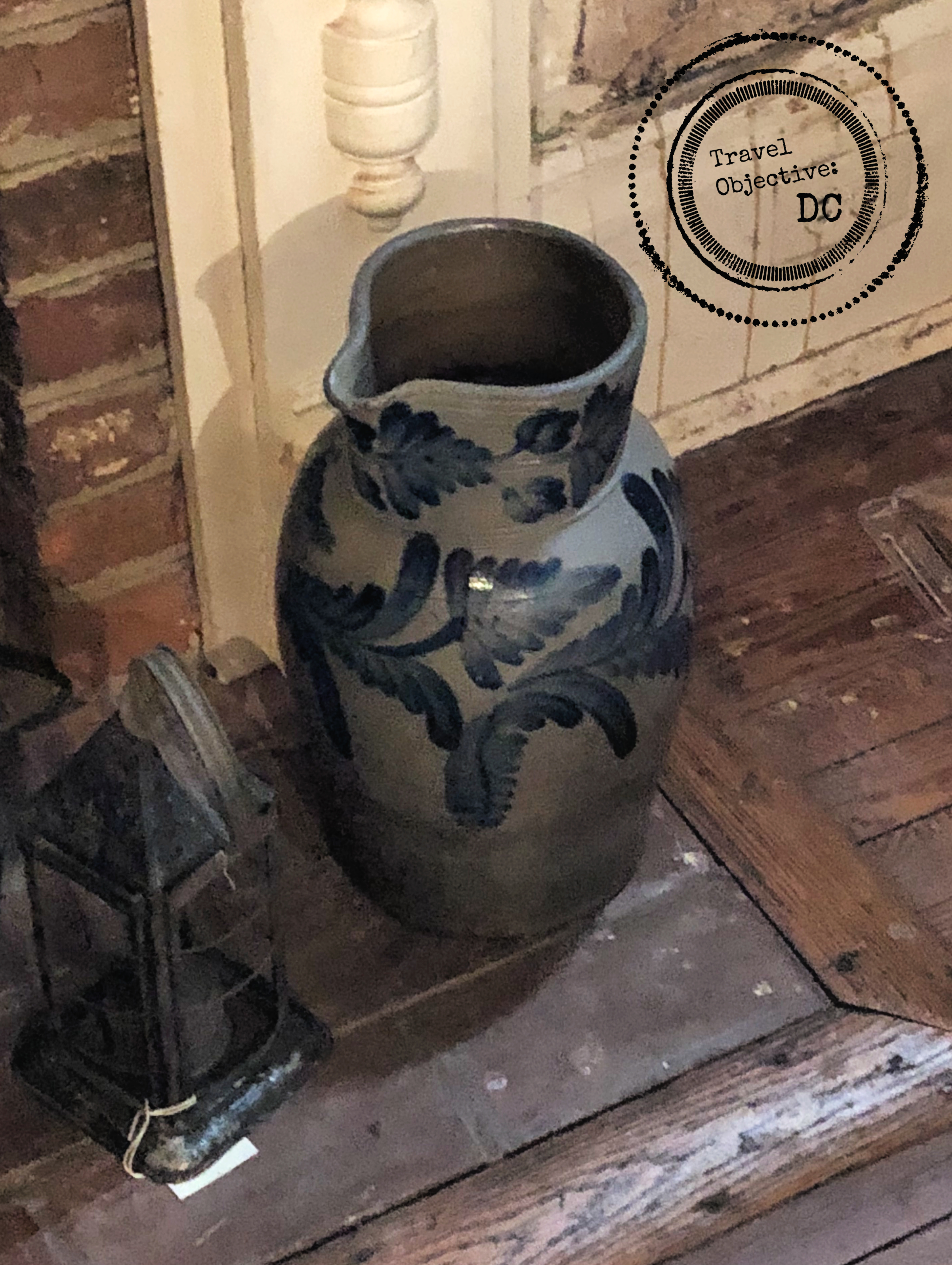
A vase by the dining room fireplace.

During the Civil War, as in many wars, disease killed more soldiers than combat. Poor sanitation, inadequate nutrition, contaminated water, cramped living conditions, a limited understanding of germs, and other factors all contributed to an environment rife with disease. Illnesses such as dysentery, typhoid, pneumonia, and tuberculosis were common and deadly for Civil War soldiers.

As a sturdy structure near strategic thoroughfares, the Wilcoxon house and farm soon became a hospital for Union soldiers diagnosed with diseases and other inhibiting ailments, rather than combat wounds.  Many were housed in tents in the surrounding fields. The more seriously ill were quartered in the house. 

Historic Blenheim in Fairfax Virginia was used by the Union Army as a hospital for soldiers during the Civil War
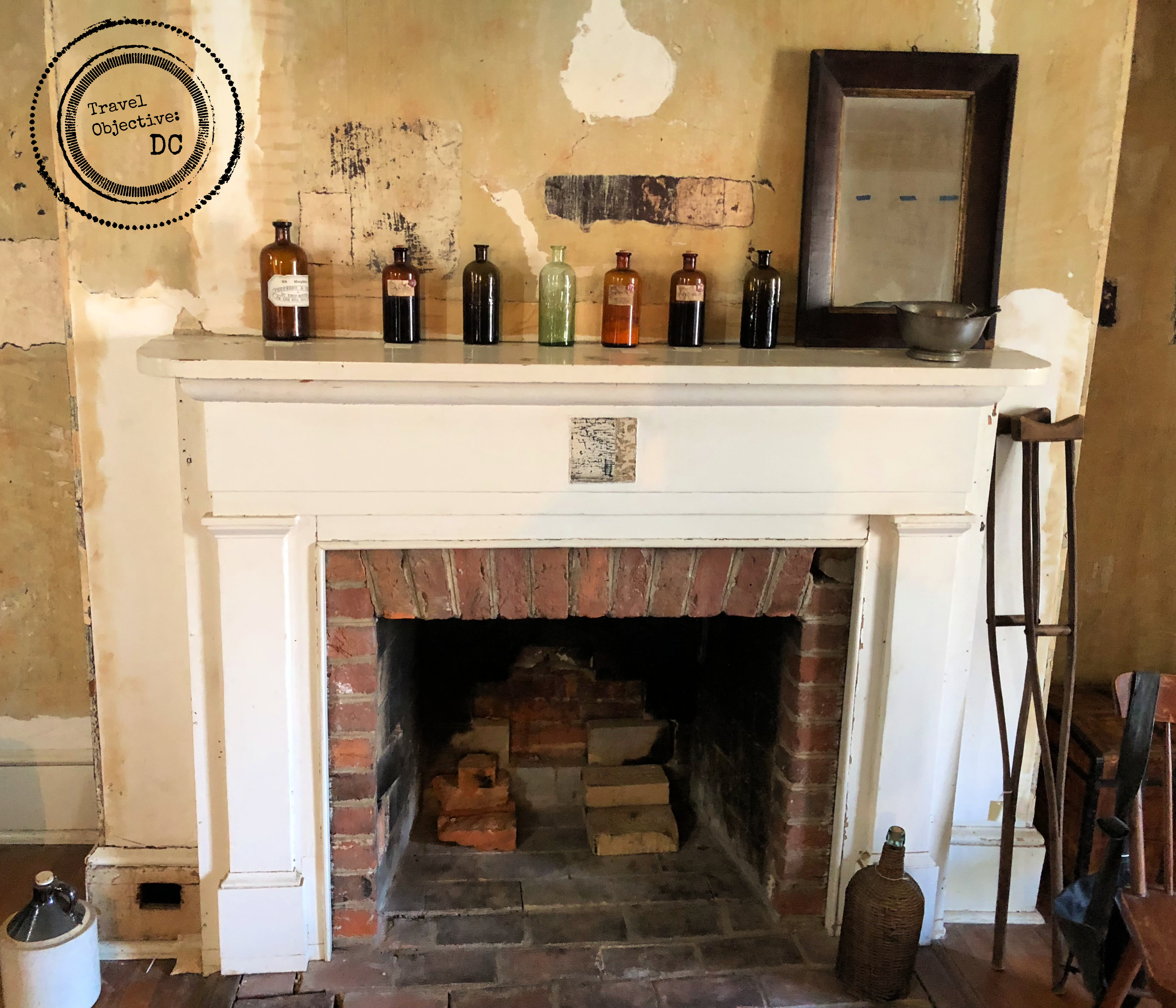
The first floor parlor fireplace with period medicine bottles and crutches.

The first soldiers convalescing in the Wilcoxon house found three floors of pristine plaster walls. Since the house was new, the plaster had not yet cured and the walls were neither painted nor wall papered. Soldiers quickly began writing their names, units, dates, and adding drawings, doodles, sketches and other decorations. 

Drawing of a ship by Civil War soldier | Northern Virginia Civil War Graffiti Trail | Military tourism | Fairfax Virginia
Ships, buildings and aspects of military life were all common subjects for soldiers’ drawing. 
Northern Virginia Civil War Graffiti Trail | Historic Blenheim | Drawing of a soldier by a Civil War soldier

The first dates written by soldiers on the house’s walls were in March 1862. Soldiers were on the Wilcoxon farm through mid-1863.  The family returned to the home around September 1863, after Albert Wilcoxon signed an “Oath of Allegiance” to the United States.  The Wilcoxons returned the farm to working order.  Although the family would paint and paper the walls on the first and second floors of their home several times through the years, none of the four generations that lived in the house ever covered or altered the attic graffiti.

Today, the property is known as Historic Blenheim and the Civil War Interpretive Center. Visitors can tour the first floor of the Greek revival farm house and see the recovered writings and some of the preservation work underway. Paper and paint have been carefully removed from the walls and the floors reinforced to protect the structural integrity of the house.  

Unfortunately, the second floor and the attic are not open to the public, but the nearby Interpretive Center does have a life size replica of the attic so visitors can get a closer look at the attic drawings. The Interpretive Center also has information about the soldiers and units who passed through Blenheim, additional background on the Wilcoxon family and a small gift shop.  

The Interpretive Center at Blenheim | Civil War history | Fairfax Virginia | Travel Objective DC
The Interpretive Center at Blenheim. It’s design suggests Blenheim’s agricultural past. 

The center’s staff have identified 122 individual soldiers from 23 different units who wrote graffiti on the Blenheim walls. Reviews of military records provide an overview of the men. As a group, the average age was 25. About 45% were foreign born, mostly from present day Germany. Farming was their predominate occupation.

Blenheim researchers though have combed through military, pension and other government records and worked with local historical and genealogical societies to assemble more intimate portraits of many of these men. One is Charles Schlingermann of the 58th New York Infantry Regiment. A native of Prussia, he enlisted in September 1861 at the age of 19. He had only been in America about three months. He died of his wounds following the Second Battle of Bull Run in August 1862 and is buried on the grounds of the Old Soldiers’ Home in Washington, DC. 

Civil War graffiti | 58th New York Volunteers | Fairfax VA | military tourism | Travel Objective DC

Another is Charles H. Johnson, of the 1st Michigan Calvary Regiment. He was 19 years old when he wrote on the attic walls on June 20, 1863. He survived service at Gettysburg and the remainder of the war to reenlist in the Veterans Volunteers of the 1st Michigan Cavalry. He served at Fort Laramie during the Indian Campaign.

He left the Army in 1866 and returned to Michigan where he married and raised his family. After his wife’s death, he moved to San Jose, California to live with his daughter until his death in 1924. He was a prolific letter writer during his military service; his many letters home are now archived at the University of California at Santa Barbara.

Civil War soldier signature on the wall at Historic Blenheim | Fairfax VA | Travel Objective DC | 83rd Pennsylvania Volunteers
Researchers are working to identify another soldier’s signature using acetate to trace the signature in order to see it more clearly. This soldier was a member of Company B, 83rd Pennsylvania Infantry. 

A visit to Blenheim provides a unique Civil War historical experience. It is not a battlefield, and not quite a memorial nor museum. The names on the wall take on a new significance when written by the hand of the soldier. As a preservation project, Blenheim takes its visitors past the odd fact and footnote and literally introduces them to the personal legacy of the soldiers who passed through over a century ago. 

* * *

Civil War soldiers left their marks in other buildings as well. The Northern Virginia Civil War Graffiti Trail features six other Civil War era buildings where soldiers’ writings have been preserved.   

ROUTE RECON

Historic Blenheim and the Civil War Interpretive Center are located at 3610 Old Lee Highway, Fairfax, Virginia, 22030 The operating days and hours are  1000 – 1500 Tuesday – Saturday. The historic house tour is held once each day at 1300. Call 703-591-0560 for more information. Historic Blenheim can be accessed by public transit. Take Metro’s Orange Line to the Vienna Metro Station. From the Station, take the CUE Gold Bus Route 11 toward George Mason University, stopping at Heritage Lane.


A Place to Pause and Ponder the Marks of War

One of Washington’s newest memorials is also one of its most unique. Dedicated by President Barak Obama on October 5, 2014, the American Veterans Disabled for Life Memorial (AVDLM) stands on a wedge-shaped piece of ground in Southwest Washington, D.C., an island of reverence floating amidst a busy bureaucratic sea.

Unlike other monuments found throughout Washington dedicated to individuals, military units or specific wars, this memorial is dedicated to all current and former members of the Armed Forces who have been changed physically or psychologically by war.

The AVDLM was the brainchild of Lois Pope, a Florida philanthropist who was inspired after meeting a disabled veteran at the Vietnam Veterans Memorial in 1995 and realizing no similar monument exited for American service members disabled by war.


She would ultimately team up with then-U.S. Department of Veterans Affairs Secretary Jesse Brown and Art Wilson, head of the Disabled American Veterans, to spearhead the effort. The three would encounter many challenges and hurdles in building this memorial before realizing their goal, not the least of which was the memorial’s location.

The 1986 Commemorative Works Act provided the National Capital Monuments Commission the authority to approve the sighting for all monuments and memorials on most Federally owned land.

During the review process, the commission found that the AVDLM did not reach the level of prominence necessary to afford it a space on the National Mall. While the AVLDM’s supporters were taken aback by the decision, they selected an alternate location one block south of the Mall, rather than risk a major delay in the project.

A view of the U.S. Botanic Garden Conservatory (and its reflection) from the memorial.

At first glance, the site might seem an odd location for such a monument. It lies between three busy streets–Washington Avenue, 2nd Street and C Street–amid interchange ramps for arterial highways and next to the Headquarters of the Department of Health and Human Services. The Rayburn House Office and other Federal office buildings spread out in the blocks around it. The massive Capitol Power Plant looms large to the south. Pedestrian and vehicle traffic can be heavy in the area.

The U.S. Capitol Dome and the Bartholdi Fountain are both visible from the AVDLM site. The memorial’s planners thought the close proximity of the memorial to the Capitol would remind Congress of their responsibilities regarding war and peace.

After numerous revisions, the final construct combined stone, water, fire, vegetation, and etched glass into multiple design elements which not only mark the physical and psychological impact of war on the veteran, but also the ability of that veteran to emerge from trauma and move forward toward recovery with courage and resolve.

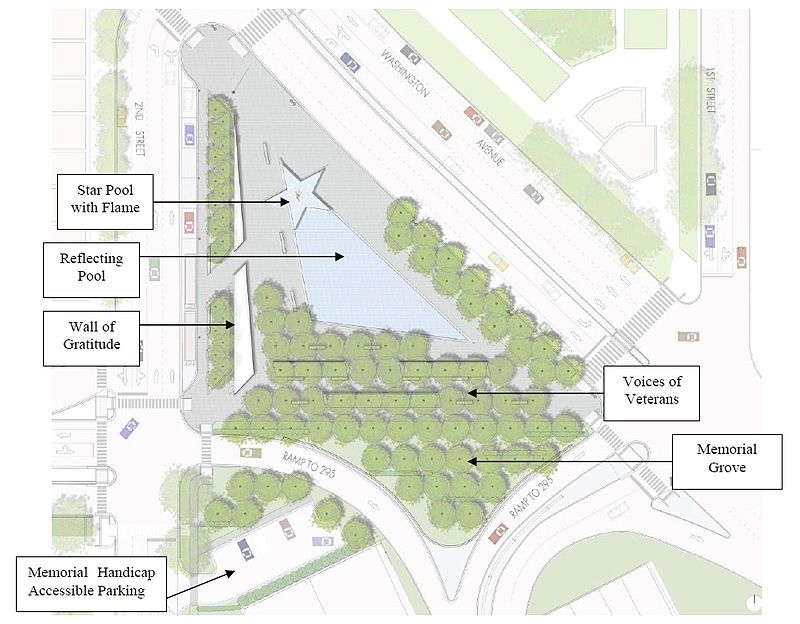
The National Capital Planning Commission’s architectural drawing of the layout of the AVDLM’s final design.  National Capital Planning Commission (June 24, 2010). American Veterans Disabled for Life Memorial, …  NCPC File No. 6179 (Report). Washington, D.C.: National Capital Planning Commission.

The focal point of the memorial is a star-shaped fountain and triangular reflecting pool. At the center of the fountain is a flame produced by the ignition of gas bubbles floating up through the water. The flame of course recalls the sacrifice of wounded veterans and the effect of the flame rising out of the water is quite enthralling. (Unfortunately, during the colder weather months the fountain is drained and there is no flame).

Along the south side of the memorial (cleverly masking the power plant) are three walls composed of 48 glass panels where the true message of the AVDLM is found in etched images and inscriptions of wounded veterans discussing their duty, the impact of their wounds, what it took to recover, and how they moved forward.

The 18 quotes on the walls were selected from over 600 submitted anonymously to a design panel. Interspersed within the walls are four bronze silhouette sculptures which provide additional visual context to the disabled veteran’s path of pride in their service, trauma, recovery and finding new purpose.

Along the western side of the memorial are two large granite walls bearing two more quotes on the burdens of war and military service by George Washington and Dwight D. Eisenhower.

Around the memorial are ginkgo and cypress trees and a variety of ornamental bushes and other plants, which add some greenery to the many stone and glass features. The ginkgo trees turn gold each November and will ultimately grow to form a canopy through the memorial.

A ginkgo tree silhouetted by the Department of Health and Human Services next to the memorial.
A bronze silhoutte sculpture within the glass wall.

Throughout the memorial plaza are a myriad of stone benches, inviting the visitor to sit and spend some time letting the memorial’s elements come together – the burning flame, the trickling water, the thoughts and images of the veterans, the names of Washington and Eisenhower, the Capitol Dome, even the traffic and people passing by – to remind us all that the wounded warrior is much more than the wound.

Disability does not define the disabled veteran.

If you cannot come to Washington DC to visit the AVDLM in person, click here for a virtual tour or check out the American Veterans Disabled for Life Memorial website for a video montage and information about the memorial’s planning and construction.

* * *

The Census Bureau estimates there are approximately 4 million disabled veterans living in the United States today. If after your physical or virtual visit to the AVDLM, you want to lend some of them a hand, there are many organizations who are looking for volunteers with a wide variety of skills to assist in providing professional services, home improvement help, advocacy, fundraising and many other areas.

A few examples include:

  • The Disabled American Veterans (DAV) organization offers a variety of services to disabled veterans and their families and has many volunteer opportunities.
  • The Fisher House Foundation has a network of homes on the grounds of military and VA hospitals for visiting family members of hospitalized service members and veterans. Fisher House operates the Hero Miles Program, using donated frequent flier miles to bring family members to the hospitals for visits.
  • Building Homes for Heroes builds specially modified homes for disabled veterans that help them live independently. The homes are provided at no cost to the veterans.

ROUTE RECON

The AVDLM is located southwest of the U.S. Capitol and south of the U.S. Botanic Gardens. The Street address is 150 Washington Avenue, SW, Washington, DC 20024. The memorial is accessible from the Capitol South and Federal Center Southwest Metro Stations (on the Blue, Orange and Silver lines).  There is very limited street parking in the immediate area.

MESS CALL

There are a number of eating establishments in the blocs to the west of the AVDLM. One locally owned favorite is the 2 Sisters Deli at 400 C Street SW. The deli features tasty and generously sized sandwiches at a reasonable (for DC anyway) price. And the staff is friendly.

A Century Later, Belgium Reflects on Its Recovery

Belgian Soldier
Belgian Soldier Statue at the Royal Museum of the Armed Forces and Military History in Brussels

Belgium is a relatively young country by European standards, declaring independence from the Netherlands in 1830.

Its flat landscapes and location along major trading—and invasion—routes placed it at the center of many military conflicts through the centuries, including World War I.

The Belgian Royal Museum of the Armed Forces and Military History in Brussels is a fascinating stop with exhibits spanning from medieval to contemporary times.

The museum has a very impressive collection of artifacts, including suits of armor, uniforms, flags, and weapons organized into eleven galleries. The museum takes the traditional approach to organizing its exhibitions by displaying entire collections of items with little narrative.

Exhibit Hall
The Historic Gallery where more than 8,000 items from 1831 to 1914 are on display.

The World War I exhibit is no exception. Display cases with uniforms from all the combatant countries except Greece and Bulgaria line the wall of the large exhibit hall. Machine guns, artillery pieces, tanks and vehicles are featured in the hall’s center.

Although the collection is large and contains many unique and interesting pieces, its arrangement seems haphazard. Uniforms are displayed on older department store mannequins. Equipment is randomly clustered together. There is little explanation of how the war unfolded for Belgium, the role of Belgian military units or how the equipment was used on the battlefield.

A planned renovation for the museum’s World War I gallery had to be postponed and several pieces of the collection are currently loaned out for other exhibits marking the war’s centennial.

Fokker Triplane
A German Fokker Triplane displayed above the World War I Exhibit Hall.

The Western Front

Remmeber Belgium
Remember Belgium Poster: Young, E. (ca. 1918) [Photograph] Retrieved from the Library of Congress
The exhibit does not reflect the significance of Belgium’s prominent role in World War I. Germany invaded Belgium in August 1914 in order to quickly attack France. By going through Belgium, the German army hoped to catch the French unprepared and take Paris.

They were unsuccessful and the Western Front became a stalemate.

The Germans occupied much of Belgium throughout the war. Belgian citizens were subject to forced labor and Belgian resources were used to support the German war effort.

Stories of atrocities against the Belgian population by German soldiers became propaganda for recruitment efforts in France, the United Kingdom and the U.S.

Belgium was the site of a number of World War I engagements: the Frontiers, Mons, Ypres, and Passchendaele are only a few.

Beyond The Great War

By contrast, a sleek new exhibit on post-war Belgium offers a more immersive experience, making extensive use of multimedia. Beyond The Great War 1918-1928 is a temporary exhibit marking the 100th anniversary of the 1918 armistice.

The post-war exhibit departs from military themes and covers a myriad of political, social and economic issues Belgium had to navigate following World War I. Those challenges were stark. The Belgium military concluded hostilities–taking tremendous losses in the final days of the war–before transitioning to occupation duty, then demobilization.

Cannon
A period Schneider 155 Howitzer used by the Belgian Army

King Albert I and his ministers returned to Brussels and reestablished civil authority. All types of ordinance needed to be cleared from cities, towns and farms. More than 700,000 Belgian refugees tried to resettle. The dead needed to be buried, the wounded cared for, and destroyed infrastructure rebuilt. The Belgian economy needed to be reorganized as Belgium was brought into a new international order.

The look and experience of Beyond the Great War is different from many of the other exhibits found throughout the museum. It is brighter and more colorful with well curated displays which draw the eye. Archived photos, art, film and statuary are used to tell Belgium’s post-war story along with video and an impressive visual replica of the Hall of Mirrors at Versailles.

French Sailor
Statue of a French sailor, part of a monument to French sailors erected in Melle, Belgium. Belgium built many monuments to Belgian and Allied troops after the war.

The Museum

The Royal Museum of the Armed Forces and Military History was established in the early 1920’s, expanding upon a small, but well-received, military exhibit at the Brussels World Fair in 1910. In 1923, the museum moved to its current location in the Cinquantenaire (50th Anniversary) Park in central Brussels.

The park was developed from a former military parade ground to mark the 50th Anniversary of Belgium’s independence. A large triumphal arch and classical arcade dominate the park, which also houses several other museums.

Arch
Triumphal Arch, the centerpiece of Cinquantenaire Park in central Brussels. The entrance to the Royal Museum of the Armed Forces and Military History is located near the base of the arch.

The military history museum’s World War II galleries are currently closed for renovation in preparation for the 75thAnniversary of the end of the Second World War. The current exhibits are being refurbished and a new hall is being built to chronical Belgium’s second occupation.

What will emerge? It is not entirely clear, but replicating the approach of Beyond the Great War will surely make the stories of Belgium’s World War II experiences more compelling.

* * *

Beyond the Great War 1918-1928 is open through September 22, 2019 at the Royal Museum of the Armed Forces and Military History in Brussels, Belgium.  

The museum is open daily, except Mondays, from 0900 – 1700. The museum is also closed on January 1, May 1, November 1, and December 25.  Admission is 5 Euros, payable only by debit or credit card. Discounts are also available for certain groups. See the Royal Museum of the Armed Forces and Military History for more information.

ROUTE RECON

The Royal Museum of the Armed Forces and Military History is located in Cinquantenaire (50th Anniversary) Park. The park is located in central Brussels and accessible by multiple bus, subway and streetcar lines.  The Merode or Schuman Stations are each about a ten-minute walk from the museum.

There are also several car parking lots in the park.

MESS CALL

The Sky Café inside the museum offers snacks, sandwiches and a variety of beverages, including beer and wine. It is open from 1000 – 1600 each day.  However, the kitchen closes early so arrive before 1400 if you want to order food.


Happy 75th Birthday Pentagon!

The Puzzle Palace, Fort Fumble, the Big Spoke, Bat Cave on the Basin, the Concrete Carousel.

The world’s most famous five sided building has many nicknames, but the headquarters of the U.S. Department of Defense is more simply known as the Pentagon.

1 Pentagon Aerial View
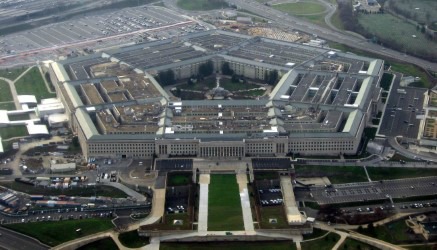
Overhead view of the Pentagon 2008 Photo by David Gleason from Chicago, IL. (CC BY-SA 2.0)

2018 marks the 75th anniversary of this iconic Washington, DC landmark.

In the late 1930’s, as the world edged closer to war, Secretary of War Henry Stimson and War Department leaders knew they needed a new building to house the department’s expanding workforce. At that time, employees were scattered in multiple buildings around the District of Columbia, Maryland and Virginia.

2 Munitions and Main Navy Buildings
An overhead view of the Main Navy and Munitions Buildings.  Built at the beginning of World War I, these buildings housed a large number of War and Navy Department workers. The buildings were located on the Mall in the vicinity of the current Viet Nam Memorial. The buildings were demolished in 1970. Photo: Histories of the National Mall, accessed 25 January 2018, http://mallhistory.org/items/show/57.

Designing and planning the new building began in earnest in 1940, with two proposed sites selected in Arlington, Virginia, just over the Potomac River from Washington. The first proposed site was the U.S.Department of Agriculture’s Arlington Experimental Farm. The other was Hoover Field, an early Washington area commercial airport. The Pentagon owes its particular five-sided shape to the irregular layout of the experimental farm location. The unique design of five pentagons nested together connected by radiating hallways allowed planners to maximize the structure’s available work space.

3 Pentagon Ramps
Pentagon concourse in 1944. In order to save steel, building designers used concrete ramps, rather than elevators, for workers to move floor to floor. Photo: U.S. War Department

Ultimately, the Hoover Field site was selected over the farm location, but the five-sided design was kept. The building was to be made of concrete, to minimize the need for steel, which was needed for war production. Limestone facades over the concrete completed the neoclassical look of the Pentagon we know today.

The final contracts were signed and ground was immediately broken on September 11, 1941. The attack on Pearl Harbor three months later only added to the urgency to complete the Pentagon’s construction, which took just sixteen months. When construction was completed on January 15, 1943, some War Department workers had already moved in.

The Pentagon was the headquarters for the War Department from 1943 through 1947, when the National Security Act formally established the Department of Defense (DoD). Then the Pentagon became the headquarters for this new department as well as for each of the armed services. As the size, budget and influence of the military grew during the Cold War, the term “the Pentagon” would become synonymous with the DoD and American military bureaucracy, with all of its successes and excesses, strengths and weaknesses, victories and mistakes.

 * * *

Members of the general public have been able to tour the Pentagon since 1976, when the tour program was implemented as part of America’s bicentennial. Today Pentagon tours are still available, but they do require some planning ahead.

Tours are by reservation only, which can be made by visiting the Pentagon Tours website. Reservations must be made at least two weeks before the tour date. The DoD is very careful about who is allowed into their headquarters so follow all the instructions on the website carefully.

On the day of the tour, arrive at the Pentagon Visitor Center (near the entrance to the Pentagon Metro Station) with sufficient time to clear an airport style security checkpoint. The Pentagon tours website recommends arriving one hour ahead of time.

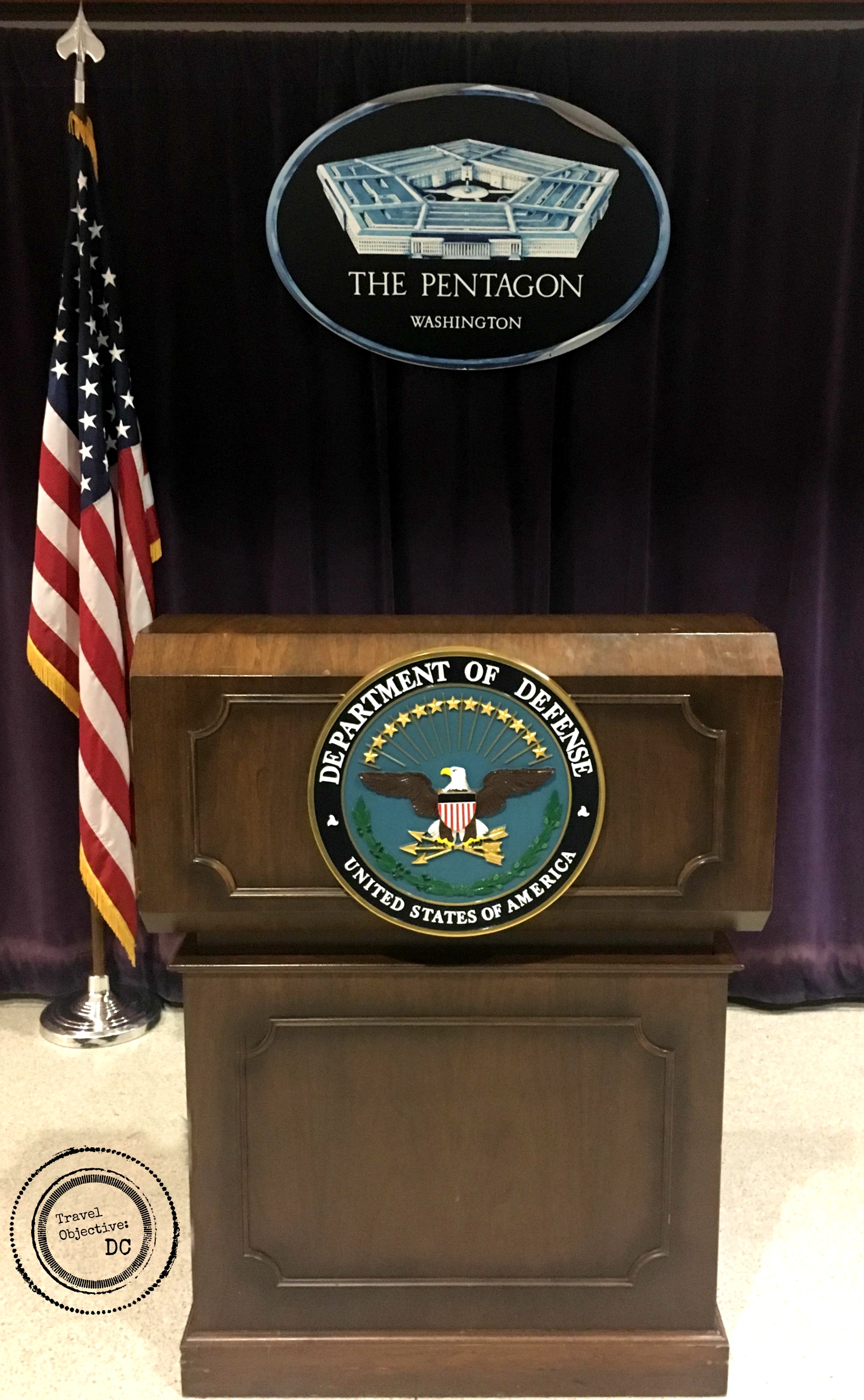
After clearing security, there is a waiting area, also used by other Pentagon visitors. The waiting area has a gift shop with the expected collection of hats, key chains, post cards and other trinkets with Pentagon or military service themes. (If something catches your eye, be sure to buy it before the tour begins as you will not pass by the gift shop again). There is also a mockup Pentagon briefing podium and backdrop for taking selfies or group photos, sure to impress friends and family.4 Pentagon Podium

Tours are led by junior enlisted service members. One cannot help but feel a bit of pride in these young men and women, dressed in their class A uniforms with crisp creases and polished brass. Guides are selected from the military services various honor guard units stationed in the area. One guide confided it is a good job to have, working in a climate controlled building with weekends and holidays off. The biggest challenge he said was memorizing all the facts and walking backwards for most of the mile-long tour.

As one of the world’s largest office buildings, the guide had many facts about the Pentagon to share. They are recited effortlessly, with machine gun-like repetition. The Pentagon is five stories tall, with an additional two stories underground and covers 28.7 acres. Today there are over 17 miles of corridors, 54 escalators, 70 elevators, 131 stairways, 284 restrooms, 8,979 parking spaces, 16,250 lighting fixtures and 26,000 employees.

The tour followed the guide up one of the 54 escalators to the Pentagon’s extensive retail area. The original building designers wisely included extensive retail space so workers would not have to leave the building for common necessities. Today the Pentagon’s  workers can visit about 20 fast food restaurants, three banks, a clothing store, drug store, barber shop, hair salon, dry cleaners, jewelers, post office, vision center, even an office of the Virginia Department of Motor Vehicles.

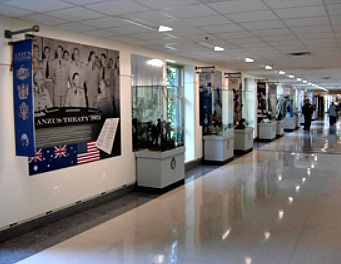
5 ANZUS Corridor
The displays in the ANZUS Corridor, on the Pentagon’s second floor, commemorate the 1951 Security treaty between Australia, New Zealand and the U.S. Photo: U.S. Department of Defense

But the tour is more than just facts, figures and shopping. Many Pentagon corridors have special defense-related themes with museum quality displays. However, the tour is only about 60 minutes long. While the tour group keeps moving most of that time, the size of the building makes it impossible to see every special exhibit in that amount of time. The tour planners though selected a route that allows the guides to broadly focus on the missions of the U.S. Armed Forces and their storied pasts.

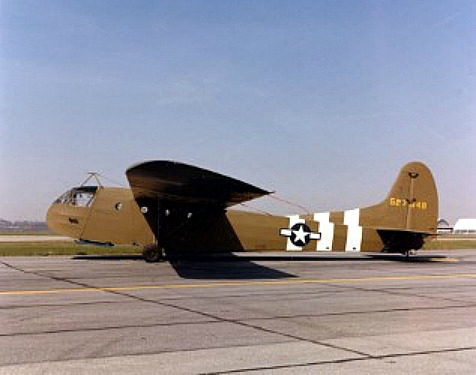
The center piece of the Air Force displays is a series of scale models of Air Force aircraft, past and present. After the guide discussed the size of the C-5 Galaxy transport aircraft, the capabilities of the F-22 Raptor fighter and the stealthiness of the B-2 Spirit bomber, he pointed out his favorite aircraft, the Waco CG-4A Combat Glider.

6 Waco_CG-4A_USAF
A Waco CG-4A-GN (45-27948) Combat Glider on display at the National Museum of the U.S. Air Force  Photo: U.S. Air Force

The guide explained how the gliders saw service during World War II. The light bodied aircraft earned the nickname “the Flying Coffin” due to their precarious mission of flying unarmed while carrying troops and equipment deep behind enemy lines as a precursor to invasions and large advances. Gliders and their crews served with distinction in Sicily, Burma, Normandy, Southern France and Bastogne among other places.

Somewhat surprisingly, the tour next passed the displays of the United States Coast Guard. The Coast Guard is a component of the Department of Homeland Security, not the DoD. But at several times through its history, especially during wartime, the Coast Guard has served as part of the Navy. The displays trace the Coast Guard’s history from its forerunners first establishment in 1790 as the Revenue Cutter Service. Naval aviation followed the Coast Guard, then a corridor dedicated to Dwight D. Eisenhower represented the Army.

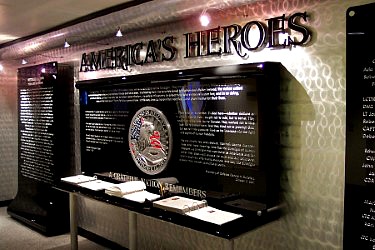
8 Memorial
Inside the Pentagon’s interior 9/11 Memorial. Photo: U.S. Department of Defense

The one stop the tour does make is at Pentagon’s interior 9/11 Memorial. The memorial is located on the first floor of the outer ring, in the area struck by American Airlines Flight 77. The walls of the memorial feature a textured metallic finish with black stone tablets recognizing the sacrifices made that day, commemorating the names of those who died and detailing the medals awarded to the military and civilian casualties. Adjoining the memorial is the Pentagon Memorial Chapel, which opened in 2002.

9 DEF_Medal_for_the_Defense_of_Freedom
The Secretary of Defense Medal for the Defense of Freedom was established after the 9/11 attacks for civilian employees of the DoD killed or wounded in the line of duty.

The corridor leading to the memorial and chapel has one of the Pentagon’s most unique displays, the Pentagon Memorial Quilts. In the months and years after the attack, individuals and groups from across the United States (and some foreign countries as well) sewed then donated quilts to the Pentagon to mark the tragedy and aid in recovery. The quilts reflect a variety of themes but most reflect patriotism, loss, memorializing the fallen, gratitude for the responders and support for the military. There are about 120 quilts in the collection. Around fifty are displayed at the Pentagon with others rotated and loaned for display in communities and military facilities around the world.

Because of the security precautions, visiting the Pentagon takes a special effort, but it is well worth it. The Pentagon’s size, shape and mission certainly make it a unique location to visit. But walking its hallways, hearing its history, seeing its occupants walk briskly about, and seeing the exhibits remind us all of what it takes to serve.

* * *

Route Recon

The best way to reach the Pentagon is by taking the Metro Rail system. There is a Metro station at the Pentagon, served by the Blue and Yellow lines.  As you exit the metro gates, make a left and proceed up the escalator. The Pentagon Visitors’ Center will be on your right.

There is NO public parking at the Pentagon. If traveling by car, park in the parking garage at the Pentagon City Mall. The Pentagon is about a 10-minute walk away. After exiting the parking garage or mall, cross Army-Navy drive and take a pedestrian tunnel  over to the Pentagon. When you exit the tunnel, follow signs for the Metro, which will lead you to the Pentagon Visitor’s Center. Visit the Pentagon Tours website for more information.

Mess Call

There is no eating during the Pentagon tour and unless you have an escort, you will not be able to visit any of the Pentagon’s eating establishments. The nearby Pentagon City Mall and neighborhood have a wide variety of dining options

Serving with Paint, Paper and Pencils

Weapon? – Check!

Gas Mask? – Check!

Paint Brush? – Check!

Sketch Book? – Wait! WHAT???

Paint brushes, sketch books and charcoal pencils are usually thought of as implements of art, not of war. But a very special exhibit of combat art from World War I currently hosted at the Smithsonian National Air and Space Museum demonstrates how they can be both. The exhibit, entitled Artist Soldiers, is a collaboration between the Air and Space Museum and the Smithsonian National Museum of American History.

While art depicting combat has been around probably as long as there has been combat, what makes this exhibit unique is the featured artists.

877 Dunn
Battle of the Marne by Harvey Dunn; Watercolor and Pastel on Paper, 1918

Shortly after the U.S. entered World War I, military policymakers decided to recruit artists directly into the Army, due in part to similar British and French programs. Visual images in posters, newspapers and magazines would be important for maintaining the morale and support of the American public. British and French military artists had generated some impressive work for their governments in this regard.

The task of recommending specific artists for this duty fell to Charles Dana Gibson, an accomplished artist and illustrator who headed the Division of Pictorial Publicity of the Committee on Public Information. Gibson recommended illustrators, artists who can usually draw or sketch quickly, an important skill for someone working in combat.

882 Townsend
Helping A Wounded Ally by Harvey Everett Townsend; Charcoal on Paper, 1918

In early 1918, eight of these successful commercial artists were commissioned as Reserve captains in the Corps of Engineers and assigned to the American Expeditionary Force (AEF).

It was the first time the War Department incorporated artists directly into the Army’s ranks and sent them into combat areas for the expressed purpose of “making a complete pictorial record of the American Army’s participation in the war”.

Many of the artists already knew each other before arriving in France with the AEF, having studied at the same art schools such as the Art Institute of Chicago or the Art Students League in New York.

The eight artist-soldiers were:

William James Aylward – A successful book, magazine, and advertising illustrator, he grew up around docks and often portrayed maritime subjects. As a combat artist, he focused on ports, of course, but also landscapes.

896 Aylward
Unloading Ships at Bassen Docks by William Aylward; Charcoal and Gouache on Paper, 1919

Walter Jack Duncan – Also a noted illustrator before the war, he often depicted the soldier’s life in rear areas.

George Matthews Harding – During World War I, Harding produced combat scenes incorporating many new technologies introduced in World War I, such as aircraft and tanks. Harding would serve as an official combat artist again during World War II.

Wallace Morgan – Prior to the war, Morgan worked for many of the major magazines of the day, such as Colliers’ and the Saturday Evening Post. He was especially well known for his black and white drawings.

897 Peixotto
Tressing Nets for Artillery Emplacements by Ernest Peixotto; Pen and Ink Wash and Charcoal on Paper, 1918

Ernest Clifford Peixotto – The “old man’ of the group at 48 upon his commissioning, Peixotto worked in France, painting landscapes and illustrating travel books prior to the war. Peixotto stayed in France for several years after the armistice. He taught art in an AEF’s educational program for soldiers remaining in Europe.

J. Andre Smith – Trained in architecture, he actually preferred to draw and etch. Smith was the only one of the artists who received military training before he deployed, having served briefly in a camouflage unit. He also became the group’s commanding officer.

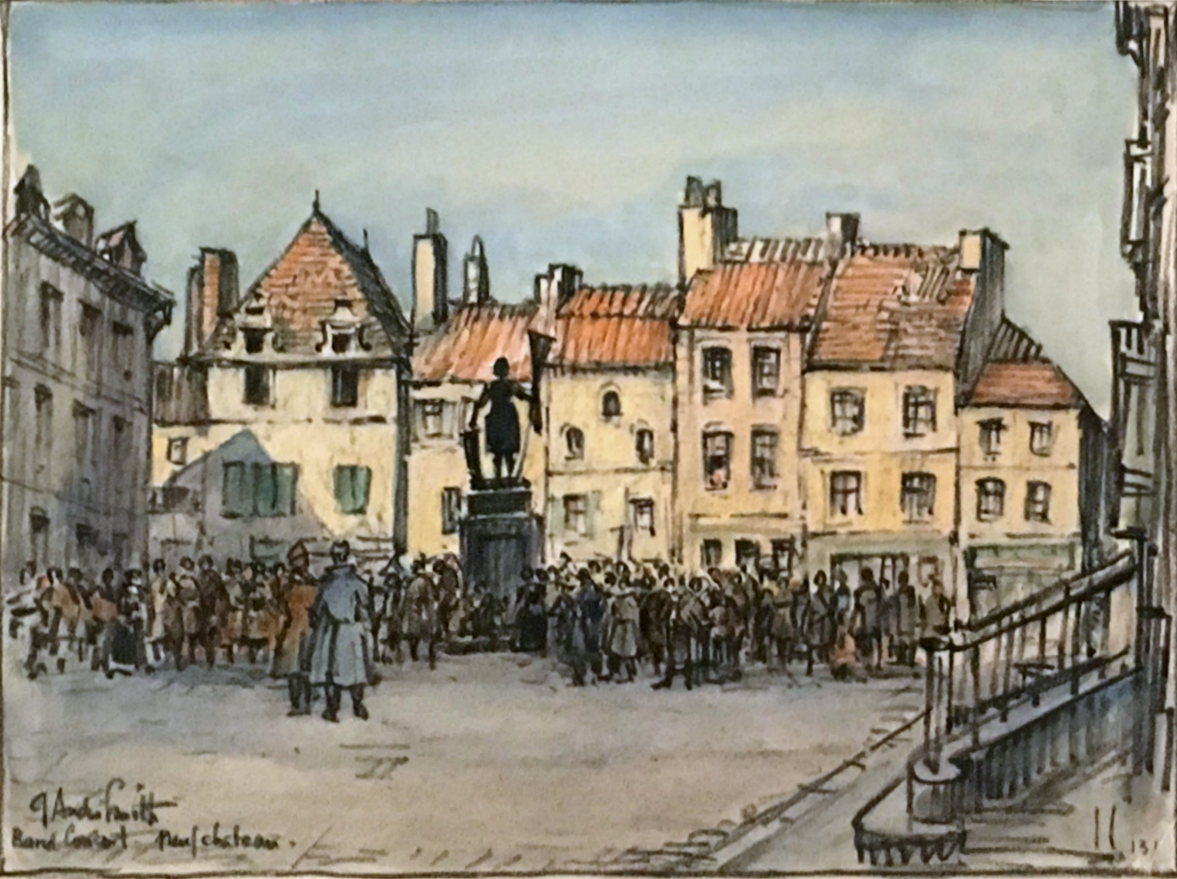
879 Smith
Band concert at Neufchatel by J. Andre Smith; Watercolor and Charcoal on Paper, 1918

Harry Everett Townsend – He returned to the U.S. from Europe in 1914 to draw war posters, then volunteered for Army service. Townsend lost a brother early in the war in a plane crash. He focused much of his work on aviation and other new technologies. Townsend later worked at the Paris Peace conference and taught art at the AEF’s training center.

Harvey Thomas Dunn – He was a daring combat artist who usually worked in close proximity to the front lines.

Upon arriving in France in May 1918, the artists were assigned to the AEF Intelligence Section, Press and Censorship Division. For several weeks after their deployment–as U.S. forces continued to drill and train for combat missions–the artists oriented themselves to Army life, toured the battlefields, and prepared themselves for what was to come.

889 Morgan
The Morning Wash Up Neufmaison by Wallace Morgan; Charcoal on Paper, 1918

They established a studio in the French town of Neufchateau, halfway between the AEF’s Headquarters and the front. There they could complete or refine their drawings into finished pieces. The artists were directed to submit their images to the War Department at the end of each month, along with a report on anticipated follow-on pieces.

Once deployed, they had the authority to move freely around both the forward and rear areas to do their work. While there is no record of any of the artists going “over the top”, they took their mission very seriously. They positioned themselves at the front, lived in the trenches, got wet in the rain, missed meals, and exposed themselves to enemy fire many times in order to do their work.

In the nine months of service with the AEF, the artist soldiers produced over 700 pieces. They drew, painted and sketched scenes from the front, rear areas, the use of new technologies, soldiers both on and off duty, landscapes, civilians, in short, all they were exposed to.

878 Aylward
Returning Refugees at Hattonchatel by William Aylward; Charcoal and Gouache on Paper, 1919

For all their efforts, however, the brass in Washington was not always happy with their work. While skillfully prepared, the pictures and their subject matter were not always easily transferred to home front use in boosting morale. But they do provide a challenging and thought-provoking contemporary rendering of the daily life of American soldiers and French civilians in 1918.

Following the war, all the artists continued their successful art careers. The War Department transferred about 500 of their works to the Smithsonian Institute which displayed them at various times through the 1920’s. Since then however, the paintings have not been exhibited very often, making this a rare opportunity to see a portion of these unique and historic works.

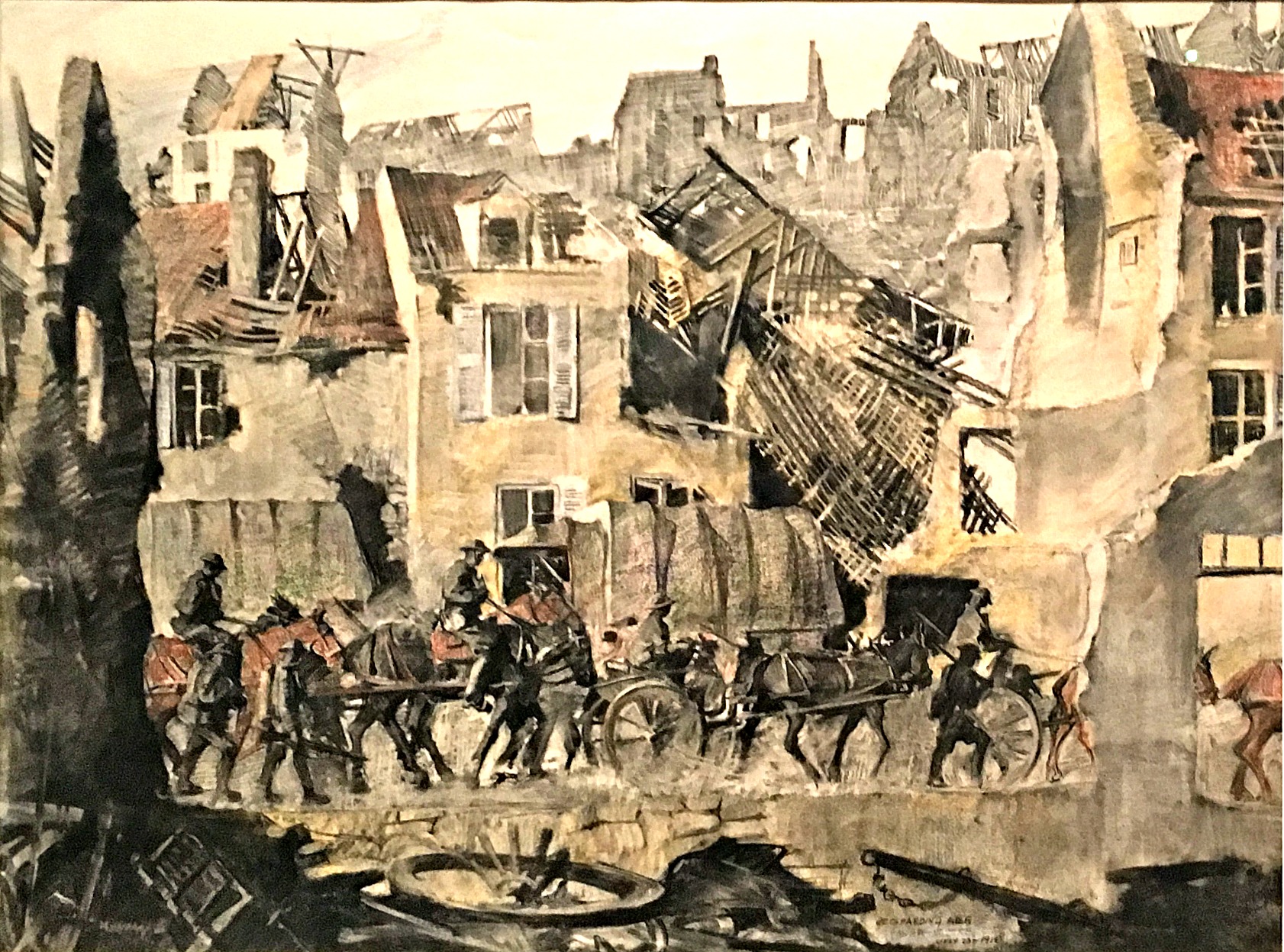
887 Harding
American Artillery and Machine Guns by George Harding, Charcoal on Maison, 1918

An accompanying exhibit entitled Soldier Artists displays some impressive photography of stone carvings created by soldiers while living in the underground trenches, along with other World War I period artifacts from the Smithsonian collections.

Both exhibits are currently on display until November 2018.

While you are at the Smithsonian Air and Space Museum, be sure to visit the permanent exhibit on World War I combat aviation.

* * *

ROUTE RECON

The NASM is located at the intersection of Independence Avenue and 6th Street, Southwest. There is no onsite parking, but there are several commercial lots nearby. The nearest Washington Metro stations are the L’Enfant Plaza Station on the Yellow and Green Lines and the Smithsonian Station on the Blue and Orange lines. Both stations are about a two block walk to the NASM.

MESS CALL

The Wright Place Food Court offers a variety of fast food meal options from Boston Market, Donatos Pizza and McDonald’s.

* * *

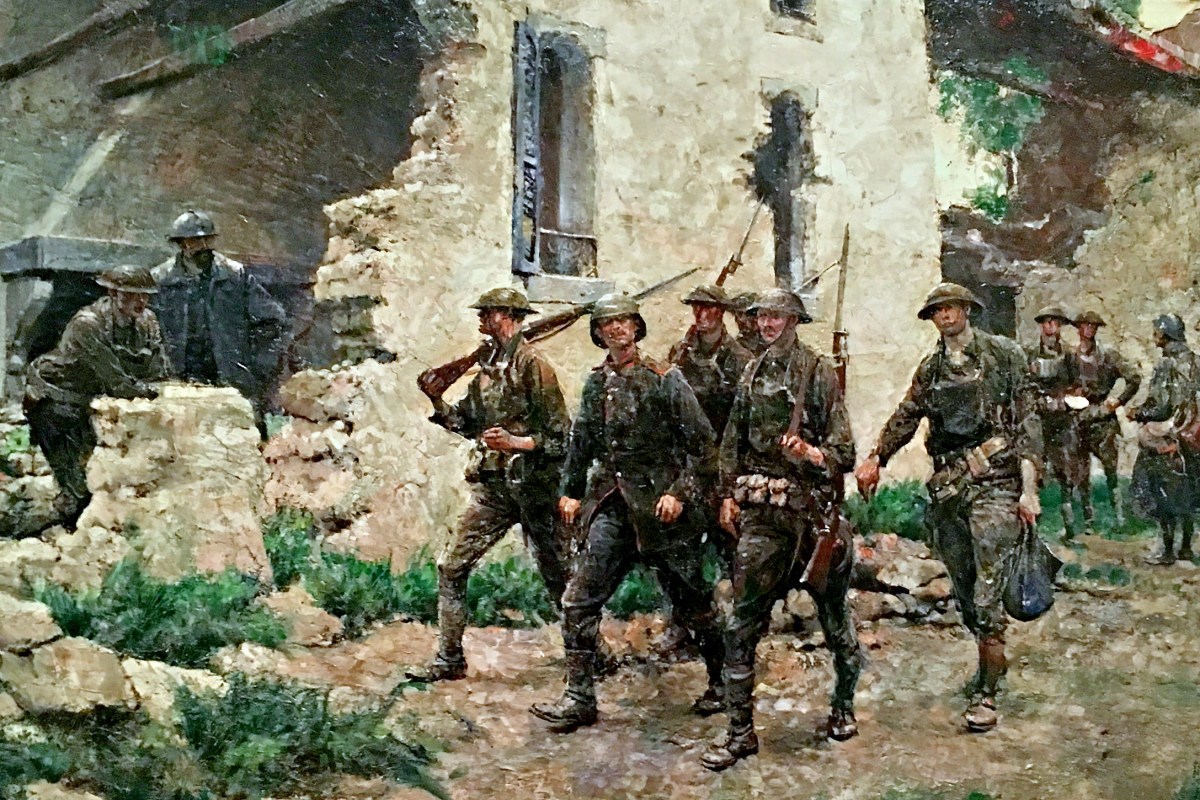
Featured Image: The Prisoner by Harvey Dunn, Oil on Canvas, 1918

Celebrating 70 Years of “Aiming High” at the U.S. Air Force Memorial

September 2017 marks the 70th Anniversary of the United States Air Force, which was formally established as a separate military service by the National Security Act of 1947. Previously, various ground-based air reconnaissance, combat and support units had existed as part of the U.S. Army.

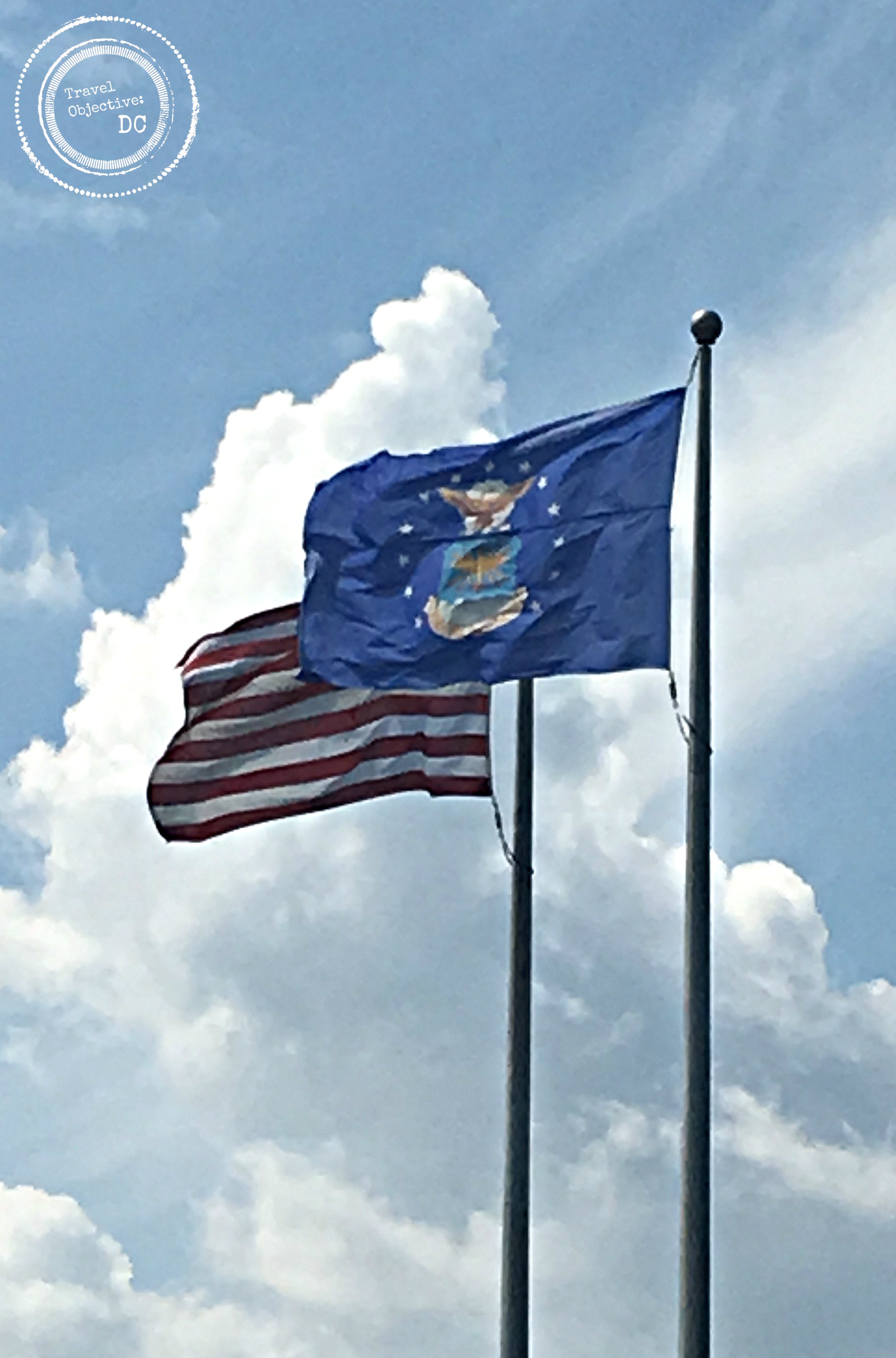
Flags
The U.S. Air Force celebrates its 70th Anniversary in 2017.

What better way to mark the 70th Anniversary of the Air Force than to visit the Air Force Memorial?

Given the relative young age of the Air Force (compared to Army, Navy and Marine Corps, which were all established in 1775), it is rather understandable that for most of its existence, the Air Force had no memorial of its own.

In 1991, leaders of two Air Force veterans’ organizations began an effort to build a memorial to those who served in the Air Force and its predecessor organizations.

The memorial sits in Arlington, Virginia along a high ridge adjoining Interstate 395, the main southern arterial into Washington, D.C. With views of the Potomac River, Pentagon, and other official buildings spread out below, this location fittingly evokes the aerial nature of the Air Force mission. Arriving and departing aircraft from nearby Reagan National Airport add to the effect.

View with flags 2
Official Washington as seen from the U.S. Air Force Memorial.

Architect James Ingo Freed, (who also designed Washington’s Holocaust Museum) studied how to use the physical location to capture the essence of the Air Force and the dedication of the men and women who have served in its ranks. The resulting venue is sleek and streamlined, with minimal adornment and flourish, as if inspired by a modern aircraft.

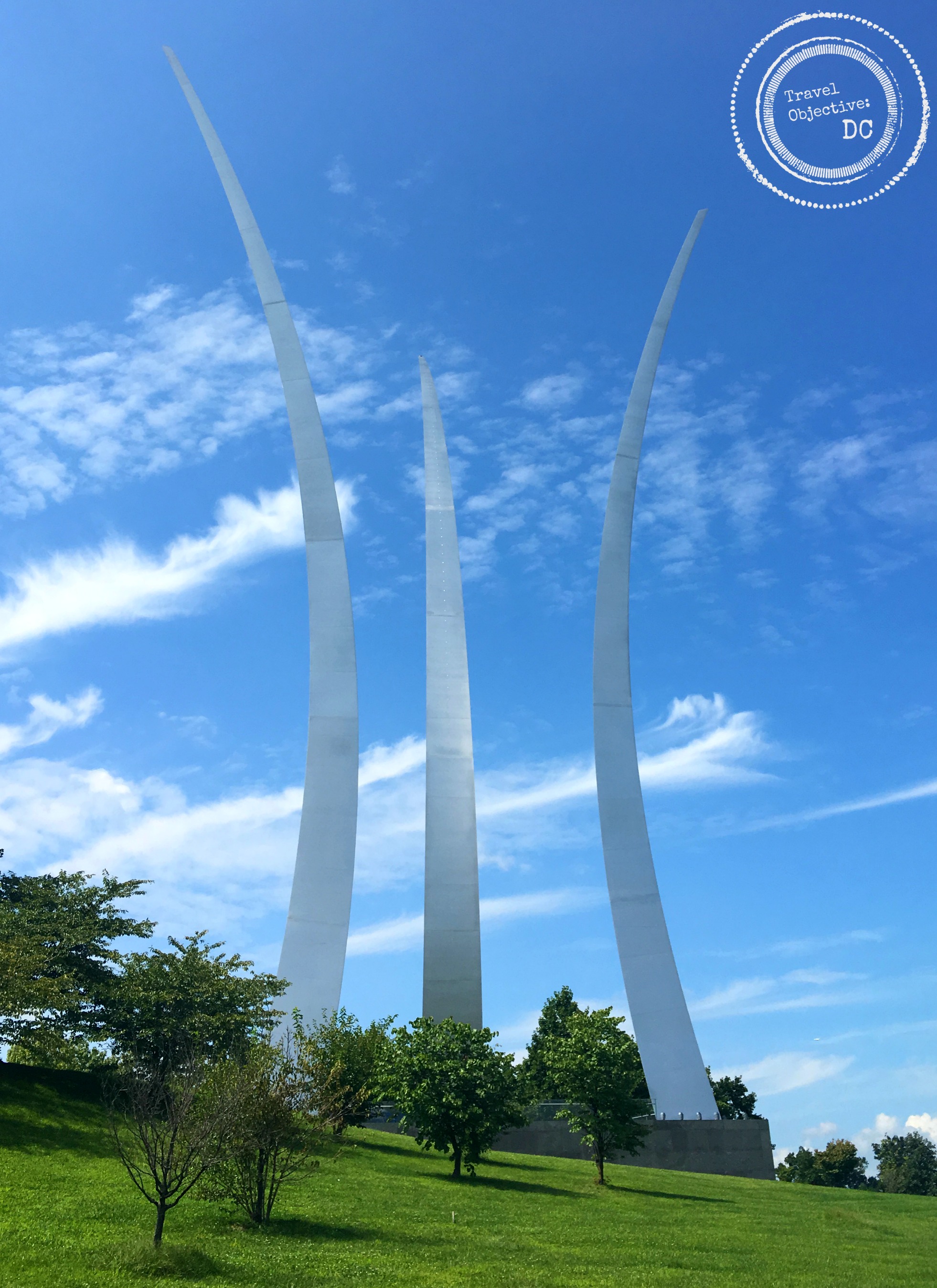
The most prominent feature of the memorial is three vertical, arc shaped steel spires, meant to evoke the image of soaring flight. The spires are arranged in a triangular pattern with the highest reaching up to 270 feet.

Spires from hill
The Air Force Memorial’s most prominent feature, three steel spires reaching skyward.

N/A
The U.S. Air Force “Thunderbirds” perform the High Bomb Burst maneuver.  (U.S. Air Force photo/Staff Sgt. Larry E. Reid Jr.)

The spires are also reminiscent of a contrail pattern formed by the U.S. Air Force Thunderbird Air Demonstration Squadron as they perform their “breaking bomb” maneuver. The lack of a fourth spire alludes to the “missing man” formation, used by Air Force flying units at funerals and other events to mark the loss of a comrade. Given their height and prominence, the spires have also added an additional landmark to the Washington, D.C. skyline.

Just to the west of the spires is a wide walkway connecting two highly polished granite inscription walls. The northern wall lists Air Force Medal of Honor winners. In front of it is a small glass contemplation wall to remember our airmen who are no longer present.

Commemoration Wall
Mementos left at the base of the memorial’s contemplation wall

Airman
The visage of one airman from the honor guard sculpture.

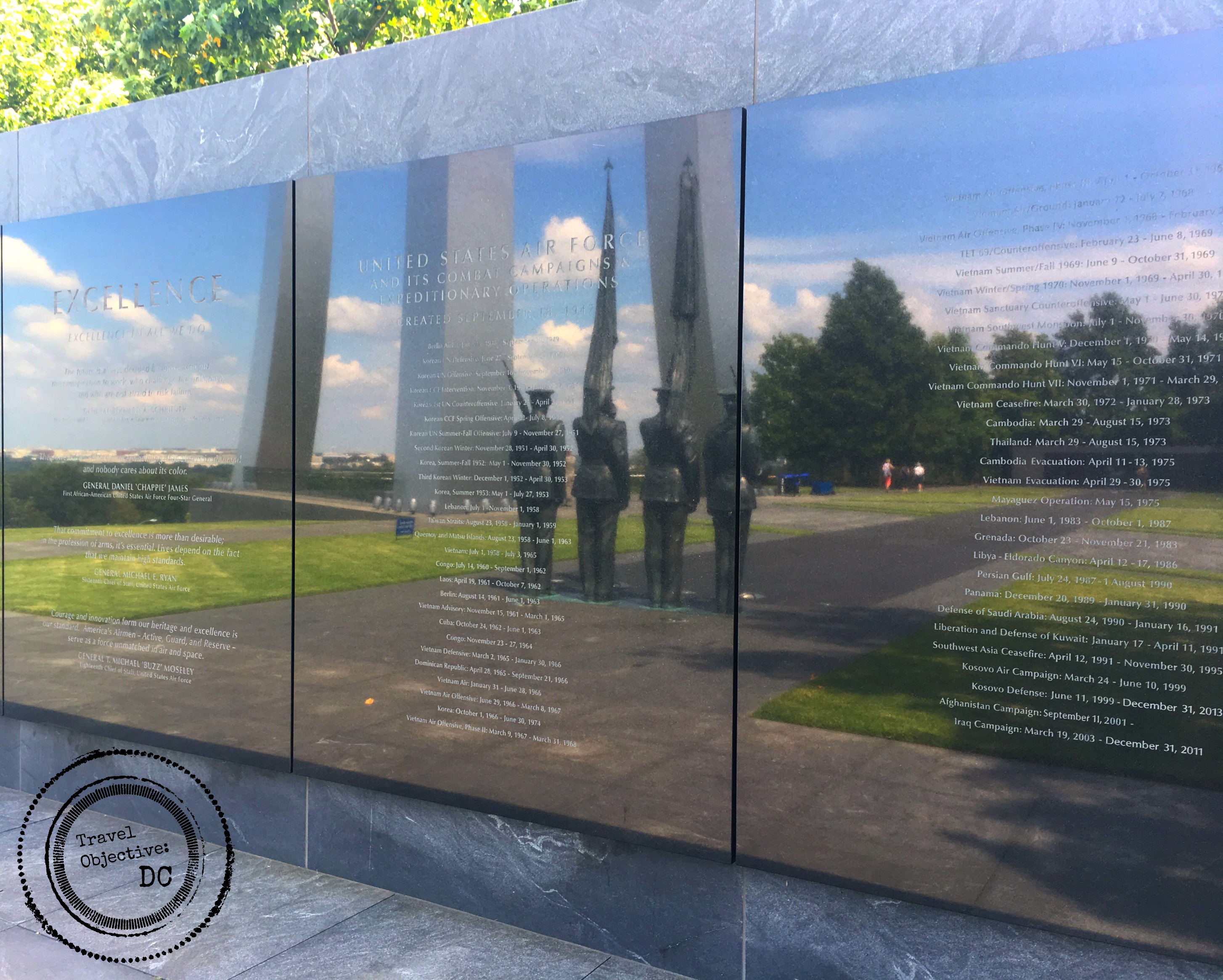
On the opposite southern wall are displayed the Air Force’s core values:

Integrity first,

Service before self,

Excellence in all we do

In front of the southern wall is a sculpture of a four-member Air Force honor guard, keeping watch over the Memorial and adding a human element to the lofty arches and inspired words.

The colors of the Memorial’s features are muted, again like a modern aircraft, metallic spires, polished dark granite walls, gray statues, and the glass contemplation wall. The only other prominent color is green, from the manicured lawn and the trees ringing the parking lot.

HG in Wall
The honor guard sculpture and spires reflected in the southern inscription wall.

Woman and FlagsWhile most aspects of the memorial are clearly visible, one is not: silence.

A certain stillness permeates the venue, bringing a sense of quiet to a busy corner of Arlington. Given this setting, along with the views, designs and significance of the memorial to members of the Air Force, it is a common location for promotions, concerts and other special ceremonies, so you may be sharing your visit with larger gatherings and even the Air Force Band.

(You can check event calendar for a listing of special events at the memorial.)

Some visitors, upon seeing the Memorial for the first time, remark about its unique designs and features and how they are relevant to the Air Force experience. President George W. Bush addressed this in his remarks at the memorial’s dedication on October 14, 2006.

He said: “A soldier can walk the battlefields where he once fought, a Marine can walk the beaches he once stormed; but an airman can never visit the patch of sky he raced across on a mission to defend freedom. And so, it’s fitting that…the men and women of the Air Force will have this memorial, a place here on the ground that recognizes their achievements and sacrifices in the skies above”.

Spires and Sky

The U.S. Air Force Memorial is located at 1 Air Force Memorial Drive, Arlington, VA, 22204. The memorial is free and open every day but December 25. Daily hours of operation from October 1 through March 31 are 8:00 AM – 8:00 PM and from April 1 through September 30 are 9:00 AM – 9:00 PM.

* * *

Route Recon

The Air Force Memorial is easily reached by car, from the Pentagon or Pentagon City Metro stations or bus. From Visit the Air Force District of Washington Website for more information.

* * *

Mess Call

The nearby Pentagon City neighborhood has a wide variety of dining options. Pentagon City is located about 1 mile from the Air Force Memorial. When exiting the Memorial, take a left onto Columbia Pike. At the first intersection, take a right on Joyce Street and cross underneath I-395 and you will enter Pentagon City. Take a left on Army-Navy Drive and you will see several parking garages on your right.