Lost and Found History at the Missing Soldiers Office


Along 7th Street in Northwest Washington, a narrow staircase takes the visitor up two flights to a suite of simple rooms restored to resemble their 19th Century appearance.

Today these rooms are often quiet, save for the tours and visitors. But from 1865 through 1868, they bustled with an extraordinary initiative led by Clara Barton. The noted humanitarian undertook the challenging but critically important mission of identifying missing Union solders from the Civil War. 

By 1865, the former teacher and Patent Office clerk had already made a name for herself. She spent the Civil War years gathering and distributing medical supplies, food and other items for the Union Army. At the same time, she assisted soldiers, nursing the sick and wounded, and comforting all those she could. 

A famous photo of Clara Barton taken my Mathew Brady.

A photograph of Clara Barton by Mathew Brady

-Library of Congress

After the war, she became aware of the large volumes of mail arriving at Army facilities either addressed to missing soldiers or seeking information on their whereabouts. Sadly, most of these letters went unanswered. At the time, the Army had no system for notifying a family upon the death or absence of a soldier.

After receiving the endorsement of President Lincoln, Barton undertook the work of identifying as many of the Union Army missing as possible. She established the Office of Correspondence with Friends of the Missing Men of the United States Army, which would later become known more simply as the Missing Soldiers Office. 

Barton based the operation on the third floor of a building then located at 488 1/2 7th Street Northwest. Originally built in the 1850’s, the three story brick building was of a typical design for Washington, DC. The first floor was dedicated to retail space along busy 7th Street. The second floor usually provided office space to local professionals while boarders rented rooms on the third floor. 

The staircase to the 3rd Floor at the Clara Barton Missing Soldiers Office Museum
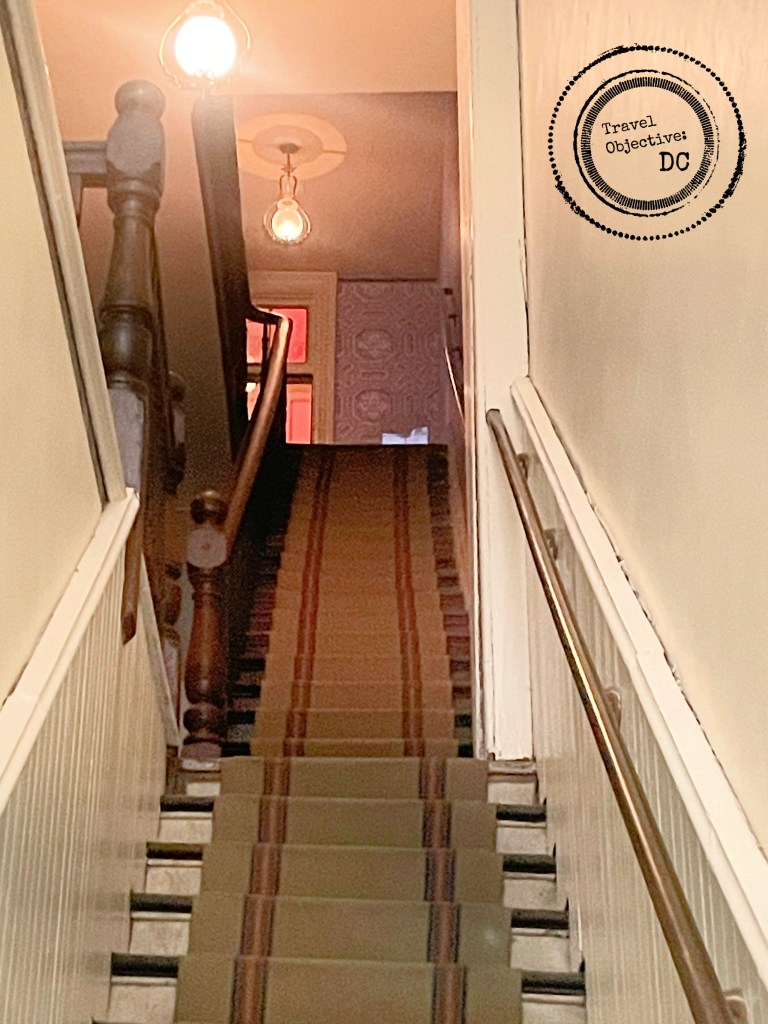
The staircase to the 3rd Floor at the Clara Barton Missing Soldiers Office Museum

Barton first rented a third floor room to lodge in and store some medical supplies in June of 1861.  However, the Missing Soldiers Office would require more space. She rented additional rooms from her friend and landlord Edward Shaw, a co-worker from the Patent Office.

Today there are nine rooms on display as part of the Clara Barton Missing Soldiers Office Museum. The dimly lit rooms have pretty wallpaper, but are largely empty. Creaks emanating from the uneven hardwood floors add a sense of authenticity to the space. Each room has some period furnishings and a few artifacts on display.

Much of the work of the Missing Soldier’s Office was performed in a large room facing 7th Street. Originally three rooms, Barton and Shaw continued to expand the office my removing walls to accommodate the growing staff and workload. The room’s location made it a natural choice to be the principal working area as the westward facing windows fill the room with natural light, in contrast to the other dimly lit areas. An artist’s depiction shows what the room may have looked like with racks for storage of supplies and large tables for reading and responding to correspondence.
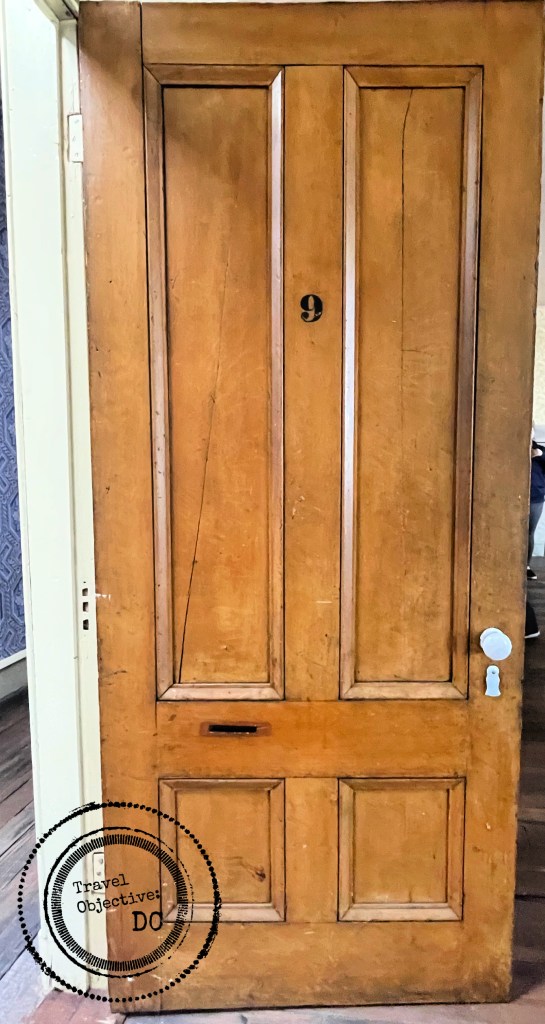
The original door to Room 9 of the Missing Soldiers Office. Note the mail slot on the lower left, cut into the door by Clara Barton.

Barton implemented a straight forward and highly effective system for gathering information about the missing. After she received letters regarding the whereabouts of a missing soldier, a file was created. The names of the missing, organized by state of origin, were compiled into large lists called a Roll of Missing Men.

These rolls were printed on large broadsheet paper and distributed nationwide. They were hung prominently in post offices, government buildings and other public gathering places. The names were also published in newspapers. Returning soldiers or anyone with any information about a name on the list was invited to write the Missing Soldiers Office. Incoming letters were analyzed and collated into the files in the hopes of ultimately identifying the soldier’s fate. 
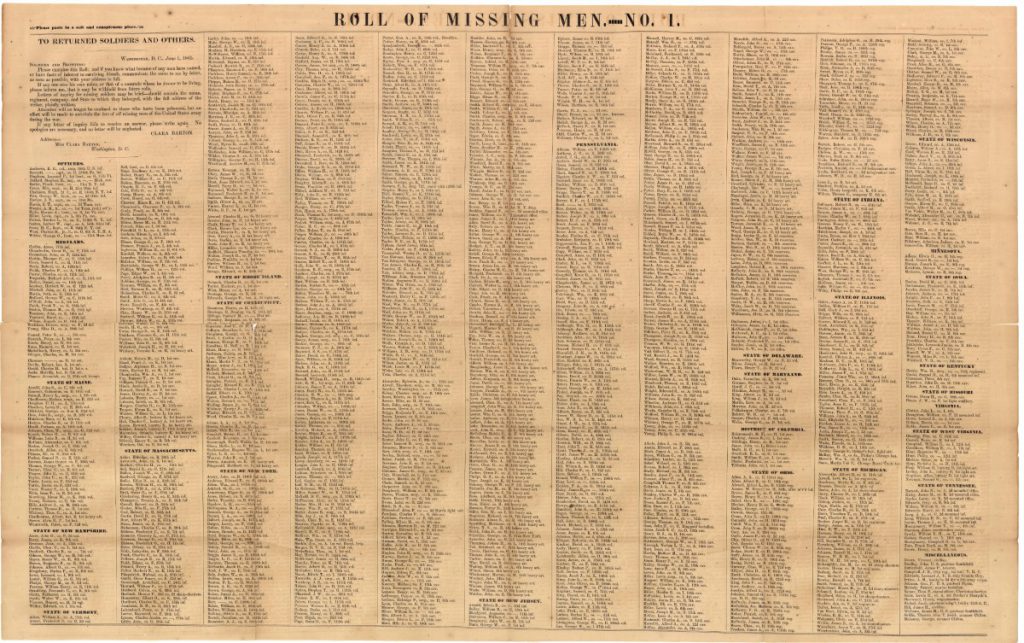
An example of a Roll of Missing Men which Clara Barton had printed and distributed nationwide.

A Roll of Missing Men. Clara Barton had these large lists printed and distributed nationwide.

-Photo courtesy of the Clara Barton Missing Soldiers Office Museum

Barton and her staff collected and scrutinized any available records from prisons, hospitals, and burial sites. Former prisoners of war were also interviewed and proved to be excellent sources of information.

Barton had some early success in her work when she met a young solider named Dorence Atwater. Atwater had been a prisoner at the notorious Andersonville prison camp in southern Georgia where he kept the camp records on the burials of deceased Union prisoners. He also secretly kept a second list of burial information, which he smuggled out of the prison at war’s end. 

Atwater and Barton accompanied an Army visit to Andersonville in the summer of 1865. Using Atwater’s list and other records, troops replaced temporary, numbered grave markers with more permanent headboards listing the solders names and units. While this work was underway, Barton and Atwater responded to letters with the updated burial information. Ultimately, Barton and Atwater were able to identify the graves of all but 450 of the 13,000 Union soldiers who had died at Andersonville.

A photo of Dorence Atwater.

A photograph of Dorence Atwater taken around 1870

-Connecticut State Library

One of the other rooms on the third floor served as Clara Barton’s bedroom, another as Shaw’s. Barton also decorated one room as a parlor where she would receive visitors. Receiving and responding to correspondence was only a portion of her role in the Missing Soldiers Office. Barton financed most of the operation herself, so she was often busy talking to donors and lobbying Congressmen. Of course, family members, those offering information, Army officials and others with an interest in her work would regularly call upon her on the 3rd floor.

As Barton wrote in her diary “…I was to leave everything else and fit up my little parlor with its cabinet of relics…I must see people if I would get their interest and I must have a suitable place to see them in…”

Barton closed the Missing Soldiers Office in late 1868. Incoming correspondence had slowed and she was suffering from exhaustion. But the results of the years long effort were most impressive. The Missing Soldier’s office received over 63,000 letters of inquiry and responded to over 42,000. It distributed over 99,000 Rolls of Missing Men and helped to identify over 22,000 soldiers.

Additionally, when Barton and her staff could positively identify a missing soldier, their letter to the family was official government correspondence. It could be used as supporting documentation for a death benefit application. As such, these letters could provide a route to material support as well as emotional consolation.  

After closing the office, Barton traveled to Europe on her doctor’s advice. She visited a friend’s family in Geneva, Switzerland. While there, Barton was first exposed to the Geneva Convention and the work of the International Committee of the Red Cross. The next chapter of her life was waiting, and she did not look back.  

Photograph of Boyce and Lewis Shoe Store at 437 7th Street. The facade hides the original brick exterior and several windows on the 2nd and 3rd floors.

-Library of Congress
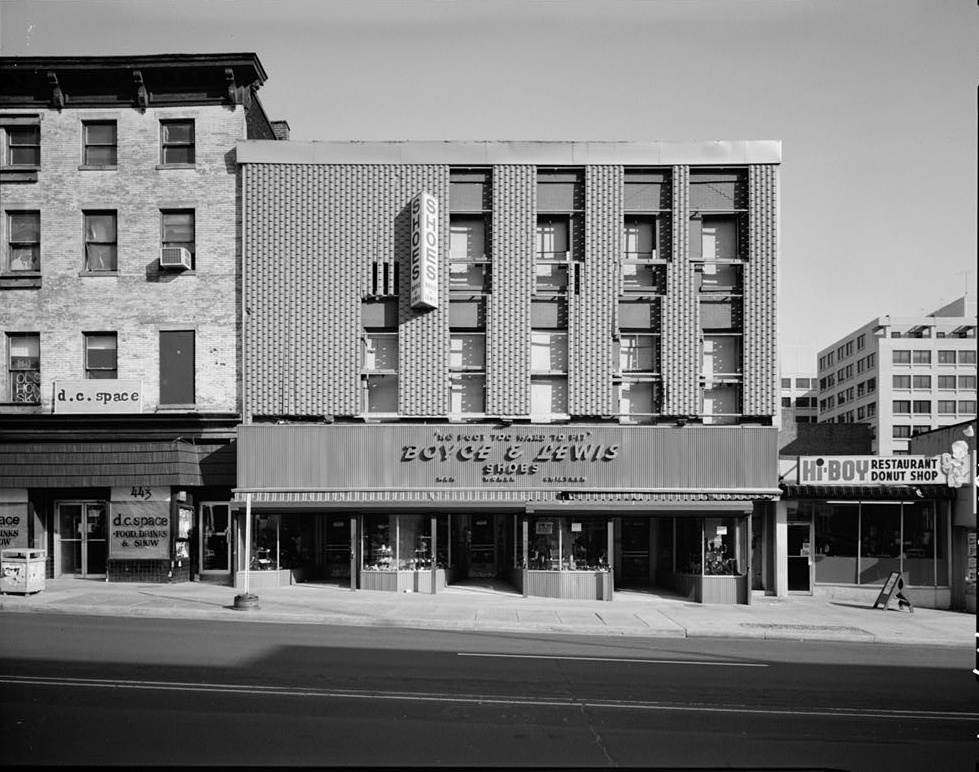
In Washington, Shaw closed the previous chapter of her life. After she left for Europe, he packed up some of her personal belongings along with a mix of other materials from the third floor and placed them in the attic. He would live on the third floor a few more years, before moving on. Other boarders would come and go. In 1913, the third floor was sealed off from the rest of the building. The Missing Soldier’s Office became a bit of a footnote, a brief interlude in Barton’s life. 

Just before Thanksgiving in 1996, a General Services Administration carpenter named Richard Lyons was inspecting the building before its scheduled demolition. While examining the unused 3rd floor, he discovered the trove of artifacts stored 120 years earlier, including the now iconic Missing Soldiers Office sign.

The iconic Missing Soldiers Office sign which identified the office location in Room 9 on the 3rd floor and its manager, Miss Clara Barton.

When a GSA carpenter discovered the Missing Soldiers Office sign in the attic, he knew he had found something significant.

Lyons began a research project that ultimately saved the building and an extensive renovation followed. The space is currently administered by the National Museum of Civil War Medicine, which partnered with the GSA in the renovation space. The Clara Barton Missing Soldiers Office Museum was opened to the public in 2015.

Today, a visit to the museum feels like a step back in time. The first floor, which for decades was used as a shoe store, is an open reception area housing the gift shop along with a large mural depicting the life of Clara Barton. 

Reproduction wallpaper hangs in a room at the Clara Barton Missing Soldiers Museum. Curators conducted extensive research on the original wallpaper samples still available to recreate the look of the rooms in Barton’s time.

Reproduction floral wallpaper hanging on one of the rooms at the Clara Barton Missing Soldiers Office

Extensive research has been done on returning the rooms to their 19th Century appearance, especially the wallpaper. Barton favored bold floral patterns for her personal space, office spaces had more muted colors in geometric designs. 

A selection of artifacts is on display through the rooms, including receipts, pens, stationery packaging, old clothing, and most impressive, a copy of the first Roll of Missing Men.

Today, of course, Barton’s work would not be necessary. The US Military has a very organized system for notifying next of kin about the loss of a service member. DNA samples are taken and stored to aid in identification. The Defense POW/MIA Accounting Agency works to identify the missing from earlier wars and conflicts. 

But before these systems were in place, it was a visionary Clara Barton who saw the need and created a structure to meet it. To make it work, she raised money, traveled the country giving speeches, lobbied Congress, issued reports, sought assistance from other Federal agencies and directed an extensive program of correspondence and outreach. 

It all happened over 150 years ago on 7th Street. Climb the stairs and see for yourself. 
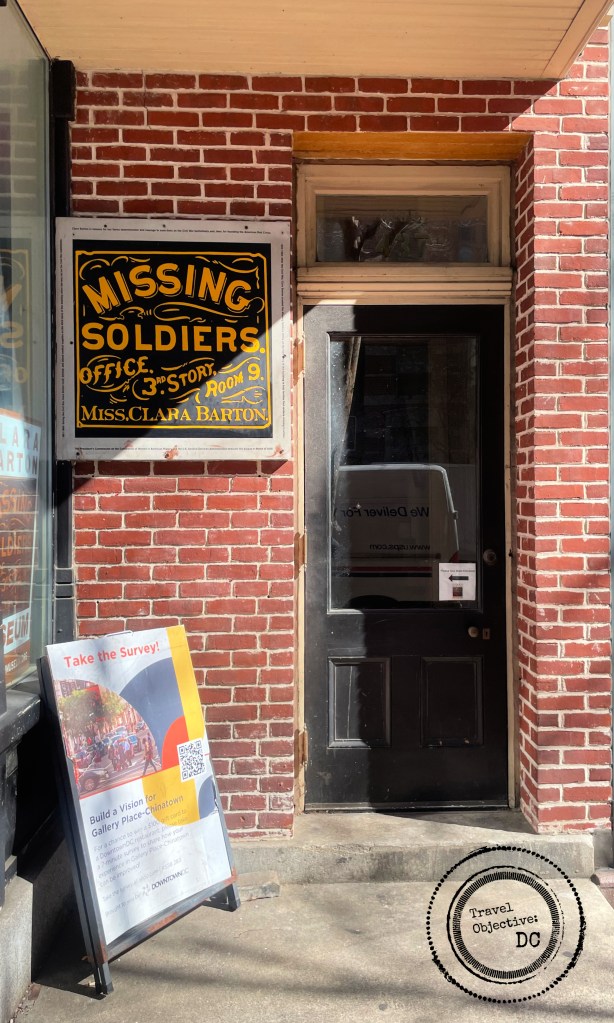
The entrance door leading to the stairway at the Clara Barton Missing Soldiers Office Museum.

* * *

Route Recon

The Clara Barton Missing Soldiers Office Musuem is located at 437 7th Street NW, Washington, DC 20004. The museum is open on Fridays and Saturdays from 11:00 AM to 5:00PM. The nearest Washington Metro Station is Archives-Navy Memorial-Penn Quarter. From the station exit, make a U-Turn back toward 7th Street. Turn left on 7th Street and proceed past D Street. The Clara Barton Missing Soldiers Office Musuem will be on your right just before E Street.

Command Reading

Relics of War, the History of a Photograph by Jennifer Raab

In 1865, on her visit to Andersonville, Clara Barton collected a variety of small artifacts she found around the camp, such as dug out bowls and cups, woven reed plates and spoons made from animal horns. She arranged these pictures on a writing desk and had them photographed. Barton used the relics in her work to raise awarness and enthusiasm for her Missing Soldiers Office and its mission. In her book, Dr. Raab, a professor of the history of art at Yale University, uses artistic criticism techniques to interpret the photograph and what it came to mean for post Civil War American society.

Hancock, the Superb


Statues of military leaders on horseback are a common site in plazas and squares around Washington, DC. While the statues might seem ordinary, the men featured on them are usually not. This is certainly the case with the statue of General Winfield Scott Hancock in the Penn Quarter neighborhood near the Navy Memorial.

It is hard to imagine a military career today as the one experienced by this 19th century Army leader.

As the Union Army was quickly expanding to meet the grim realities of the Civil War, Major General George McClellan, Commander of the Army of the Potomac, promoted his long-time acquaintance Hancock from captain to brigadier general and assigned him to brigade command. 

Hancock would go onto distinguish himself during the war, earning the nickname “Hancock the Superb”. He ultimately served 42 years on active duty and 25 years as a general officer. 

The equestrian statue of Winfield Scott Hancock.
The statue of General Winfield Scott Hancock

In 1896, the equestrian statue was dedicated to Hancock portraying the famous general in his more senior years. But the simple monument does not tell the full story of this highly respected Union Army general.

Hancock hailed from Montgomeryville, Pennsylvania. He was the son of a lawyer in a locally prominent Democratic family. His parents named him after Winfield Scott, the Army’s most senior officer at the time. His name was apt. From an early age, the young Winfield demonstrated a keen interest in military affairs. He could often be found leading young boys in a “youth militia company” on marches through town.

At the age of 16, he was accepted at West Point, graduating in 1844.

Assignments followed in the west and in Mexico during the Mexican-American War. After the war, Hancock often received Quartermaster assignments which taught him important lessons in logistics, organization and how to navigate the Army’s bureaucracy. His affable nature, technical proficiency and dashing good looks earned him an excellent reputation among his soldiers, colleagues and superiors.

Photograph of Winfield Scott Hancock.

A photograph of General Winfield Scott Hancock taken sometime between 1861-1865 by Brady’s National Photographic Portrait Galleries

-Library of Congress

Militarily, Hancock is probably best remembered for his actions as a corps commander in the Union Army of the Potomac at the Battle of Gettysburg in 1863. In the prelude to the fighting, Hancock arranged Union troops in a broad defensive position along high ground south of the town. Once the fighting began in earnest, Hancock led from the front, quickly maneuvering his troops to reinforce positions along the Union line. On the third day of the battle, Hancock was severely wounded in the thigh during Confederate General George Pickett’s famous charge against the Union center. 

Hancock would not leave the field until rebel troops had been repulsed. He would take five months to convalesce and would never completely heal from the wound. 

Early in his career, Hancock became very good friends with a North Carolina-born officer named Lewis Armistead. However, in 1861, while both were stationed in California, they said their good-byes and headed east, destined to fight on different sides. The two faced each other on the final day of Gettysburg when Armistead led a brigade as part of Pickett’s Charge against troops commanded by Hancock. Armistead was fatally wounded during the battle and died two days later. 

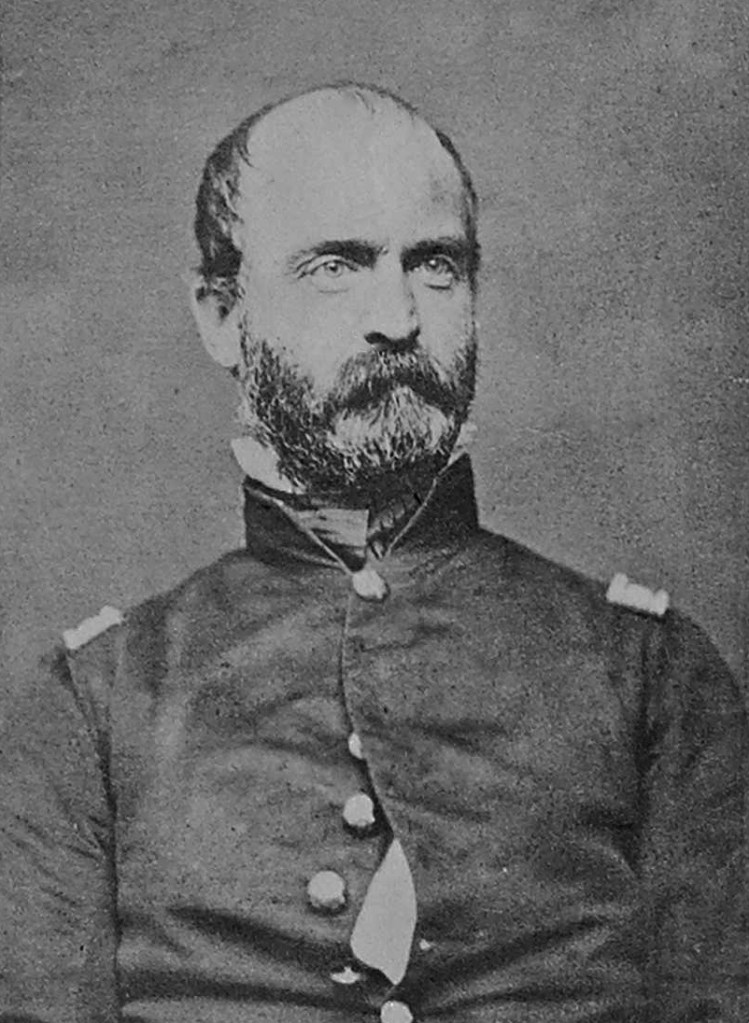
A photograph of Lewis Armistead, taken between 1861 and 1865, by an unknown photographer.

Photograph of Lewis Armistead

Both Hancock and Armistead are portrayed in Michael Shaara’s historical novel The Killer Angels and his son Jeffrey Shaara’s similar novels The Last Full Measure and Gods and Generals, as well as the films Gettysburg (1993) and Gods and Generals (2003).

There is scant historical evidence to support some of the depictions and dialog of the friendship between Armistead and Hancock portrayed in the novels and films. However, Captain John Bingham, an officer on Hancock’s staff, spoke with Armistead before he died. He would later write to Hancock with Armistead’s parting words to him: “Tell General Hancock for me that I have done him and done you all an injury, which I shall regret the longest day I live.” 

In July of 1865, it was Hancock who supervised the execution of several of John Wilkes Booth’s conspirators in the assassination of President Lincoln. He would later be assigned as military governor of Louisiana and Texas during Reconstruction. His Democratic leanings, including his endorsement of the quick return of civil authorities, put him at odds with Republicans in Washington and with his former commander (and later President) Ulysses S. Grant. 

A commemorative  handkerchief featuring the images of Democratic Presidential candidate Winfield Scott Hancock and Vice Presidential candidate William English.

A commemorative handkerchief featuring the images of Democratic Presidential candidate Winfield Scott Hancock and Vice Presidential candidate William English

-Library of Congress

While remaining in the Army, Hancock tested politics several times. After two attempts, he secured the Democratic nomination for president in 1880, but lost to a Republican (and former Union General) James Garfield. 

Hancock died at age 61 in 1886 from an infection and complications of diabetes while serving as Commander of the US Army’s Department of the Atlantic. His death surprised the country as the condition of his health was unknown to most everyone. 

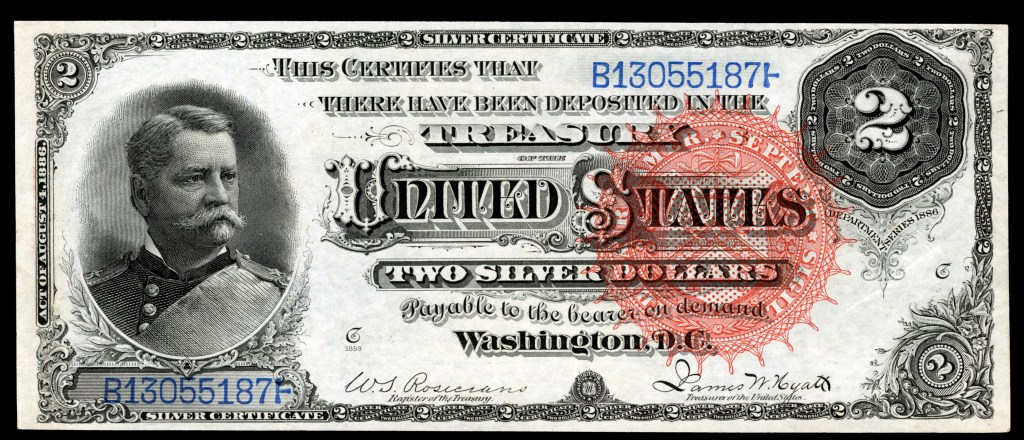
$2 Silver Certificate with portrait of Winfield Scott Hancock.
Following his death, Hancock was placed on the $2 Silver Certificate bill

Tributes to Hancock poured in from military, civic and political leaders from across the country. Perhaps the most stirring came from a political rival and former president, Rutherford B. Hayes:

“If, when we make up our estimate of a public man, conspicuous, as a soldier and in civil life, we are to think first and chiefly of his manhood, his integrity, his purity, his singleness of purpose, and his unselfish devotion, we can say truthfully of Hancock that he was through and through pure gold.”

Hancock’s statue is made of bronze, not gold, but he was the gold standard of an officer and a gentlemen.

* * *

Route Recon

The Statue of Winfield Scott Hancock is located just south of the Archives-Navy Memorial-Penn Quarter Metro Station.

Command Reading

Armistead and Hancock: Behind the Gettysburg Legend of Two Friends at the Turning Point of the Civil War by Tom McMillan. This dual biography of two leading Civil War generals provides new scholarship and analysis of their lives and careers and specifically details their friendship from its earliest days up to the Battle of Gettysburg.

The Grand Army of the Republic: the Legacy Lingers


The latter half of the 18th century saw a heyday for fraternal organizations in the United States. These associations provided their largely male memberships with opportunities to share common cultural, occupational, and religious backgrounds while often hosting social and recreational events for members and their families. 

One of the most prominent and powerful of these organizations was known as the Grand Army of the Republic (GAR). Membership in the GAR was open to all honorably discharged personnel, both officers or enlisted, from the Union Army, Navy, Marine Corps and Revenue Cutter Service (forerunner of the Coast Guard) who served during the Civil War. 

The GAR was founded in 1866 by Dr. Benjamin Stephenson who served as a surgeon with the 14th Illinois Volunteer Infantry Regiment. After the war he established a medical practice in Springfield, Illinois. Working with several veteran colleagues, he helped organize the first GAR post in nearby Decatur. 

The Grand Army of the Republic memorial in Washington, DC
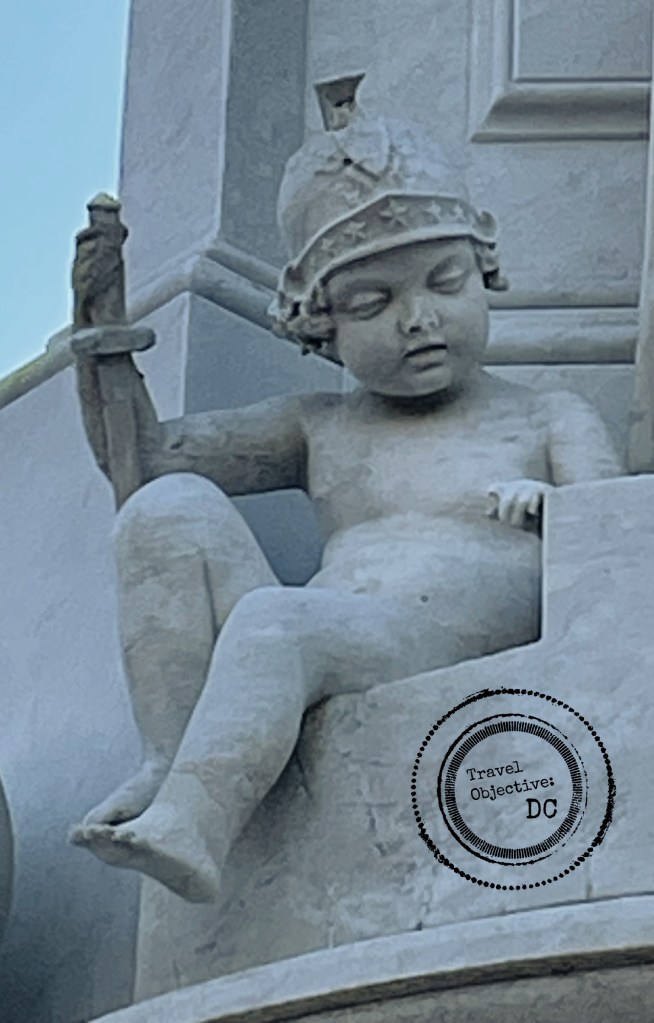
A Union soldier and sailor represent Fraternity on the Grand Army of the Republic memorial at Indiana Plaza.

The GAR Memorial

One of the GAR’s principal activities was building and dedicating monuments to the sacrifices of Union forces and to the work of the GAR itself. As Union veterans aged, the GAR stepped up their efforts to build such memorials. In Washington DC, a GAR monument is located in Indiana Plaza in Washington’s Penn Quarter neighborhood. Several historic buildings frame the plaza and the Archives-Navy Memorial-Penn Quarter Metro Station brings consistent foot traffic to this busy area. 

The GAR Memorial, also known as the Benjamin Stephenson Memorial, is triangularly shaped to reflect the GAR’s motto of Fraternity, Charity and Loyalty. Each side of the 25-foot high sand colored granite block has a bronze sculpture, featuring a weathered green patina. 

The southern facing side reflects Fraternity with a sculpture of a Union soldier and sailor standing side by side. Below the sculpture is an oval image of Dr. Stephenson in his Army uniform, also rendered in bronze, surrounded by a laurel wreath carved into the granite. 

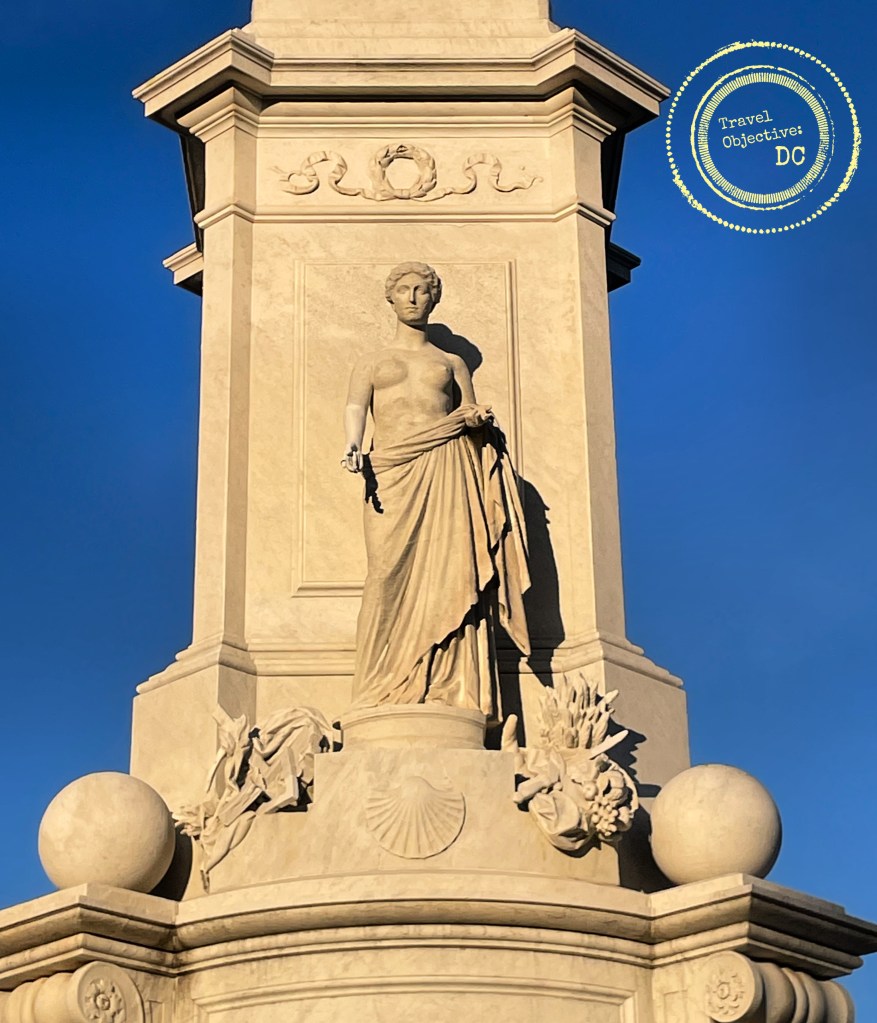
The Northeast side of the Grand Army of the Republic memorial, depicting the statue of Loyalty.

A statue of a woman with a sword and a shield represents Loyalty on the Grand Army of the Republic Memorial.

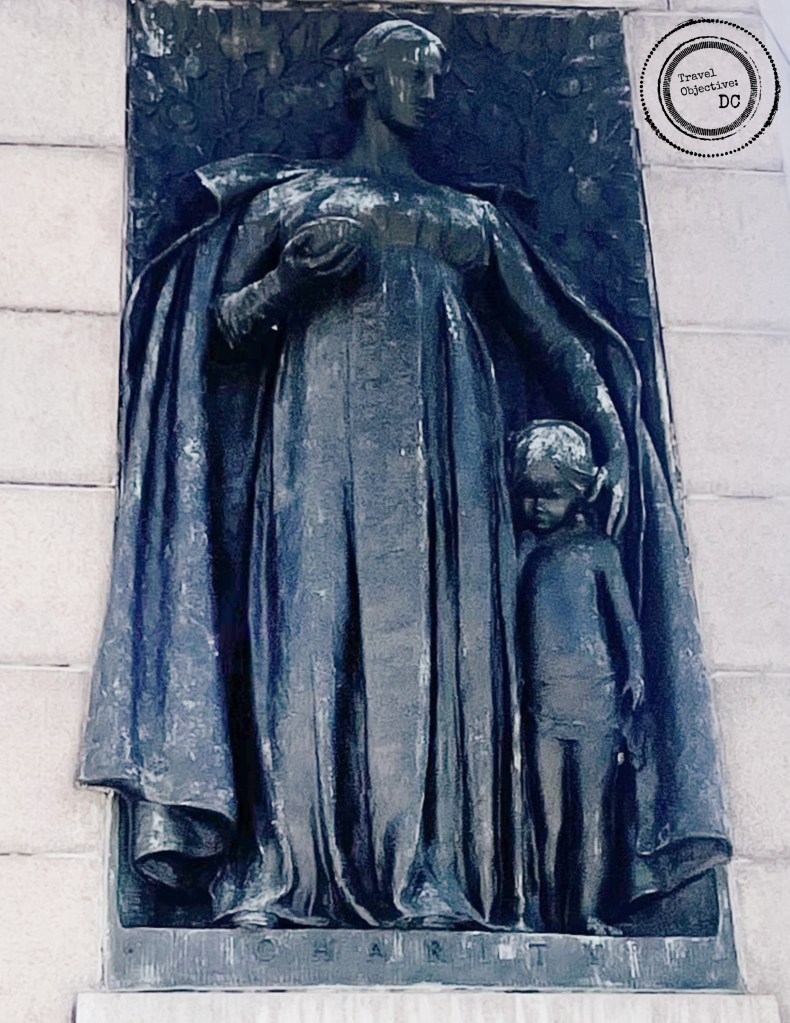
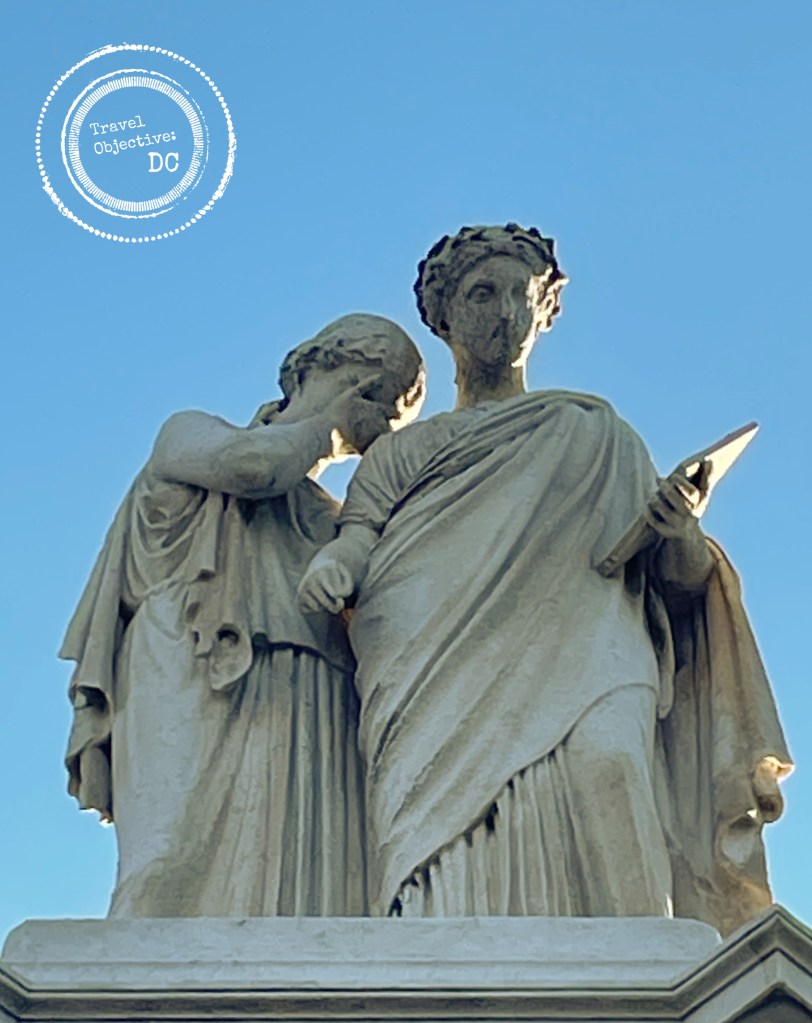
Charity is portrayed on the northwest side by a woman wearing a robe and protecting a young child. Unfortunately, a thick coat of urban grime makes viewing this statue more difficult. Finally, Loyalty is represented on the northeast side by a statue of a woman bearing a sword and holding a shield.

The monument was dedicated on July 2, 1909 in a ceremony attended by President William Howard Taft and hundreds of aging Civil War veterans. The GAR Members in the crowd that day may not have realized it, but they were part of one of America’s earliest and most powerful single-issue advocacy societies.

The Legacy of the GAR

When Dr. Stephens founded the GAR, the original focus was to raise money and organize relief efforts for wounded veterans, as well as surviving widows and children. But in short order the GAR would move to lobbying State and Federal officials for expanded pensions for Union veterans, hiring preferences for government jobs, and the building of veterans homes and hospitals. Membership soared, reaching its peak in 1890, when the GAR boasted more than 400,000 members. 

A woman and small child represent Charity on the Grand Army of the Republic Memorial.

The statue depicting charity on the Grand Army of the Republic Memorial in Washington, DC.

The GAR grew politically prominent and was especially influential within the Republican Party. In the second half of the 19th century, five Republican GAR members were elected to the presidency. Many more GAR members were elected to Congress, governorships and state legislatures. 

One reason the GAR was so politically effective was its formal structure of organized components across the country. State level units were known as departments and local bodies were known as posts. Every state had a department and posts were found in communities nationwide. GAR posts were also found in US territories and international locations. 

The national headquarters, state departments and local posts operated under a common set of by-laws and had an established chain-of-command. Each year from 1868 through 1949, the GAR organized national reunions known as encampments. These encampments were so well attended they grew larger than the political conventions of the day. Encampments were moved from state to state and localities welcomed the gatherings for the positive economic impact they provided. 

The bronze relieve figure of Dr. Benjamin Stephenson, founder of the Grand Army of the Republic.

The bronze relief of Dr. Benjamin Stephenson, founder of the Grand Army of the Republic.


Locally, posts raised money, built memorials, organized commemorations and ceremonially buried deceased veterans. They also assumed important civic functions not always tied to veterans, directing fundraising to local causes, organizing the broader community to address local issues, and sponsoring recreational events open to all. The GAR’s organizational model and many of its practices were later adopted by the Veterans of Foreign Wars (founded in 1899) and the American Legion (founded in 1919) and are still in use today.  

At at time when membership in fraternal organizations was often limited by race, GAR membership was open to all veterans, including the African Americans who fought as U.S. Colored Troops or had enlisted in the other services.

Membership in the GAR was exclusive to veterans and therefore only open to men. However, there were at least three female members: Kady Bromwell, who served along with her husband in two different Rhode Island Infantry Regiments; Sarah Edmond, who disguised herself as a man and fought with the 2nd Michigan Infantry Regiment; and Dr. Mary Edward Walker who served as a Union Army surgeon. 


The GAR formally disbanded in 1956 upon the death of its last member, Albert Woolson. Woolson, whose father had died of his combat wounds, enlisted in the 1st Minnesota Heavy Artillery Company as a drummer boy in 1864. He was about 14 years old the time. After his death, Life magazine ran a seven page story about his life.

While the GAR has been gone for over seventy years, its legacy remains. Many patriotic acts we practice today, such as placing flags on veterans graves, observing Memorial Day each May, standing for the National Anthem and saluting the flag all originated with the GAR. 

While the GAR may only be seen today through its monuments, its boot steps still echo through our stadiums, cemeteries, Legion posts and veterans homes. 

* * *

Route Recon

The memorial is located at Indiana Plaza in the Penn Quarter neighborhood. The small public plaza, located across the street from the Archives-Navy Memorial-Penn Quarter Metro station, is bounded by 7th Street to the west, Indiana Avenue to the north, and Pennsylvania Avenue to the south. 

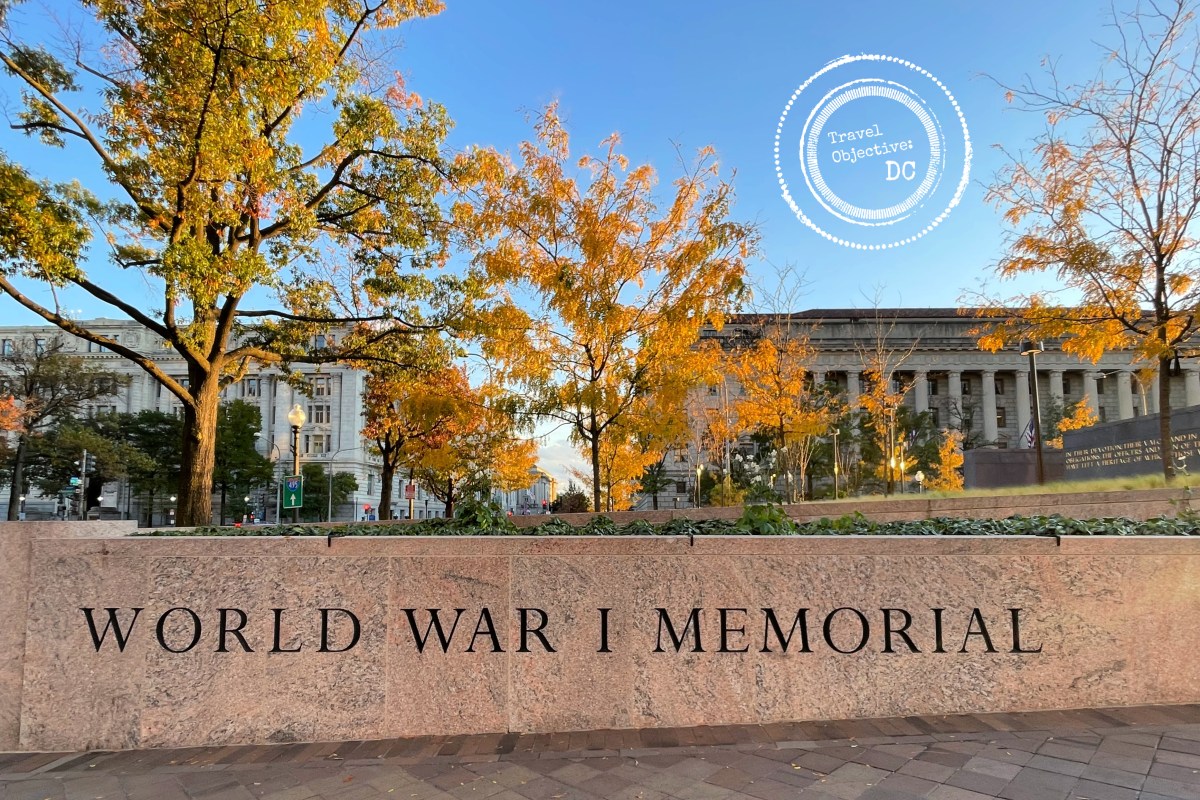
Over 100 Years Later, DC’s World War I Memorial Is Now Complete

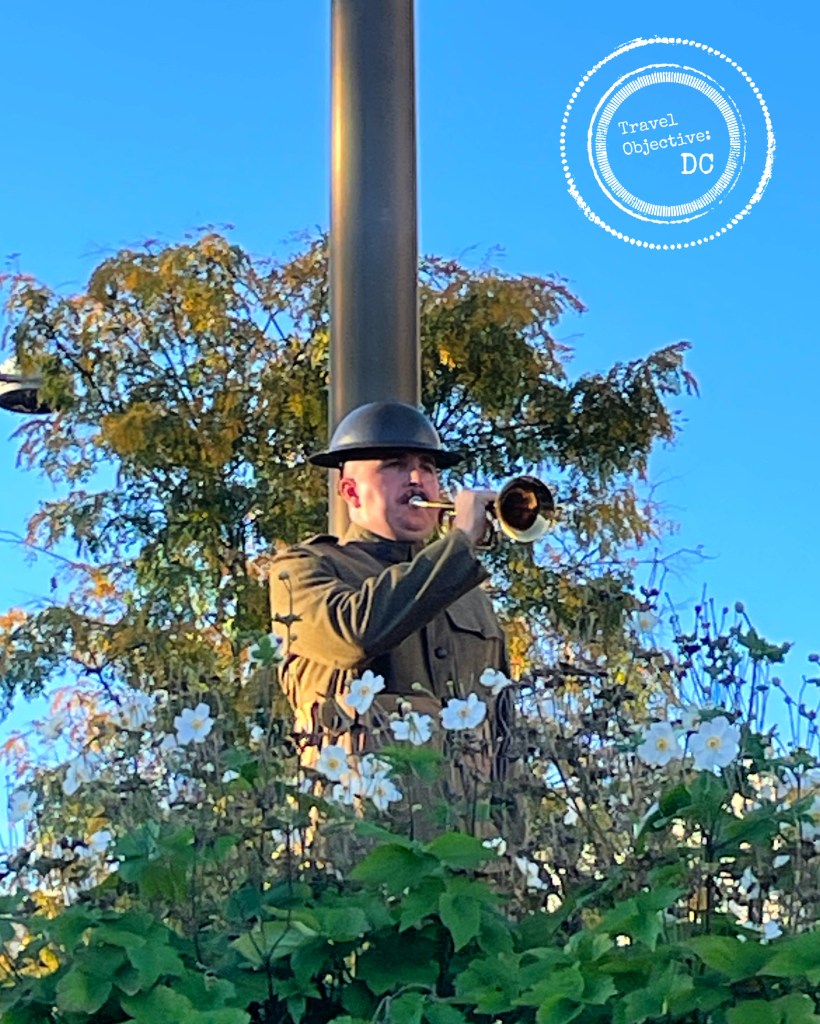
Each day, shortly before 5:00 pm, an individual in a First World War U.S. Army “Doughboy” uniform exits the stately Willard Hotel and crosses Pennsylvania Avenue, bound for the Washington DC area’s newest memorial, the National World War I Memorial.

The Doughboy carries a bugle, and positions themselves under the memorial’s flagpole. Precisely at 5:00 o’clock, the bugler plays the mournful notes of Taps. The bugle notes echo through the plaza inviting all who hear to pause and remember the 4.7 million American men and women who fought in World War I and especially the estimated 126,000 Americans who gave their lives in the “war to end all wars”.

Bugler in World War I uniform - World War I Memorial - Washington DC

A bugler in his World War I uniform

In a bit of irony, for over a century there has not been a national memorial in the capital city to World War I. There are other important World War I monuments in and around Washington, but not a single, focused and comprehensive national memorial to the war that shaped so much of the 20th century and America’s role within it. Yet that changed in 2021 when a partially constructed memorial was dedicated and opened to the public. Three years later, the final and dramatic piece of the memorial was installed capping a years long effort and bringing Washington, DC’s National World War I Memorial to fruition.

Pershing Park

The National WWI Memorial is located in what was formerly known as Pershing Park, a parcel of land originally laid out as part of the redevelopment of Pennsylvania Avenue in the 1970s.  Located between 14th and 15th Streets and Pennsylvania Avenue, the park was dedicated to General of the Armies John J. Pershing and the American Expeditionary Force (AEF) and formally opened in 1981.

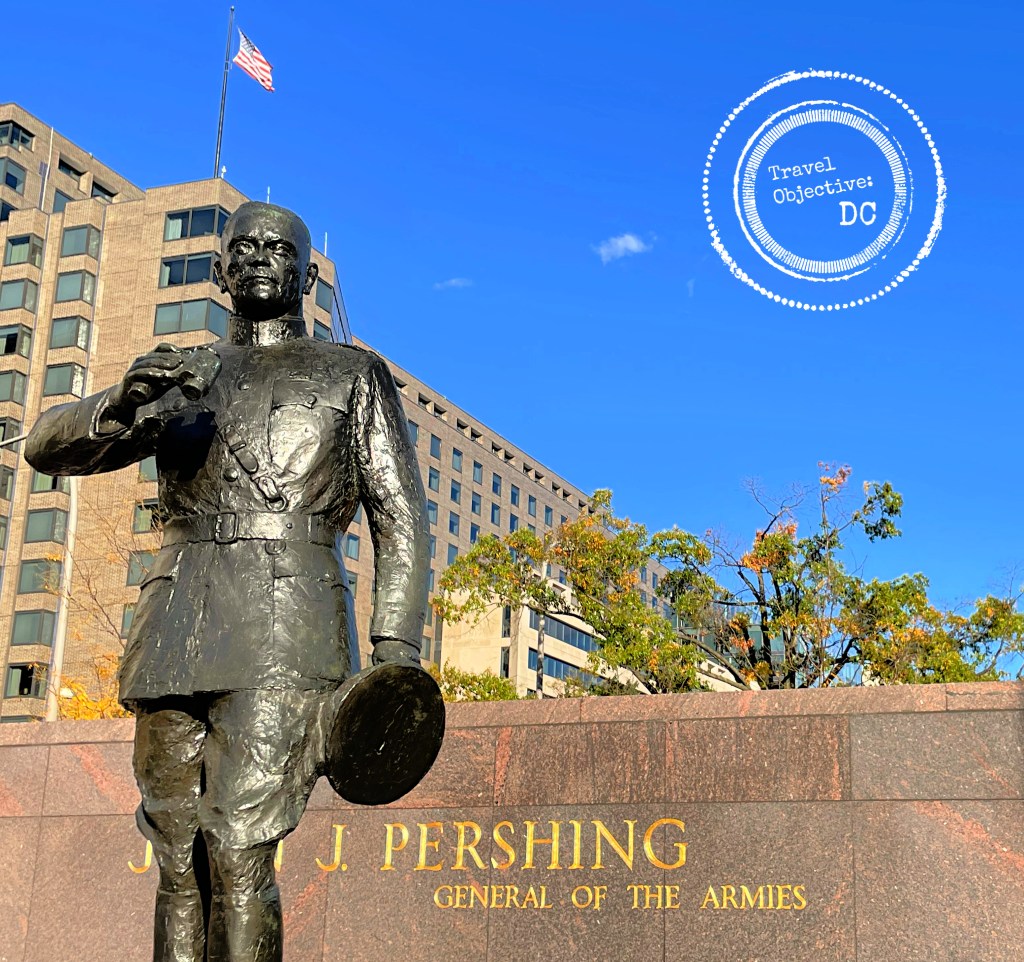
The park featured an eight-foot-tall statue of Pershing standing straight and surveilling the horizon with his binoculars in hand. A wall perpendicular to the statue displayed maps and details of the AEF’s operations in Europe. 

The statue of General of the Armies John J. Pershing at the National World I Memorial

General John J. Pershing statue - National World War I Memorial - Washington DC

Also included were a fountain that could be converted to a skating rink during the winter months, a glass concession stand and sitting areas. Abundant landscaping was added to provide a natural setting within a busy urban corridor. Earthen berms covered with grass surrounded the park on three sides, shielding the grounds from traffic noise.  

Unfortunately, maintenance funds for the park’s unique features were scarce. Some aspects of the park fell into disrepair, trash accumulated and the landscaping neglected. 

However, when the World War I Centennial Commission went in search of a venue for a national memorial to World War I in the nation’s capital, it ultimately decided on a redesigned Pershing Park as the best location.  

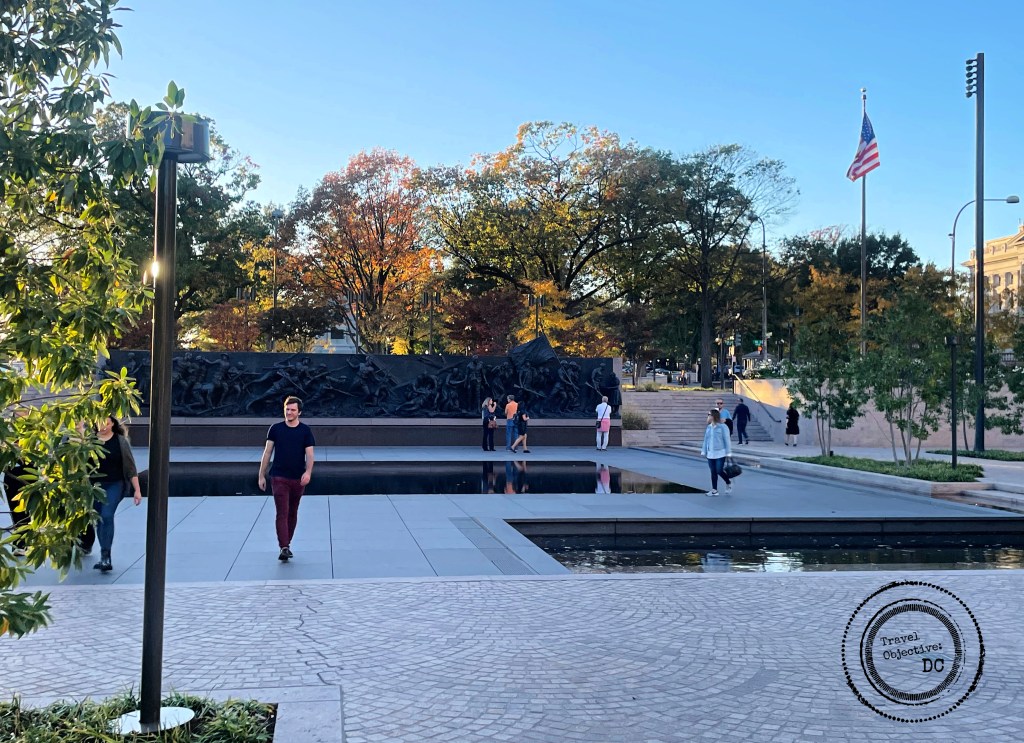
Visitors walk through an open plaza at the National World War I Memorial.

Visitors walk through an open plaza at the National World War I Memorial.

With the clock ticking on the 100th Anniversary of the armistice, the commission expedited the truly lengthy process for approving new landmarks in Washington. The approach was not without controversy. Community and architectural groups grew concerned the new designs abandoned the original intent of an open green space in the middle of the city. 

Ultimately, in 2016, a design submitted by architect Joseph Weishaar was selected. His approach was to use the existing footprint of the 1.76 acre park situated in a busy downtown area just southeast of the White House. Weishaar retained Pershing’s statue, the AEF Wall and the earthen berms but planned new features that expanded the interpretation of World War I.

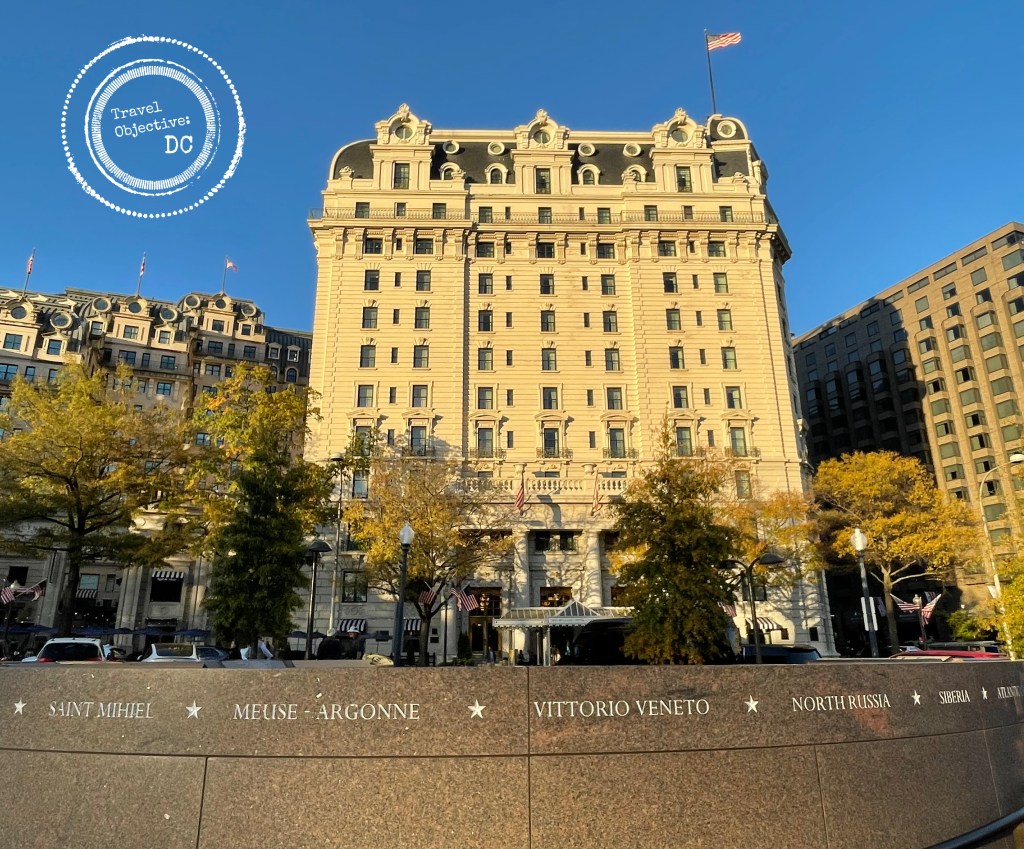
One new addition is known as the belvedere, a raised, enclosed circular area located near the northeastern entrance of the park.  The belvedere serves as the memorial’s orientation center. Interpretive signage installed along the interior of the wall familiarizes the visitor to “the Great War” and the roles played by American forces. The belvedere’s elevation provides clear lines of sight to the memorial’s features. 

Willard Hotel in the background of the belvedere at First World War Memorial.

The circular wall of the belvedere is inscribed with the campaign names of the First World War. In the background is the Willard Hotel.

A Soldier’s Journey

Across the plaza from the belvedere, over a shallow reflection pool is the most prominent aspect of the the new memorial, a large relief sculpture entitled A Soldier’s Journey by Sabine Howard.  The sculpture’s installation in September of 2024 completes the National World War I Memorial.

The sculpture stretches 58-feet long and includes 38 separate statues. Designed to be viewed from left to right, the sculpture tells the story of an American soldier’s experience across a series of tableaus. 

Howard and his team followed a meticulous process beginning with over 12,000 drawings and photographs of models in various poses, which he used to create foam models. These foam models were then covered in clay so accurately that every uniform crease, garment wrinkle, weapon detail, and facial expression were painstakingly rendered. The clay-covered models were then used to create the molds in which the bronze statues were cast.

Sabine Howard - sculpture - A Soldier's Journey
Sabine Howard’s sculpture “A Soldier’s Journey”

Howard used combat veterans as his models, believing their faces would more accurately portray the effects of war. All the uniforms and equipment used by the models were century-old artifacts, not reproductions. Through this extensive detail, Howard invites the viewer into the story.

The effort took about eight years to complete.  

The story begins with the soldier receiving his helmet from his young daughter. He then joins fellow soldiers as they march off. The next scene shows them charging at the enemy through no-mans land. The costs of war, both physical and psychological, are shown next as nurses comfort the afflicted while our soldier looks blankly at the viewer with a harrowing gaze. 

In a dramatic scene from the sculpture entitled the Ordeal, American soldiers charge the enemy.

A dramatic scene from the sculpture A Soldier's Journey at WWI Memorial in Washington DC

The soldier then returns home as part of a victory parade. In the last scene, the soldier hands the helmet back to his daughter. Rather than depicting a joyous scene, this one is foreboding. The soldier has a look of deep resolve on his face. The daughter stares into the helmet, wearing a troubled expression. She represents the Greatest Generation, who would soon take up the mantle once again and fight another war. 

Howard’s work is powerful and thought provoking, but the story told through the sculpture is a familiar one. With some changes to the uniforms and equipment, the story could be about any war. 

This was Howard’s desired effect.  He wanted a sculpture that asks the questions any war memorial should ask: Was it worth it? What did we gain? What did we lose? What did we learn? 

Other Features

On the reverse of the sculpture wall, water gently cascades over an inscription taken from a haunting poem entitled The Young Soldiers Do Not Speak by Archibald MacLeash. MacLeash’s poem is written from the perspective of deceased soldiers who tell the living that it is up to the them to give meaning to the lives the soldiers lost. MacLeash was a veteran of the First World War who became a noted writer, poet and editor. President Roosevelt appointed MacLeash as the Librarian of Congress in 1939. He wrote a poem in 1940 in honor of the Library of Congress staff who died in World War I. 


“We were young, they say, we have died, remember us”

From The Young Soldiers Do Not Speak by Archibald MacLeash

A unique aspect of the memorial are the circular benches arrayed around the southern and western edges of the memorial plaza. Unlike similar war memorials in Washington, the inclusion of these sitting areas provides an appointed space available for rest and reflection, a gathering spot for friends or even an area for discussion about World War I. Trees and ornamental grasses around the memorial plaza provide a peaceful sense to aid in reflection.

Additionally, the live playing of Taps daily adds a human element to the stone and bronze of the memorial. The daily bugler initiative is coordinated by the Doughboy Foundation. Through the foundation’s website, members of the public can sponsor each day’s rendition in remembrance of an individual. The name of the day’s honoree and the scheduled bugler can be learned by scanning a QR code on a sign near the memorial’s flagpole. 

Bugler - Doughboy Foundation - bugler playing Taps

Taps is sounded daily at the National World War I Memorial.

The evolution of Pershing Park into Washington DC’s National World War I Memorial has brought new life and purpose into this downtown space. The area is now more inviting and interesting, drawing more people in to learn about the American role in World War I and to remember those who fought and died. 

At the dedication ceremony for the sculpture, Architect Joseph Weishaar remarked: “We don’t build memorials for the dead. They are for the living. We build them to protect and preserve our memories and our stories.”

While it seems so long ago, World War I continues to impact issues of the 21st century, such as the geopolitical situations of Eastern Europe and the Middle East, the immigration system we know today, defense spending, women’s rights, and the role of America on the world stage to name only a few.

However, as World War I moves deeper into history, maintaining the stories and learning its lessons becomes imperative. For if we lose them, we lose a big piece of who we are.

Route Recon

The World War I Memorial is accessible 24 hours a day, seven days a week. The memorial is located in downtown Washington, DC between the intersections of 14th and 15th Streets Northwest and Pennsylvania Avenue.

The closest Metro Station is Federal Triangle, located about three blocks away on the Blue, Orange and Silver Lines. Metro Center Station on the Red Line is located about flour blocks away to the north.

Giving Benedict the Boot at Saratoga

Saratoga National Historical Park sits tucked up against the Hudson River along the rolling foothills of the Adirondack Mountains in upstate New York. The park preserves the sites of the First and Second Battles of Saratoga (also known as the Battle of Freeman’s Farm and the Battle of Bemis Heights respectively) fought in the autumn of 1777.

Saratoga is often described as the turning point of the American Revolution. For the first time, an entire British Army had surrendered to the Americans. The victory persuaded European powers, especially France, to come to support of the fledging nation fighting for its independence from Great Britain. 

Farms, fields and forests mark the landscape of Upstate New York near Saratoga National Historical Park.

Like many battlefields, various stone markers and monuments dot these famous fields, commemorating leaders, units or events. On a small ridge sits a distinctive piece of American statuary, as unique as can be found on any American battlefield. 

The statue marks the location where during the Second Battle of Saratoga, on October 7, 1777, the infamous Benedict Arnold was critically wounded in his left leg. He was leading his men in multiple charges against British and Hessian troops who were well defended behind tall, thick wooden redoubts.

It was on the last charge as Arnold and his men captured the redoubt that the final volley of retreating Hessians would find its mark. The bullets tore into Arnold’s left leg and killed his horse, which collapsed on and shattered the leg as the horse and rider dropped to the ground. 

The painting Battle of Saratoga: General Arnold Wounded in the Attack on the Hessian Redoubt by Alonzo Chappel, 1860

Arnold’s contributions at Saratoga would secure an important American victory, yet lead him down the path to treachery. 

In the United States, the name Benedict Arnold is still synonymous with traitor. Yet this was not always true. 

Arnold was born in Connecticut, the son of a successful barrel maker. He grew up living a comfortable life in Colonial America. At a young age, Arnold apprenticed in a relative’s apothecary shop. He later became a shipper and merchant, occupations where he could seek adventure and profits at the same time. 

As the colonies moved closer to revolution, Arnold became a colonial militia leader in Connecticut. He repeatedly demonstrated tremendous courage in battle, an adroit grasp of tactics and outstanding military leadership. Arnold, along with Ethan Allen, captured Fort Ticonderoga in 1775. He led a colonial force in the attacks on Montreal and Quebec, commanded a fleet of ships on Lake Champlain and relieved a British siege of Fort Stanwix in Western New York. Arnold would receive tributes and promotions for his actions.

Benedict Arnold, depicted as a colonel by English artist Thomas Hart, 1776

Yet Arnold was also a very difficult person, vain, distrustful of others, and easily offended. He especially chafed when others took or received the credit he thought he deserved.

At Saratoga he was often in conflict with his more cautionary commander, Horatio Gates. After the battle, Gates took credit for Arnold’s actions, which enraged Arnold. Arnold’s business was also struggling and he resented the promotion of other officers over him. 

After a long, difficult and painful convalescence (he never regained full use of his leg), Arnold was placed in command of American forces around Philadelphia. There he met and eventually married the daughter of a prominent loyalist family. It was in Philadelphia where Arnold began to communicate with British officials regarding switching sides.

In 1780, Arnold was named the commander of the U.S. fortifications at West Point, an important stronghold on the Hudson River. Arnold arranged for the surrender of West Point to the British in exchange for money and a commission in the British Army, negotiating the terms with his British interlocutor, Major John André.

John Watts de Peyster, scion of a prominent New York family, was an author, commentator on military affairs and Adjutant General of the New York Militia.

After a meeting with Arnold, André was captured by New York militiamen. While André was searched, the surrender terms and other documents were discovered in his boot. As he was not in uniform, André was arrested and later hung as a spy.  With his treachery exposed, Arnold fled to New York City. While he received a major general’s commission, his British superior, Sir Henry Clinton had little trust in Arnold. He did not have many opportunities for success on the battlefield. After the final victory at Yorktown, Arnold and his family moved to London. 

Arnold revived his merchant business after the war with mixed results. Although he had established good relationships with King George III and members of the British aristocracy, Arnold was not highly regarded in England, and he remained despised in the United States.

He died in London in 1801, a rather bitter man.

Nevertheless, a century later, a New York military and community leader named John Watts de Peyster commissioned a monument commemorating Arnold’s actions on the Saratoga battlefield. de Peyster was the author of several works of military history, including two books on the Battle of Saratoga.

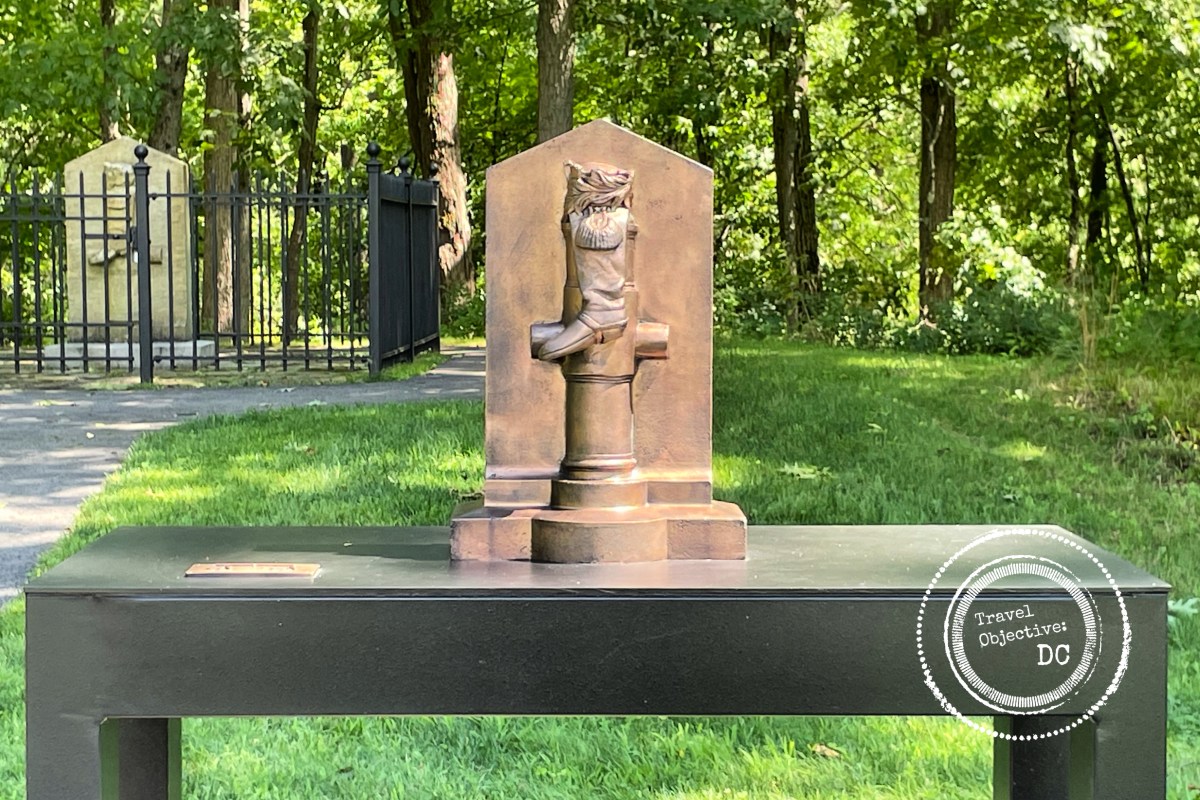
The Boot Monument, commissioned by John Watts de Peyster and sculpted by George Edwin Bissell.

de Peyster admired the courage Arnold displayed at Saratoga and its contributions to the American victory, and the subsequent assistance to the cause the victory brought about. He believed Arnold’s actions deserved recognition. de Peyster collaborated with a prominent sculptor named George Edwin Bissell to create a statue recognizing Arnold’s actions, but not his treachery.

Approaching the statue, known as the Boot Monument, the four foot high white marble sculpture almost resembles a grave marker especially as it is enclosed by a black iron fence. The front of the monument is really rather simple. It bears no inscriptions, only simple yet expressive imagery. A rider’s boot, with the toe pointing left (to symbolize Arnold’s left leg), topped by a major general’s fringed epaulet, further crowned by a laurel wreath. The vertically aligned images all seem to hang from a downward pointed howitzer. 

On the reverse of the monument is this inscription:

Erected 1887 By

JOHN WATTS de PEYSTER

Brev: Maj: Gen: S.N.Y.

2nd V. Pres’t Saratoga Mon’t Ass’t’n:

In memory of

the “most brilliant soldier” of the

Continental Army

who was desperately wounded

on this spot the sally port of

BURGOYNES GREAT WESTERN REDOUBT

7th October, 1777

winning for his countrymen

the decisive battle of the

American Revolution

and for himself the rank of

Major General.

While Arnold is not mentioned anywhere on the statue, a nearby interpretive sign summarizes his story, so there is no question to whom the phrase “the most brilliant soldier of the Continental Army” refers. It is worth noting that Arnold was already a major general at the time of the battle. He was however, promoted to a more senior status as a result of his conduct at Saratoga. 

The Saratoga Battle Monument in the village of Victory, New York

Perhaps de Peyster’s interest in recognizing Arnold with a separate statue stems from his work as part of the Saratoga Monument Association (referred to as “Saratoga Mon’t Ass’t’n” on the inscription), which purposefully snubbed Arnold in another monument. 

To mark the Battle of Saratoga’s centennial in 1877, the Saratoga Monument Association, a private group, raised funds to build a prominent monument near the battlefield.

Completed in 1883, the Saratoga Battle Monument is a 155 foot high obelisk made of dark granite. It is located in the nearby village of Victory, New York. 

The empty statue niche on the Saratoga Battle Monument.

The monument has a door on each of its four sides, and above each door is a niche for a statue. Three of the niches contain statues of the senior commanders at Saratoga: General Horatio Gates, General Philip Schuyler and Colonel Daniel Morgan.  The fourth niche, facing south toward the battlefield, is purposefully empty. It is where a statue of Benedict Arnold would have been placed had he stayed true to the cause. 

When the monument is open, visitors can climb the 188 stairs to the top and take in the very picturesque countryside with views of local farms, rolling hills and the Adirondack Mountains in the distance. Along the way, there are sixteen bas relief plaques cast in bronze with scenes from the time of the battle along with stained glass windows and mosaic tiled floors. 

The bas relief sculpture of the wounding of Benedict Arnold inside the Saratoga Battle Monument.

The Saratoga battlefield and Monument are only two of five sites comprising the Saratoga National Historical Park. Other venues include Victory Woods, where the British Army made its final encampment, the Saratoga Surrender Site, and the Philip Schuyler mansion. (Schuyler was a New York patrician who commanded the Continental forces opposing Burgoyne prior to Gates. He is probably best known today as Alexander Hamilton’s father-in-law). The park recently completed a $6 million dollar improvement project that added interpretive signage, tactile maps and other objects, along with upgraded roadways and trailheads. 

As the national mark’s the 250th anniversary of the American revolution, new generations of historians, students and visitors will research and learn about the early American Patriots. They will discover how complex these men and women were. Perhaps one of the most complex was Benedict Arnold. Although he eventually chose a dishonorable path, he fought very bravely for the cause of independence at a critical time of the Revolutionary War. de Peyster’s statue reminds us of this Arnold — an Arnold that is too important to be forgotten or ignored. 

Route Recon

Start your trip to the Saratoga National Historical Park at the park’s Visitor Center where you will find information about the battle, the park’s various venues, upcoming programs and weather advisories.  

The Visitor’s Center is located at 648 New York State Route 32, Stillwater, NY 12170.

The park is approximately 40 miles north of Albany, NY and 14 miles southeast of Saratoga Springs, NY. 

More detailed directions are available here.  

The park is open year-round, with the exception of several holidays. Some park features are only open seasonally. Check the Saratoga National Historical Park website for more information about seasonal operating hours.

There is a one-way, 10-mile road circumventing the battlefield area. The road has ten tour stops at significant places in the battlefield. The Boot Monument is located at Stop 7. 

Mess Call

Fortify yourself for your day of exploration at the Saratoga National Historical Park at Mama Bear’s Diner (formerly Sweeney’s) in Schuylerville, NY. Mama Bear’s serves hearty breakfast and generous sandwiches for lunch in a modern yet homey setting. The eatery recently changed ownership with a long-time server taking ownership. She is continuing the traditions of generous portions that Sweeney’s had established while adding a focus on sourcing more ingredients from local farms. 

Mama Bear’s Diner is located at 106 Broad Street, Schuylerville, NY, 12871.

Open Wednesday through Sunday from 7:00 AM to 2:00 PM.

Command Reading

Saratoga: A Military History of the Decisive Campaign of the American Revolution

Author John Lauder drew upon his years of experience as a researcher and historian for the National Park Service (he developed the interpretation plan for Saratoga National Historical Park) to write a comprehensive yet readable history of British General John Burgoyne’s Albany Campaign of 1777. Lauder’s work carefully examines the strategic and tactical aspects of the campaign along with the parallel political machinations which shaped the campaign and the Americans’ defensive response. Lauder thoroughly examines Benedict Arnold’s actions, from his participation in the 1775 attack on Quebec to his command of the fleet on Lake Champlain to his leadership at Saratoga. 

Understanding Arlington Begins at Arlington House


In the spring of 1864, as the Civil War extended into its third year, the Union Army was suffering staggeringly high casualties. Sadly, the newly created national cemeteries at the Soldiers’ Home in Washington and in Alexandria were reaching capacity. 

The Union Army was going to need additional space to bury its war dead. Major General Montgomery C. Meigs, the Quartermaster General of the Army, knew where he was going to find it. 

Meigs soon directed burials to begin at Arlington, the antebellum plantation of Robert E. Lee and his wife Mary Custis Lee. 

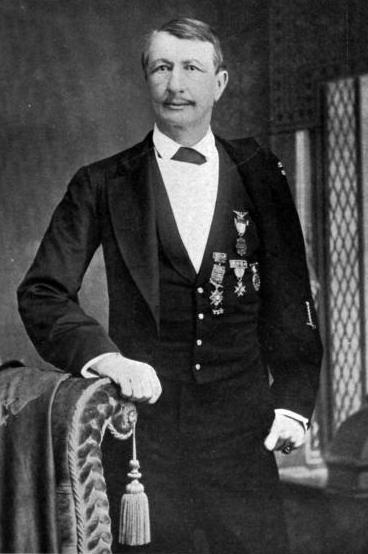
Brevet Major General Montgomery C. Meigs, Quatermaster General of the US Army, 1861-1882.

Only a fraction of the 4 million people who visit Arlington National Cemetery each year make the trek up a winding hill to visit Arlington House. Those who do are rewarded not only with a great view of the National Mall, but a much better sense of how the Lees’ home became America’s preeminent national cemetery.

Arlington House Before the War

The Lees loved life at Arlington. Robert E. Lee wrote “Arlington…where my affection and attachments are more strongly placed that at any other place in the world.”  Mary and Robert married in the front parlor in 1831. While Mary followed her husband on several of his Army assignments, she spent most of her time living and raising the couple’s seven children at Arlington.

Flowers bloom in the main garden

Mary Custis Lee inherited Arlington from her father, George Washington Parke Custis. Parke Custis was the grandson of Martha Washington from her first marriage.  Following the death of Parke Custis’ father, George Washington adopted the young boy and his sister.

Parke Custis revered George Washington and assembled an extensive collection of Washington’s belongings. He intended to display these artifacts in a grand mansion. Construction of the house took sixteen years and was completed in 1818. 

The Greek Revival mansion, with its peaked roof and Roman columns, resembles an ancient temple.  The collection of artifacts and the mansion, built overlooking the new capital, was to be a powerful reminder of the man for his namesake city taking shape below. 

The view of the Lincoln Memorial and Memorial Bridge from Arlington House.

Arlington House Today

The first floor of the main house that the Lees loved so well is open daily for self-guided tours. A $12 million, three-year renovation of the grounds was completed in 2021. Through the project, numerous repairs were made to the interior, artifacts returned to the house, and new interpretive signage installed. 

The house is now restored to its pre-war appearance, displaying the lifestyle of wealthy landowners in early 19th century Washington. The rooms are well furnished with some original furniture and accessories from the Lee home. Walls are adorned with original artworks painted by Parke Custis and Mary Lee, both self-taught artists.

In addition to the main house, the grounds also include two buildings containing former slave quarters, two gardens, a bookstore and a museum.

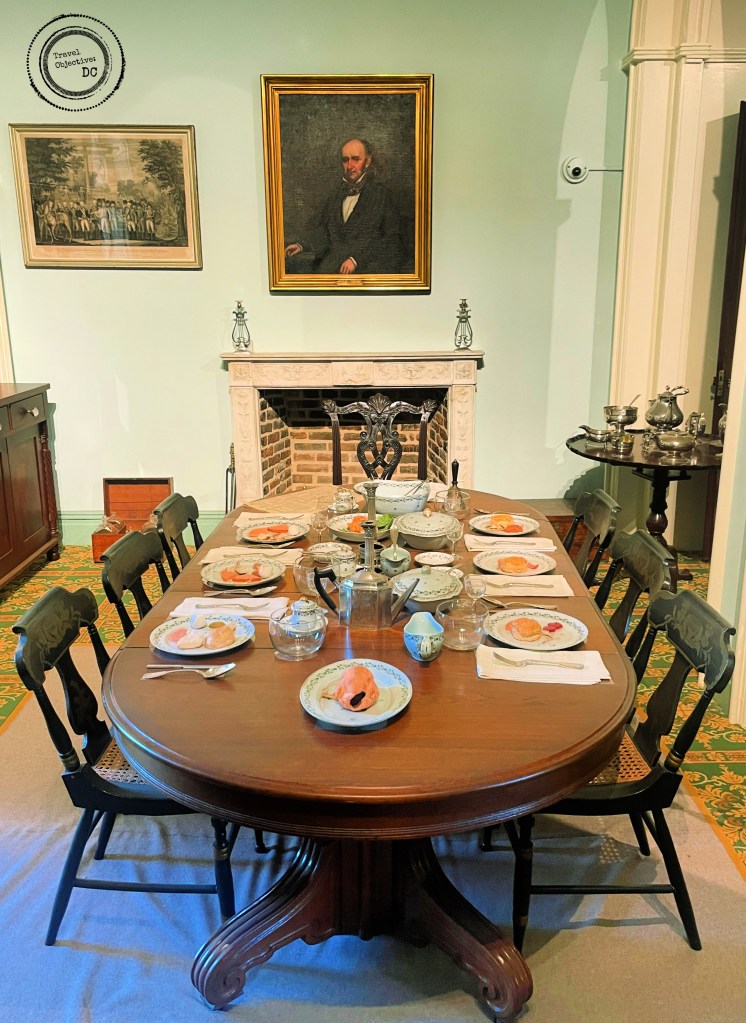
View of the main dining room

From Plantation to Cemetery

In April 1861, while at Arlington, Robert E. Lee made the fateful decision to resign his commission in the US Army ending his career of over thirty years. He would instead serve his native Virginia, which had just seceded from the Union. 

After the Lee family departed Arlington House for Richmond, the US Army moved quickly to take possession of both the house and the strategically important ground it occupied.

Before the war, Montgomery Meigs had served with Lee and the two officers enjoyed a cordial relationship. He was even a guest at Arlington House on several occasions. However, Meigs viewed Lee’s decision to leave the US Army and fight for the Confederacy as treachery.

In June of 1864, Meigs requested 200 acres of the Lee’s Arlington plantation be designated as Arlington National Cemetery.

Although most burials initially occurred in the northeast corner of the estate, Meigs ordered burials on the grounds of Arlington House. As he wrote to Secretary of War Edward Stanton “… the grounds about the mansion are admirably suited for such use.”

Graves of Union Army officers next to the flower garden at Arlington House

Today, the remains of Arlington’s main flower garden are an easy stroll after exiting the house. The pleasant plot of land teems with roses and many other flowering plants. Mary Custis Lee loved her garden and it is no wonder why after admiring the flowers on a summer day while pollinators buzzed and fluttered about.

Yet surrounding the garden are the graves of 45 US Army officers who were killed in battle, a reminder of Meigs’ determination for burials close to Arlington House. 

By the end of the Civil War, over 15,000 Union dead had been buried at the new Arlington National Cemetery. However, Meigs was not yet done. He directed the remains of unidentified soldiers who died near Washington DC to be disinterred for reburial at Arlington. 

A grove of trees west of the flower garden was selected as the location. On September 16, 1866, the tomb of the Civil War Unknowns was dedicated containing the remains of 2,111 Civil War soldiers. It was the first memorial at Arlington National Cemetery dedicated to unidentified soldiers who died in battle. 

The orginal sarcophagus and the one seen today at the Tomb of the Civil War Unknowns

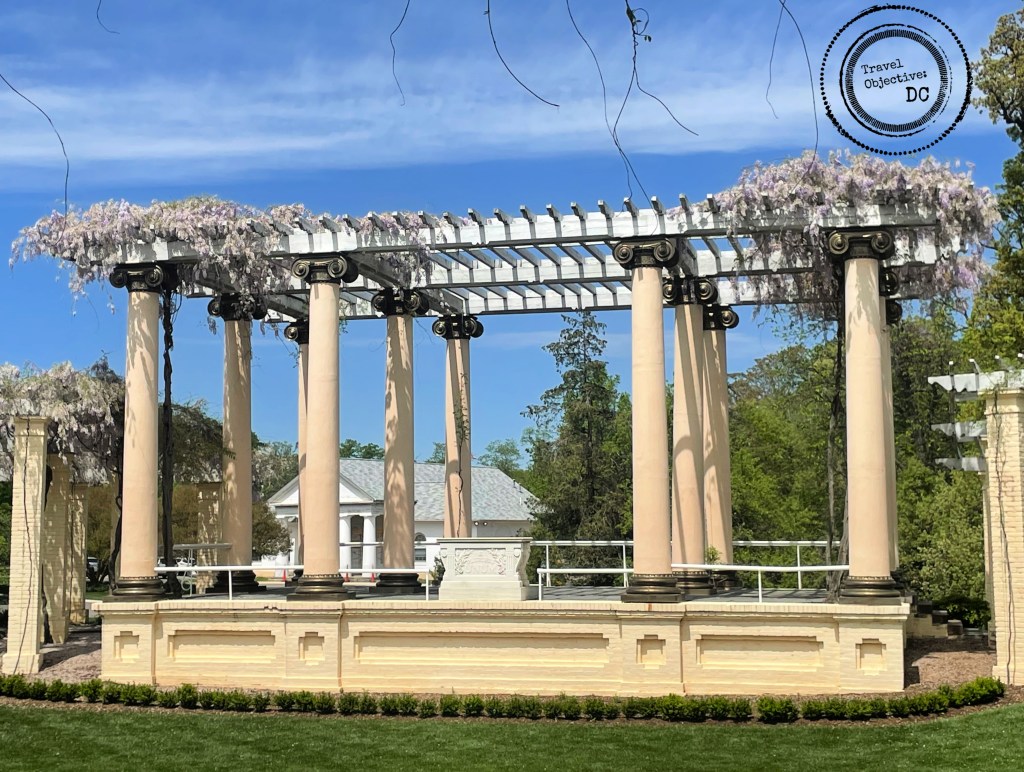
Further to the west, Meigs built what is known today as the Tanner Amphitheater. The elliptical marble colonnade with a lattice roof was designed to host observance ceremonies for Memorial Day. Dedicated in 1873, it was used annually until the current Memorial Amphitheater opened in 1921. 

Additionally in 1873, Congress passed legislation which broadened the burial criteria at national cemeteries to include all honorably discharged Civil War veterans. Through the years, the criteria would expand to include veterans of other wars, as well as spouses and certain family members.

Meigs retired from the Army in 1882 after 46 years of service and over twenty years as the Quartermaster General. Through that time, he stayed very involved in the conditions at Arlington, adding decorative features, improving roads and supervising landscaping.  Wooden grave markers gave way to headstones, and grand ones at that, as a burial ground originally for poor soldiers became the desired final resting place for generals and admirals. 

The stage of the current Tanner Amphitheater at Arlington.

Remembering the Enslaved at Arlington

In 1930s the National Park Service assumed responsibility for Arlington House, while the Army maintained jurisdiction over the cemetery. Through the following decades National Park Service archeologists, researchers and historians have continued to develop a broader picture of life at Arlington.

In the decades leading up to the Civil War, over 100 enslaved people lived and worked on the Arlington plantation.

The recent renovation project also restored two surviving slave quarters buildings behind the main house, while archeological and scholarly research provided new details about their daily lives. 

One of the two recently renovated former slave quarters buildings at Arlington House.

Today the former slave quarters contain displays and provide interpretation of the enslaved workers’ lives at Arlington. A looped video playing in a former smokehouse provides the reflections of their descendants over a century later, many of who still live today in the Washington area. The exhibit provides an important alternate narrative to the Custis-Lee stories and experiences of Arlington. 

Final Resting Places

Robert E. Lee never did return to Arlington after he departed in 1861. After the war, he was appointed president of Washington College [now Washington & Lee University] in Lexington, Virginia and served for five years. He died in 1870 and is buried in the University Chapel in Lexington.

Mary Custis Lee returned to Arlington just once, in June of 1873. She was greatly dismayed by what she saw around her former home and would not enter the main house. She wrote a friend how the graves “are planted up to the very door without any regard to common decency…” She died several months after her visit and is buried beside her husband in Lexington. 

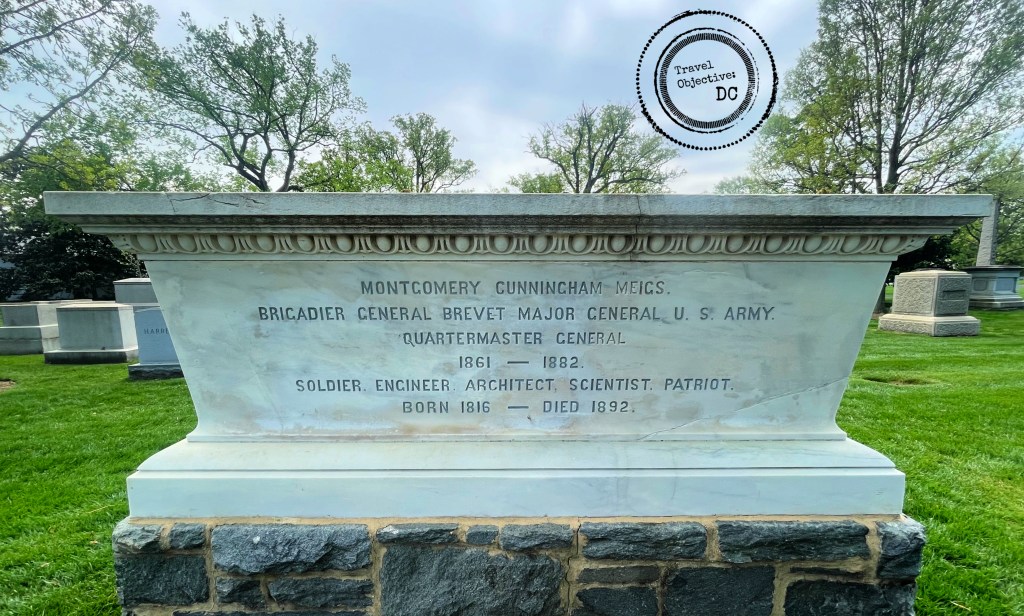
Prior to retiring from the Army, Meigs identified a portion of Arlington where his family would be buried. Upon his death in 1892, he was given a large military funeral in the cemetery he helped establish, with flags, bands and soldiers in dress uniforms, joining his wife, son (who was killed in the Civil War) and father (also a general officer).

The grave of Montgomery C. Meigs

In one of the many ironies in the long history of Arlington, while the Lees are buried some 185 miles away from their home, the Meigs family lies in Section 1, a short walk from Arlington House.

Route Recon

Arlington House is located within the grounds of Arlington National Cemetery. To access the house, visitors must use the main entrance of Arlington National Cemetery at the Welcome Center. Be prepared for a security check. Information on security procedures and prohibited items at Arlington is available here.

In most cases, plan on making a 15-20 minute walk up to Arlington House. Please note that vehicle and bus access through the cemetery is generally not permitted, except for those with vehicle passes to visit a gravesite, or those attending a funeral service. 

An interpretive bus tour service is available at Arlington National Cemetery, which includes a stop at Arlington House. Tour information is available here. Visitors with a valid disability placard may ride the interpretive tour bus at no cost (with one companion). See the main desk in the Welcome Center for more information.

Arlington House is open daily from 9:00 AM until 4:30 PM, except for Thanksgiving, Christmas Day and New Year’s Day. 

To access Arlington National Cemetery by car, follow the driving directions below to Arlington National Cemetery. 

Parking is available at the Arlington National Cemetery parking facility located at the cemetery’s main entrance on Memorial Avenue, next to the Welcome Center. Additional information regarding parking at at this facility is available here

Arlington House is accessible via the Washington DC Metro system on the Blue Line. Take the  Arlington Cemetery subway stop which is a short walk from the Visitor’s Center.  

Command Reading List

On Hollowed Ground, The Story of Arlington National Cemetery by Robert M. Poole

Robert Poole’s history of Arlington traces the cemetery’s evolution from the Custis-Lee family planation to the honored burial site of today. He insightfully traces how the rites, rituals and rhythms of Arlington changed through the years and were impacted by America’s wars from the 19th through 21st century.

Arlington National Cemetery, Shrine of America’s Heroes by James Edward Peters

James Peters work combines a very comprehensive history book and visitor’s guide into a single volume. Now in its 4th edition, the book contains a detailed explanation of Arlington’s early years as a plantation and a cemetery as well as the lives and burial information for over a hundred notable people interred at Arlington.

Driving Directions to Arlington National Cemetery

From Washington:

From Washington, D.C. you can drive to the cemetery by crossing the Memorial Bridge.

From points South (Richmond, VA area)

Take I-95 NORTH towards Washington, D.C. Take exit number 170A, I-395 NORTH toward Washington. Take exit number 8A, VA-27/Washington Blvd. towards VA-244/Columbia Pike. Follow signs to Arlington National Cemetery. Go 3/4 of the way around traffic circle and exit. Park in visitor’s lot next to Visitor’s Center on the left.

From points East (Annapolis, MD area)

Take US-50 WEST towards Washington, D.C. Take I-395 SOUTH. Take exit number 11B, George Washington Memorial Parkway NORTH, towards Arlington National Cemetery. Stay to the left at the fork in the road. Go 3/4 of the way around traffic circle and exit. Park in visitor’s lot next to Visitor’s Center on the left.

From points North (Baltimore, MD area)

Take I-95 SOUTH towards Washington, D.C. I-95 SOUTH becomes Capital Beltway, I-495. Cross Woodrow Wilson Memorial Bridge. Take US-1 North through Alexandria, VA. US-1 becomes Jefferson Davis Highway. At fork stay to the left and merge onto VA-110. Go approximately 1.5 miles. Take Arlington National Cemetery exit. At stop sign, turn left. Park in visitor’s lot next to the Visitor’s Center on the left.

From points Northwest (Frederick, MD area)

Take I-70 EAST to I-270 SOUTH. Merge onto Capital Beltway, I-495 SOUTH towards Northern Virginia. Take exit 43 & 44, VA-193/Georgetown Pike and George Washington Memorial Parkway. Keep right on ramp and take George Washington Memorial Parkway SOUTH approximately 10 miles. Take Arlington National Cemetery exit. At Stop sign, turn left. Park in visitor’s lot next to Visitor’s Center on the left.

From points West (Fairfax County, Loudoun County, Shenandoah Valley, VA area)

Take I-66 EAST to towards Washington, D.C. Take exit 64, Capital Beltway, I-495 SOUTH towards Richmond. Go one exit and merge onto US-50/Arlington Blvd EAST. Follow US-50 approximately 12 miles. Exit onto George Washington Memorial Parkway SOUTH. Take Arlington National Cemetery exit. At Stop sign, turn left. Park in visitor’s lot next to Visitor’s Center on the left.

It’s Not Too Late to Commemorate D-Day!

Are you heading to Washington, DC this summer rather than the beaches at Normandy, but still want to commemorate the D-Day anniversary?  Then save time for a visit to the National Museum of the US Army at Ft. Belvoir, VA for a very unique and compelling temporary exhibit entitled Freedom From Above.

This highly interactive experience uses advanced technology combining powerful, realistic imagery with key background information, allowing the viewer to develop a broader perspective than might be possible using a map or book, or viewing a movie or single artifact.

As the title suggests, the exhibit focuses on the experience of US airborne forces on June 6, 1944.

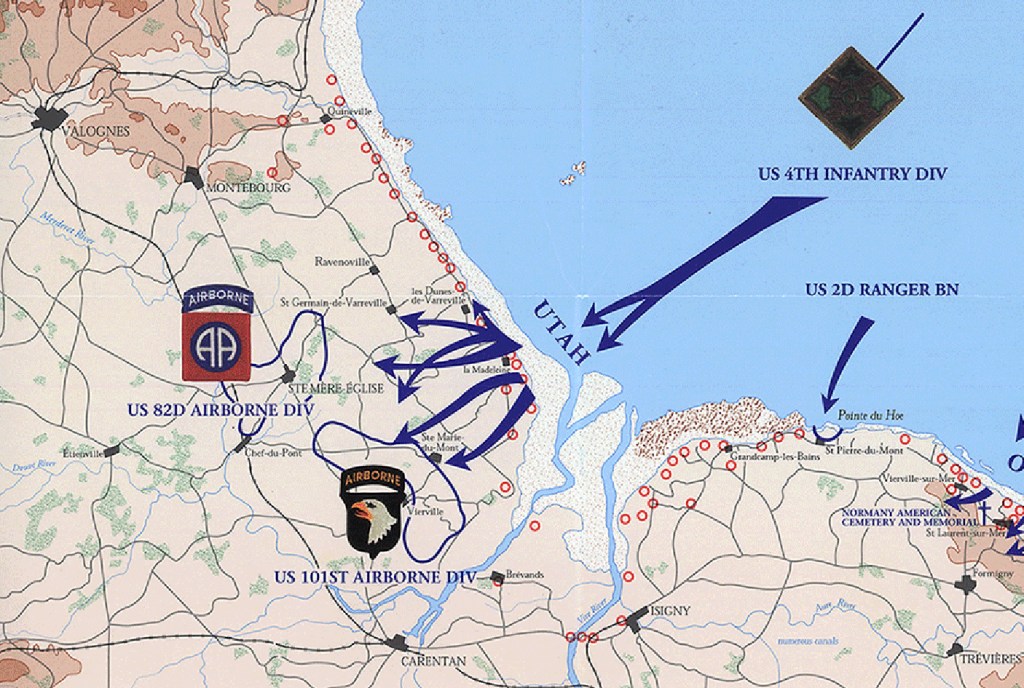
Detail of Utah Beach Area from US Army Center for Military History D-Day Commemorative Map

Early on D-Day morning, paratroopers from the 82nd and 101st Airborne Divisions deployed to areas to the rear of Utah Beach. Their mission was to secure road junctions, bridges and causeways behind Utah to facilitate the ground forces breakout from the beach, as well as to hinder German reinforcements from reaching the area. Poor weather conditions, anti-aircraft fire and confusion often lead to the paratroopers jumping far from their designated drop zones. Some paratroopers drowned landing in flooded fields or were shot after being caught on trees or buildings.

Yet they rallied.

Over the next few days, the airborne troops reestablished some unit cohesion, engaged the German defenders and were able to achieve some important mission objectives.

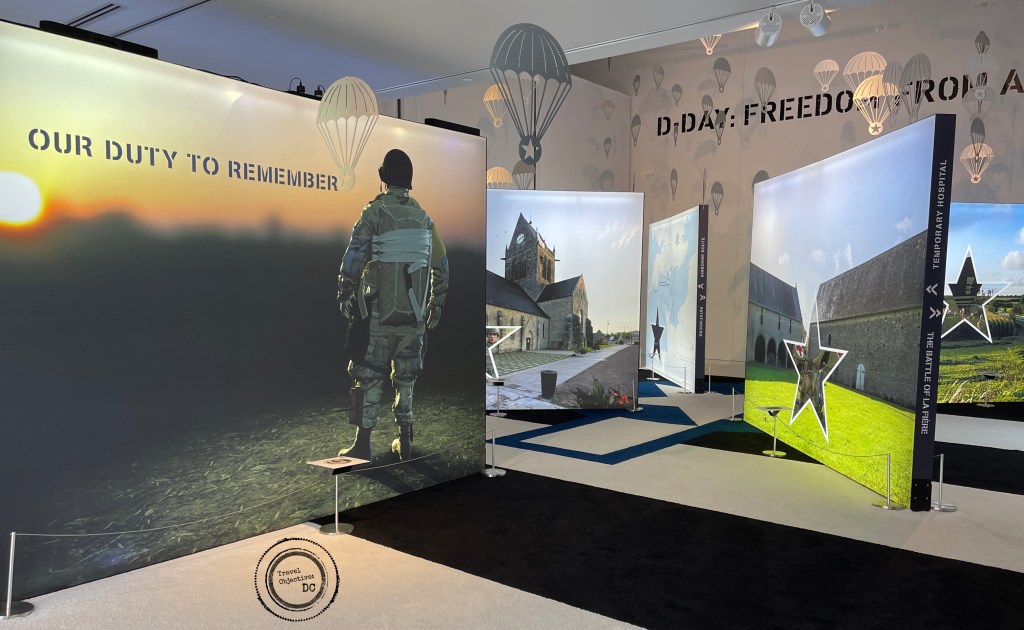
Freedom From Above exhibit space

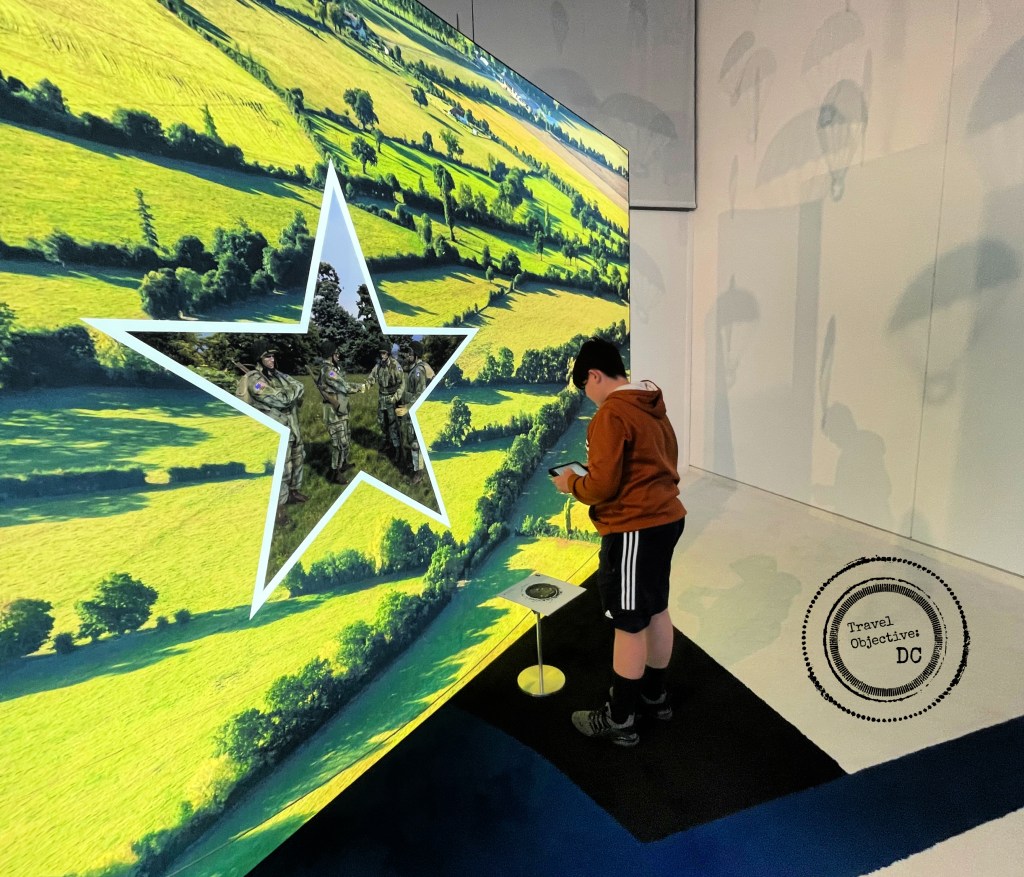
Through the Freedom From Above exhibit, visitors encounter 16 large screens depicting images and scenery related to the paratroopers’ final preparations, transport, deployment and initial operations in Normandy. Visitors experience each scene with a small tablet computer called a Histopad. 

By using the Histopad to scan an image on a small platform adjacent to each large screen, visitors access the details, imagery and stories contained within the scene. Links embedded in the scene provide the viewer with additional details regarding people, objects or images portrayed on the Histopad’s screen.

Using the Histopad, a visitor unlocks the historical details and stories contained in the scene in front of them.

By turning completely around with the Histopad, the viewer gets a 360 degree perspective on the scene. Several of the scenes have a time travel scale, allowing the viewer to compare what an area looked like in 1944 to the same area today. Other scenes are more informational, depicting aircraft cockpits, the large (and heavy) amount of equipment a paratrooper carried and the routes the planes flew from bases in the United Kingdom into Normandy. 

The exhibit designers have embedded a digital relic hunt within the scenes. Find the ten relics, spread over the sixteen scenes and, after providing an email address, you can receive a special relic collectors certificate. It’s important to remember the Histopad allows you multiple vantage points within a scene. If you are relic hunting, be sure to look all around.

Successful digital relic collectors can earn a certificate.

The historic scenes begin in the briefing room housed in a Quonset hut on an airbase in England. Here paratroopers of the 101st Airborne Division received their pre-deployment briefing. Around the room are short benches arranged in neat rows, and the walls are covered in flags, informational posters, signs and official notices. Visitors can open a field desk and explore its contents. (Hint: You might find a relic there.)

Additional scenes include well known events as well as planned operations such as Pathfinders marking a drop zone, glider aircraft deploying troops and heavy equipment, and a field hospital.

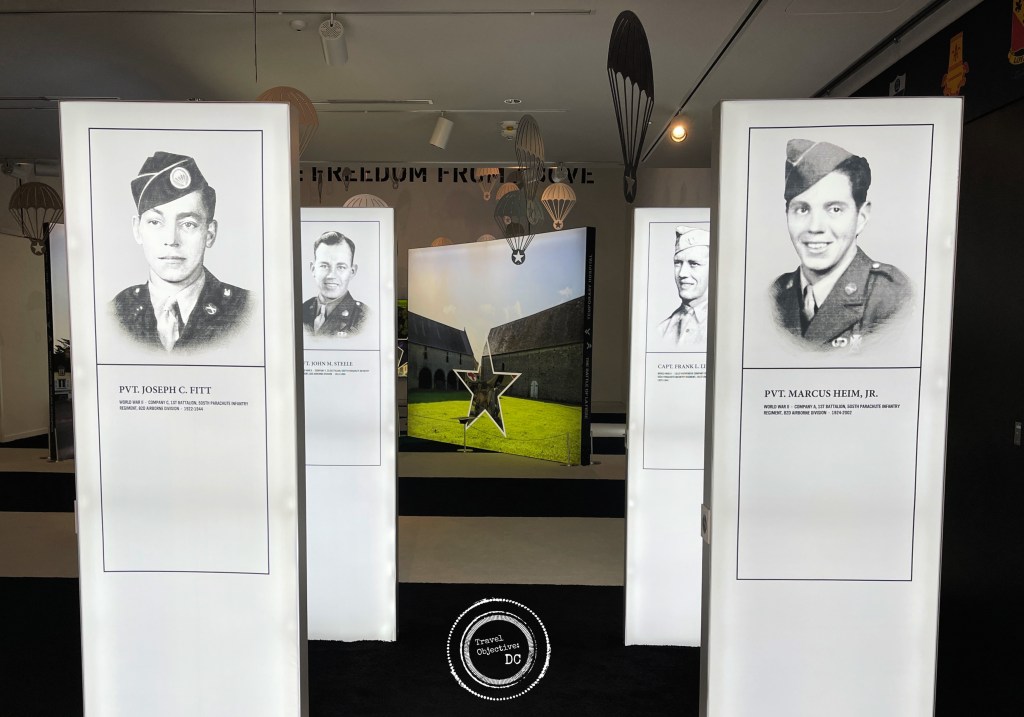
One scene is dedicated to the landing of Private John M. Steele of the 82nd Airborne Division at the village of Sainte-Mère-Église. Steele’s experience was prominently included in the 1962 film The Longest Day. Just after midnight Steele and his “stick” (a squad of Airborne soldiers jumping from an airplane) began landing in and around the center of the town. Steele’s parachute was caught on the Church’s steeple and he was suspended for two hours. He was eventually captured by German soldiers, but managed to escape four days later. 

Steele survived the war and became a local celebrity in the town. A replica of him and his parachute hang on the church today.

The stanchion with the photograph and story of Private John M. Steele, whose parachute was caught on the steeple of the church at Sainte-Mère-Église.

The Histopad provides a simulated view of how the town might have looked to Steele as he descended. Unfortunately, German soldiers were already on the town square that morning and many of Steele’s fellow stick members were quickly caught or killed as they landed. 

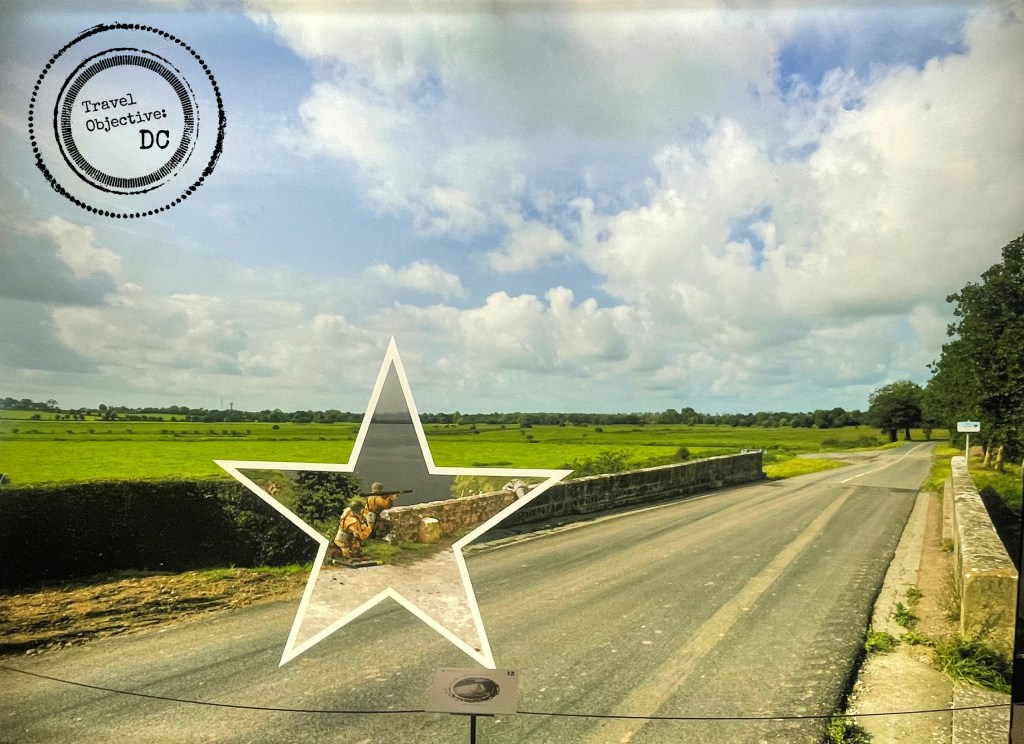
Although not as well known as landings and liberation of Sainte-Mère-Église, the battle at the La Fière bridge was an important, but costly victory for the 82nd Airborne in the days following the landings. The bridge was one of the principle objectives for the 82nd Airborne troops. 

By holding the bridge as well as eastern and western banks of the river it spanned, the paratroopers would allow ground forces on Utah Beach to quickly move inland while forestalling a wider German counterattack on American landing forces. Elements of 82nd engaged in an intense battle with German defenders over four days to capture and hold the bridge. The Histopad provides detailed information about the troop deployments around the bridge and allows the viewer to see up close some of the equipment used in the fight. 

The Freedom From Above exhibit scene depicting the bridge at La Fière.

In addition to the interactive experiences, stationary displays tell the unique stories of ten paratroopers who fought bravely on D-Day. These soldier stanchions include an image of the soldiers along with an excerpt of their story. Small images on the stanchions are also scannable, leading to a visual depiction of the soldier’s experiences, along with additional biographical information and, in some cases, period news footage.

Soldier stanchions with the images and details of D-Day paratroopers.

While the augmented reality of the exhibit is engaging, the National Museum of the US Army added a very moving feature to the exhibit. Only four Medals of Honor were awarded for heroic actions on June 6th, each to a US Army soldier. All four medals are on display together and each soldier’s story is presented at the entrance to the exhibit. This lends a sobering reminder of the courage and sacrifices made by all the Allied soldiers on D-Day.

To complete the D-Day experience at the museum, visitors should certainly visit the Global War gallery on the first floor. The gallery’s World War II displays contain a number of artifacts from D-Day as well as equipment used by airborne forces during the war. 

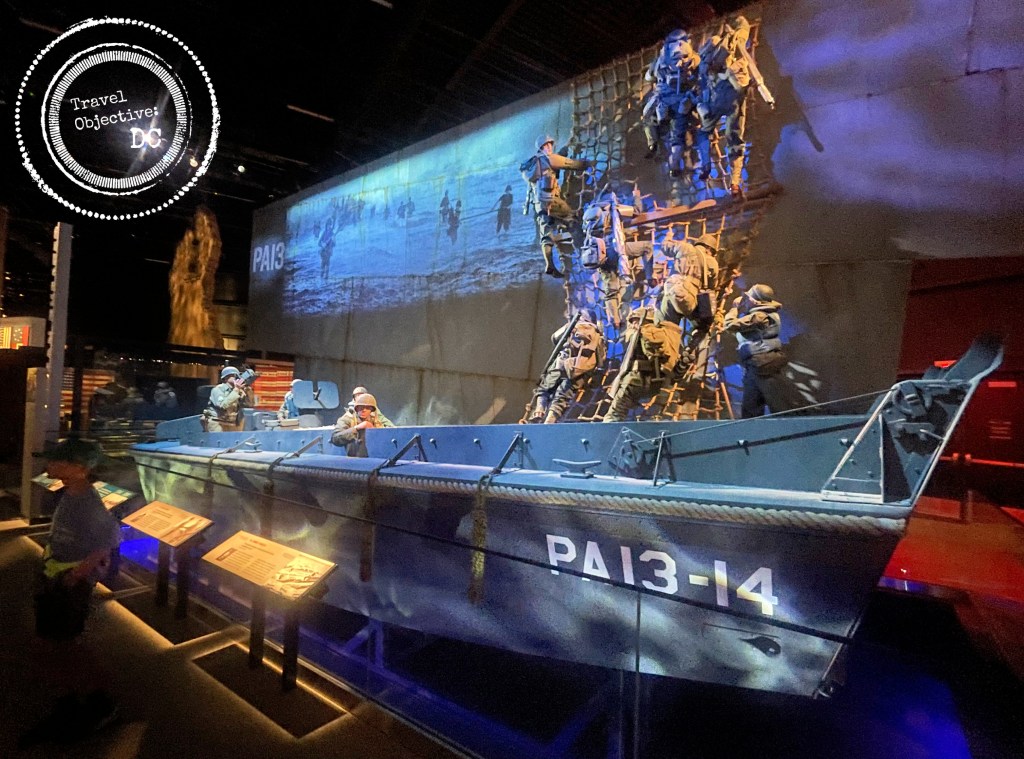
The largest artifact is an LCVP, (Landing Craft, Vehicle, Personnel), also known as a Higgins Boat. Andrew Higgins was a successful manufacturer of small maritime craft built to operate in marshes or swamps. He designed this type of landing craft with a very shallow draft, enabling it to operate in only two feet of water. The front ramp would drop down allowing up to 36 soldiers in combat gear to literally “hit the beach” then return to a ship for more men. The Higgins Boat was also widely used in both the Atlantic and Pacific Theaters. More than 23,000 Higgins Boats were produced, but fewer than a dozen are known to exist today. 

The display scene at the museum shows soldiers being loaded onto the Higgins Boat before it heads to shore. 

Given their sheer size and scope–over 150,000 troops, 5,000 ships and 11,000 aircraft were involved–the Allied landings on D-Day continue to captivate the mind even eight decades later. The National Museum of the US Army has prepared an impressive exhibit dedicated to the D-Day experience. While the Histopad and augmented reality are no substitute for a visit to France, visitors to Freedom From Above will take away a deeper sense of the paratroopers’ courage and sacrifice at Normandy.  

NOTE: Freedom From Above at the National Museum of the United States Army is open until November 15, 2024.

Route Recon

The National Museum of the United States Army is located at 1775 Liberty Drive, Fort Belvoir, VA, 22060

The museum is located on a publicly accessible portion of Fort Belvoir. Parking is free.

The museum is free, but tickets are required. Access tickets here.

Download a map with written directions here.

Traveling by car:

From Washington (traveling south)

Follow Interstate 395 South toward Richmond, Va. Merge onto Interstate 95 South. Take exit 166A toward VA-286 South/Fairfax County Parkway. Continue for 2.5 miles and turn left onto Liberty Drive.

From Baltimore (traveling south)

Follow MD-295 South, Baltimore-Washington Parkway. Exit onto Interstate 495 South/Interstate 95 South toward Richmond Va./Andrews Air Force Base. Follow signs for Interstate 95 South toward Richmond, Va. Take exit 166A toward VA-286 South/Fairfax County Parkway. Continue for 2.5 miles and turn left onto Liberty Drive.

From Richmond (traveling north)

Follow Interstate 95 North toward Washington. Take exit 166A toward VA-286 South/Fairfax County Parkway. Continue for 2.5 miles and turn left onto Liberty Drive.

Traveling by Bus:

The Fairfax Connector bus service travels to the Museum via two different routes:
Route 171 : Weekends ONLY
Route 334 : Monday – Friday ONLY
Please check the Fairfax County Website for the most current bus schedules.

Traveling by Metro:

The Franconia-Springfield Metro Station, on Metro’s blue line, is the closest station to the Museum. From the metro station, take Fairfax County Connector Bus Route 334 on weekdays or Route 171 on weekends to the museum.

Mess Call

The Museum Café is open daily from 9:00 – 4:00 pm. The Café provides daily grill service for breakfast and lunch as well as a variety of grab and go items.

A Moment on Iwo Jima Became a Monument for All Time

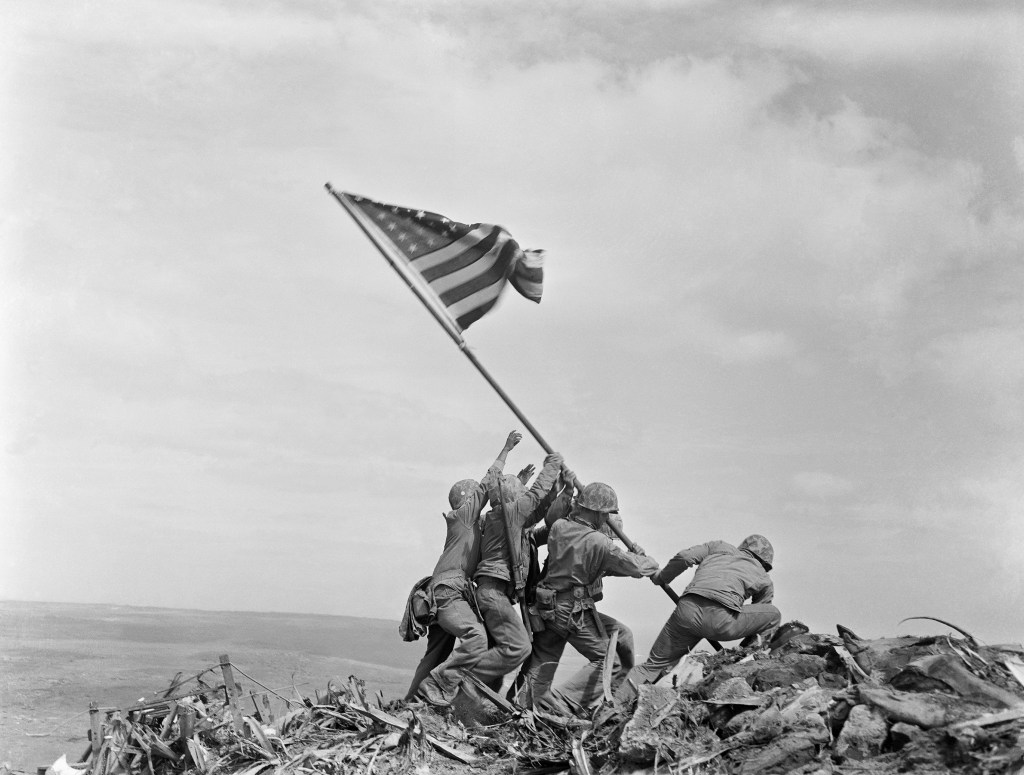
You may not know the name Joe Rosenthal, but you have seen his work. Rosenthal was a photographer for the Associated Press (AP). On the afternoon of February 23, 1945, in 1/400th of a second, Joe Rosenthal took one of the most iconic photographs in American history. Seven decades later, his image of six United States Marines in combat gear raising an American flag still captivates the mind and stirs the soul. 

The photograph inspired a famous sculpture that is now recognized around the world as a symbol of the United States Marines. Known officially as the United States Marine Corps War Memorial, it is dedicated “For the Marine dead of all wars, and their comrades of other services who fell fighting beside them, since the Marine Corps’ founding in 1775”. 

The memorial is located in Arlington Ridge Park, a broad, open green space on the edge of the busy Arlington neighborhood of Rosslyn and in close proximity to Arlington National Cemetery. Situated on high ground overlooking the Potomac River, the park is a natural venue for the memorial.

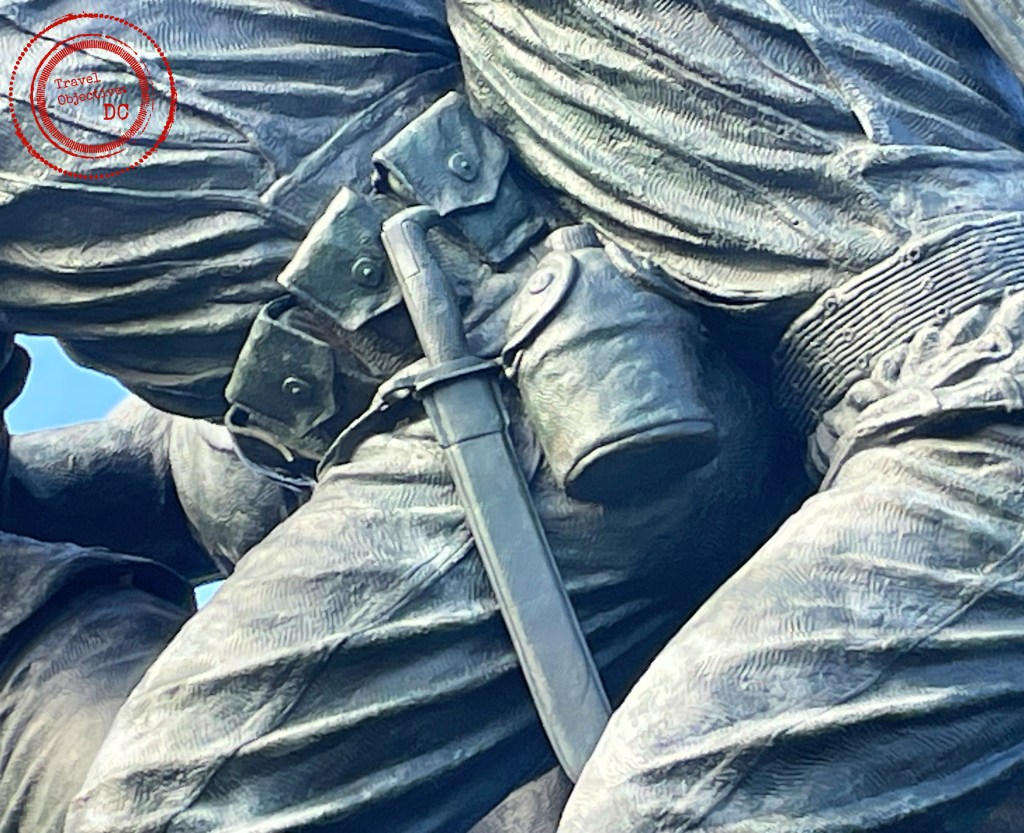
Upon approaching the memorial, the first impression is of its size.  The entire monument is more than five stories high. The thirty-two foot bronze figures of the Marines stand on a polished, black granite oval base. A green patina on the bronze adds color to the figures’ carefully sculpted fatigue uniforms.  

Around the base of the statue, notable battles fought by United States Marines from the Revolutionary War through the present day are engraved in gold lettering. Fleet Admiral Chester Nimitz’s observation that among those Americans who served on Iwo Jima, “uncommon valor was a common virtue” is prominently inscribed on the west side of the memorial. 

A circular trail around the park features interpretive signs providing background information on the Battle of Iwo Jima, the famous photograph, facts about the statue, and the history and missions of the US Marines.

A miniature statue for the vision impaired included on an interpretive sign near the memorial.

The Marine Corps traces its history back to 1775 when the Continental Congress authorized the recruitment of two battalions of Marines to provide the fledging Continental Navy with a ground operations force.  Since then, the Marines have engaged in every major conflict and a number of expeditionary operations. As the Marine Corps Hymn declares, the Marines have “fought in every time and place…” including some places you might not expect, such as the Civil War’s First Battle of Bull Run and the Battle of Belleau Wood during World War I.   

In the decades before World War II, the Marine Corps developed and refined the doctrines, tactics and training for amphibious landing operations, where Marines would storm ashore from landing craft prepared to fight. Their proficiency in these complicated maneuvers was instrumental to the success of the Allied “island hopping campaign” in World War II’s Pacific theater. In early 1945, the island of Iwo Jima became the next strategic objective. By this time in the war, US B-29 Superfortress bombers could reach the main Japanese islands from airstrips on Guam and Saipan. However, both the airstrips and the B-29 in-flight formations were often attacked by Japanese fighters based on Iwo Jima.

As they prepared, the Marines knew Iwo Jima would be a tough fight. Unlike earlier battles, the Marines would be landing on Japanese territory, not an occupied island. The Imperial Japanese Army had approximately 23,000 soldiers on Iwo Jima, occupying an extensive tunnel and fortification system. 

On February 19, 1945, approximately 70,000 Marines and Navy support personnel landed on Iwo Jima. After days of heavy fighting, Marines of the 2nd Battalion, 28th Marine Regiment made steady progress in their mission to capture Mount Suribachi, a dormant volcano that was the highest point on the island. By the morning of February 23, they reached the summit. 

The first Iwo Jima flag raising. A small flag carried ashore by the 2nd Battalion, 28th Marines is planted atop Mount Suribachi on February 23, 1945.

– Staff Sergeant Louis R. Lowery, USMC

At the top, an American flag was raised so that troops across the island would see the Marines now held the high ground. At the sight of the flag, Marines cheered and Navy ships sounded their horns. 

But the flag was only about 4-feet-long and not quite visible at a distance. A few hours later, an 8-foot-long flag was acquired and sent up to the Marines on Mount Suribachi.  As six Marines quickly planted the second flag, Joe Rosenthal captured the moment for posterity.

Once the flag was raised, the Marines quickly dispersed as fierce fighting continued. Four more weeks of intense combat were yet to come. The landing force sustained 24,053 causalities, roughly one third of those who landed. Three of the men in the photo were among the 6,140 Marines and Navy corpsmen who would lose their lives on Iwo Jima, the deadliest battle ever for the Marine Corps.

But there were instances of great heroism as well. Twenty-seven men were awarded the Medal of Honor for their service at Iwo Jima (about half of them were presented posthumously). 

Joe Rosenthal’s famous photograph of the second flag raising on Iwo Jima.

Joe Rosenthal was carefully balancing himself on some rocks and sandbags as he quickly snapped his famous photograph without using the viewfinder. 

He was unaware of how the picture would turn out as he sent the film to Guam for developing a few hours after taking the photo. The developed pictures crossed the desk of an AP photo editor named John Bodkin. Bodkin’s job was to scan through the photos submitted by his photographers across the Pacific theater for use in American newspapers. Upon seeing Rosenthal’s picture, he knew it was special, proclaiming “Here’s one for all time!”

He immediately arranged to transmit the picture to the AP Headquarters in New York. It arrived in time to be printed on the morning of February 25th in the Sunday editions of newspapers all over the United States. The photograph was an instant sensation. The previous week’s grim news of the terrible combat and heavy casualties on Iwo Jima were now replaced by a picture showing American progress and determination. Rosenthal won the Pulitzer Price for the photo and it would become the main symbol of the 7th US War Loan campaign. 

US Department of the Treasury poster for the 7th War Loan. The campaign would raise over $26 billion during the spring of 1945.

Sculptor Felix W. de Weldon, an artist on active duty with the US Navy, was one of the millions who saw the image. Captivated by the photograph, he began modeling the image in clay, then building a life size representation. 

He proposed building a grand monument based on Rosenthal’s photograph. With the consent of both Congress and the Marine Corps he began working on plaster models from which bronze castings for the statue were made. 

A private fundraising campaign was begun to build the statue based on de Weldon’s work. Over $850,000 was raised from Marines, veterans, and other supporters. He modeled the faces, frames and other features of three men who survived the battle and were believed at the time to be in the photo. He used photographs and information about the fallen Marines to model their images. 

After years of hard work, the memorial was dedicated by President Dwight D. Eisenhower on November 10, 1954.  In 1961, President John F. Kennedy signed a proclamation authorizing the US flag to be flown at the memorial 24 hours a day. 

Shortly after the photo was taken, there were issues with identifying the men in the picture. Rosenthal did not record the names of his subjects and his picture shows no faces. An event that took about ten seconds became a distant memory in the face of the intense fighting on Iwo Jima. The initial efforts to identify the figures lead to unfortunate errors. The first misidentification was corrected in 1947 as Corporal Harlan Block was identified as the Marine planting the flag pole into the ground. For many decades it was believed a Navy Corpsmen named John Bradley and a Marine named Rene Gagnon were in the photograph.

In the 2010’s researchers studying Rosenthal’s and other photographs (there were both Army and Marine Corps photographers present at the time) of the flag raising carefully examined the uniforms and equipment of the flag raisers. They concluded that two different Marines and neither John Bradley nor Rene Gagnon were actually in the photograph. The Marines convened two official Boards of Inquiry, one in 2016 and another in 2019. After thorough examinations of the evidence to include some previously unknown photographs of the second flag raising, the boards concurred.

Note the sculptor Felix de Weldon’s precise detail on the Marines’ uniforms and equipment. Given the large size of the statues, the canteen would hold eight gallons of water.

In public statements, the Marines explained the importance of being factually correct, but noted that nothing in the historians’ research nor the boards’ findings diminishes any of the contributions of the Marines and other servicemen who fought on and around Iwo Jima.

Visitors to Washington, DC should include the US Marine Corps War Memorial on their short list of destinations to visit, especially if they have a connection to the Marine Corps. Unlike many other Washington-area landmarks, visiting the Marine Corps Memorial is fairly straightforward. Unless there is a special ceremony, the park is often quiet and peaceful. Free parking is available and the Rosslyn Metro Station is a ten-minute walk away.  

But ease in visiting an iconic sculpture is only one reason. Joe Rosenthal’s photograph and the memorial it inspired gained fame for what their subjects represent: critical values, such as teamwork, dedication and sacrifice. These values made the Marine Corps an effective fighting force throughout its history.

Indeed, these values–like the photograph and the monument–are for all time.

* * *

According to the US Marine Corps, the following six Marines are depicted on the memorial (from right to left):

Corporal Harlon Block, (depicted at the base of the flag pole)

Private First Class Harold Keller

Private First Class Franklin Sousley

Sergeant Michael Strand

Private First Class Harold Schultz

Private First Class Ira Hayes 

* * *

Route Recon

The US Marine Corps War Memorial is located in Arlington Ridge Park. The address is 1000 Marshall Drive, Arlington, VA 22209.

Park Hours are 6:00 AM – Midnight daily. Restrooms are located at the park. 

By Car

From VA 110 south turn right onto Marshall Drive, then follow signs for the US Marine Corps War Memorial.

From US 50 east take the exit for Rosslyn and the Key Bridge. Turn right onto Meade Street at the top of the ramp. Turn left on Marshall Drive, then follow the signs for the US Marine Corps War Memorial.

From US 50 west cross into Virginia on the Roosevelt Bridge and take the exit for Rosslyn and the Key Bridge. Turn left onto Meade Street at the top of the ramp. Turn left on Marshall Drive, then follow the signs for the US Marine Corps War Memorial.

Parking is available at the US Marine Corps War Memorial. Special events may limit parking.

By Metro

The memorial is a 10-15 minute walk from the Rosslyn Metro Station on the Blue Line. 

Arlington National Cemetery 

Arlington Ridge Park adjoins Arlington National Cemetery. Use Arlington National Cemetery’s Ord & Weitzel Gate gate to access the park and the memorial. 

Sunset Parades

On designated Tuesday evenings during the summer, the US Marine Corps holds Sunset Parades at the memorial.  The Sunset Parades are a 45-minute performance featuring the US Marine Band, the United States Marine Drum and Bugle Corps and the Marine Corps Silent Drill Platoon.

Command Reading

Flag of Our Fathers – This book was authored by James Bradley, son of Navy Corpsman Jack Bradley who was believed to be one of the flag raisers in Joe Rosenthal’s famous picture. The younger Bradley set out to write a book telling the life stories of the individuals associated with the flag raising. Published in 2000, long before it was concluded that two of the book’s subjects did not actually take part in the flag raising, the book provides compelling background on the lives of these Marines and gripping accounts of the combat on Iwo Jima. Bradley also provides details on how Joe Rosenthal took the famous photo as well the 7th War Loan fundraising campaign.

African American Military History on the National Mall

From Bunker Hill in 1775 to Bagdad in 2005, African Americans have served in the American military throughout our history.  Their experiences are told as part of the larger African American saga at the Smithsonian’s newest museum, the National Museum of African American History and Culture.

Decades in the making, this museum opened in 2016 and attendance has now grown to over 1.6 million annual visitors. With over 3,500 artifacts on display, the museum’s broad expanse of exhibits reflect critical aspects of African American life such as slavery, civil rights, sports, music and military service. 

A “soup bowl” style helmet worn during World War I. Soldiers of the US 369th Infantry Regiment, the Harlem Hellfighters, are pictured behind the helmet.

Situated on the National Mall, the exterior features a distinctive bronze colored filigree, a tribute to the timeless work of African American metal artisans. It sets this structure apart from the neoclassical and modernist designs of the neighboring government buildings.

The bright, spacious lobby, known as Heritage Hall, features diverse artwork with copper metallic and gray walls, complimenting the museum’s unique exterior. From here, the visitor may choose their entryway into the African American experience presented in the museum. The escalator down leads to the History Galleries while upstairs are the Community and Culture Galleries, which reflect more contemporary times and themes.

Tracing African American military history will ultimately lead in both directions. 

Begin the journey in the downstairs galleries, which present over 400 years of African American history, from the establishment of the African slave trade through the Civil Rights era. African American military service during America’s wars is presented chronologically as part of the larger narrative of African American life. The galleries and exhibits devoted to four major conflicts all convey the recurring theme of how time and again African Americans fought bravely in wars for freedoms they themselves did not possess.

A large gallery dedicated to the Revolutionary War explores how enslaved Blacks served on both sides, motivated by promises of freedom. 

The flag of the Bucks of America, a Black paramilitary group founded in the Boston area. It is believed the group protected the property of Patriot merchants who had left Boston to fight in the Revolutionary War.

Historians estimate approximately 5,000 –  6,000 Blacks served in the Continental Army or in colonial militias. They were involved in every major Revolutionary War battle and most smaller engagements. Units such as the First Rhode Island Regiment, comprised mostly of Blacks, gained renown for their discipline and skills as soldiers. Additionally, experienced Black seamen were actively recruited by the Continental and Royal Navies and served in many different operational capacities.

The war’s conclusion in 1783 brought freedom for some Black soldiers and sailors, but many were returned to slavery, either in America or other portions of the British Empire. 

The Civil War gallery focuses largely on the many contributions of the US Colored Troops to the Union war effort. While newly freed slaves could receive paid work from the Army as early as 1861, they could not serve as Army soldiers until January 1863.  

A kepi cap worn by a soldier from the 4th Regiment Heavy Artillery, US Colored Troops

Ultimately, about 179,000 African Americans enlisted in the Army from both the North and South. They were organized into segregated infantry, cavalry and artillery regiments with white officers and designated as US Colored Troops. Initially, they were paid less than white soldiers and given menial jobs to perform. In time though they earned full pay and distinguished themselves in many battles. Sixteen African American soldiers would earn the Medal of Honor. 

Unlike the Army, the Navy was integrated before the Civil War. About 20,000 African Americans served aboard U.S Navy ships during the Civil War alongside White sailors.

The exhibits devoted to World War I and II are notably smaller than the Revolutionary and Civil War galleries.  They broadly describe the segregated service of African Americans during these wars and the hostile environment to which they often returned.

One of the highlights in the History Galleries is a beautifully restored Stearman Keydet training aircraft used by the Tuskegee Airmen. The two seat bi-plane was the primary pilot training aircraft for the US Armed Forces in the 1930’s and 1940’s. The accompanying display also includes an excellent five minute introductory video on the origins and accomplishments of the Tuskegee Airmen, which was established in 1941 to demonstrate that African Americans could perform the jobs required in the Army Air Forces. The Tuskegee Airmen included pilots, as well as navigators, flight engineers, bombardiers, mechanics and other essential support positions. 

A PT-13D Stearman Kaydet training aircraft used to train Tuskegee Airmen

One of the most notable units comprised of Tuskegee Airmen was the 332nd Fighter Group. From their base in Italy, the 332nd escorted heavy bombers on raids into central Europe from May 1944 through April 1945. They flew more than 15,000 sorties, losing but 25 escorted bombers to enemy fire. 

In the museum’s Community Gallery on the third floor is an exhibit entitled Double Victory: the African American Military Experience. The gallery takes its name from the Pittsburg Courier’s Double Victory campaign during World War II, which promoted America’s victory over the Axis Powers and an African American victory over discrimination at home. 

This exhibit expands on the themes first introduced in the below-ground History Galleries. Here the emphasis goes beyond historical facts of African American military service to how that service changed through the years and its impact on the larger African American community. 

A handkerchief with the emblem of the Pittsburgh Courier’s Double Victory campaign.

Also included are more artifacts, such as documents, weapons and equipment. These highlight what military service for African Americans entailed at the time, such as a seaman’s certificate issued in 1826 to a Black sailor named Robert Barnaby. Barnaby carried the certificate with him at all times to prove he was a sailor in the US Navy and avoid being seized as a runaway slave. 

This exhibits introduces the accomplishments of some notable African American units such as the 54th Massachusetts, the Buffalo Soldiers, the Harlem Hellfighters, and the Red Ball Express, among others. 

President Harry Truman officially ended segregation in the US Armed Forces in 1948, upon signing Executive Order 9981. Change came, but slowly. Racial tension continued in the following decades in parallel with the civil rights movement occurring across American society. However, the integration of the services opened new opportunities for African American service members.  
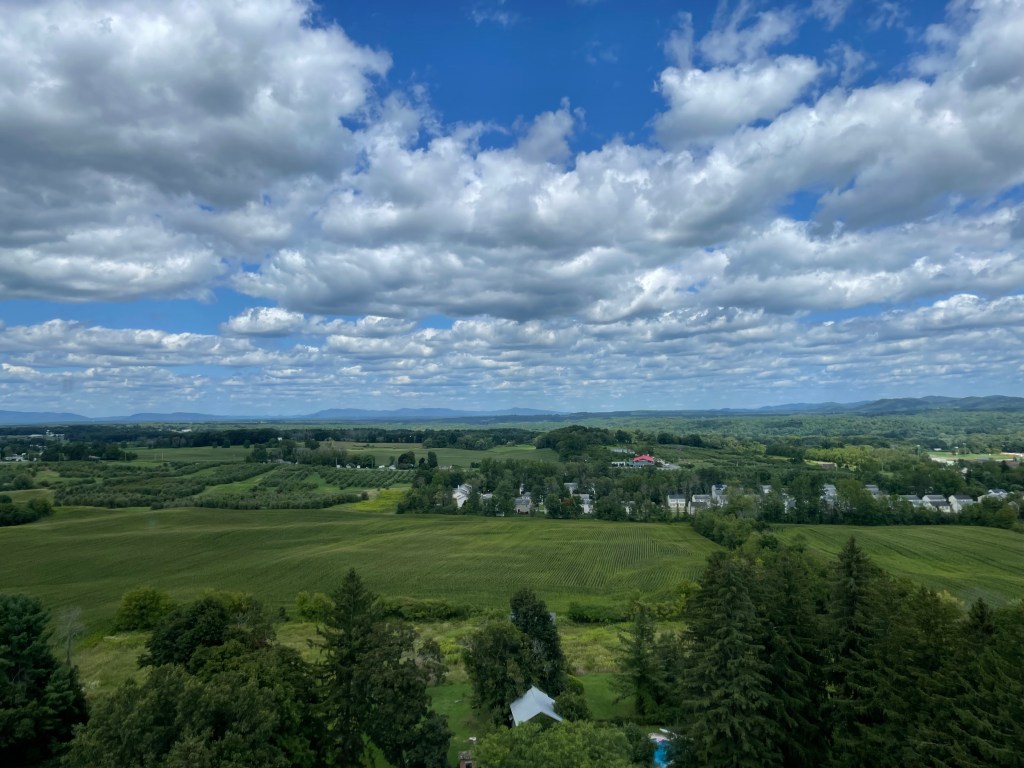
A horse saddle used by B Troop , 9th US Cavalry Regiment (A Buffalo Soldiers Regiment)

The final part of the Double Victory exhibit portrays one of the most important of those opportunities, the long rise of African Americans to senior ranks within the military. Two hundred years after the Battle of Lexington and Concord, Daniel “Chappie” James, a fighter pilot and Tuskegee Airman became the first African American four star general in history.

The exhibit includes Colin Powell’s dress uniform from his tenure as Chairman of the Joint Chiefs of Staff. It denotes the pinnacle of that long rise and attests to what is now possible in the military.

Although they might not have always been treated fairly, military service has long been an important part of African American life. Today, African Americans comprise 17% of the ranks of soldiers, sailors, airmen and Marines and continue a tradition begun over 200 years ago. Through that time, the unique relationship between African Americans and the American military was a rather complex picture. Curators have designed and assembled some revealing exhibits exploring the nuances of those complexities. It is an important collection and well worth seeing for anyone desiring a more complete picture of American military history. 

* * *

Route Recon

The Museum is located on the National Mall at Constitution Avenue, NW, between 14th and 15th Streets, Washington, D.C. The street address is 1400 Constitution Avenue, NW, Washington, DC, 20560.

Click here for a map of all the Smithsonian Institute Museums around the National Mall.

The museum is open Tuesdays – Sundays from 10:00 AM until 5:30 PM. On Monday, the museum is open from 12 Noon until 5:30 PM.

 Free timed-entry passes are required for entry.

Using public transportation is advised for those visiting the museum.

Metrorail – The closest Metro station is Federal Triangle, along the blue, orange, and silver lines.

Metrobus – Bus stops are located on Constitution Avenue. Visit the Washington Metropolitan Area Transit Authority for more information.

Circulator Bus – The National Mall Circulator Loop bus provides easy access around the National Mall and convenient connections to other Circulator buses for visits to uptown sites.

Mess Call

If your schedule allows, plan for lunch or a snack at the Sweet Home Café, the museum’s restaurant. It features a variety of food items reflective of African American culinary traditions as well as many modern day favorites. The Sweet Home Café is open daily, from 11:00 AM to 3:00 PM with the exception of Mondays (12:00 Noon – 3:00 PM).

What’s Peace Got To Do With It?

In a city abundant with statues, monuments and memorials, a few stand out for their uniqueness. One of these sits to the northwest of the US Capitol in the middle of a traffic circle formed where Pennsylvania Avenue terminates at First Street, NW. It is one of three pieces of statuary, along with memorials to Ulysses S. Grant and James Garfield, that form a visual connection between the US Capitol Grounds and the National Mall. 

Dedicated to the sailors and Marines who died during the Civil War, the statue is known as the Navy Monument or Peace Monument. Unlike its neighboring statues which feature American statesmen cast in bronze, the Peace Monument mixes a variety of classical figures arrayed around an upright bloc, all captured in Italian marble.

The Peace Monument from the National Mall

At the top of the 44 foot high monument are two robed figures facing the National Mall to the west. One is Grief, who buries her head in one hand, while resting her other on the shoulder of History, who stands bearing a pen and scroll inscribed with the words: They died that their country might live. 

Midway down the monument, Victory holds her laurel high in her right hand, while a very young Mars (the god of war) and Neptune (the god of the sea) sit at her feet.

Victory with Mars and Neptune

On the reverse side of the statue, the figure of Peace looks towards the US Capitol. At her feet are a collection of items symbolic of the benefits of peace. There is a cornucopia and a sickle representing agricultural bounty while a gear and a book represent industry and the pursuit of knowledge. 

Four large marble spheres on their own bracket-shaped pedestals are found on the corners of the monument along with classical adornments, such as wreaths, scrolling and scallop shells. Below the monument, jets of water shoot into a giant basin. On the west side an inscription reads: In memory of the Officers, Seamen and Marines of the United States Navy who fell in defence [sic] of the Union and liberty of their country, 1861–1865.

While it looks as if it might have been designed by a committee, the statue was the idea of one man: US Navy Admiral David Porter. 

Admiral Porter was the scion of a distinguished naval family. His father, Commodore David Porter, was a hero of the War of 1812 and his adopted brother was David Glasgow Farragut (of “Damn the Torpedos” fame). Admiral Porter first served as a midshipman at age ten under his father. He would serve in the Navy for over sixty years. 

Admiral David Dixon Porter

-Photograph by Mathew Brady, Library of Congress Collection

Porter sketched the original figures of Grief and History as early as 1865, then raised money from private sources for its construction. Porter was likely inspired by his father, who undertook a similar project. Commodore Porter commissioned a statue dedicated to the lives of six naval heroes who died fighting the Barbary Pirates in the early 19th century. At one time this statue was displayed near the US Capitol; it was ultimately moved to the US Naval Academy at Annapolis in 1860.

For his monument, Admiral Porter worked with Franklin Simmons, an accomplished sculptor known for his work in sculpting political and historical figures. Simmons carved the statues at his studio in Rome, working with another team of Italian sculptors to carve the monument’s shaft. He consulted frequently with Admiral Porter on including additional figures and embellishments. 

After its unveiling, an art critic remarked, “Porter knows more about the high seas than high art.”

While that may well have been true, Porter’s conglomeration of figures and mixed symbology seems quite appropriate for a monument to the U.S. Navy during the Civil War.

Close-up of the Statue of Mars. Note the erosion on the fingers of right hand where he grips his sword, and on nose.

In April of 1861, the Navy had but 42 commissioned ships. It needed to expand quickly and it required many new and different types of vessels for the missions it now faced.  Specialized ships were necessary for enforcing President Lincoln’s blockade of Southern ports, defeating the Confederate Navy in open waters, supporting US Army ground operations and patrolling interior rivers. This was also a transitional period as wooden sailing ships gave way to ironclads powered by steam. 

The Navy set about a massive program of refitting current naval vessels, building new ones and acquiring civilian ships, which were converted for military use. By war’s end, the Navy had over over 600 vessels, some very distinct in design and purpose.

During the Civil War, the US Navy also rewrote doctrines focusing on flotilla operations rather than single ship actions, adopted new combat tactics, and revised its command structure. 

Admiral Porter was on the forefront of some of these developments. He commanded a flotilla of ships in the Union capture of New Orleans. He transported Ulysses S. Grant’s army down the Mississippi River prior to the assault on Vicksburg. He also commanded naval forces in the attack on Fort Fisher, North Carolina. After a two-day long bombardment of the fort, Porter contributed a force of sailors and Marines to join US Army soldiers on a multi-pronged ground attack. 

 The Bombardment and Capture of Fort Fisher, N.C. Jany. 15th, 1865. [Published by Currier & Ives, between 1865 and 1872] Library of Congress Collection


While historians devote more attention to land campaigns and the Army’s epic battles, the Navy made significant contributions to the Union victory in the Civil War. During those years, 4,523 sailors lost their lives. The Marine Corps played their role as well, participating in some major land battles, enforcing blockades and conducting patrols along the rivers. During the Civil War, 148 Marines were killed in combat.

After his Civil War service, Porter served as the Superintendent of the US Naval Academy where he implemented a number of reforms to better prepare midshipmen to become naval officers. He originally intended the monument to be placed at Annapolis as was his father’s. However, the Secretary of the Navy at the time disagreed. 

Congress though did approve of the statue being placed near the Capitol. Funds were appropriated for the construction of the monument’s platform and a basin for the fountain, which were made from Maine blue granite.  

The monument was shipped in pieces to Washington in 1876. The next year, the monument was assembled and installed at its current site. The last statue of Peace was added in 1878. A formal dedication ceremony was delayed until the statue was completed. Dolphins were also to be incorporated as were bronze lamps, but these were never added and no formal dedication was ever held.

The Statue of Peace facing the US Capitol.

The statue was built of Italian Carrara marble, which unfortunately has not stood up to the weather or the pollution in Washington, DC. Erosion of the faces on different figures is clearly evident and various features have broken off. For example, the young Neptune is missing his trident.

Additionally, protestors have repeatedly climbed the Peace Monument during demonstrations on the Mall, further damaging the statues. A major restoration effort was made in 1991, where the marble was carefully cleaned, strengthened and missing pieces replaced. Similar work was conducted in 1999 and 2010. 

Close up of the Statues of Grief and History. Note the erosion on History’s face and the missing pen from History’s right hand.

It is easy to be dismissive of the Peace Monument as something antiquated–or not related to peace at all–since it memorializes war dead. Indeed, the monument may not work as “high art”. But the monument’s story is compelling and offers some rich analogies to peace worth considering.

Like this monument’s creation, peace may take a long time. Peace might look different from what you expected. Peace may never be complete. Peace is fragile and needs constant tending.  Peace may not be heralded with a formal ceremony, yet it exists nonetheless. Peace may flabbergast some, but it can endure.

* * *

Route Recon

The Navy Monument or Peace Monument is located within a traffic circle at the intersection of Pennsylvania Avenue and First Street, NW, to the northwest of the US Capitol building. The best way to get to the monument (and the Capitol) is by taking Metro.

Three Metro stops are within walking distance of the memorial and the Capitol:

  • Union Station – Located at First Street, NW, and Massachusetts Avenue.
  • Capitol South – Located at First Street between C and D Streets, SE.
  • Federal Center, SW – Located at the southwest corner of Third and D Streets, SW.

Additional information on riding Metro, is available at the Washington Metropolitan Area Transit Authority.
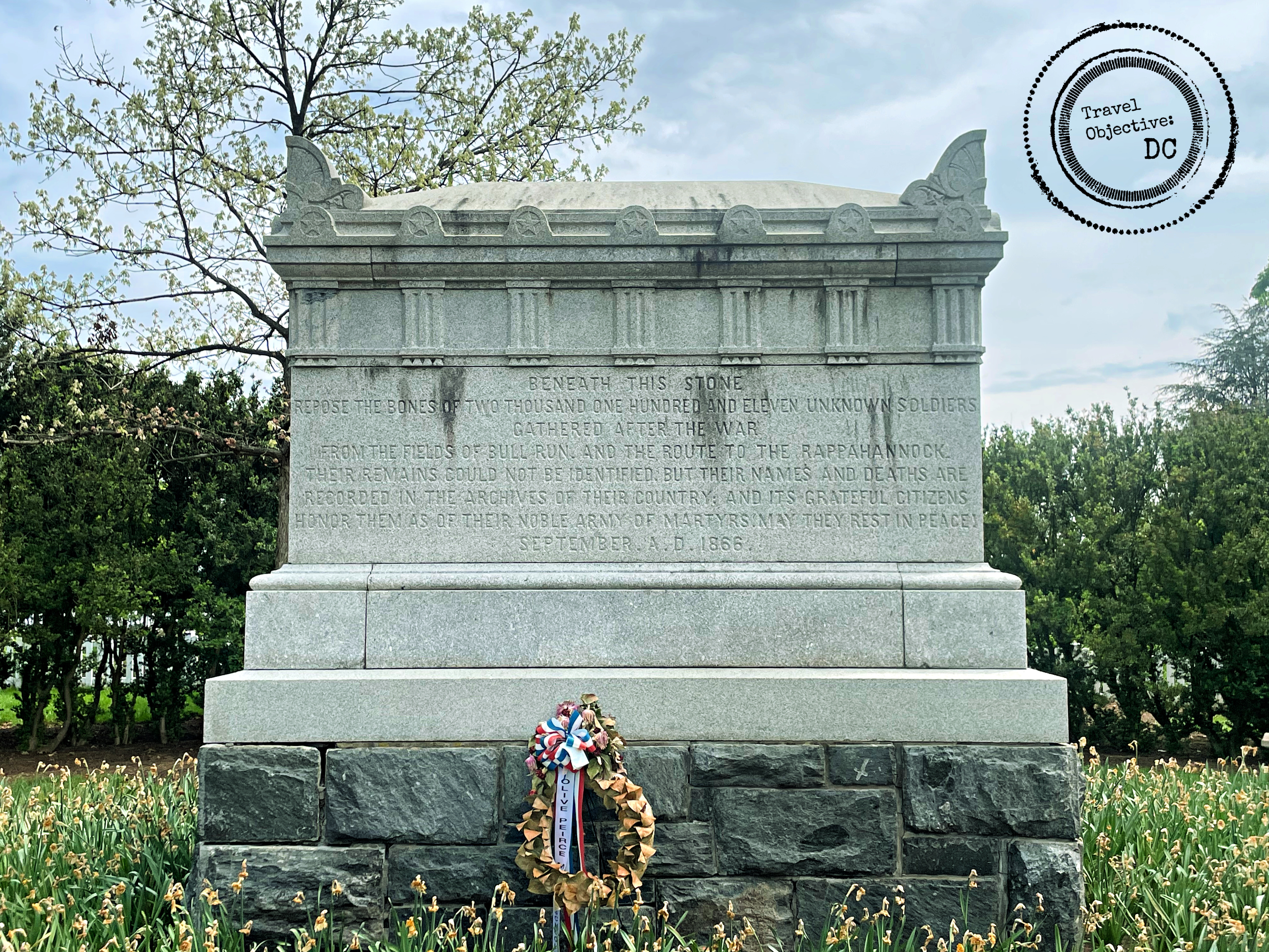
The DC Circulator, a public bus system with routes through Washington’s downtown area includes stops near the Memorial. Find more information about Circulator busses at www.dccirculator.com.
There is very little public parking available near the Capitol. The nearest public parking facility is at Union Station, to the north of the Capitol. Very limited metered street parking is found along the Mall to the west of the Capitol.