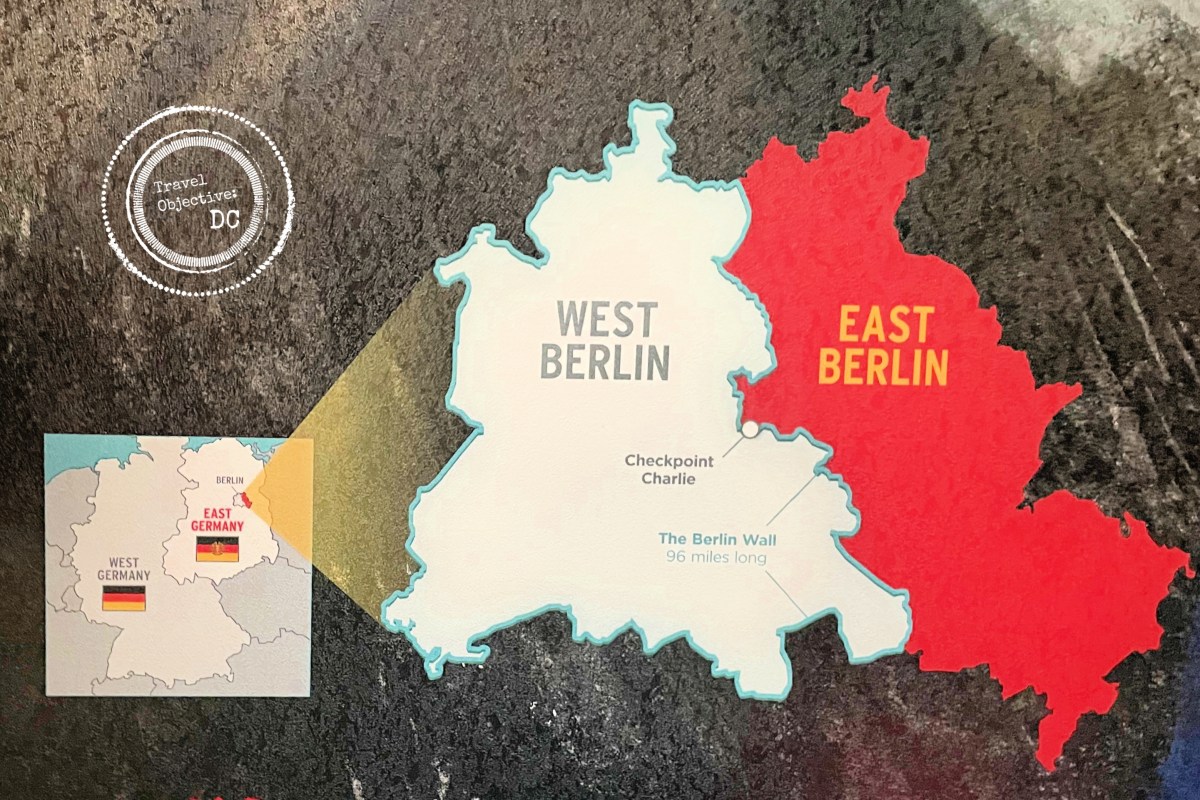
Following the Second World War, the different economic and political systems of the victorious Allied powers led to an intense 46-year rivalry known as the Cold War. From 1945 through 1991, the United States and its western partners competed with the Soviet Union and its client states in world politics, space, culture, sports, and, of course, espionage.
Throughout the Cold War, Berlin was the most visible focal point in the global competition between East and West.
Cold War Berlin was run by four foreign powers. One half the city, West Berlin, was administered by the United States, United Kingdom and France. The other half was run by the Soviet Union. Ultimately, East Berlin became the capital of the German Democratic Republic (East Germany).
In 1961, East Germany built a wall around West Berlin to stem the massive emigration of East Germans to the west. Traversing Berlin became impossible for most of its residents. Demonstrations, check points, even armed standoffs marked life in this hardscrabble city.
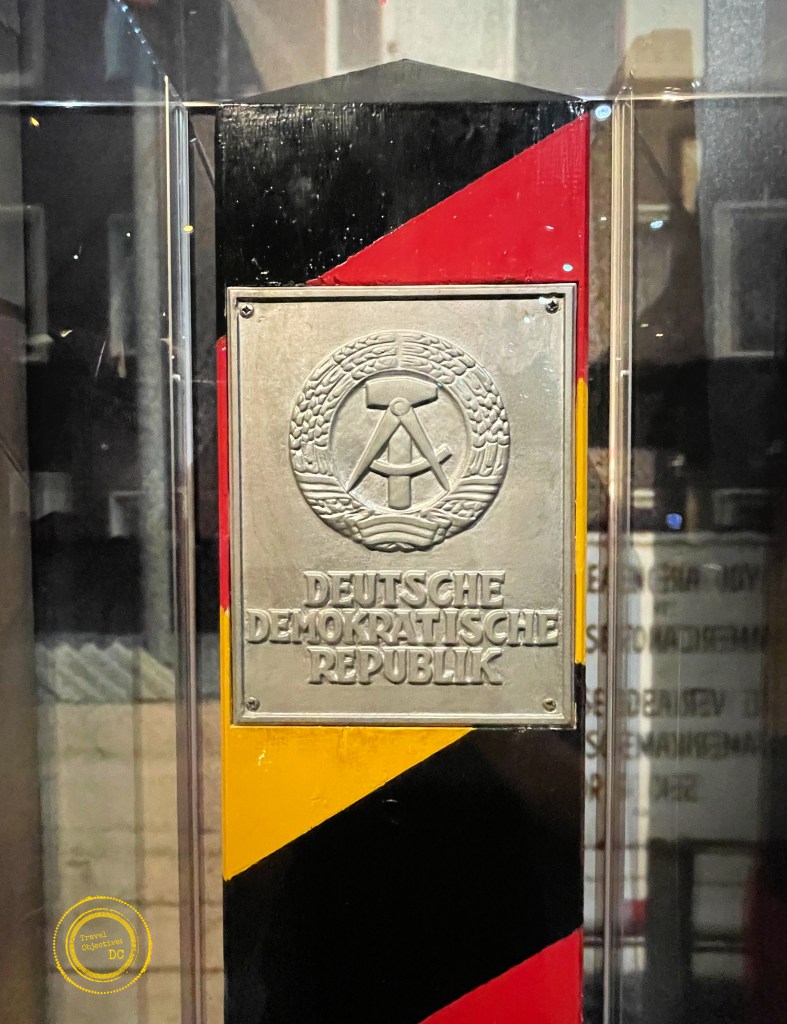
A border marker with the emblem of the German Democratic Republic (Deutsche Demokratiche Republik in German) or East Germany.
Against this backdrop, the various intelligence services of the four occupying powers and many other nations around the world engaged in the delicate work of deception and collection throughout Berlin.
One of those agencies, the East German Ministry of State Security, or Stasi, focused as much on collecting information on their own citizenry as on the Americans, British, French and West Germans.
In a most intriguing and vivid exhibit entitled Berlin, City of Spies, the International Spy Museum in Washington, DC transports its visitors back to Cold War East Berlin and life under the Stasi.
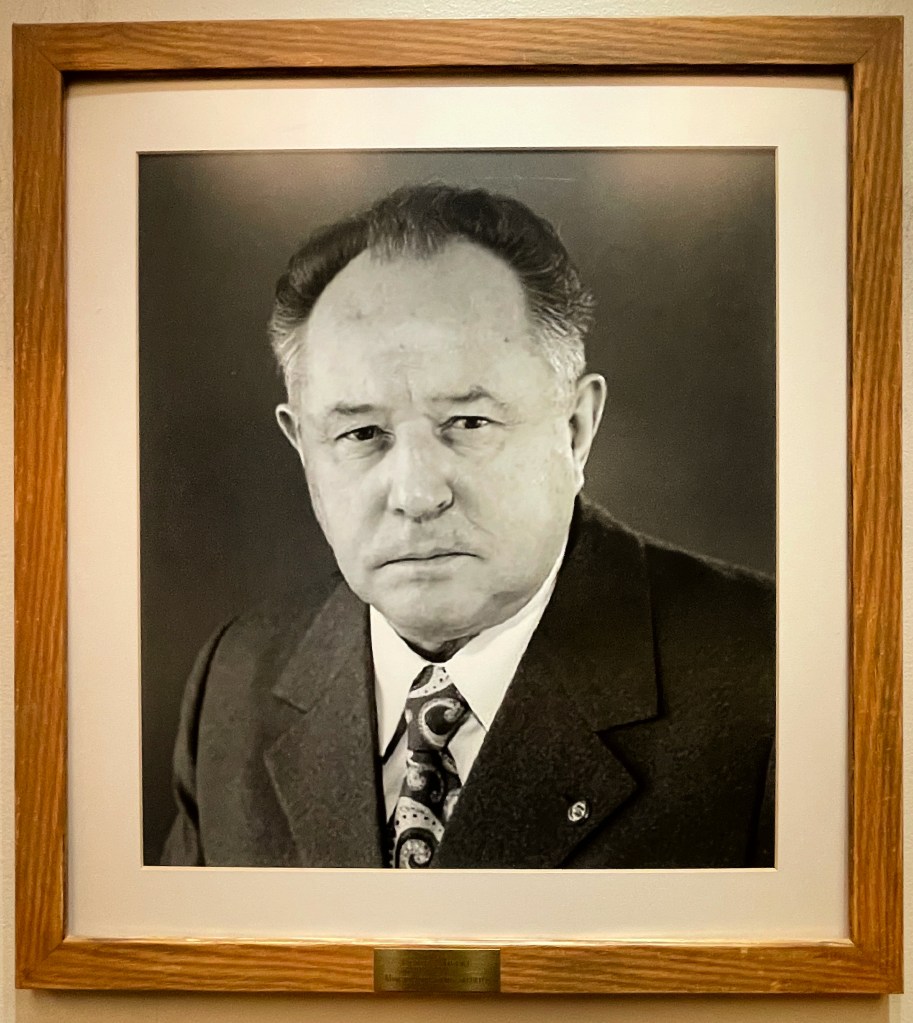
Erich Mielke was the East German Minister of State Security (Head of the Stasi) from 1957 to 1989.
For those interested in the practice of espionage, the International Spy Museum is an essential addition to any Washington, DC itinerary. This private museum portrays the work of intelligence collection from ancient times until today with a mix of well designed exhibits, compelling storytelling, multiple interactive features and the largest display of intelligence-related artifacts available to the public.
Entry into Berlin, City of Spies requires passing through an East German border checkpoint, complete with a boundary marker and an officer of the East German Volkspolizei (People’s Police or VoPo) who demands to inspect your papers. (Don’t worry if you forgot to bring them, he and his dog are virtual!)
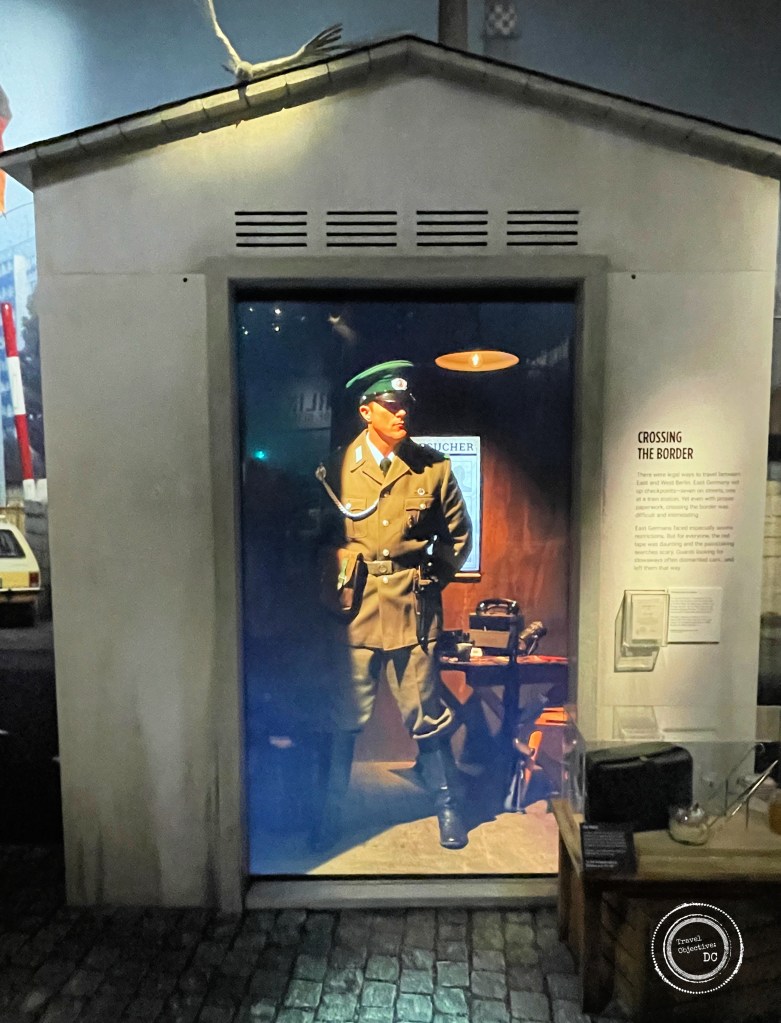
An East German Volkspolizei officer greets each visitor to Berlin, City of Spies.
After the encounter with the VoPo, a walk down a very realistic-looking Berlin side street leads to a searing look at the Stasi’s surveillance state.
“To know everything and to report on everything worth knowing” was Stasi head Erich Mielke’s goal for the organization. From 1957 until 1989, Mielke built an organization that permeated all parts of East German society.
There were over 90,000 Stasi agents who had recruited an extensive informant network. Some sources estimate one in three East Germans participated. They were everywhere — in workplaces, schools, military bases and hotels. Even in private homes, the Stasi was watching.
Visitors can flip through the cards in these file cabinets to learn about actual Stasi agents and their targets.
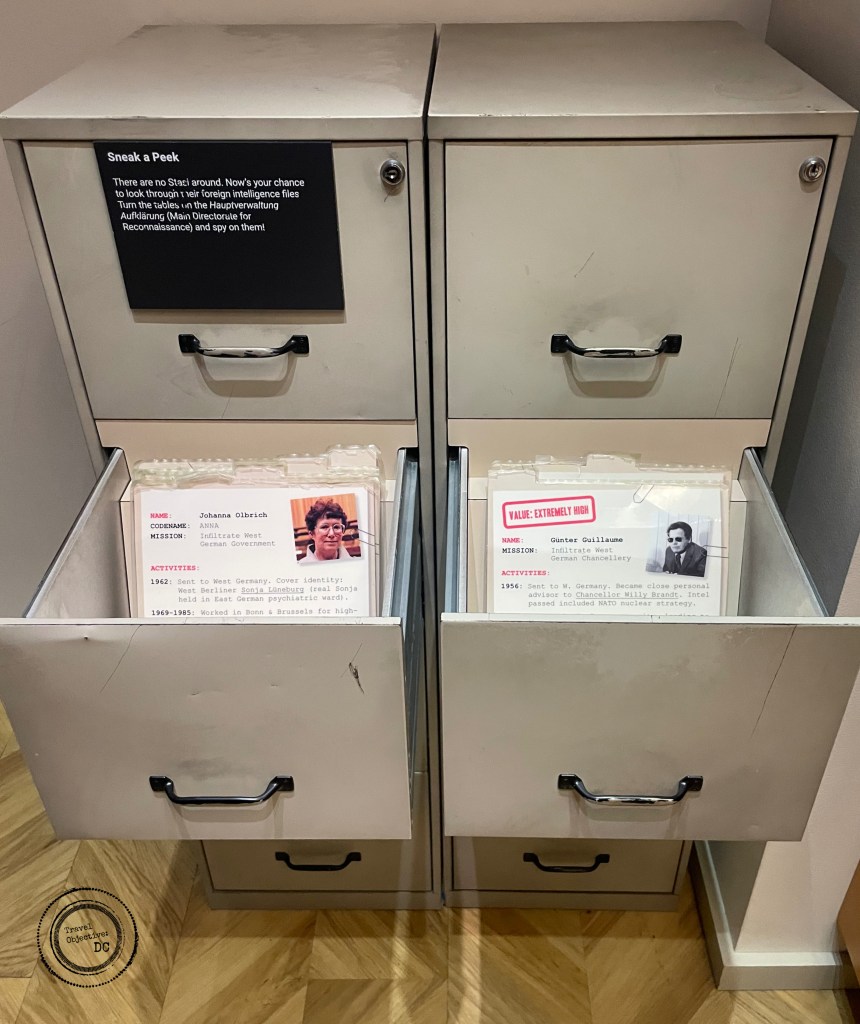
For some insight into the Stasi’s work, visitors can flip through excerpts from dossiers introducing real world Stasi agents and the people they targeted.
Being brought in for questioning by the Stasi was dreaded by East Germans. An adjoining area introduces Stasi interrogation techniques. An interactive activity allows a visitor and a partner to practice an interrogation, either as the interrogator or a subject. Through the activity, tips are provided to each person as they try to outwit the other.
Nearby, Stasi surveillance devices resembling decor items are displayed in a hotel room setting. A bathroom medicine cabinet holds additional tools of the spy trade used for personal disguises.
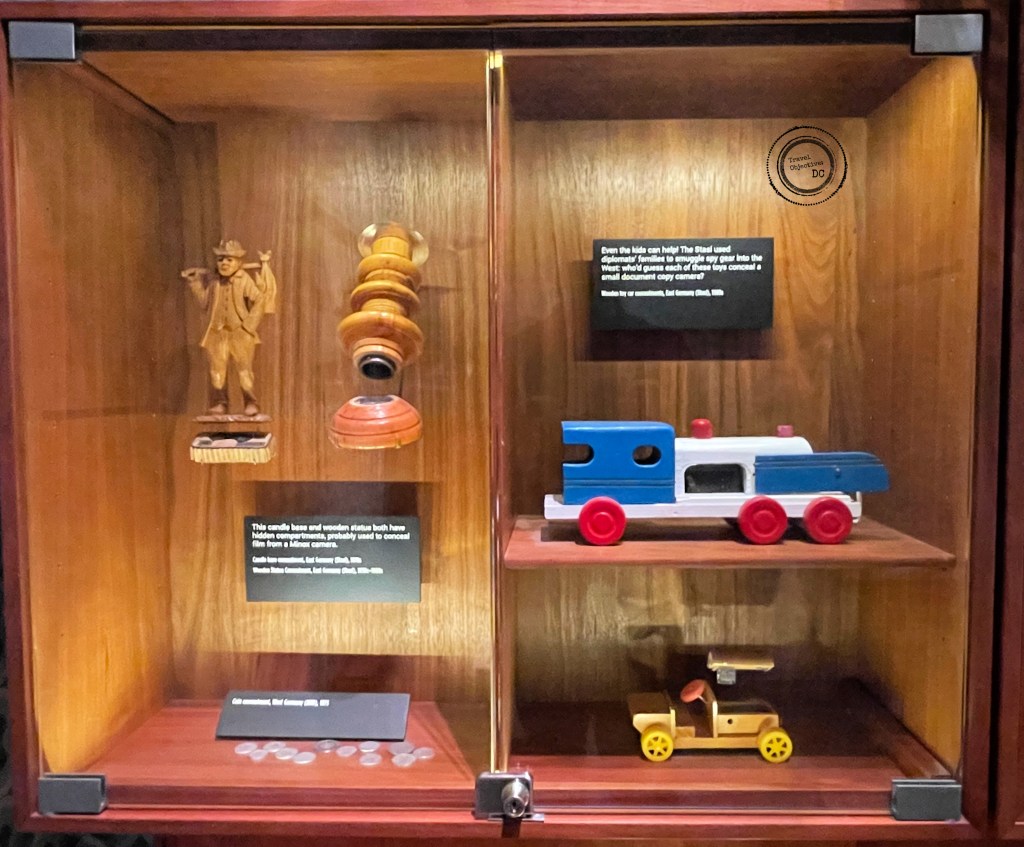
The wooden figurines, coins and children’s toys all contain surveillance devices used by the Stasi.
Across the street from the Stasi displays, a portion of another house alludes to the role of tunnels in Berlin. Once the Berlin Wall was in place, those seeking to live in the west sometimes turned to building tunnels.
Over 70 escape tunnels built by East Germans have been discovered under Berlin. However, only 19 were known to have been successfully used. Not all of Berlin’s tunnels were built to conceal people crossing borders, however. The International Spy Museum also includes a special exhibition on Operation Gold.
In 1954, at a very tense period of the Cold War, the United States and the United Kingdom began Operation Gold, a tunnel-building project to tap into underground Soviet military communication cables in Berlin. Intelligence crews secretly dug a 1,476-foot tunnel between the American and Soviet sectors, loading it with critical electronics. They successfully tapped into the cables and rerouted them through the tunnel where conversations were carefully recorded.
A portion of the Operation Gold tunnel on display at the International Spy Museum.
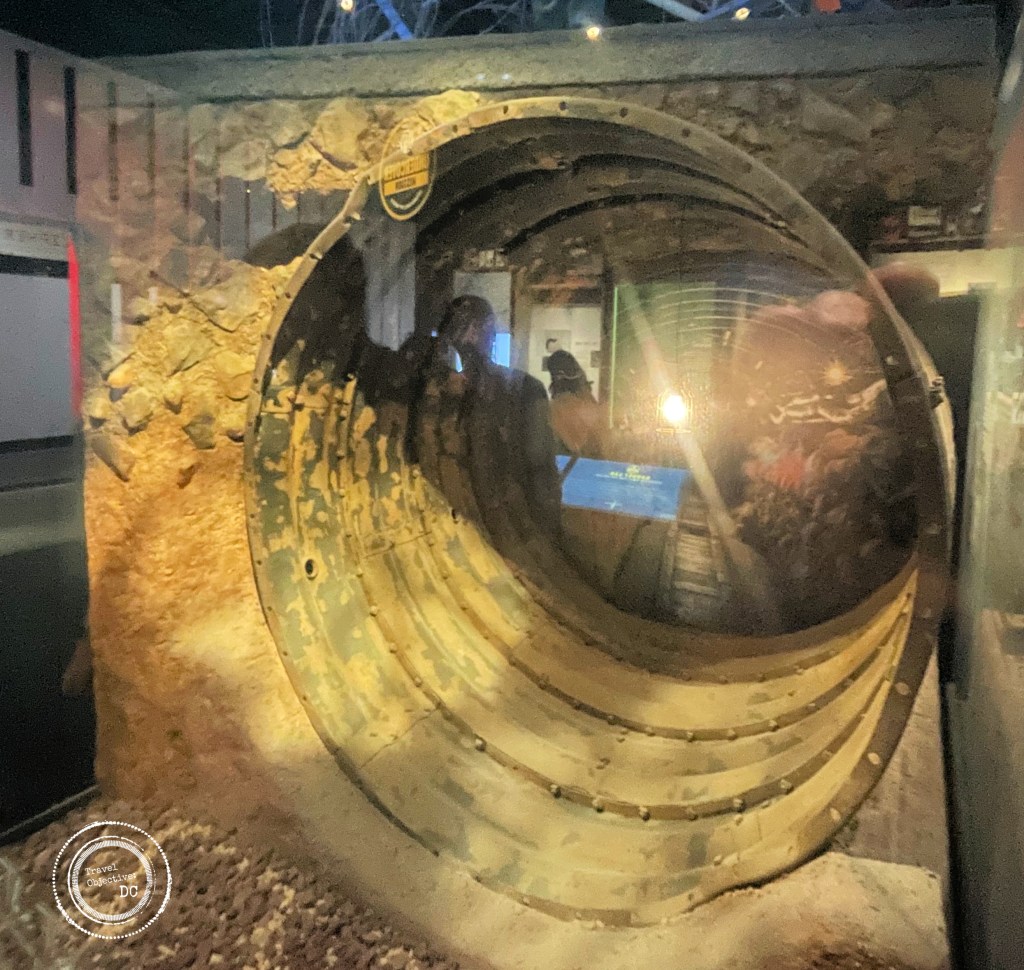
For about a year from 1955 until 1956, the intercepts revealed valuable information about Soviet atomic weapon design and nuclear intentions. Ironically, as often seen in the shadowy world of intelligence, the tunnel had been known to the Soviets all along.
A Russian mole within British intelligence had passed information about Operation Gold to the KGB before the tunnel was ever dug. However, not wanting to reveal their agent, the KGB never disclosed their knowledge of the tunnel until an East German repair crew discovered the tunnel in 1956.
On October 3, 1990, East and West Berlin, along with East and West Germany, officially united. The Stasi was dissolved. In January 1992, however, the new German government enacted an unprecedented law, knowns as the Stasi Records Act. The law opened the extensive Stasi archives to the public. Ordinary German citizens could apply to read any files the Stasi maintained about them.
The impact has been profound. Many East Germans learned the identities of the people, sometimes of close personal friends and relatives, who had spied on them. In other cases, East Germans who had pursued new political, academic or business careers were dismissed from their positions due to their affiliation with the Stasi.
To date, about 2 million individuals, less than half of those eligible, have applied to see their files.
In 1994, Berlin once again became the capital of a united Germany. Today Berlin is a cosmopolitan city located in the heart of Europe, known for its culture and legendary nightlife. Yet its history, even in Washington, DC, is never far away.
* * *
Route Recon
The International Spy Museum’s address is 700 L’Enfant Plaza, SW Washington, DC 20024.
The International Spy Museum is a private, non-profit museum located in the L’Enfant Plaza section of Washington. Ticket prices are dynamic based upon demand and time of day. Admission is about $37.00 for adults and $25.00 for children. Tickets can be purchased through the museum’s website.
Directions to the Spy Museum can also be found on the museum’s website.
Command Reading
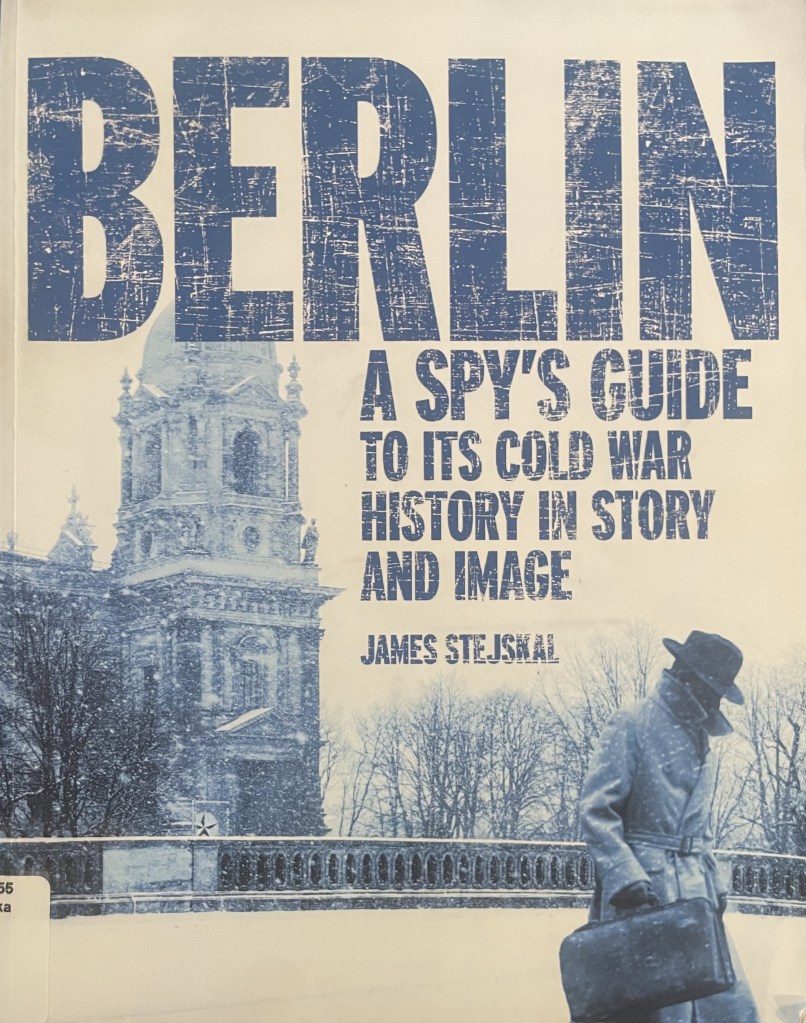
Berlin: A Spy’s Guide to its Cold War History in Story and Images
-by James Stejskal.
While there are many books written about espionage in Berlin, A Spy’s Guide is a recent publication written by an intelligence professional who worked Berlin for a number of years. Part history book, part travel guide, A Spy’s Guide is helpful for anyone wanting to add intriguing sites related to espionage to their Berlin itinerary.
Mess Call
If your brush with espionage in East Berlin leaves you hungry, head to Cafe Berlin in Washington’s Capitol Hill neighborhood. There you can in recount your adventures over an authentic schnitzel or currywurst accompanied by a German beer.
Guten Appetite!
Cafe Berlin is located at 322 Massachusetts Ave NE, Washington, DC 20002

