Revisiting the War Above the Trenches at the National Air and Space Musuem

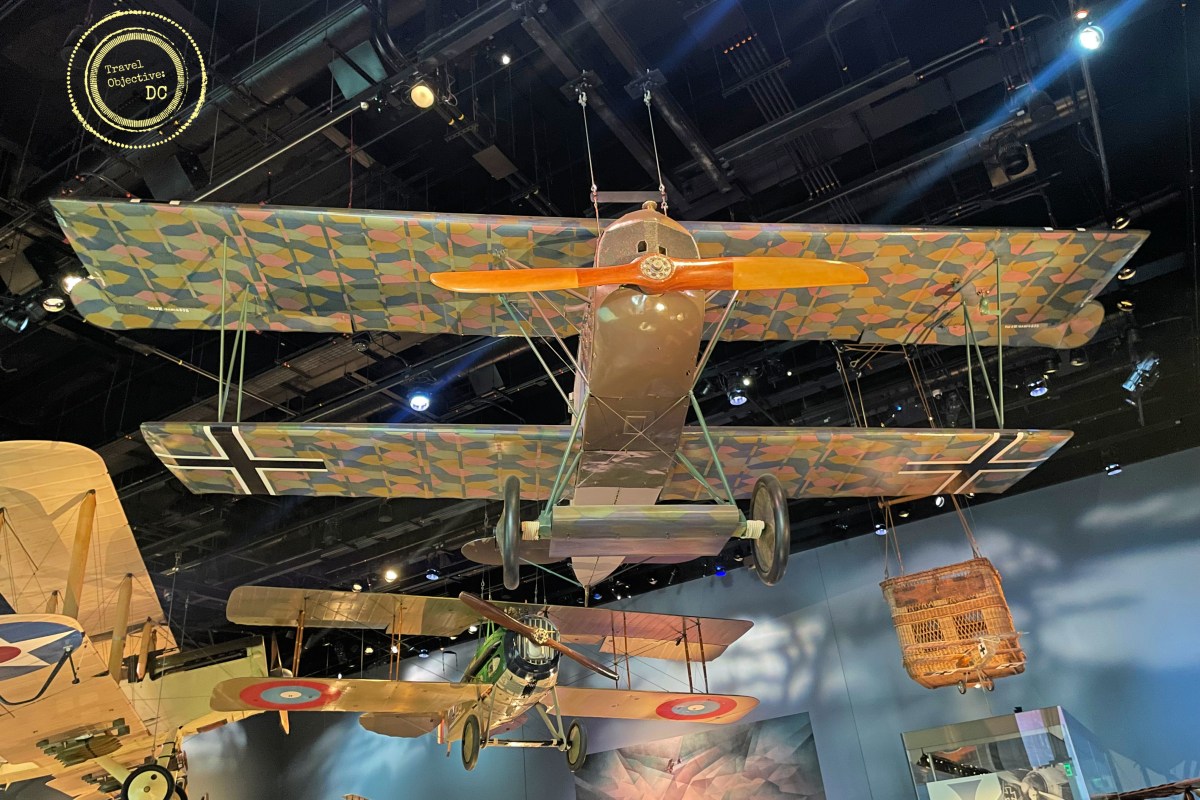
A German Fokker D.VII Fighter

Lieutenant Arthur Raymond Brooks, US Army Air Service, knew he was in for a fight.

In the skies above Mars-la-Tour, France on September 14, 1918, Brooks and his squadron of six SPAD XIII fighters encountered four squadrons of German Fokker D.VIIs. As the fighter planes engaged each other, Brooks flew directly into German machine gun fire. He then quickly pulled away from his main formation with eight German fighters in pursuit. 

Brooks next used all the maneuver capabilities the SPAD could provide to avoid being caught in a Fokker’s line of fire. He did barrel rolls. He flew in loops. He quickly climbed, then rapidly dove.  

As the melee continued, Brooks fired on multiple Fokkers as they all weaved through the sky, downing two. German fire shattered his windshield and damaged one of his two machine guns. His SPAD was riddled with bullet holes.  Yet he stayed in the fight. Brooks anecdotally shot down four German fighters that day (although he was only credited with two) and was awarded the Distinguished Service Cross for his actions.
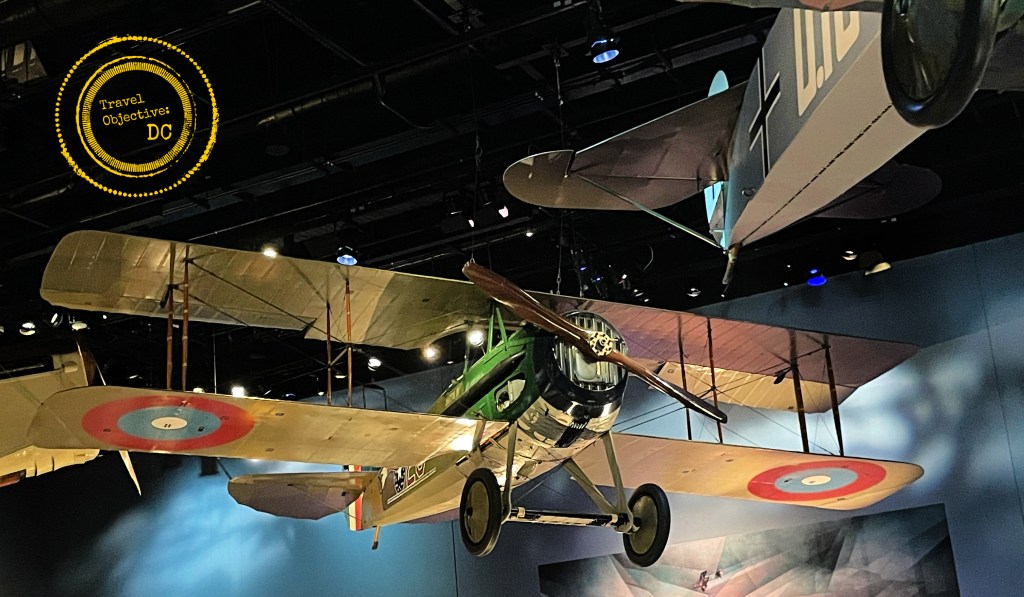
A SPAD XIII Fighter at the National Air and Space Musuem

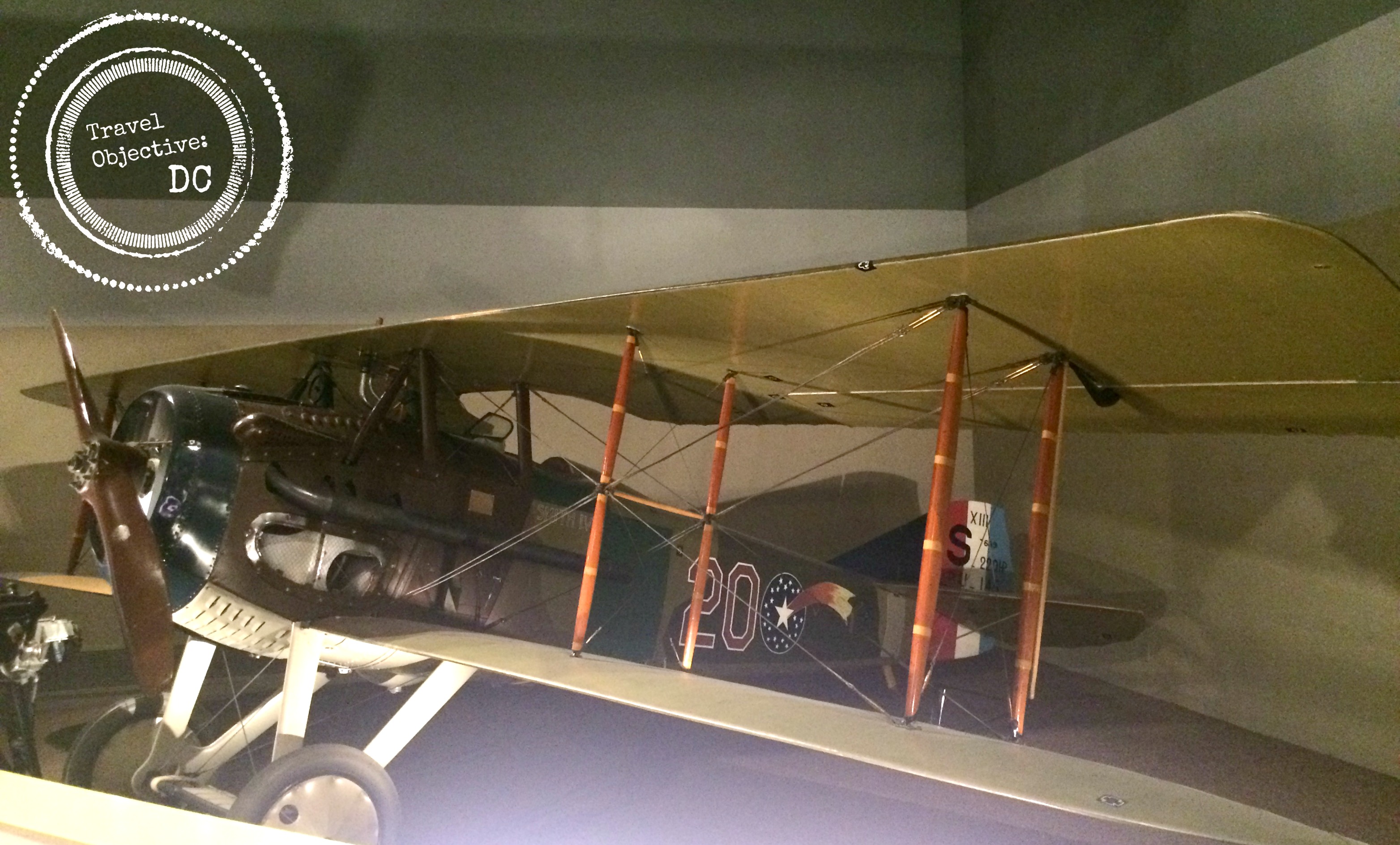
The SPAD XIII FighterBuilt by the Société Pour L’Aviation et ses Dérivés (SPAD) company, the SPAD XIII was preferred by French aces. The US Army Air Service also flew SPADs. Ray Brooks flew this SPAD in October 1918.

Ray Brooks is just one pilot whose aerial exploits are recounted in the Smithsonian Institute’s National Air and Space Museum’s (NASM’s) redesigned World War I aviation exhibit entitled World War I, the Birth of Military Aviation.

This is NASM’s third exhibit dedicated to the aircraft and aerial warfare of the First World War.  The earlier exhibit, entitled Legend, Memory and the Great War in the Air, closed in 2018 as NASM prepared for a musuem-wide refurbishment. The new iteration explores the twin themes of how “the Great War” defined the on-going nature of military aviation as well as the remarkable experiences of World War I aviators.

There is much to see in the new gallery, but the meticulously restored World War I aircraft are the main attraction. Many of the World War I airplanes previously displayed are back. Greeting you from overhead as you enter the exhibit hall are the French Voisin Type 8 nighttime bomber and the German Albatross D.VA, a fighter that debuted in 1917. Other aircraft include the Fokker D.VII German fighter, Ray Brooks’ SPAD XIII fighter and the DH-4 Liberty Plane.

A German Albatross D.Va Fighter – These fighters were introducted in 1917.
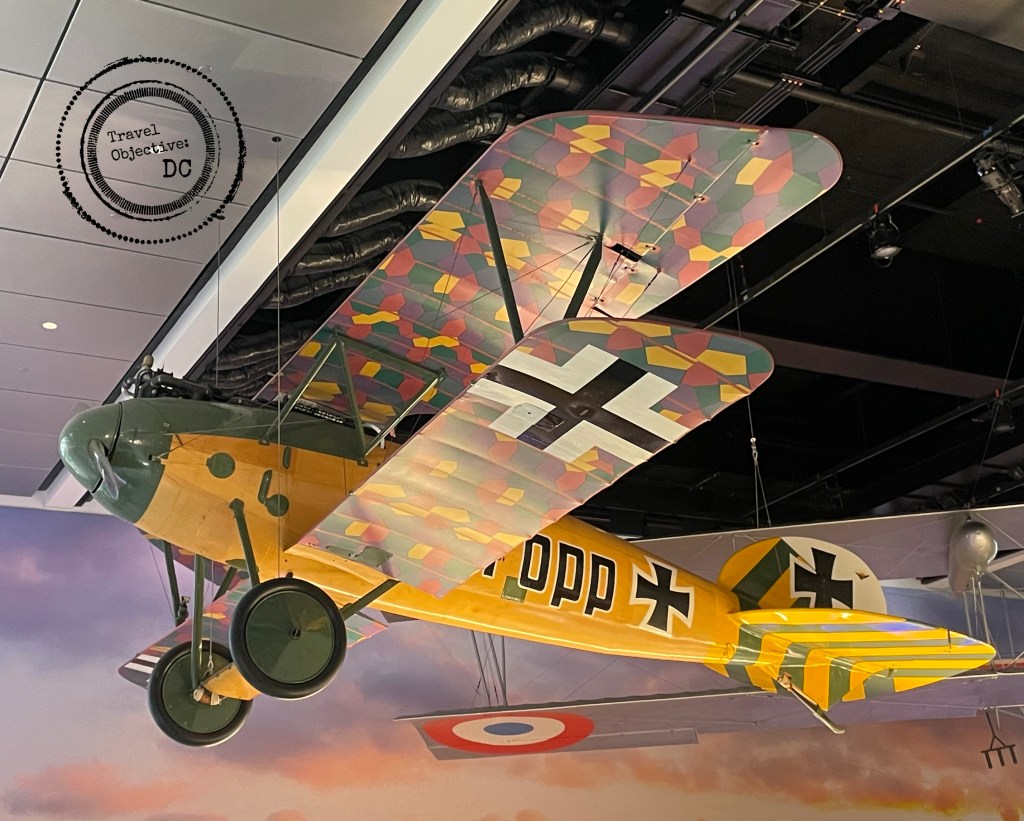
A German Albatross D.Va Fighter at the National AIr and Space Musuem

The latest exhibit occupies a smaller footprint than its predecessor, but NASM’s designers have filled the space with a wide range of intriguing artifacts, vintage aircraft, airplane models and other displays. 

The exhibit timeline from 1914 through the post-war period is arranged in a counterclockwise manner around a beautifully restored Sopwith F.1 Camel (the last surviving Camel fighter produced by the Sopwith Aviation Company).  Once a pilot mastered the British-made aircraft’s finicky controls, the Camel was a highly versatile fighter. It is credited with downing more enemy aircraft than any other Allied plane.

Unlike other aircraft on display, the Sopwith Camel is placed on the floor making it the easiest to see and admire.

Adjoining the Camel is a large movie screen surrounded by a tent-like frame, suggesting an early aerial hanger. A four-part narrated film plays on a loop showing period aircraft in flight. The film provides a wonderful sense of motion to these beautiful but otherwise static aircraft.
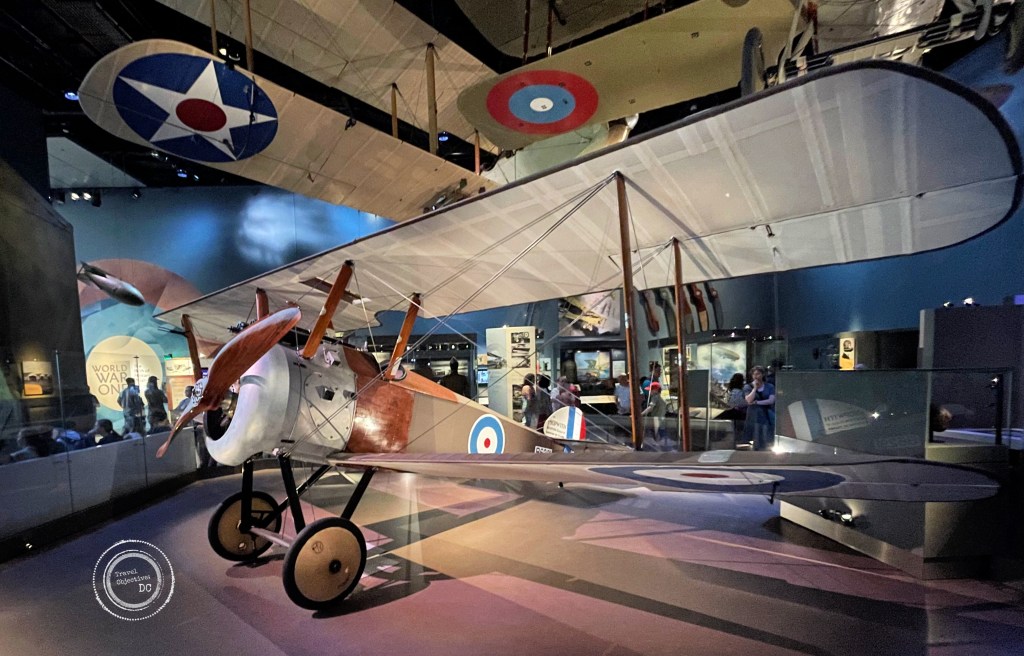
A Sopwith F.1 Camel at the National Air and Space Musuem

The Sopwith F.1 CamelThis aircraft is the last surviving F.1 Camel built by the UK’s Sopwith Aviation Company.

Through the war years, three distinct types of military aircraft evolved–reconnaissance planes, fighters and bombers–reflecting the three original mission areas of military aviation.

To battlefield commanders, the airplanes’ most critical function was reconnaissance and observation. Trench warfare had ended the traditional scouting role of horse cavalry, but aircraft could find, fix and observe the enemy from above. Reconnaissance aircraft were built to direct artillery fire, track troop deployment, assess damage and relay messages over long distances. Planes were fitted with cameras and communications equipment, essentially becoming the commanders’ eyes and ears. Pilots and observers risked their lives to take photographs, which were now an important element of military planning.

A Kodak A-2 Oblique Aerial Camera. A 4″x5″ glass plate was changed out each time a picture was taken.
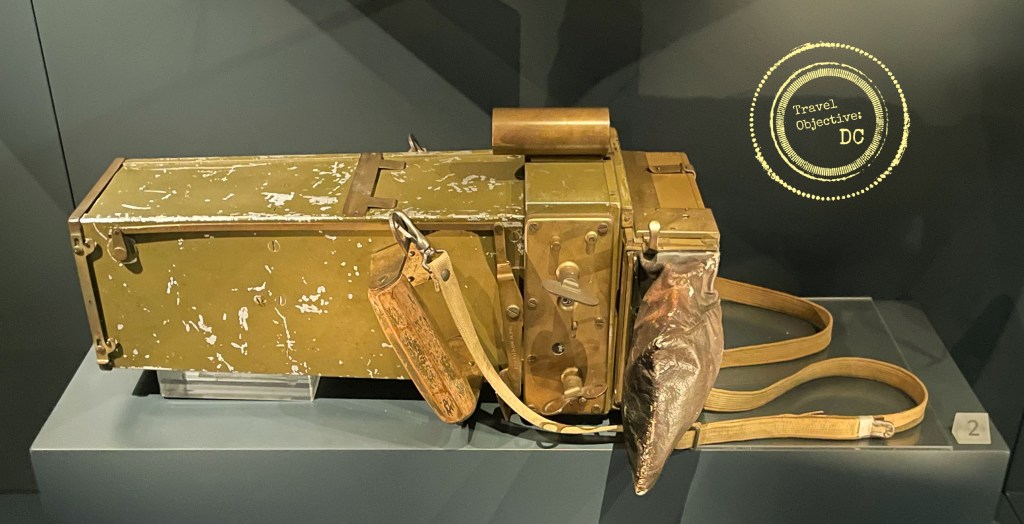
A Kodak A-2 Oblique Aerial Camera at the National Air and Space Musuem

Fighter aircraft were first developed to protect the reconnaissance planes. Ultimately, the fighters would engage each other to control the airspace over the trenches. Later in the war, Britain and Germany formed special fighter squadrons to directly attack troops on the ground.

Airships also conducted reconnaissance as well as bombing missions. However, their large size and slow speed made them susceptible to attack by fighters. They were generally replaced on bombing missions with specialized aircraft capable of flying further and higher while carrying heavier bomb loads.

 A German aviation insignia

Cross insignia from a German airship – This design was the official emblem of the German Air Service until mid-1918.

World War I gave rise to the military aviator as a distinct specialty. Some aviators, especially pursuit (later called fighter) pilots, took on a mythic status in their home countries.  Flying high above the mud and blood of the trenches, these pilots were heirs to the chivalrous legacy of knights in armor. Pilots were written about in newspapers, appeared on magazine covers and made public appearances.

Prominent pilots included in the exhibit include Eddie Rickenbacker (America’s most decorated WWI ace), Manfred von Richtofen (The Red Barron), Eugene Bullard (African-American pilot flying for the French), Raol Lufbrey (a French-American ace), and Snoopy. (OK, Snoopy was not a real pilot, but he does have his own display, which is, of course, by the Sopwith Camel).

Among all the aircraft and artifacts, there are many interactive features as well. You can use a light table to analyze period photo imagery from a reconnaissance aircraft, learn how a synchronizer allowed machine gun bullets to miss propeller blades, and take the controls of a Sopwith Camel to experience the sounds of this highly maneuverable fighter. An immersive exhibit on trench warfare at first seems rather two dimensional. However, a look through trench periscopes provides some basic context on the infantryman’s view of aviation.

Snoopy first imagined himself flying his doghouse in 1965. Through the comic pages, as well as books, games, cartoons, and toys, Snoopy has been a consistent reminder of World War I aviation.

A collecton of artifacts celebrating Snoopy, the World War I ace.

At the beginning of the war in the Summer of 1914, the airplane was still a novel invention, a little more than a decade old. Very few aircraft were designed for any military purposes. As the war progressed, rudimentary flying machines quickly became faster, more maneuverable and better armed.

Airplanes were also needed on a large scale. Over 215,000 aircraft were built between 1914 to 1918. A myriad of new products were developed or adapted for use in aviation such as specialized cameras, radios, and aerial bombs. Many items first developed in World War I are still used in modern aviation, like the artificial horizon instrument, flight suits, and oxygen masks to name just a few. This sudden and sustained demand for combat aircraft and accessories gave rise to a new industry filled with highly skilled workers, an industry we rely on today.  

A collection of World War I aircraft propellers

American, British and French propellers

Although World War I ended over a century ago, its impact is still very much felt today. World War I, the Birth of Military Aviation provides valuable insight into an important but not altogether well understood period in the history of aviation. The gallery’s opening is also an important and welcome step toward the completion of NASM’s comprehensive, multi-year renovation.

* * *

Route Recon

The Smithsonian Institute’s National Air and Space Museum (NASM) is located on the National Mall bordered by Independence Avenue, Jefferson Drive, and 4th and 7th Streets, SW. The entrance is on the north side of the building facing the National Mall. You cannot access the museum from the south side along Independence Avenue. Free timed tickets are required for entry into NASM. Tickets can be acquired through the NASM website. Ticket holders will line up near the entrance on the Mall side of the Museum building prior to their entrance time. Entry prior to the time on the ticket is not allowed, but ticket holders can enter after the ticket time.

Parking – Very limited metered street parking is available around the museum. Parking is available in several commercial parking lots in the neighborhood.

Public Transportation

Metrorail – The closest Metro station is L’Enfant Plaza, along the blue, orange, silver, and green lines. From the L’Enfant Plaza Station, take the exit for Maryland Avenue and 7th Street.

Metrobus – Bus stops are located on Independence Avenue, SW, and along 7th Street, SW. Visit the Washington Metropolitan Area Transit Authority for more information.

Command Reading

Capt. Arthur Ray Brooks, America’s Quiet Ace of W.W.I by Walter A. Musciano – Originally published in 1963, Musciano’s concise work provides a brief overview of Brooks’ life with some straightforward accounts of World War I aerial combat. It also includes an interesting assortment of historic World War I photographs of Brooks and his fellow aviators as well as detailed informaton on the aircraft Brooks flew.
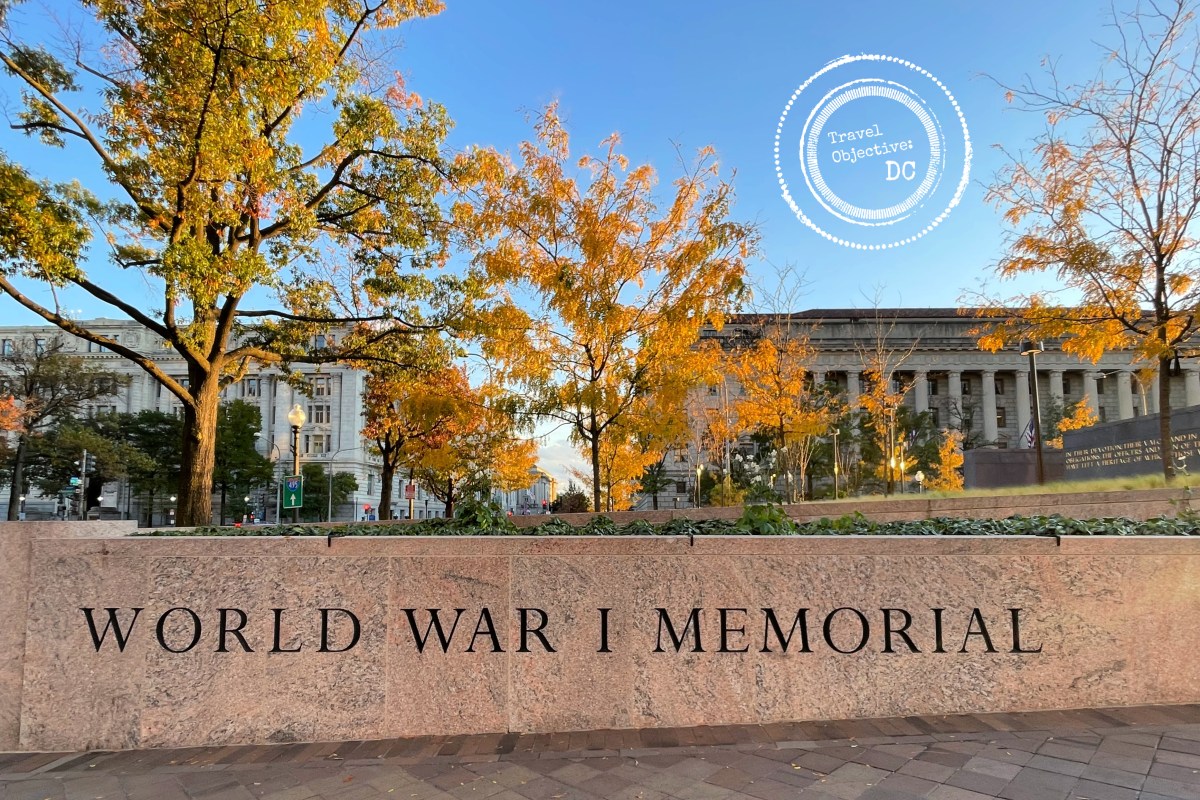
Over 100 Years Later, DC’s World War I Memorial Is Now Complete

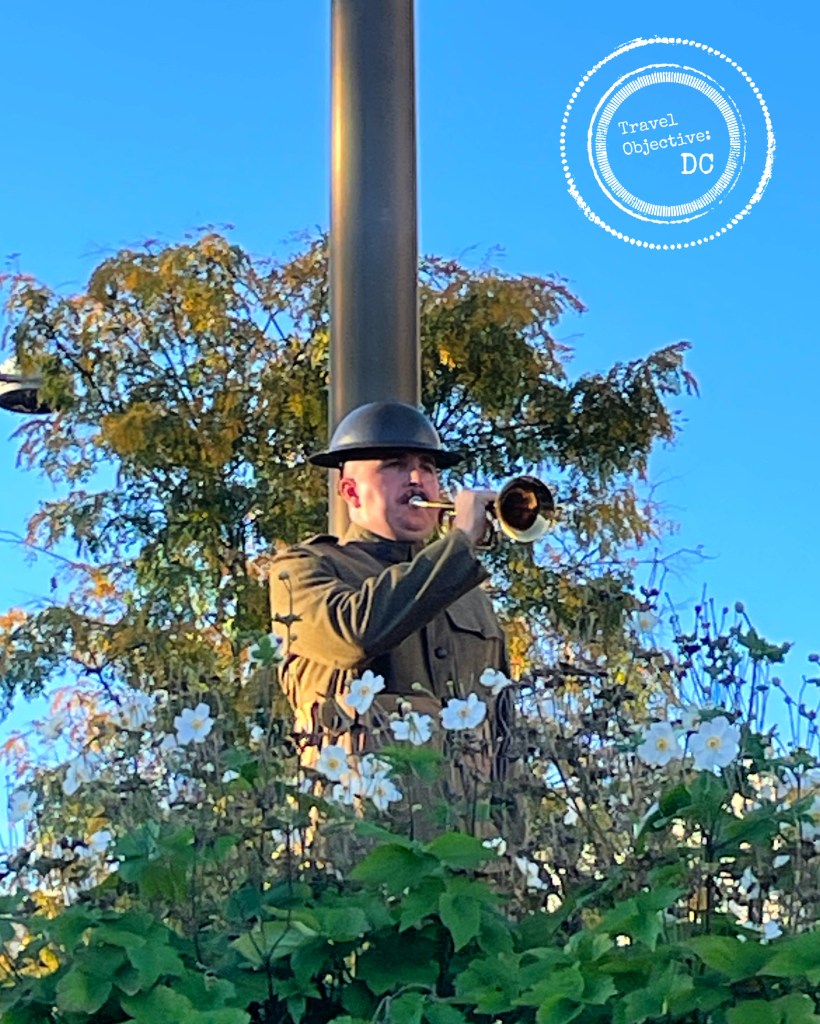
Each day, shortly before 5:00 pm, an individual in a First World War U.S. Army “Doughboy” uniform exits the stately Willard Hotel and crosses Pennsylvania Avenue, bound for the Washington DC area’s newest memorial, the National World War I Memorial.

The Doughboy carries a bugle, and positions themselves under the memorial’s flagpole. Precisely at 5:00 o’clock, the bugler plays the mournful notes of Taps. The bugle notes echo through the plaza inviting all who hear to pause and remember the 4.7 million American men and women who fought in World War I and especially the estimated 126,000 Americans who gave their lives in the “war to end all wars”.

Bugler in World War I uniform - World War I Memorial - Washington DC

A bugler in his World War I uniform

In a bit of irony, for over a century there has not been a national memorial in the capital city to World War I. There are other important World War I monuments in and around Washington, but not a single, focused and comprehensive national memorial to the war that shaped so much of the 20th century and America’s role within it. Yet that changed in 2021 when a partially constructed memorial was dedicated and opened to the public. Three years later, the final and dramatic piece of the memorial was installed capping a years long effort and bringing Washington, DC’s National World War I Memorial to fruition.

Pershing Park

The National WWI Memorial is located in what was formerly known as Pershing Park, a parcel of land originally laid out as part of the redevelopment of Pennsylvania Avenue in the 1970s.  Located between 14th and 15th Streets and Pennsylvania Avenue, the park was dedicated to General of the Armies John J. Pershing and the American Expeditionary Force (AEF) and formally opened in 1981.

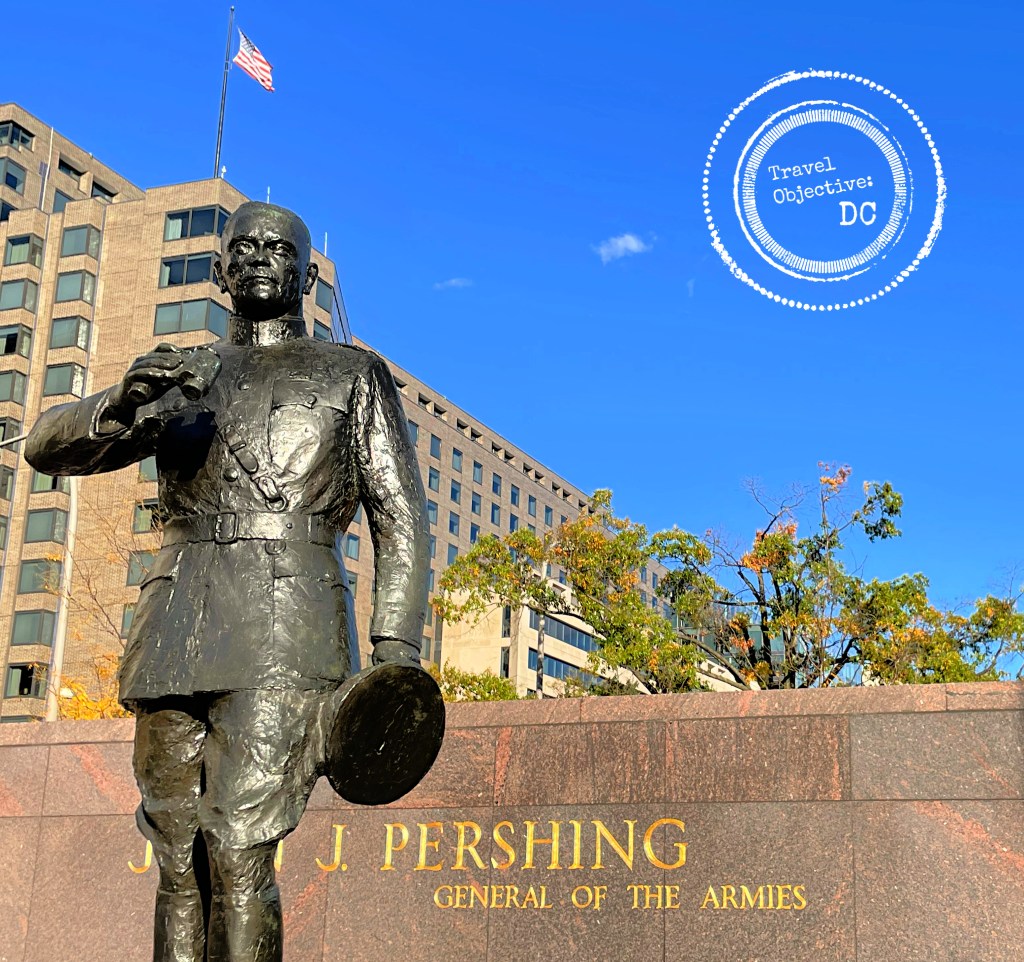
The park featured an eight-foot-tall statue of Pershing standing straight and surveilling the horizon with his binoculars in hand. A wall perpendicular to the statue displayed maps and details of the AEF’s operations in Europe. 

The statue of General of the Armies John J. Pershing at the National World I Memorial

General John J. Pershing statue - National World War I Memorial - Washington DC

Also included were a fountain that could be converted to a skating rink during the winter months, a glass concession stand and sitting areas. Abundant landscaping was added to provide a natural setting within a busy urban corridor. Earthen berms covered with grass surrounded the park on three sides, shielding the grounds from traffic noise.  

Unfortunately, maintenance funds for the park’s unique features were scarce. Some aspects of the park fell into disrepair, trash accumulated and the landscaping neglected. 

However, when the World War I Centennial Commission went in search of a venue for a national memorial to World War I in the nation’s capital, it ultimately decided on a redesigned Pershing Park as the best location.  

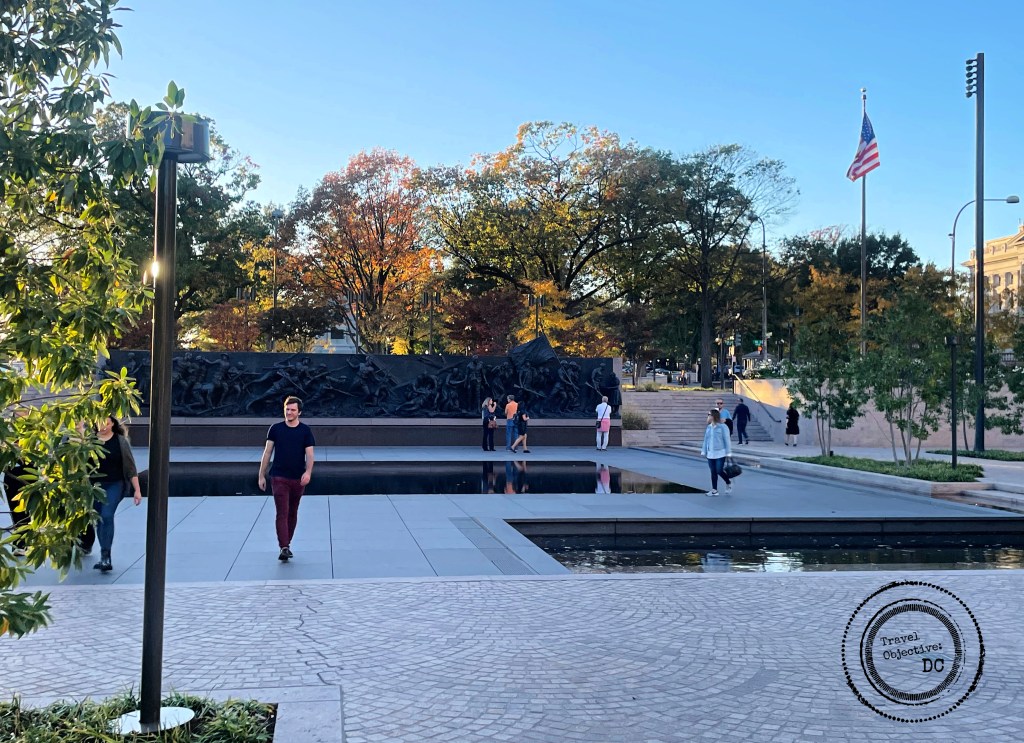
Visitors walk through an open plaza at the National World War I Memorial.

Visitors walk through an open plaza at the National World War I Memorial.

With the clock ticking on the 100th Anniversary of the armistice, the commission expedited the truly lengthy process for approving new landmarks in Washington. The approach was not without controversy. Community and architectural groups grew concerned the new designs abandoned the original intent of an open green space in the middle of the city. 

Ultimately, in 2016, a design submitted by architect Joseph Weishaar was selected. His approach was to use the existing footprint of the 1.76 acre park situated in a busy downtown area just southeast of the White House. Weishaar retained Pershing’s statue, the AEF Wall and the earthen berms but planned new features that expanded the interpretation of World War I.

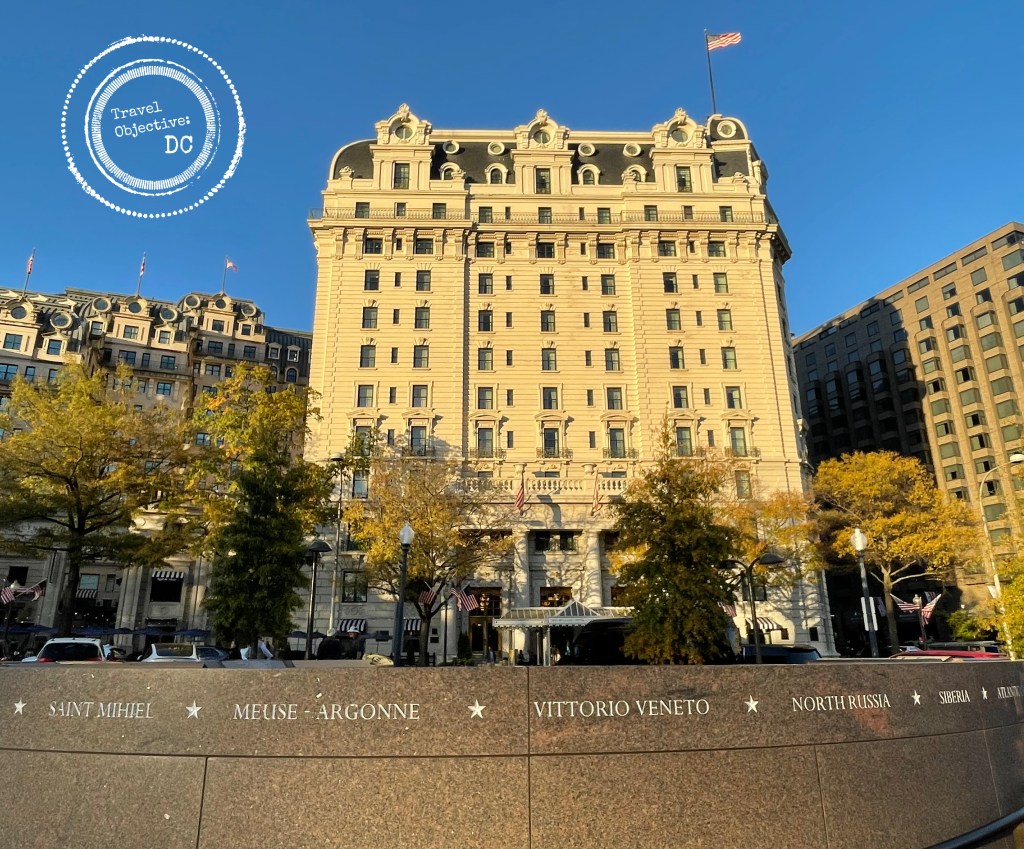
One new addition is known as the belvedere, a raised, enclosed circular area located near the northeastern entrance of the park.  The belvedere serves as the memorial’s orientation center. Interpretive signage installed along the interior of the wall familiarizes the visitor to “the Great War” and the roles played by American forces. The belvedere’s elevation provides clear lines of sight to the memorial’s features. 

Willard Hotel in the background of the belvedere at First World War Memorial.

The circular wall of the belvedere is inscribed with the campaign names of the First World War. In the background is the Willard Hotel.

A Soldier’s Journey

Across the plaza from the belvedere, over a shallow reflection pool is the most prominent aspect of the the new memorial, a large relief sculpture entitled A Soldier’s Journey by Sabine Howard.  The sculpture’s installation in September of 2024 completes the National World War I Memorial.

The sculpture stretches 58-feet long and includes 38 separate statues. Designed to be viewed from left to right, the sculpture tells the story of an American soldier’s experience across a series of tableaus. 

Howard and his team followed a meticulous process beginning with over 12,000 drawings and photographs of models in various poses, which he used to create foam models. These foam models were then covered in clay so accurately that every uniform crease, garment wrinkle, weapon detail, and facial expression were painstakingly rendered. The clay-covered models were then used to create the molds in which the bronze statues were cast.

Sabine Howard - sculpture - A Soldier's Journey
Sabine Howard’s sculpture “A Soldier’s Journey”

Howard used combat veterans as his models, believing their faces would more accurately portray the effects of war. All the uniforms and equipment used by the models were century-old artifacts, not reproductions. Through this extensive detail, Howard invites the viewer into the story.

The effort took about eight years to complete.  

The story begins with the soldier receiving his helmet from his young daughter. He then joins fellow soldiers as they march off. The next scene shows them charging at the enemy through no-mans land. The costs of war, both physical and psychological, are shown next as nurses comfort the afflicted while our soldier looks blankly at the viewer with a harrowing gaze. 

In a dramatic scene from the sculpture entitled the Ordeal, American soldiers charge the enemy.

A dramatic scene from the sculpture A Soldier's Journey at WWI Memorial in Washington DC

The soldier then returns home as part of a victory parade. In the last scene, the soldier hands the helmet back to his daughter. Rather than depicting a joyous scene, this one is foreboding. The soldier has a look of deep resolve on his face. The daughter stares into the helmet, wearing a troubled expression. She represents the Greatest Generation, who would soon take up the mantle once again and fight another war. 

Howard’s work is powerful and thought provoking, but the story told through the sculpture is a familiar one. With some changes to the uniforms and equipment, the story could be about any war. 

This was Howard’s desired effect.  He wanted a sculpture that asks the questions any war memorial should ask: Was it worth it? What did we gain? What did we lose? What did we learn? 

Other Features

On the reverse of the sculpture wall, water gently cascades over an inscription taken from a haunting poem entitled The Young Soldiers Do Not Speak by Archibald MacLeash. MacLeash’s poem is written from the perspective of deceased soldiers who tell the living that it is up to the them to give meaning to the lives the soldiers lost. MacLeash was a veteran of the First World War who became a noted writer, poet and editor. President Roosevelt appointed MacLeash as the Librarian of Congress in 1939. He wrote a poem in 1940 in honor of the Library of Congress staff who died in World War I. 


“We were young, they say, we have died, remember us”

From The Young Soldiers Do Not Speak by Archibald MacLeash

A unique aspect of the memorial are the circular benches arrayed around the southern and western edges of the memorial plaza. Unlike similar war memorials in Washington, the inclusion of these sitting areas provides an appointed space available for rest and reflection, a gathering spot for friends or even an area for discussion about World War I. Trees and ornamental grasses around the memorial plaza provide a peaceful sense to aid in reflection.

Additionally, the live playing of Taps daily adds a human element to the stone and bronze of the memorial. The daily bugler initiative is coordinated by the Doughboy Foundation. Through the foundation’s website, members of the public can sponsor each day’s rendition in remembrance of an individual. The name of the day’s honoree and the scheduled bugler can be learned by scanning a QR code on a sign near the memorial’s flagpole. 

Bugler - Doughboy Foundation - bugler playing Taps

Taps is sounded daily at the National World War I Memorial.

The evolution of Pershing Park into Washington DC’s National World War I Memorial has brought new life and purpose into this downtown space. The area is now more inviting and interesting, drawing more people in to learn about the American role in World War I and to remember those who fought and died. 

At the dedication ceremony for the sculpture, Architect Joseph Weishaar remarked: “We don’t build memorials for the dead. They are for the living. We build them to protect and preserve our memories and our stories.”

While it seems so long ago, World War I continues to impact issues of the 21st century, such as the geopolitical situations of Eastern Europe and the Middle East, the immigration system we know today, defense spending, women’s rights, and the role of America on the world stage to name only a few.

However, as World War I moves deeper into history, maintaining the stories and learning its lessons becomes imperative. For if we lose them, we lose a big piece of who we are.

Route Recon

The World War I Memorial is accessible 24 hours a day, seven days a week. The memorial is located in downtown Washington, DC between the intersections of 14th and 15th Streets Northwest and Pennsylvania Avenue.

The closest Metro Station is Federal Triangle, located about three blocks away on the Blue, Orange and Silver Lines. Metro Center Station on the Red Line is located about flour blocks away to the north.

A Century Later, Belgium Reflects on Its Recovery

Belgian Soldier
Belgian Soldier Statue at the Royal Museum of the Armed Forces and Military History in Brussels

Belgium is a relatively young country by European standards, declaring independence from the Netherlands in 1830.

Its flat landscapes and location along major trading—and invasion—routes placed it at the center of many military conflicts through the centuries, including World War I.

The Belgian Royal Museum of the Armed Forces and Military History in Brussels is a fascinating stop with exhibits spanning from medieval to contemporary times.

The museum has a very impressive collection of artifacts, including suits of armor, uniforms, flags, and weapons organized into eleven galleries. The museum takes the traditional approach to organizing its exhibitions by displaying entire collections of items with little narrative.

Exhibit Hall
The Historic Gallery where more than 8,000 items from 1831 to 1914 are on display.

The World War I exhibit is no exception. Display cases with uniforms from all the combatant countries except Greece and Bulgaria line the wall of the large exhibit hall. Machine guns, artillery pieces, tanks and vehicles are featured in the hall’s center.

Although the collection is large and contains many unique and interesting pieces, its arrangement seems haphazard. Uniforms are displayed on older department store mannequins. Equipment is randomly clustered together. There is little explanation of how the war unfolded for Belgium, the role of Belgian military units or how the equipment was used on the battlefield.

A planned renovation for the museum’s World War I gallery had to be postponed and several pieces of the collection are currently loaned out for other exhibits marking the war’s centennial.

Fokker Triplane
A German Fokker Triplane displayed above the World War I Exhibit Hall.

The Western Front

Remmeber Belgium
Remember Belgium Poster: Young, E. (ca. 1918) [Photograph] Retrieved from the Library of Congress
The exhibit does not reflect the significance of Belgium’s prominent role in World War I. Germany invaded Belgium in August 1914 in order to quickly attack France. By going through Belgium, the German army hoped to catch the French unprepared and take Paris.

They were unsuccessful and the Western Front became a stalemate.

The Germans occupied much of Belgium throughout the war. Belgian citizens were subject to forced labor and Belgian resources were used to support the German war effort.

Stories of atrocities against the Belgian population by German soldiers became propaganda for recruitment efforts in France, the United Kingdom and the U.S.

Belgium was the site of a number of World War I engagements: the Frontiers, Mons, Ypres, and Passchendaele are only a few.

Beyond The Great War

By contrast, a sleek new exhibit on post-war Belgium offers a more immersive experience, making extensive use of multimedia. Beyond The Great War 1918-1928 is a temporary exhibit marking the 100th anniversary of the 1918 armistice.

The post-war exhibit departs from military themes and covers a myriad of political, social and economic issues Belgium had to navigate following World War I. Those challenges were stark. The Belgium military concluded hostilities–taking tremendous losses in the final days of the war–before transitioning to occupation duty, then demobilization.

Cannon
A period Schneider 155 Howitzer used by the Belgian Army

King Albert I and his ministers returned to Brussels and reestablished civil authority. All types of ordinance needed to be cleared from cities, towns and farms. More than 700,000 Belgian refugees tried to resettle. The dead needed to be buried, the wounded cared for, and destroyed infrastructure rebuilt. The Belgian economy needed to be reorganized as Belgium was brought into a new international order.

The look and experience of Beyond the Great War is different from many of the other exhibits found throughout the museum. It is brighter and more colorful with well curated displays which draw the eye. Archived photos, art, film and statuary are used to tell Belgium’s post-war story along with video and an impressive visual replica of the Hall of Mirrors at Versailles.

French Sailor
Statue of a French sailor, part of a monument to French sailors erected in Melle, Belgium. Belgium built many monuments to Belgian and Allied troops after the war.

The Museum

The Royal Museum of the Armed Forces and Military History was established in the early 1920’s, expanding upon a small, but well-received, military exhibit at the Brussels World Fair in 1910. In 1923, the museum moved to its current location in the Cinquantenaire (50th Anniversary) Park in central Brussels.

The park was developed from a former military parade ground to mark the 50th Anniversary of Belgium’s independence. A large triumphal arch and classical arcade dominate the park, which also houses several other museums.

Arch
Triumphal Arch, the centerpiece of Cinquantenaire Park in central Brussels. The entrance to the Royal Museum of the Armed Forces and Military History is located near the base of the arch.

The military history museum’s World War II galleries are currently closed for renovation in preparation for the 75thAnniversary of the end of the Second World War. The current exhibits are being refurbished and a new hall is being built to chronical Belgium’s second occupation.

What will emerge? It is not entirely clear, but replicating the approach of Beyond the Great War will surely make the stories of Belgium’s World War II experiences more compelling.

* * *

Beyond the Great War 1918-1928 is open through September 22, 2019 at the Royal Museum of the Armed Forces and Military History in Brussels, Belgium.  

The museum is open daily, except Mondays, from 0900 – 1700. The museum is also closed on January 1, May 1, November 1, and December 25.  Admission is 5 Euros, payable only by debit or credit card. Discounts are also available for certain groups. See the Royal Museum of the Armed Forces and Military History for more information.

ROUTE RECON

The Royal Museum of the Armed Forces and Military History is located in Cinquantenaire (50th Anniversary) Park. The park is located in central Brussels and accessible by multiple bus, subway and streetcar lines.  The Merode or Schuman Stations are each about a ten-minute walk from the museum.

There are also several car parking lots in the park.

MESS CALL

The Sky Café inside the museum offers snacks, sandwiches and a variety of beverages, including beer and wine. It is open from 1000 – 1600 each day.  However, the kitchen closes early so arrive before 1400 if you want to order food.


Serving with Paint, Paper and Pencils

Weapon? – Check!

Gas Mask? – Check!

Paint Brush? – Check!

Sketch Book? – Wait! WHAT???

Paint brushes, sketch books and charcoal pencils are usually thought of as implements of art, not of war. But a very special exhibit of combat art from World War I currently hosted at the Smithsonian National Air and Space Museum demonstrates how they can be both. The exhibit, entitled Artist Soldiers, is a collaboration between the Air and Space Museum and the Smithsonian National Museum of American History.

While art depicting combat has been around probably as long as there has been combat, what makes this exhibit unique is the featured artists.

877 Dunn
Battle of the Marne by Harvey Dunn; Watercolor and Pastel on Paper, 1918

Shortly after the U.S. entered World War I, military policymakers decided to recruit artists directly into the Army, due in part to similar British and French programs. Visual images in posters, newspapers and magazines would be important for maintaining the morale and support of the American public. British and French military artists had generated some impressive work for their governments in this regard.

The task of recommending specific artists for this duty fell to Charles Dana Gibson, an accomplished artist and illustrator who headed the Division of Pictorial Publicity of the Committee on Public Information. Gibson recommended illustrators, artists who can usually draw or sketch quickly, an important skill for someone working in combat.

882 Townsend
Helping A Wounded Ally by Harvey Everett Townsend; Charcoal on Paper, 1918

In early 1918, eight of these successful commercial artists were commissioned as Reserve captains in the Corps of Engineers and assigned to the American Expeditionary Force (AEF).

It was the first time the War Department incorporated artists directly into the Army’s ranks and sent them into combat areas for the expressed purpose of “making a complete pictorial record of the American Army’s participation in the war”.

Many of the artists already knew each other before arriving in France with the AEF, having studied at the same art schools such as the Art Institute of Chicago or the Art Students League in New York.

The eight artist-soldiers were:

William James Aylward – A successful book, magazine, and advertising illustrator, he grew up around docks and often portrayed maritime subjects. As a combat artist, he focused on ports, of course, but also landscapes.

896 Aylward
Unloading Ships at Bassen Docks by William Aylward; Charcoal and Gouache on Paper, 1919

Walter Jack Duncan – Also a noted illustrator before the war, he often depicted the soldier’s life in rear areas.

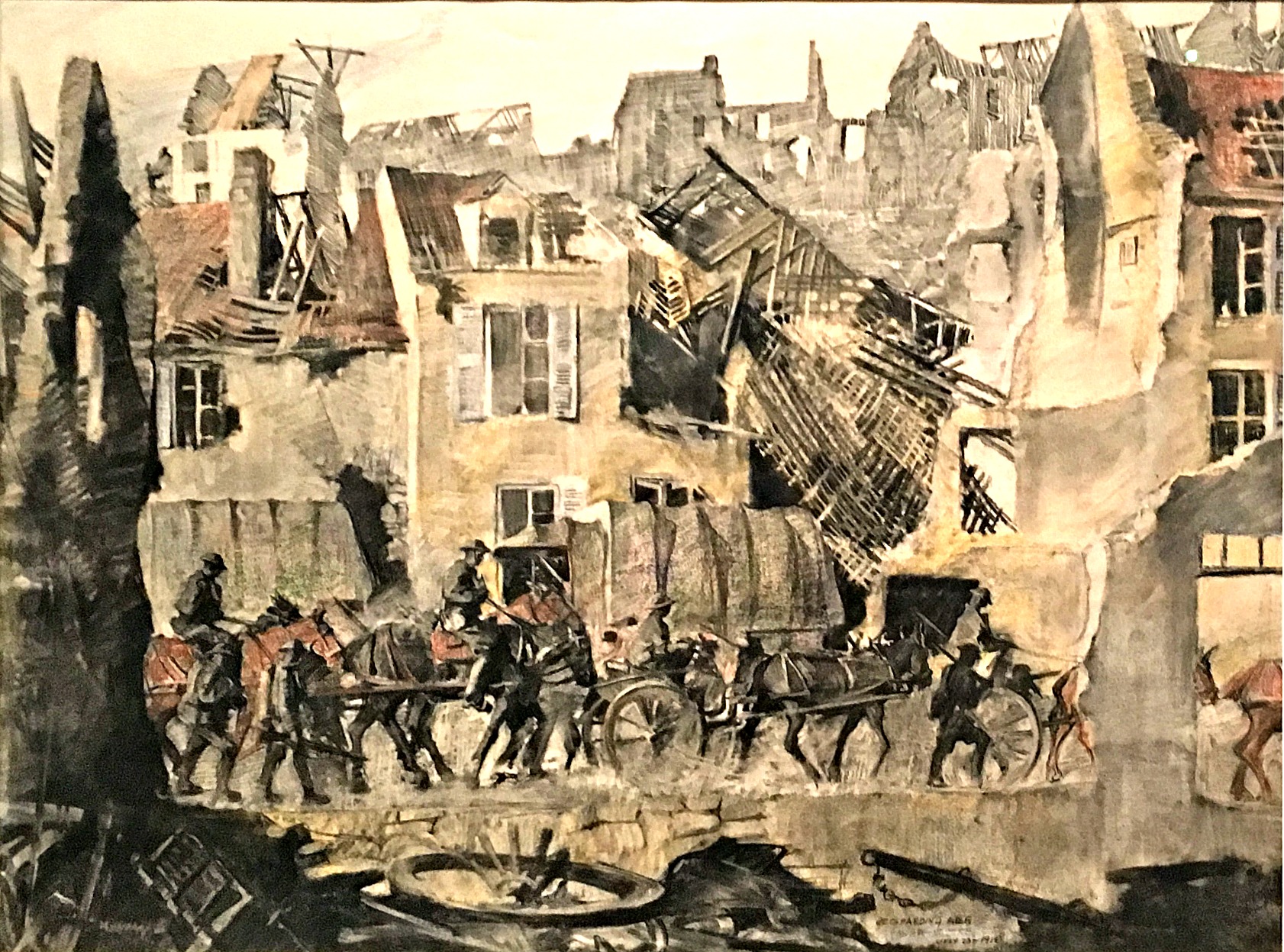
George Matthews Harding – During World War I, Harding produced combat scenes incorporating many new technologies introduced in World War I, such as aircraft and tanks. Harding would serve as an official combat artist again during World War II.

Wallace Morgan – Prior to the war, Morgan worked for many of the major magazines of the day, such as Colliers’ and the Saturday Evening Post. He was especially well known for his black and white drawings.

897 Peixotto
Tressing Nets for Artillery Emplacements by Ernest Peixotto; Pen and Ink Wash and Charcoal on Paper, 1918

Ernest Clifford Peixotto – The “old man’ of the group at 48 upon his commissioning, Peixotto worked in France, painting landscapes and illustrating travel books prior to the war. Peixotto stayed in France for several years after the armistice. He taught art in an AEF’s educational program for soldiers remaining in Europe.

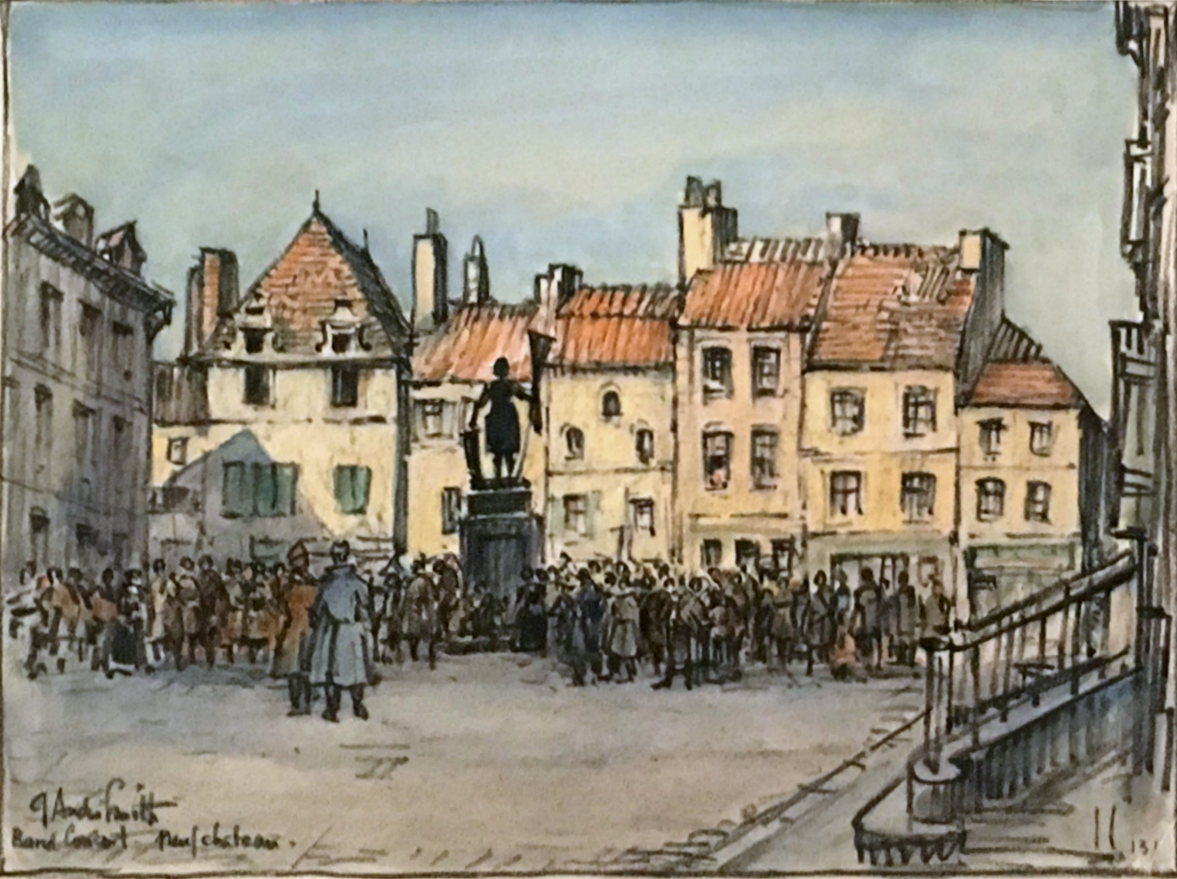
J. Andre Smith – Trained in architecture, he actually preferred to draw and etch. Smith was the only one of the artists who received military training before he deployed, having served briefly in a camouflage unit. He also became the group’s commanding officer.

879 Smith
Band concert at Neufchatel by J. Andre Smith; Watercolor and Charcoal on Paper, 1918

Harry Everett Townsend – He returned to the U.S. from Europe in 1914 to draw war posters, then volunteered for Army service. Townsend lost a brother early in the war in a plane crash. He focused much of his work on aviation and other new technologies. Townsend later worked at the Paris Peace conference and taught art at the AEF’s training center.

Harvey Thomas Dunn – He was a daring combat artist who usually worked in close proximity to the front lines.

Upon arriving in France in May 1918, the artists were assigned to the AEF Intelligence Section, Press and Censorship Division. For several weeks after their deployment–as U.S. forces continued to drill and train for combat missions–the artists oriented themselves to Army life, toured the battlefields, and prepared themselves for what was to come.

889 Morgan
The Morning Wash Up Neufmaison by Wallace Morgan; Charcoal on Paper, 1918

They established a studio in the French town of Neufchateau, halfway between the AEF’s Headquarters and the front. There they could complete or refine their drawings into finished pieces. The artists were directed to submit their images to the War Department at the end of each month, along with a report on anticipated follow-on pieces.

Once deployed, they had the authority to move freely around both the forward and rear areas to do their work. While there is no record of any of the artists going “over the top”, they took their mission very seriously. They positioned themselves at the front, lived in the trenches, got wet in the rain, missed meals, and exposed themselves to enemy fire many times in order to do their work.

In the nine months of service with the AEF, the artist soldiers produced over 700 pieces. They drew, painted and sketched scenes from the front, rear areas, the use of new technologies, soldiers both on and off duty, landscapes, civilians, in short, all they were exposed to.

878 Aylward
Returning Refugees at Hattonchatel by William Aylward; Charcoal and Gouache on Paper, 1919

For all their efforts, however, the brass in Washington was not always happy with their work. While skillfully prepared, the pictures and their subject matter were not always easily transferred to home front use in boosting morale. But they do provide a challenging and thought-provoking contemporary rendering of the daily life of American soldiers and French civilians in 1918.

Following the war, all the artists continued their successful art careers. The War Department transferred about 500 of their works to the Smithsonian Institute which displayed them at various times through the 1920’s. Since then however, the paintings have not been exhibited very often, making this a rare opportunity to see a portion of these unique and historic works.

887 Harding
American Artillery and Machine Guns by George Harding, Charcoal on Maison, 1918

An accompanying exhibit entitled Soldier Artists displays some impressive photography of stone carvings created by soldiers while living in the underground trenches, along with other World War I period artifacts from the Smithsonian collections.

Both exhibits are currently on display until November 2018.

While you are at the Smithsonian Air and Space Museum, be sure to visit the permanent exhibit on World War I combat aviation.

* * *

ROUTE RECON

The NASM is located at the intersection of Independence Avenue and 6th Street, Southwest. There is no onsite parking, but there are several commercial lots nearby. The nearest Washington Metro stations are the L’Enfant Plaza Station on the Yellow and Green Lines and the Smithsonian Station on the Blue and Orange lines. Both stations are about a two block walk to the NASM.

MESS CALL

The Wright Place Food Court offers a variety of fast food meal options from Boston Market, Donatos Pizza and McDonald’s.

* * *

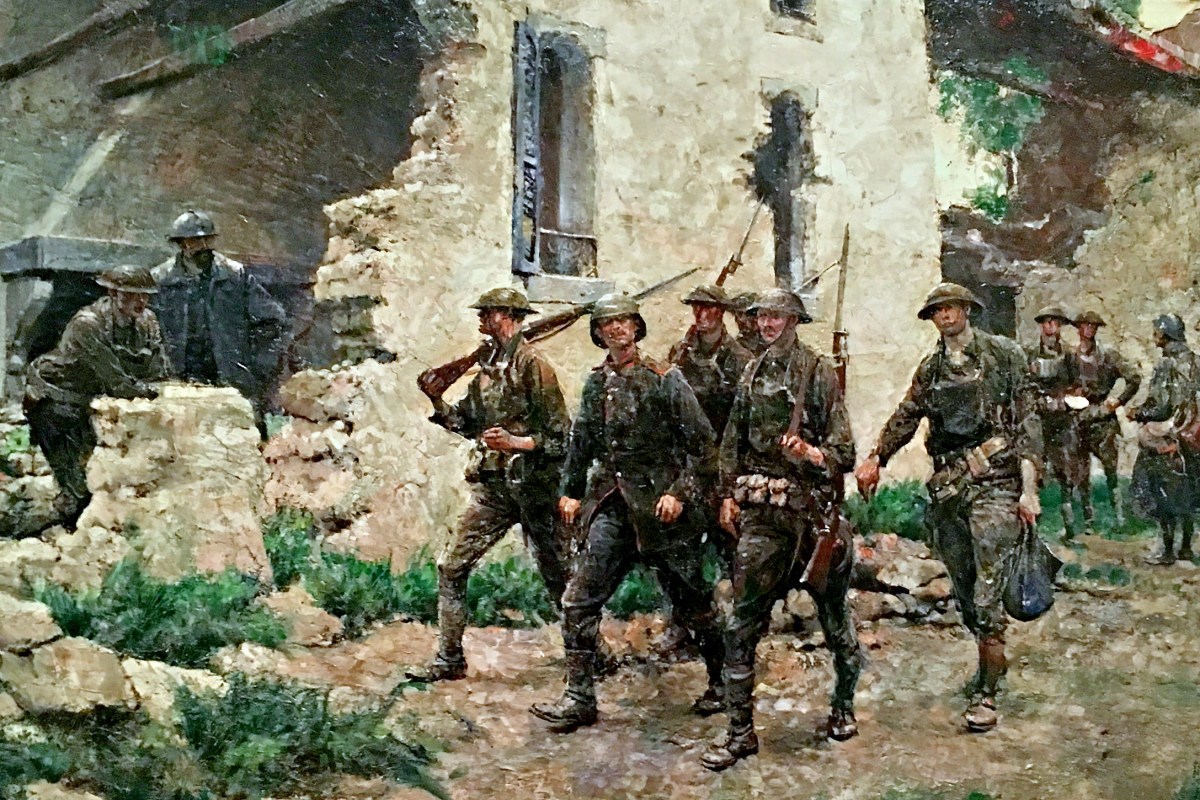
Featured Image: The Prisoner by Harvey Dunn, Oil on Canvas, 1918

The Library of Congress Opens its Books on World War I

I WANT YOU
James Montgomery Flagg, 1917 Lithograph, Prints and Photographs Division, Library of Congress

You know the look.

Intense. Almost a scowl. With piercing eyes that follow you around the room.

The man’s right index finger points directly at you, leaving no doubt who he is looking at. The long goatee, blue coat and top hat give him away.

He is your uncle, of course, and you know what he wants.

You! In the U.S. Army! NOW!

Artist James Montgomery Flagg’s image of Uncle Sam is probably the most iconic American illustration to come out of the World War I era.

This poster and many other artifacts from the First World War can be seen in the recently opened exhibit Echoes of the Great War at the Library of Congress.

Video Kiosk
View World War I imagery on video kiosks such as this throughout the exhibit. The Library of Congress digitized over 26,000 feet of period film for Echoes of the Great War, some not seen in over 100 years.

The Library of Congress regularly presents exhibitions based on its extensive collections of all types of print and recorded media. Echoes of the Great War is the Library of Congress’s commemorative exhibition marking the 100th anniversary of the U.S. entry into World War I. The impressive assortment of posters, newspapers, letters, diaries, maps, videos and other articles assembled by Library of Congress curators for Echoes of the Great War bring the issues and experiences of the World War I era down to the human level.

The exhibit is neatly organized into four separate sections, corresponding to the period of neutrality, domestic mobilization, operations in Europe, and how the U.S. navigated the challenges of the war’s aftermath. The first section entitled Arguing Over War explores the Wilson Administration’s policy of neutrality and how German unrestricted submarine warfare contributed to its demise.

ExhibitIThe section also highlights an important relief operation less well known today, the Commission for Relief in Belgium (CRB). Taking advantage of U.S. neutrality, the CRB procured, transported and distributed 11.4 billion pounds of food to 9.5 million civilians living in German-occupied Belgium and Northern France saving many from starvation. It was chaired by a young mining engineer then living in London named Herbert Hoover.
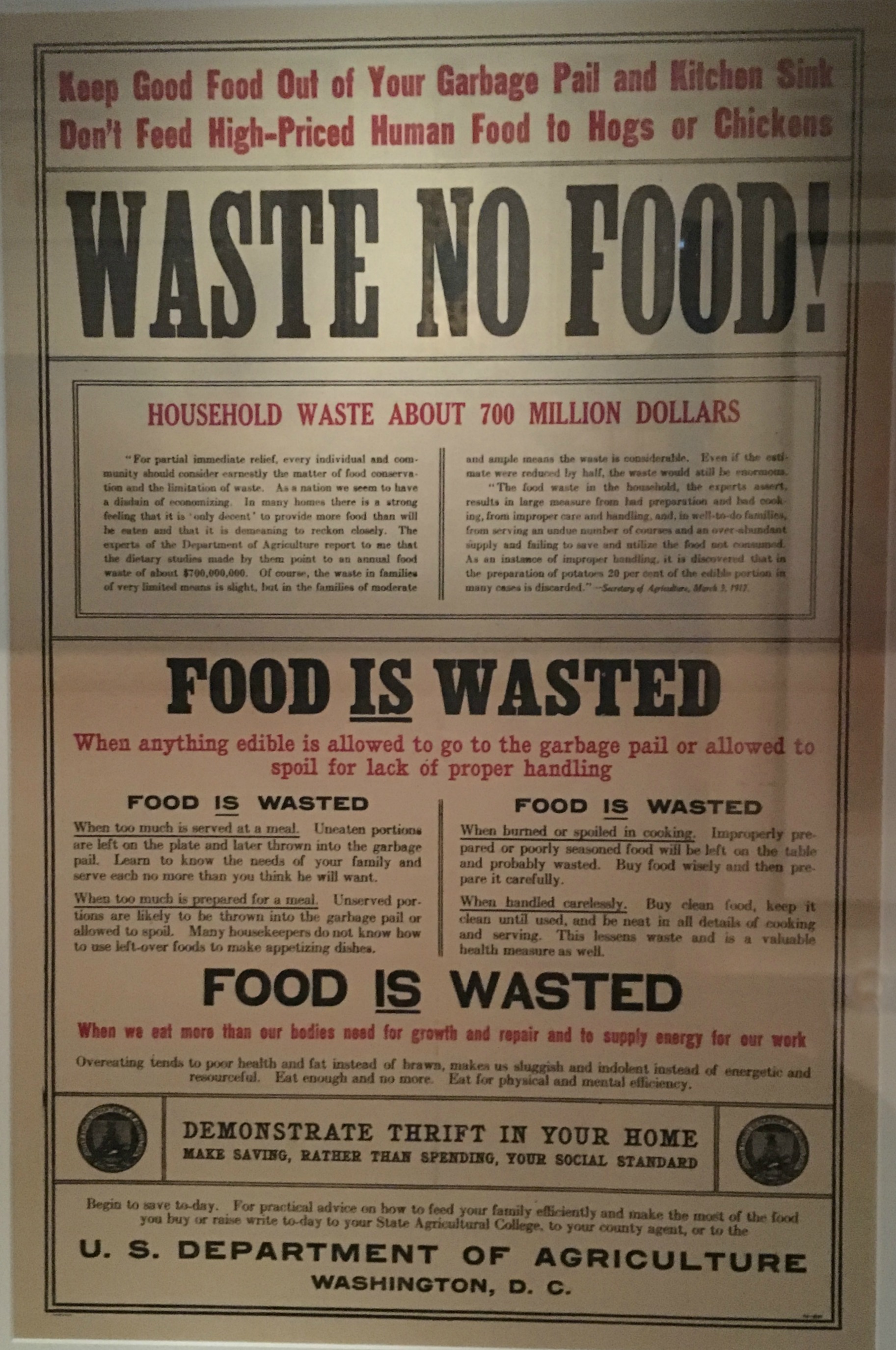
Waste No Food
The U.S. did not have mandatory food rationing during WWI, but the government encouraged voluntary food conversation through posters such as this. (Waste No Food. Wash.DC, U.S.D.A., ca. 1917. Broadside, Rare Book and Special Collections Division, Library of Congress)

The second section Over Here examines how the United States effectively prepared for this new, global war and met the associated challenges of mobilizing the economy, expanding the military, and balancing the various demands of the public while trying to maintain public support of the war effort.

Posters vividly tell the story of this section, depicting the need for Americans to enlist in the military, buy war bonds, conserve food and work more efficiently.

The U.S. military in combat is the focus of the third section, Over There. In this section the diaries and letters take on a special poignancy as civilians, Marines and soldiers of all ranks including General Pershing and Lieutenant Colonel George Patton explain their personal experiences in combat as well as their daily routines.

Diary
A page from the diary of  Sergeant Major Claud Charles Hamel, USMC, who served at Belleau Wood. He writes about visiting Dr. Boone’s aid station and meeting wounded Marines. (Claude Charles Hamel. “Diary of Claude C. Hamel, Formerly Regimental Personnel Sergeant Major Fifth Regiment U.S. Marines AEF, April 1917 to August 15, 1919”, June 22, 1922. Bound typescript memoir. General Collections, Library of Congress)


An early test of U.S. forces in World War I was the Battle of Belleau Wood, fought in June 1918 when the U.S. 2nd Division, comprised of both Army and Marine Corps elements engaged the Germans in a forest near Paris.

Lieutenant Joel T. Boone, U.S. Navy, was serving as Medical Officer for the 6th Marine Regiment and operated an aid station during the battle. In his diary on display, he describes the first night of the battle as “a Perfect Inferno”. Dr. Boone would be awarded the Distinguished Service Cross for his service in caring for the wounded and preparing patients for transport, even when the aid station was hit by enemy fire.

One month later, he earned the Medal of Honor for treating Marines under direct fire and risking his own life to collect medical supplies. Dr. Boone would later win six Silver Stars and become the most decorated medical officer of any branch in U.S. military history.

The artifacts found in the final section, World Overturned, reveal the post-war U.S. as it sought to keep the peace, expand democracy, welcome veterans, and absorb the other societal changes which were hastened by the war. There are maps with hand drawn overlays of new countries in Central Europe and the Middle East, posters extolling employers to hire veterans, and a picture of Assistant Secretary of the Navy Franklin Roosevelt awarding Dr. Boone his Medal of Honor.

Nobel Prize
President Woodrow Wilson’s 1919 Nobel Peace Prize (Medal, case and scroll box. Rare Book and Special Collections Division, Library of Congress)

There is also an original draft of President Wilson’s “14 Points” address to Congress, where he laid out is ideas for a lasting post-war peace. Wilson believed that democratic values in place of autocratic monarchs, self-determination of peoples and the collective action of a League of Nations would help prevent future global conflicts. He would forcefully argue his 14 Points at the Paris peace negotiations following the war and win the 1919 Nobel Peace Prize for his efforts.

You can always learn something by visiting a library and this is especially true when visiting Echoes of the Great War at the Library of Congress. At the end of the exhibit is a video featuring the exhibit’s curators, advisors and consultants discussing their contributions and what they learned while researching this project.

Echoes EntranceIn order to preserve what is on display, some items will be rotated out every seven months so Echoes of the Great War is worth visiting more than once before its scheduled closing in January 2019. The Library of Congress also put details of the exhibit, including photos and information on what is currently on display, teaching aids, curator notes and other resources on their website so you can still view many of the items, even if you cannot travel to Washington.

* * *

Tucked away in a separate room behind Echoes of the Great War is another exhibit worthy of a visit. This exhibit commemorates Thomas Jefferson’s sale of his personal library to Congress in 1815. Jefferson made the offer after the original holdings of the Library of Congress were destroyed by fire in 1814, when British forces attacking Washington, D.C. burned the U.S. Capitol. In 2015, the Library of Congress marked the bicentennial of the purchase of Jefferson’s collection by putting many of the original volumes on display.

JEFFERSON
Visitors examine several original volumes from Thomas Jefferson’s library conveyed in 1815 as the beginning of a new Library of Congress.

Throughout his life, Jefferson had accumulated more than 6,000 books on a wide variety of subjects. Jefferson believed members of Congress would benefit from access to such a broad collection. Through the years, his idea of the Library of Congress possessing the widest collection of materials for Congressional reference has taken hold. Today the Library of Congress holds more than 160 million items, making it what many consider to be the largest library in the world.

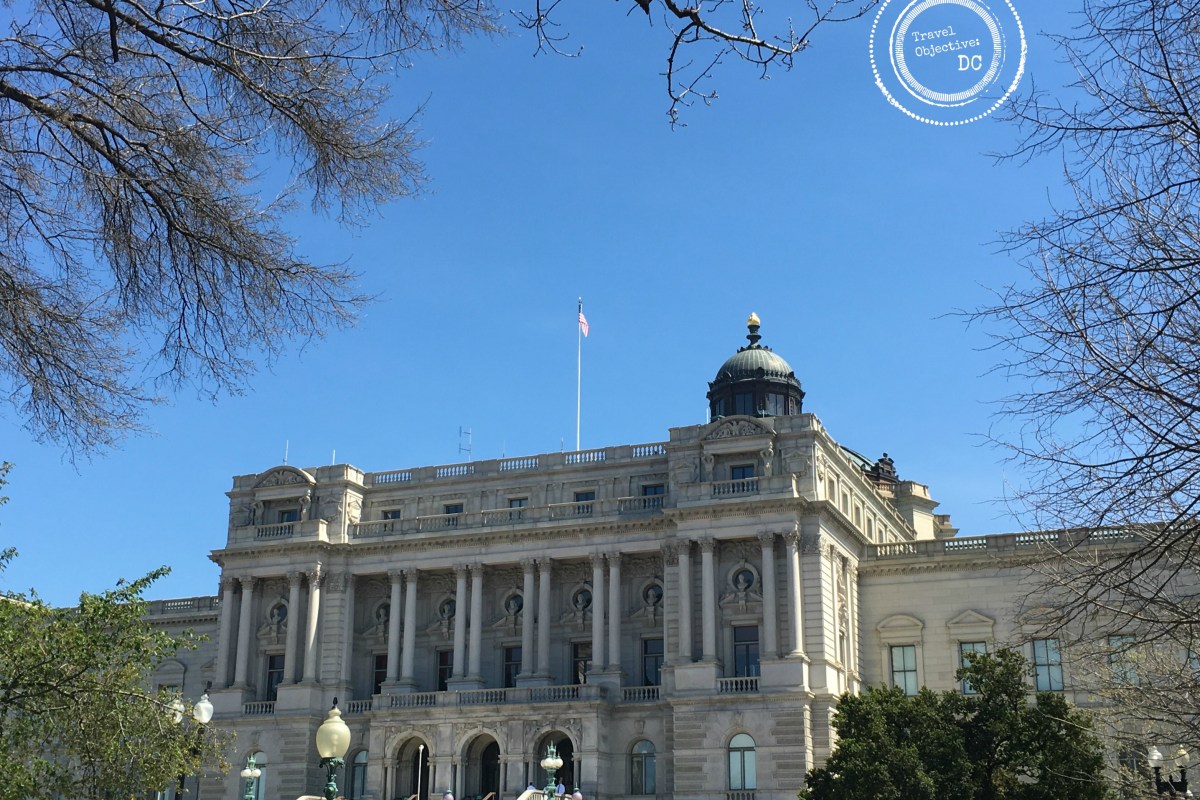
The Library of Congress’s main building is named in honor of Thomas Jefferson and is a worthy destination for anyone visiting Washington. The building was built in the late 1880’s and the interior is filled with beautiful carvings, mosaics and stonework. The Library of Congress offers tours on the half hour. Tours originate on the ground floor and last approximately 1 hour. Arrive around 10 minutes early to view a short video on the Library of Congress.

* * *

Route Recon

Echoes of the Great War is found in the Jefferson Building of the Library of Congress, located at 10 First Street, SE, Washington, DC, 20540. The closest Metro stop is Capitol South on the Orange, Blue and Silver Lines. Upon arriving at the station, use the main exit and walk approximately two blocks north on First Street SE. The Jefferson Building will be on your right, opposite the U.S. Capitol on your left. An alternate stop is Union Station on the Red Line. From Union Station exit the main entrance and cross Columbus Circle to First Street SE. Proceed about a half-mile and you will see the Jefferson Building on your left. Union Station’s public parking garage is also a good option if you are driving to the Library of Congress.

Experience the Great War Above the Trenches at the National Air and Space Museum

The list of ‘Must Sees” for most Washington, DC visitors includes the National Air and Space Museum (NASM). It is one of the city’s most visited attractions, welcoming over 6 million people each year. It is easy to understand why. It is near the Mall, admission is free and the extensive collection of all things that fly attracts people of all ages. There are literally thousands of items on display, as well as a planetarium, an IMAX movie theater and flight simulators.

Some of the best military-themed exhibits within easy walking distance of the Mall can be found at NASM. In 1991, NASM opened Legend, Memory and the Great War in the Air examining the budding role of aviation during the First World War. The exhibit contrasts the romanticized view of the experiences of World War I pilots with the starker reality of combat aviation. The exhibit entices you to enter with a bright red movie theater façade, complete with flashing marquee and similarly colored Pfalz D.XII fighter aircraft suspended overhead.

pfalz
This Pfalz D.XIII Fighter is painted bright red for its Hollywood movie role.

Inside the theater, a short, looped film explains how Hollywood adapted stories of World War I pilots for American audiences. Nearby a child’s bedroom exhibit features books, games and toys from the post-war period celebrating the glory, bravery and derring-do of World War I flying aces.

Turn the corner and a somber reality sets in.

The lighting fades and the sounds of combat emerge. Ground combat and life in the trenches are portrayed. The focus shifts to a more detailed examination of the roles pilots and aircraft would play during the war as observers, fighters, bombers, and conducting photo reconnaissance missions. Three early battles in the war, Tannenburg, the Marne and the Somme are briefly examined where the warring parties learned both the great potential and many pitfalls of deploying aircraft into combat.

During the Battle of Tannenburg and the Battle of the Marne, respective German and French commanders successfully countered enemy troop movements detected by aerial observation. During the Somme however, the British learned the limits of using aerial observation. While pilots could detect troop movements, they would not assess the morale, or the level of training of the enemy units detected below. British commanders also experienced the difficulties of coordinating simultaneous air and ground operations.

albatross
Albatross D.Va Fighter – The German military built over 4,800 Albatross fighters of all types during World War I. Only two are known to exist today. This Albatross D.Va fighter on display and one other at the Australian War Museum in Canberra.

For the aviation enthusiast, the highlights of the exhibit are likely the Smithsonian’s restored vintage WWI aircraft. In addition to the Pfalz D.XII fighter, other German aircraft include an Albatross D.Va, and Fokker D.VII fighters. There is a Sopwith 7F.1 Snipe fighter from the United Kingdom and a French Voisin Type 8 bomber.

fokker-dvii
Fokker D.VII fighter – Two mannequins representing a pilot and ground crewman inspect the Fokker D.VII fighter. Developed to counter more advanced Allied fighter aircraft, the Fokker D.VII fighter was introduced to front line squadrons in April 1918. Some historians and aviation experts considered the Fokker D.VII to be one of the best fighter aircraft of World War I. The plane was so highly regarded the final Armistice required the Germans to surrender all Fokker D.VII fighters.

There is also a SPAD XIII fighter. This French made aircraft was known for its sturdiness and ability to perform during dog fights. Multiple air services flew the SPAD XIII’s because of its excellent reputation and performance. In addition to the French, it was flown by the British, Italians, Belgians and Russians.

spad-xiii
The SAPD XIII Fighter. The number “20” on the side is the aircraft’s identification number, assigned by the aero squadron.

As the U.S. entered World War I with no combat ready aircraft, the SPAD XIII was also used by U.S. fighter squadrons of the American Expeditionary Force. The SPAD XIII on display was assigned to the 22nd Aero Squadron of the U.S. Army Air Service.

It was piloted by Lieutenant A. Raymond Brooks who named the aircraft “Smith IV” after his sweetheart’s alma mater. Lt. Brooks won one of his six aerial victories in Smith IV; other squadron pilots achieved additional victories. After being sent to the United States for a Liberty Bond tour in 1918, Smith IV was transferred to the Smithsonian Institution in 1919.

There are no American made aircraft in the World War I exhibit, but a de Havilland DH-4, manufactured by the Dayton-Wright Airplane Company can be found in the “Looking at Earth” exhibit, downstairs in Gallery 107.

dh4
De Havilland DH-4. This U.S. made bomber and observation aircraft would continue to serve the U.S. Government many years after the war.

As the U.S. was preparing to enter the war, the military began looking at various Allied aircraft designs that might be adapted and built in the U.S. The DH-4 was modeled after the British de Havilland bomber and the DH-4 would serve the U.S. Army Air Service in the same capacity. The first models began conducting combat missions in August of 1918.

The DH-4 on display was a prototype, flying many flights and experiments to test the aircraft’s design. Although it never saw combat, this DH-4 is fitted with the standard military compliment of combat equipment: six 25 lb Mark II bombs, two DeRam DR-4 cameras, two fixed, forward-firing .30-caliber Marlin machine guns, and the observer’s position is armed with two flexible .30-caliber Lewis machine guns.

dh4-mannequin
SMILE! A mannequin demonstrates one role of the de Havilland DH-4, as a photo reconnaissance aircraft.

Because the NASM is such a popular destination, it can become very crowded in the spring and summer. Planning ahead can save you some valuable time. Use the “Visit” section of the NASM website to see what is currently on display, learn about the day’s special programs, get helpful tips, and buy tickets in advance for any of the IMAX movies or the planetarium. It is important to remember visitors must pass through metal detectors to enter the NASM and certain items are prohibited.

If the NASM Mall location leaves you wanting to see more about aircraft and space exploration, the NASM has a second complex, the Steven F. Udvar-Hazy Center, located about 28 miles from downtown Washington near Dulles International Airport. Several Smithsonian Institution museums, including NASM, offer extended hours during the spring and summer. You can find more information at: http://www.si.edu/visit/hours#ExtendedHours

* * *

ROUTE RECON

The NASM is located at the intersection of Independence Avenue and 6th Street, Southwest. There is no onsite parking, but there are several commercial lots nearby. The nearest Washington Metro stations are the L’Enfant Plaza Station on the Yellow and Green Lines and the Smithsonian Station on the Blue and Orange lines. Both stations are about a two block walk to the NASM.

MESS CALL

The Wright Place Food Court offers a variety of fast food meal options from Boston Market, Donatos Pizza and McDonald’s.

White House Vicinity: The First Division Monument, the Second Division Memorial and Pershing Park

The First Division Monument

Along 17th Street near the White House are monuments to two American Expeditionary Force units: the First and Second Divisions. The First Division Monument is located at the corner of 17th Street and State Place, just west of the White House and South from the Eisenhower Executive Office Building. The Second Division Memorial is adjacent to the corner of 17th Street and Constitution Avenue, near the Ellipse.

The First Division Monument has a bronze winged victory statue atop a granite column. The names of 5,516 First Division Soldiers who died in World War I are inscribed on it. The First Division, now known as the First Infantry Division (or by its nickname “the Big Red One”) was the first division to land in France in 1917 and the last division to leave Europe in 1919.

first-division-monument_travel-objective-dc
The First Division Monument (Note the flowers planted in the shape of a “Big Red One”)

Planning for the monument began in 1919 while the division was still on occupation duty in Germany. While initially opposed by the U.S. Fine Arts Commission, it was later envisioned as a new type of military monument, very different in design and purpose from the equestrian statues of individual Civil War generals that are still prevalent around the city.

Through the years additional names have been added commemorating the sacrifices of the First Infantry Division in World War II, Korea, Viet Nam and Operation Desert Storm. The First Infantry Division Association is now raising money to add additional names from its campaigns in Iraq and Afghanistan.

The monument is now located within the restricted area maintained by the Secret Service around the White House. It is not possible to visit the monument up close, but it can be viewed from the sidewalk along 17th Street. The First Infantry Division Association will hold a Memorial Service on Veterans Day starting at 11:00 am. Because of Secret Service restrictions, the service will be held on the north side of the Ellipse, within sight of the monument.

The Second Division Memorial

The Second Division Memorial portrays a blazing gilded sword before an open archway in a stone edifice, representing the Second Division’s defense of Paris in 1918. On either side of the opening are panels listing the World War I battles and campaigns of the Second Division. The division’s emblem, an Indian head inside a five pointed star, is incorporated on the base of the sword.

The memorial was originally dedicated in 1936 by Franklin Roosevelt. Two wings were added in 1962 to recognize the division’s service in World War II and Korea. The Second Infantry Division Association is proposing adding three granite benches to the front of the memorial to commemorate the 2nd Division soldiers who died while serving on the Demilitarized Zone in Korea, and in Iraq and Afghanistan.

second-division-memorial_travel-objective-dc
The Second Division Memorial

ROUTE RECON

The Memorials are easily reached from the Farragut West Station on Metro’s Blue, Orange and Silver Lines and walking south along 17th Street.

Pershing Park

U.S. military personnel deployed to Europe to fight in World War I were organized in a single unit, the American Expeditionary Force (AEF), commanded by General of the Armies John Pershing. A park named in his honor lies at the intersection of 15th Street and Pennsylvania Avenue, about a block from the White House.

gen-pershing-statue_travel-objective-dcThe park opened in 1981 and features a bronze statue of “Black Jack” Pershing looking west over the park. An adjoining wall describes the role he and the AEF played on the European Western Front and in the Meuse-Argonne campaign.
Originally designed to be an expanse of green space in the middle of the city, the park has unfortunately not been well maintained over the past few years. The World War I Centennial Commission has selected Pershing Park though as the sight of a National World War I Memorial. A ground breaking for the new memorial is scheduled for next year with a targeted completion date of November 2018.

ROUTE RECON

Pershing Park is just south east of the White House across 15th Street along Pennsylvania Avenue. It can be reached from either the Metro Center Station on Metro’s Red Line or Federal Triangle on Metro’s Blue, Orange or Silver Lines.


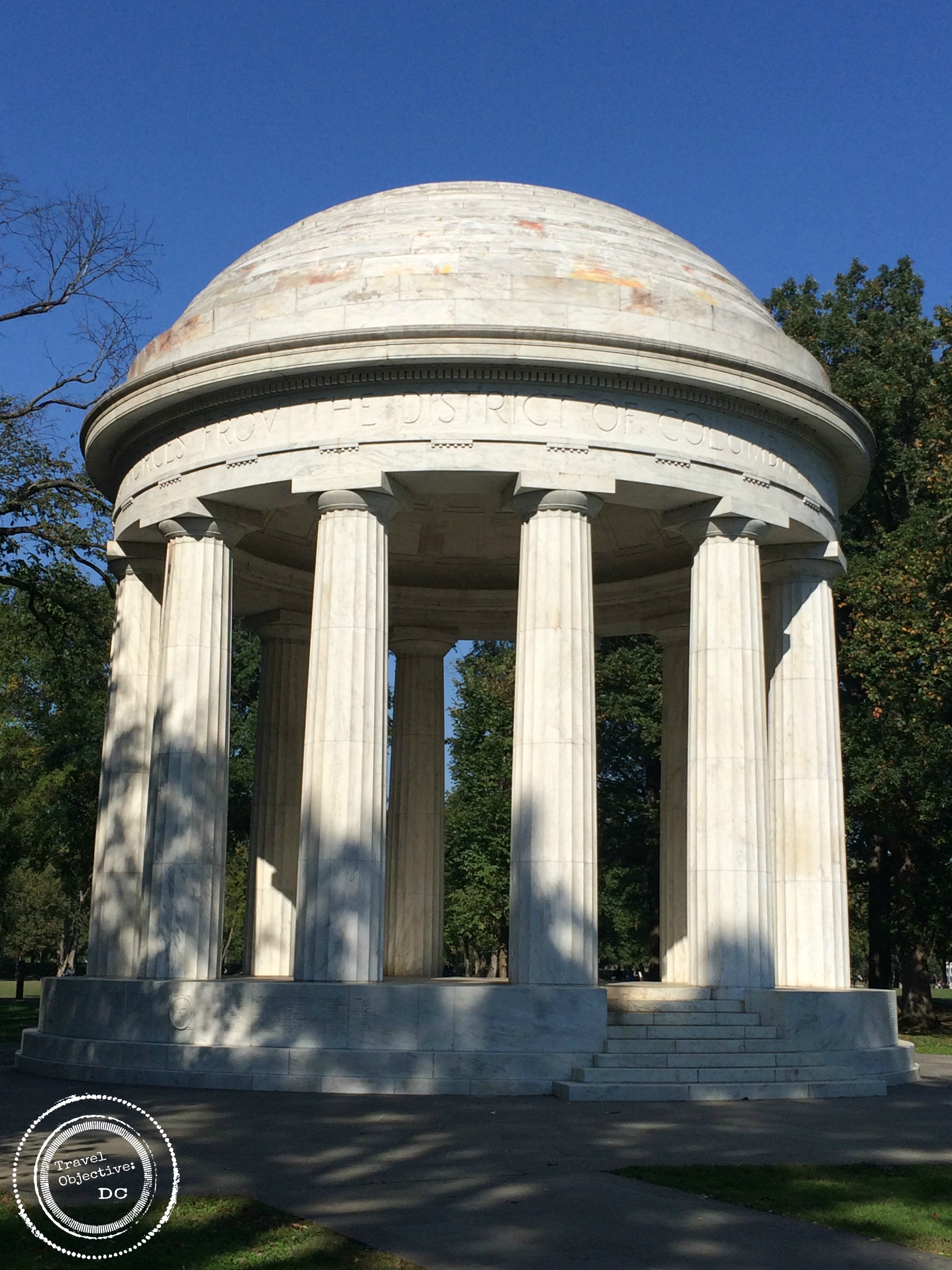
National Mall: District of Columbia War Memorial

District of Columbia War Memorial

The District of Columbia War Memorial recognizes the World War I service of citizens from the District of Columbia. It is located just north of Independence Avenue, roughly opposite of the Martin Luther King Jr. memorial.

In the cornerstone of the Memorial is a list of all 26,000 District veterans who served in World War I. On the base of the memorial are the names the 499 city residents who died during the war. Dedicated in 1931, it is an example of a “living memorial”, a structure which combines symbolic commemoration with a practical purpose. The DC War Memorial was constructed as a bandstand and carefully designed to accommodate the entire U.S. Marine Corps Band. (The Marine Band did play weekly summer concerts at the memorial until World War II).

This is the only memorial on the Mall dedicated exclusively to the District of Columbia and the first memorial to list the names of women and African Americans along with white men.

dc-war-memorial_travel-objective-dc
The District of Columbia War Memorial

ROUTE RECON

The District of Columbia War Memorial is located on the National Mall between the Korean War Memorial and the World War II Memorial. It is a 15-20 minute Walk west from the Smithsonian Station on Metro’s Blue Line, Orange and Silver Lines.

Arlington National Cemetery: Tomb of the Unknown Soldier and the Argonne Cross

Tomb of the Unknown Soldier

The best known memorial of World War I in the Washington area is the Tomb of the Unknown Soldier at Arlington National Cemetery. Following World War I, many countries adopted the practice of burying the unidentified remains of one solider in a place of high honor. Congress approved the burial of an unidentified American soldier in 1921 in the plaza of the new Memorial Amphitheater.

On Memorial Day of that year, four caskets containing remains of unidentified soldiers were exhumed from American cemeteries in France and brought to the City Hall in Chalons-en-Champagne in northeast France. There, on October 21, Army Sergeant Edward Younger, a highly decorated combat veteran, selected the casket that would come to rest in Arlington.

The casket was transported back to the United States, and after lying in state at the Capitol, the unknown soldier was buried on November 11, 1921. Five years later, Congress authorized the marble structure we see today at the Tomb, which was ultimately completed in 1931. Since July 2, 1937, the Tomb has been under 24 hour guard by U.S. Army soldiers. Today, a special platoon of the 3rd U.S. Infantry Regiment guards the Tomb.

tomb-of-the-unknown-soldier_guard_arlington-cemetery_travel-objective-dc

Sections 18, 19, 34 and the Argonne Cross

Because of the large number of American deaths overseas in World War I (approximately 116,000), the U.S. Government was faced with a critical decision in the immediate aftermath of the war: What would be done with the remains of America’s fallen soldiers? Would they be permanently interred in Europe or would the remains be brought back to the United States for burial?

Some believed it was best for the soldiers to be buried in Europe–among the comrades they fought with and in the countries they died defending. But ultimately, public sentiment favored giving the soldiers’ families the option of returning the remains to the United States.

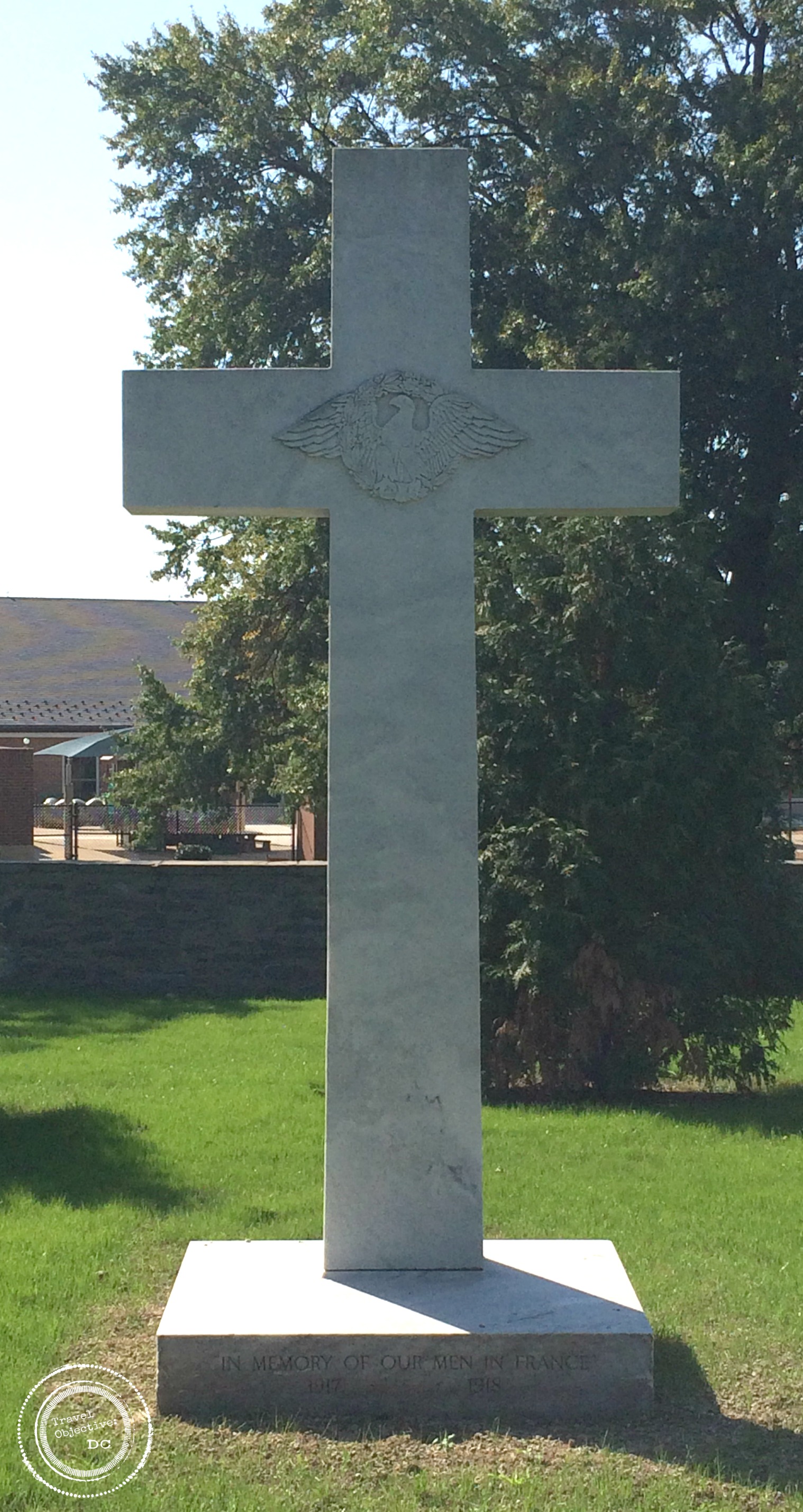
Eventually, 46,000 remains were repatriated. Over 5,000 would be buried in Arlington National Cemetery, many in Sections 18 and 19. Also found in Section 18 is the Argonne Cross which commemorates the principal American offensive of World War I, the Meuse-Argonne Campaign.

argonne-cross_logo

This was the largest offensive in U.S. military history, involving 1.2 million troops. It lasted 47 days beginning on September 26, 1918 and ending with the armistice on November 11.  The battle cost 26,277 American lives. The cross was erected in 1923 after many of the burials of World War I soldiers at Arlington.

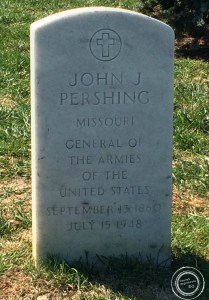
gen-pershing-headstone_travel-objective-dcThe commander of the American Expeditionary Force, General of the Armies* John J. Pershing is also buried in Arlington, in adjoining Section 34 on a hill overlooking the men he commanded. A simple, government issued headstone marks his grave, alongside a spruce tree, placed in 1989 by the No Greater Love organization in memory of all Americans who died in World War I.

* Through much of its history, the highest rank in the U.S. Army, outside of the time of major wars, has been a two star major general. During World War I, Congress authorized the appointment of three star lieutenant generals and four star generals to be granted temporarily. John J. Pershing was promoted to general in October 1917. In 1919, by Congressional directive, the rank of General of the Armies was formally established and General Pershing became the first person to hold the rank.


* * *

ROUTE RECON

Arlington National Cemetery is located in Virginia across the Potomac River from Washington, D.C. The cemetery is at the end of Memorial Avenue, which extends west from the Lincoln Memorial, across the Memorial Bridge. Memorial Avenue intersects with the George Washington Memorial Parkway, just west of the Memorial Bridge. Arlington Cemetery is accessible from the major highways in the area such as Interstate 95, Interstate 395, the Capital Beltway (I-495), and the Baltimore-Washington Parkway (I-295). There is paid parking on site.

METRO: There is also a stop for Arlington National Cemetery along the Washington Metropolitan Area Transit Authority (Metro) Blue Line.

A Century Later, We Can Still Remember

Every year since 1918, the United States has observed the 11th hour of the 11th day of the 11th month in a special way. As many high school history students can tell you, this was the effective time and day of the armistice which ended World War I.

As significant as it was, World War I does not resonate in the American psyche as does World War II or the Civil War. But it is hard to overstate its impact. World War I ushered in a completely new type of war, marked by huge armies, massive causality rates, multiple theaters of operation, the mobilization of national economies and the application of modern, industrial technologies to warfare.

tomb-of-the-unknown-soldier_arlington-cemetery_travel-objective-dc
A soldier from the 3rd U.S. Infantry Regiment guards the Tomb of the Unknown Soldier.

The first widespread and tactically significant use of aircraft, submarines, tanks, machine guns and chemical weapons occurred in World War I. Though fought a century ago, the impact of World War I remains with us today. Balkan civil wars, the status of Northern Ireland and much of the ethnic conflict in the Middle East can all be traced directly to World War I and its settlement.

April 2017 marks the 100th anniversary of the United States entry into World War I. The war greatly changed America. The United States greatly expanded its armed forces to fight the conflict. By the war’s end, there were over 4 million troops under arms.

gen-pershing-statue_travel-objective-dc
Statue of General John Pershing

America emerged from World War I as an economic,political and military power. Washington, DC grew quickly and many temporary buildings were erected for government workers busy building up the armed services and managing aspects of the economy.

Few traces of those changes can be seen today but there are important memorials to the soldiers who fought in the war. The centennial of America’s entry into the “Great War” provides a suitable occasion to visit these landmarks and honor those who served.

This month Travel Objective: DC highlights a few World War I landmarks that are accessible from downtown Washington and easily added to most visitors’ itineraries. We organized the landmarks by geography for convenient trip planning. Please click on the links below for more information, including a Route Recon for how to get there.

ARLINGTON NATIONAL CEMETERY

  • Tomb of the Unknown Soldier
  • Sections 18, 19, 34 and the Argonne Cross

NATIONAL MALL

  • District of Columbia War Memorial

WHITE HOUSE VICINITY

  • First Division Monument
  • Second Division Memorial
  • Pershing Park

If you are interested in learning more about the U. S. experience in the “the Great War,” visit the website of the United States World War I Centennial Commission. The commission was founded by Congress in 2013 to educate Americans about the war and to organize and promote various commemorative activities. You can learn more about the proposed National World War I memorial, review historical information and even sign up to volunteer in your community. It would be a fitting tribute to all those men and women, soldiers and civilians, who answered the country’s call a century ago.