Revisiting the War Above the Trenches at the National Air and Space Musuem

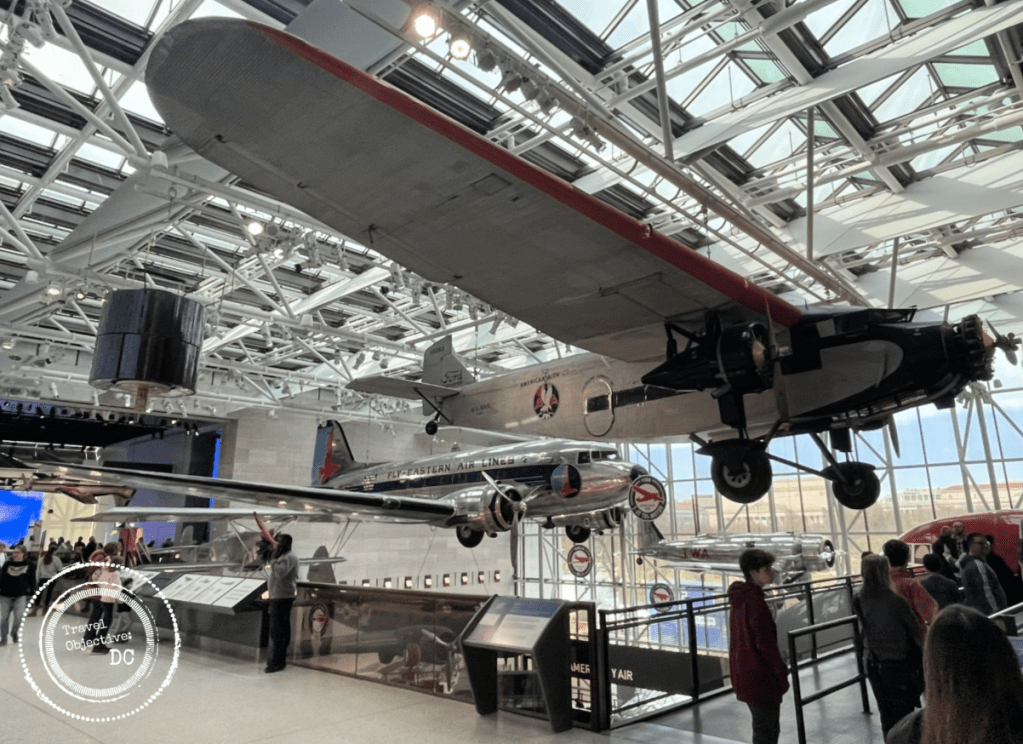
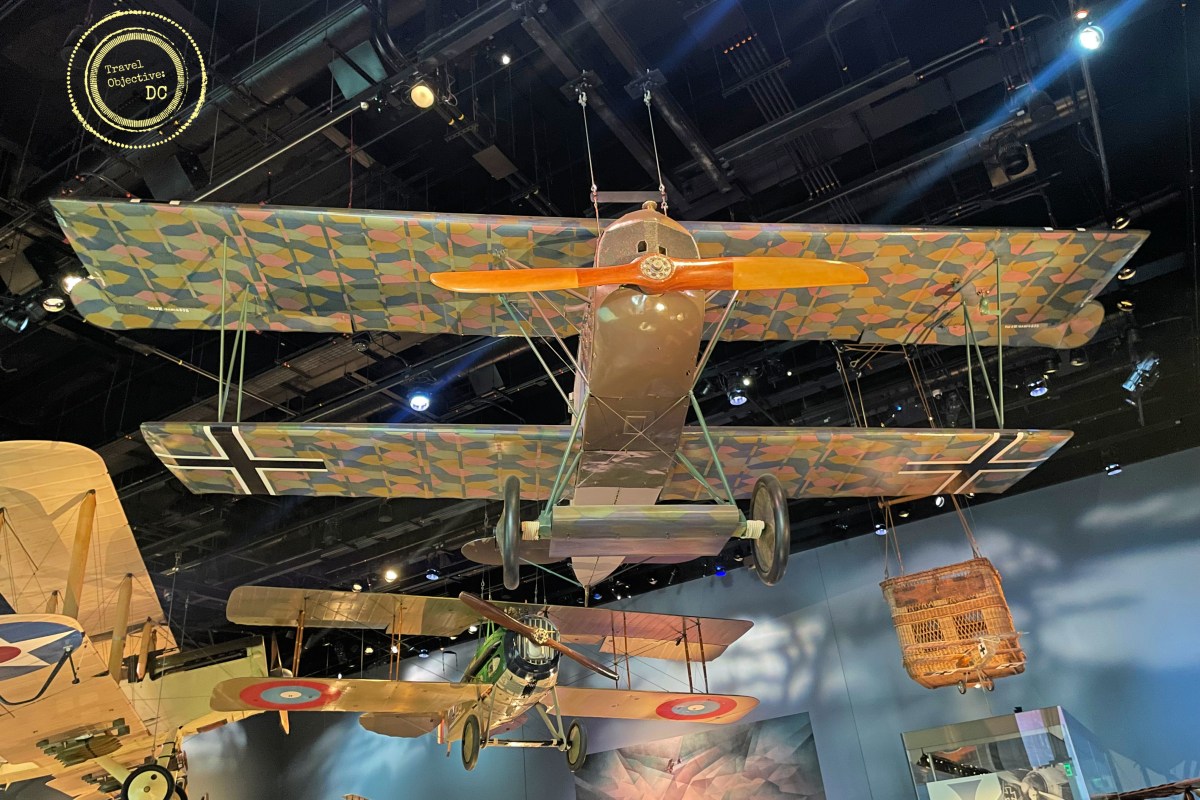
A German Fokker D.VII Fighter

Lieutenant Arthur Raymond Brooks, US Army Air Service, knew he was in for a fight.

In the skies above Mars-la-Tour, France on September 14, 1918, Brooks and his squadron of six SPAD XIII fighters encountered four squadrons of German Fokker D.VIIs. As the fighter planes engaged each other, Brooks flew directly into German machine gun fire. He then quickly pulled away from his main formation with eight German fighters in pursuit. 

Brooks next used all the maneuver capabilities the SPAD could provide to avoid being caught in a Fokker’s line of fire. He did barrel rolls. He flew in loops. He quickly climbed, then rapidly dove.  

As the melee continued, Brooks fired on multiple Fokkers as they all weaved through the sky, downing two. German fire shattered his windshield and damaged one of his two machine guns. His SPAD was riddled with bullet holes.  Yet he stayed in the fight. Brooks anecdotally shot down four German fighters that day (although he was only credited with two) and was awarded the Distinguished Service Cross for his actions.
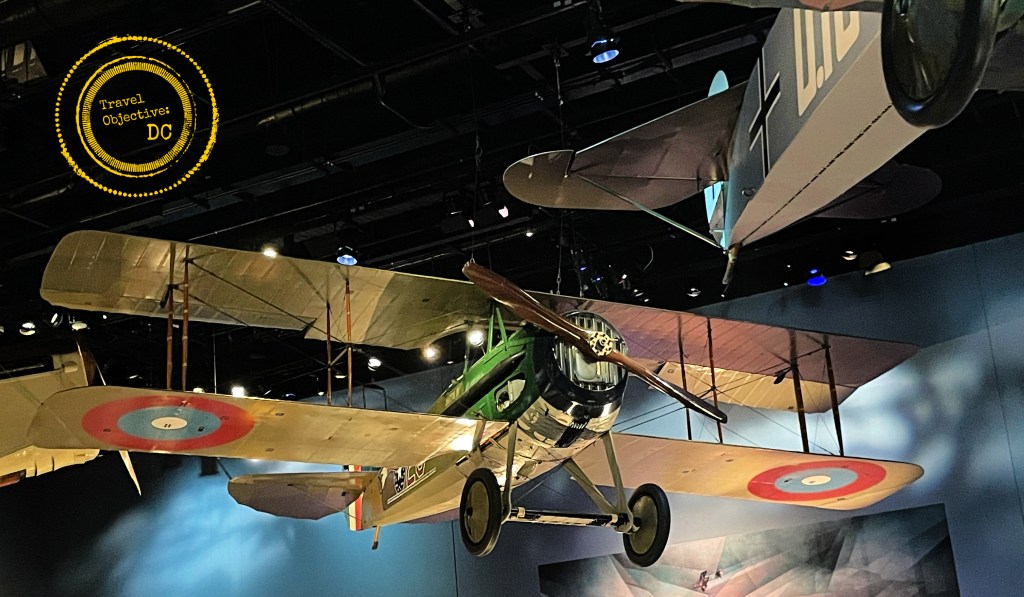
A SPAD XIII Fighter at the National Air and Space Musuem

The SPAD XIII FighterBuilt by the Société Pour L’Aviation et ses Dérivés (SPAD) company, the SPAD XIII was preferred by French aces. The US Army Air Service also flew SPADs. Ray Brooks flew this SPAD in October 1918.

Ray Brooks is just one pilot whose aerial exploits are recounted in the Smithsonian Institute’s National Air and Space Museum’s (NASM’s) redesigned World War I aviation exhibit entitled World War I, the Birth of Military Aviation.

This is NASM’s third exhibit dedicated to the aircraft and aerial warfare of the First World War.  The earlier exhibit, entitled Legend, Memory and the Great War in the Air, closed in 2018 as NASM prepared for a musuem-wide refurbishment. The new iteration explores the twin themes of how “the Great War” defined the on-going nature of military aviation as well as the remarkable experiences of World War I aviators.

There is much to see in the new gallery, but the meticulously restored World War I aircraft are the main attraction. Many of the World War I airplanes previously displayed are back. Greeting you from overhead as you enter the exhibit hall are the French Voisin Type 8 nighttime bomber and the German Albatross D.VA, a fighter that debuted in 1917. Other aircraft include the Fokker D.VII German fighter, Ray Brooks’ SPAD XIII fighter and the DH-4 Liberty Plane.

A German Albatross D.Va Fighter – These fighters were introducted in 1917.
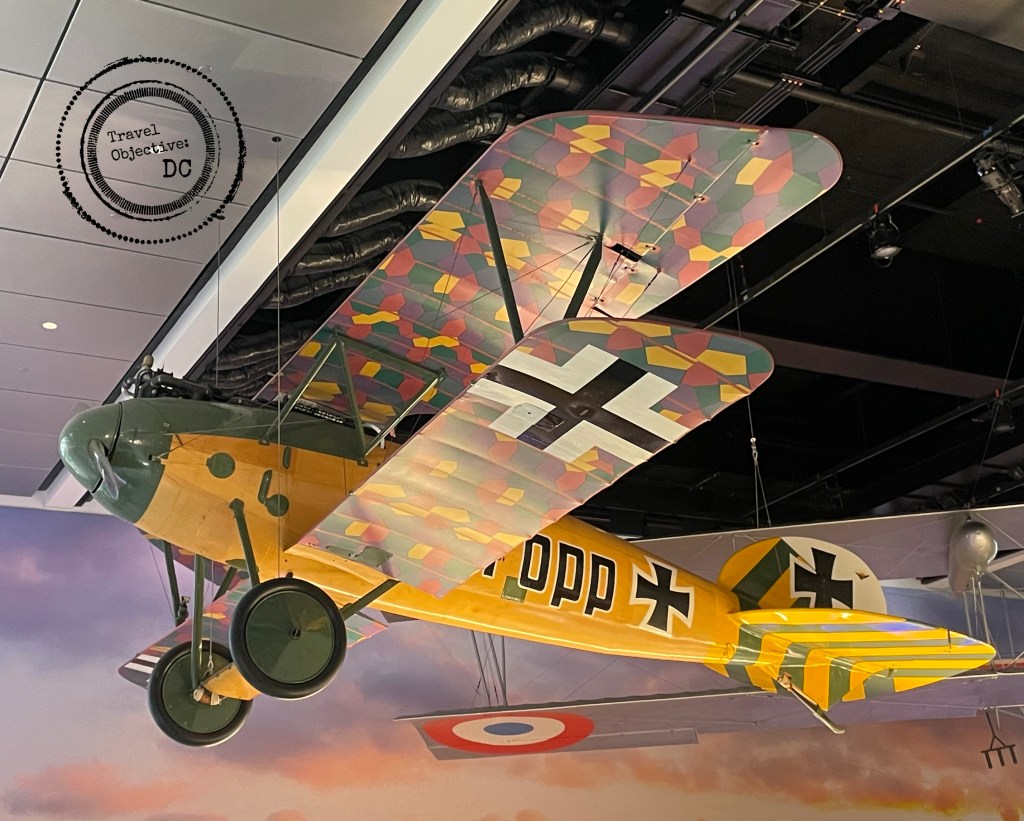
A German Albatross D.Va Fighter at the National AIr and Space Musuem

The latest exhibit occupies a smaller footprint than its predecessor, but NASM’s designers have filled the space with a wide range of intriguing artifacts, vintage aircraft, airplane models and other displays. 

The exhibit timeline from 1914 through the post-war period is arranged in a counterclockwise manner around a beautifully restored Sopwith F.1 Camel (the last surviving Camel fighter produced by the Sopwith Aviation Company).  Once a pilot mastered the British-made aircraft’s finicky controls, the Camel was a highly versatile fighter. It is credited with downing more enemy aircraft than any other Allied plane.

Unlike other aircraft on display, the Sopwith Camel is placed on the floor making it the easiest to see and admire.

Adjoining the Camel is a large movie screen surrounded by a tent-like frame, suggesting an early aerial hanger. A four-part narrated film plays on a loop showing period aircraft in flight. The film provides a wonderful sense of motion to these beautiful but otherwise static aircraft.
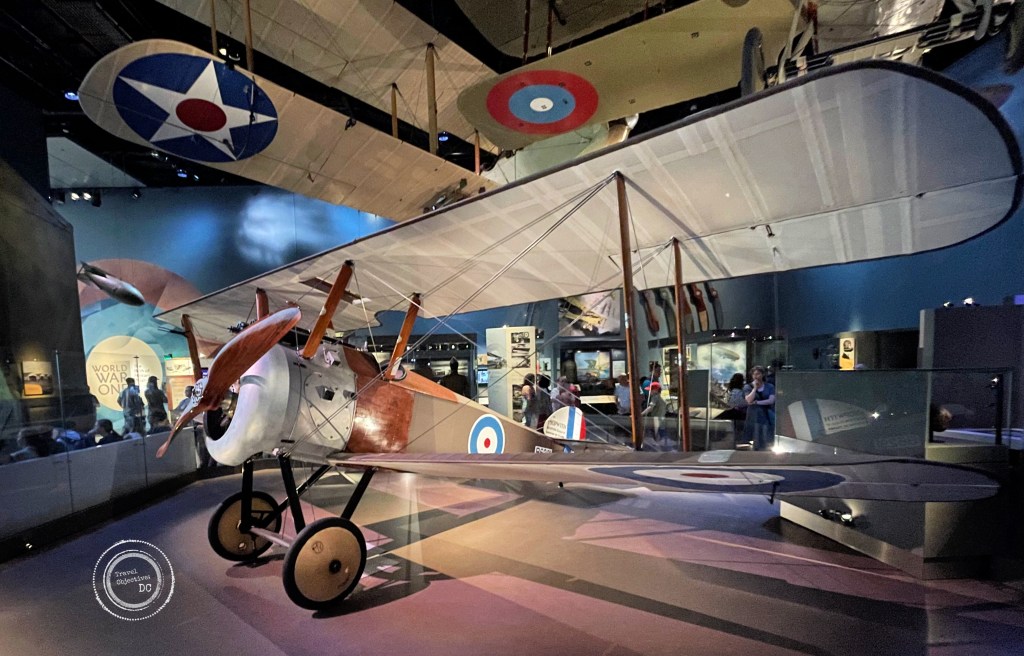
A Sopwith F.1 Camel at the National Air and Space Musuem

The Sopwith F.1 CamelThis aircraft is the last surviving F.1 Camel built by the UK’s Sopwith Aviation Company.

Through the war years, three distinct types of military aircraft evolved–reconnaissance planes, fighters and bombers–reflecting the three original mission areas of military aviation.

To battlefield commanders, the airplanes’ most critical function was reconnaissance and observation. Trench warfare had ended the traditional scouting role of horse cavalry, but aircraft could find, fix and observe the enemy from above. Reconnaissance aircraft were built to direct artillery fire, track troop deployment, assess damage and relay messages over long distances. Planes were fitted with cameras and communications equipment, essentially becoming the commanders’ eyes and ears. Pilots and observers risked their lives to take photographs, which were now an important element of military planning.

A Kodak A-2 Oblique Aerial Camera. A 4″x5″ glass plate was changed out each time a picture was taken.
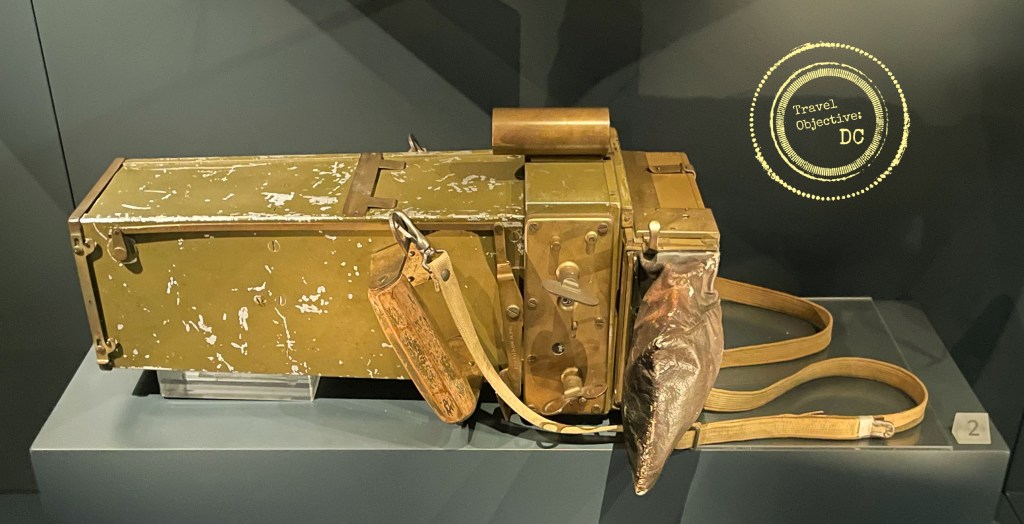
A Kodak A-2 Oblique Aerial Camera at the National Air and Space Musuem

Fighter aircraft were first developed to protect the reconnaissance planes. Ultimately, the fighters would engage each other to control the airspace over the trenches. Later in the war, Britain and Germany formed special fighter squadrons to directly attack troops on the ground.

Airships also conducted reconnaissance as well as bombing missions. However, their large size and slow speed made them susceptible to attack by fighters. They were generally replaced on bombing missions with specialized aircraft capable of flying further and higher while carrying heavier bomb loads.

 A German aviation insignia

Cross insignia from a German airship – This design was the official emblem of the German Air Service until mid-1918.

World War I gave rise to the military aviator as a distinct specialty. Some aviators, especially pursuit (later called fighter) pilots, took on a mythic status in their home countries.  Flying high above the mud and blood of the trenches, these pilots were heirs to the chivalrous legacy of knights in armor. Pilots were written about in newspapers, appeared on magazine covers and made public appearances.

Prominent pilots included in the exhibit include Eddie Rickenbacker (America’s most decorated WWI ace), Manfred von Richtofen (The Red Barron), Eugene Bullard (African-American pilot flying for the French), Raol Lufbrey (a French-American ace), and Snoopy. (OK, Snoopy was not a real pilot, but he does have his own display, which is, of course, by the Sopwith Camel).

Among all the aircraft and artifacts, there are many interactive features as well. You can use a light table to analyze period photo imagery from a reconnaissance aircraft, learn how a synchronizer allowed machine gun bullets to miss propeller blades, and take the controls of a Sopwith Camel to experience the sounds of this highly maneuverable fighter. An immersive exhibit on trench warfare at first seems rather two dimensional. However, a look through trench periscopes provides some basic context on the infantryman’s view of aviation.

Snoopy first imagined himself flying his doghouse in 1965. Through the comic pages, as well as books, games, cartoons, and toys, Snoopy has been a consistent reminder of World War I aviation.

A collecton of artifacts celebrating Snoopy, the World War I ace.

At the beginning of the war in the Summer of 1914, the airplane was still a novel invention, a little more than a decade old. Very few aircraft were designed for any military purposes. As the war progressed, rudimentary flying machines quickly became faster, more maneuverable and better armed.

Airplanes were also needed on a large scale. Over 215,000 aircraft were built between 1914 to 1918. A myriad of new products were developed or adapted for use in aviation such as specialized cameras, radios, and aerial bombs. Many items first developed in World War I are still used in modern aviation, like the artificial horizon instrument, flight suits, and oxygen masks to name just a few. This sudden and sustained demand for combat aircraft and accessories gave rise to a new industry filled with highly skilled workers, an industry we rely on today.  

A collection of World War I aircraft propellers

American, British and French propellers

Although World War I ended over a century ago, its impact is still very much felt today. World War I, the Birth of Military Aviation provides valuable insight into an important but not altogether well understood period in the history of aviation. The gallery’s opening is also an important and welcome step toward the completion of NASM’s comprehensive, multi-year renovation.

* * *

Route Recon

The Smithsonian Institute’s National Air and Space Museum (NASM) is located on the National Mall bordered by Independence Avenue, Jefferson Drive, and 4th and 7th Streets, SW. The entrance is on the north side of the building facing the National Mall. You cannot access the museum from the south side along Independence Avenue. Free timed tickets are required for entry into NASM. Tickets can be acquired through the NASM website. Ticket holders will line up near the entrance on the Mall side of the Museum building prior to their entrance time. Entry prior to the time on the ticket is not allowed, but ticket holders can enter after the ticket time.

Parking – Very limited metered street parking is available around the museum. Parking is available in several commercial parking lots in the neighborhood.

Public Transportation

Metrorail – The closest Metro station is L’Enfant Plaza, along the blue, orange, silver, and green lines. From the L’Enfant Plaza Station, take the exit for Maryland Avenue and 7th Street.

Metrobus – Bus stops are located on Independence Avenue, SW, and along 7th Street, SW. Visit the Washington Metropolitan Area Transit Authority for more information.

Command Reading

Capt. Arthur Ray Brooks, America’s Quiet Ace of W.W.I by Walter A. Musciano – Originally published in 1963, Musciano’s concise work provides a brief overview of Brooks’ life with some straightforward accounts of World War I aerial combat. It also includes an interesting assortment of historic World War I photographs of Brooks and his fellow aviators as well as detailed informaton on the aircraft Brooks flew.

Military History on the Mall


For the past 250 years, Americans have consistently answered the call to war.  

To answer that call, they often left behind civilian lives, families, and communities. Wars are never fought in a vacuum. With each conflict, there are corresponding impacts on American life and society.

On Veterans Day, 2004, the Smithsonian Institute’s National Musuem of American History, located on the National Mall, opened an ambitious military history exhibit to explore not just battles and campaigns, but rather the many ways wars have physically, culturally and economically shaped America throughout its history.

French cannon

A French four pounder field cannon, a gift to the Americans from the Marquis de Lafayette

Entitled The Price of Freedom, Americans at War, the exhibit was designed to be extensive, occuping over 18,000 square feet and examining 16 conflicts in nine different galleries. Visitors follow a maze-like path through these chronologically arranged galleries, from the French and Indian War through Iraq and Afghanistan.

In designing The Price of Freedom, curators stayed away from displays comprised largely of weapons and uniforms (although there are still plenty of those). Rather, they identified over 800 unique artifacts from the Smithsonian’s extensive collection. Some of the more notable items on display include George Washington’s sword and scabbard, the chairs used by Ulysses S. Grant and Robert E. Lee at Appomattox and a Willys Jeep from World War II.

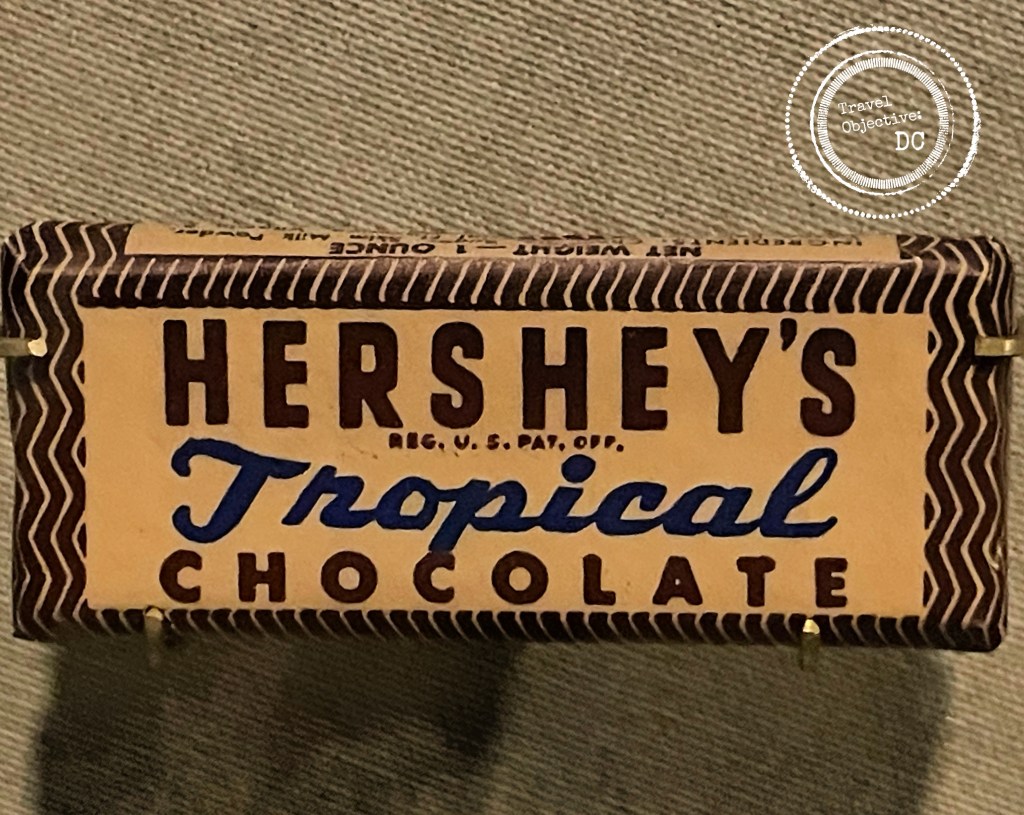
A melt resistant chocolate bar developed by the Hershey Company and provided to US servicemembers in the Pacific Theater during World War II

Hershey's Tropical Chocolate Candy Bar

However, head curator David Allison sought a symmetry in the selection of the artifacts. He wanted to display noteworthy items along with more common articles reflecting the service members and their times, such as rations, books and playing cards.

In addition to the artifacts, exhibit designers use photographs, contemporary illustrations, videos, interactive stations, and other features to help interpret the wartime experience and immerse the musuem visitor in the time. 

The most unique display is in the Vietnam War gallery where 16 different 1960’s-era television sets show contemporary footage and commentary depicting how Americans experienced the Vietnam War at home. The viewing area for the televisions is reminiscent of a mid-century living room, complete with a blocky couch and chair covered in thick clear plastic as your grandmother or aunt might have had. 

1960's era televisions
An array of 1960’s era televisions used in a display in the Vietnam War gallery in the Price of Freedom exhibit at the Smithsonian National American History Musuem

The Revolutionary War, Civil War, World War II and Vietnam War galleries are the largest. These spaces immerse you in the story of the war and how it impacted soldier and civilian alike.

The Wars of Expansion Gallery is smaller, but provides important context and accounts for a series of 19th century conflicts, such as the Battle of Little Bighorn and the Spanish-American War, which may be less familiar to many visitors.

The mix of artifacts and displays broadens the appeal of The Price of Freedom to a wider audience. Those with less interest in military subject matter should still enjoy viewing some of the more unique items while serious students of history are sure to come away having learned something new. 

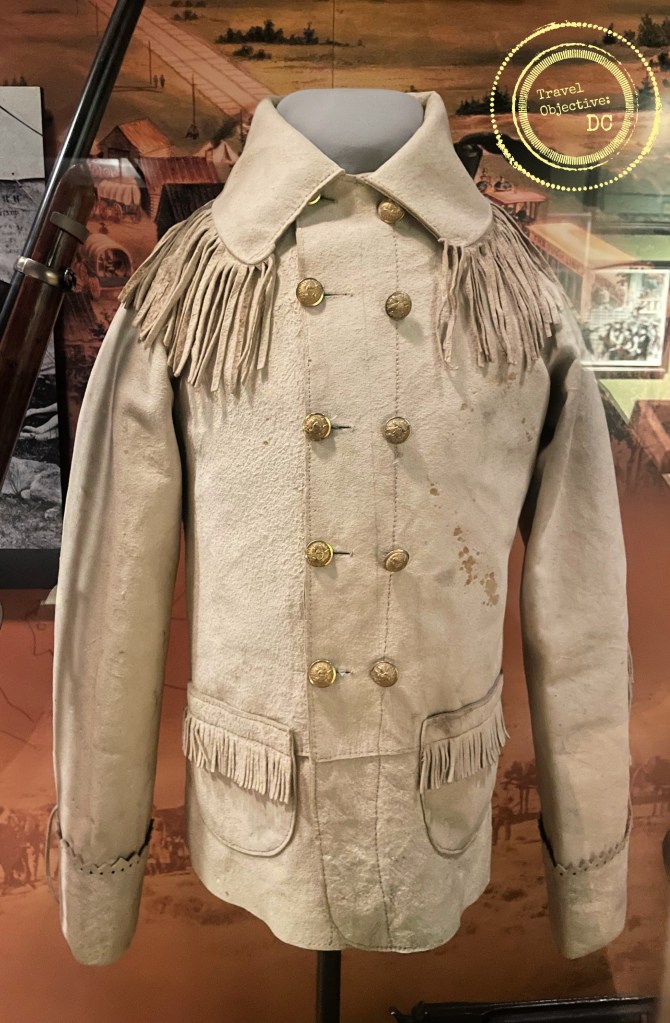
General George Custer’s buckskin coat

Custer's Buckskin Coat

While in most cases The Price of Freedom achieves its aims, there are a few shortcomings. 

Unfortunately, the exhibit space for World War I is too limited. The display misses or minimizes some important themes, such as the rapid expansion of the Army, the mobilization of the American economy, the changing role of women in the military, and the emergence of the United States as a world power. 

The Gulf War display is similarly small, seemingly limited to uniforms worn by Colin Powell and Norman Schwarzkopf. 

There is also an unfinished feel to the exhibition space for the wars in Iraq and Afghanistan. This is understandable as the original exhibit opened in 2004 before those conflicts ended. However, there is space for a more complete examination of both those conflicts than is currently provided. 

Chairs used by Grant and Lee at Appomattox.

The chairs used by Ulysses S. Grant and Robert E. Lee at Appomattox.

At the conclusion of The Price of Freedom is a short film with veterans reflecting on their motivations and sacrifices of their service in the American military. The film concludes with scenes from U.S. military cemeteries showing orderly tombstones and listing the number of interments. 

There are also recurring references to casualites throughout the galleries in keeping with the intent of the exhibit principal funder, Kenneth Behring. He desired the exhibit specifically to recognize the ultimate sacrifices made by American men and women who died in wartime. 

Even with a few flaws, two decades after its opening, the Price of Freedom remains true to its original mission. As America prepares to celebrate its 250th anniverary, this important exhibit gives visitors a thorough synopsis of America’s military heritage and its significant influence on our national character. 

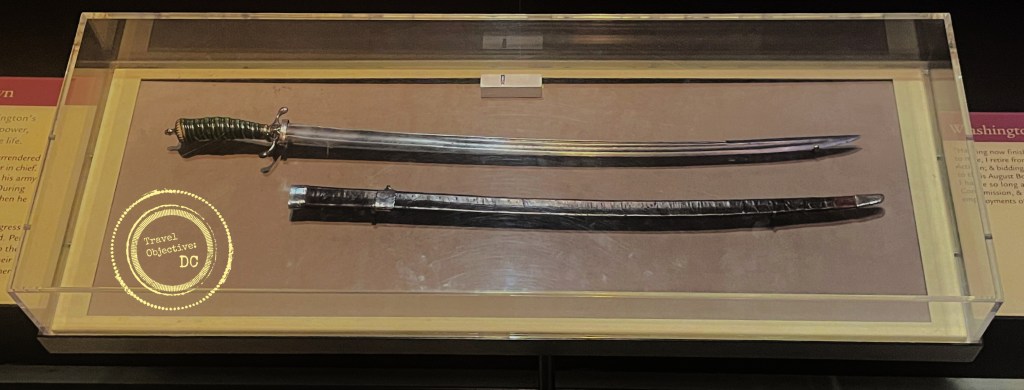
Washington's sword and scabbard
George Washington’s sword and scabbard from the American Revolution

* * *

Route Recon


The Smithsonian National Museum of American History is located at 1300 Constitution Avenue N.W., Washington, D.C. 20560

The nearest Washington DC Metro Stations are Federal Triangle and Smithsonian. Both stations are on the Metro Blue, Orange and Silver lines.

There is no public parking facility for the Smithsonian museums on the National Mall. A limited number of city-operated metered parking spaces along adjoining streets are available.  

The Musuem is open daily (except Christmas Day) from 10:00 AM to 5:30 PM.

Consult the Musuem’s website for more information about other exhibits.

Please note: The Price of Freedom, Americans at War exhibit includes some graphic images of war and casualties.

A guide to the exhibit is available here.

African American Military History on the National Mall

From Bunker Hill in 1775 to Bagdad in 2005, African Americans have served in the American military throughout our history.  Their experiences are told as part of the larger African American saga at the Smithsonian’s newest museum, the National Museum of African American History and Culture.

Decades in the making, this museum opened in 2016 and attendance has now grown to over 1.6 million annual visitors. With over 3,500 artifacts on display, the museum’s broad expanse of exhibits reflect critical aspects of African American life such as slavery, civil rights, sports, music and military service. 

A “soup bowl” style helmet worn during World War I. Soldiers of the US 369th Infantry Regiment, the Harlem Hellfighters, are pictured behind the helmet.

Situated on the National Mall, the exterior features a distinctive bronze colored filigree, a tribute to the timeless work of African American metal artisans. It sets this structure apart from the neoclassical and modernist designs of the neighboring government buildings.

The bright, spacious lobby, known as Heritage Hall, features diverse artwork with copper metallic and gray walls, complimenting the museum’s unique exterior. From here, the visitor may choose their entryway into the African American experience presented in the museum. The escalator down leads to the History Galleries while upstairs are the Community and Culture Galleries, which reflect more contemporary times and themes.

Tracing African American military history will ultimately lead in both directions. 

Begin the journey in the downstairs galleries, which present over 400 years of African American history, from the establishment of the African slave trade through the Civil Rights era. African American military service during America’s wars is presented chronologically as part of the larger narrative of African American life. The galleries and exhibits devoted to four major conflicts all convey the recurring theme of how time and again African Americans fought bravely in wars for freedoms they themselves did not possess.

A large gallery dedicated to the Revolutionary War explores how enslaved Blacks served on both sides, motivated by promises of freedom. 

The flag of the Bucks of America, a Black paramilitary group founded in the Boston area. It is believed the group protected the property of Patriot merchants who had left Boston to fight in the Revolutionary War.

Historians estimate approximately 5,000 –  6,000 Blacks served in the Continental Army or in colonial militias. They were involved in every major Revolutionary War battle and most smaller engagements. Units such as the First Rhode Island Regiment, comprised mostly of Blacks, gained renown for their discipline and skills as soldiers. Additionally, experienced Black seamen were actively recruited by the Continental and Royal Navies and served in many different operational capacities.

The war’s conclusion in 1783 brought freedom for some Black soldiers and sailors, but many were returned to slavery, either in America or other portions of the British Empire. 

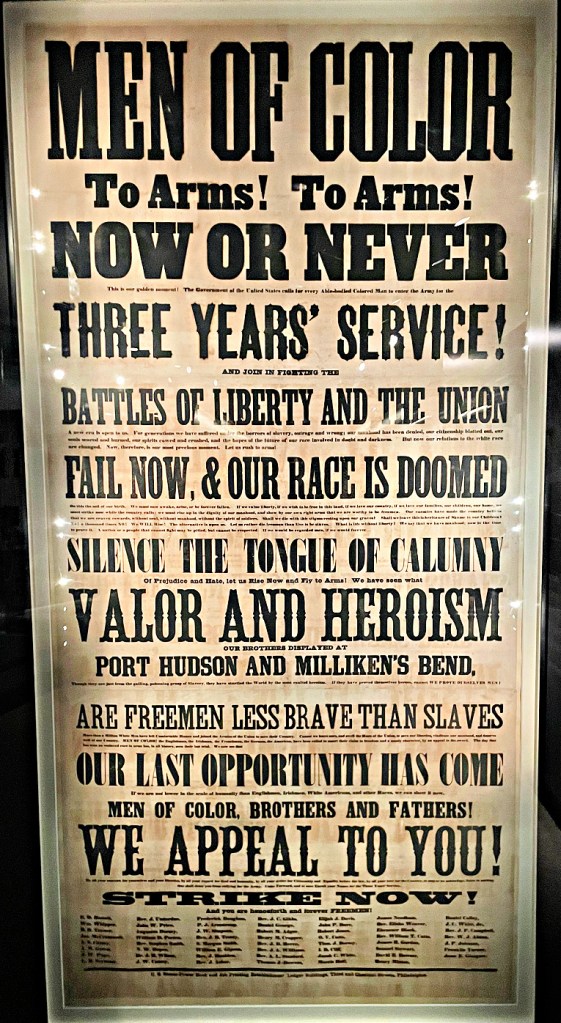
The Civil War gallery focuses largely on the many contributions of the US Colored Troops to the Union war effort. While newly freed slaves could receive paid work from the Army as early as 1861, they could not serve as Army soldiers until January 1863.  

A kepi cap worn by a soldier from the 4th Regiment Heavy Artillery, US Colored Troops

Ultimately, about 179,000 African Americans enlisted in the Army from both the North and South. They were organized into segregated infantry, cavalry and artillery regiments with white officers and designated as US Colored Troops. Initially, they were paid less than white soldiers and given menial jobs to perform. In time though they earned full pay and distinguished themselves in many battles. Sixteen African American soldiers would earn the Medal of Honor. 

Unlike the Army, the Navy was integrated before the Civil War. About 20,000 African Americans served aboard U.S Navy ships during the Civil War alongside White sailors.

The exhibits devoted to World War I and II are notably smaller than the Revolutionary and Civil War galleries.  They broadly describe the segregated service of African Americans during these wars and the hostile environment to which they often returned.

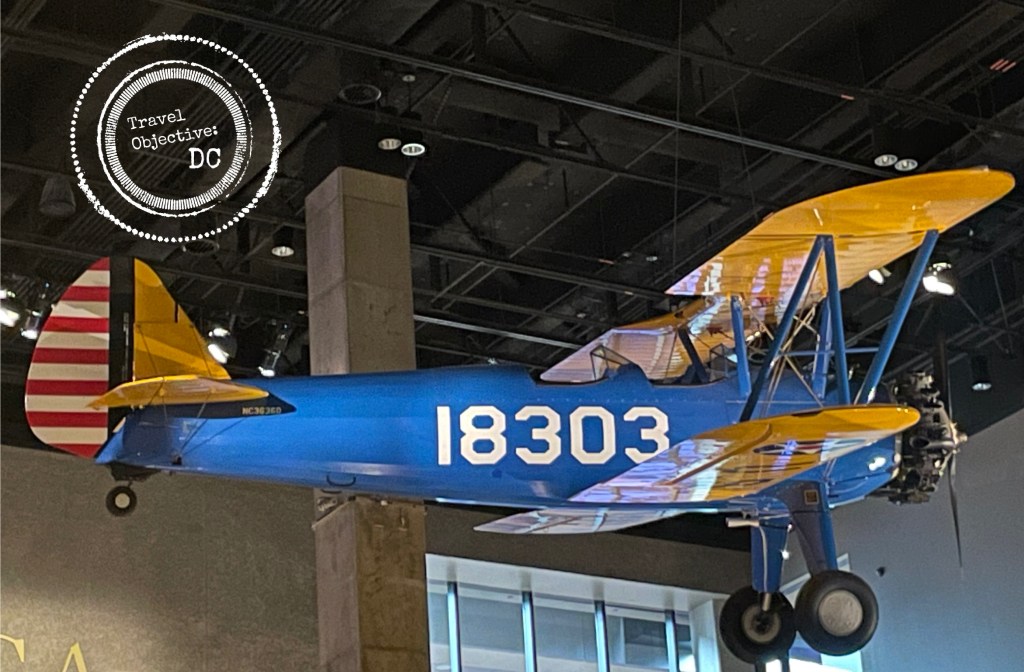
One of the highlights in the History Galleries is a beautifully restored Stearman Keydet training aircraft used by the Tuskegee Airmen. The two seat bi-plane was the primary pilot training aircraft for the US Armed Forces in the 1930’s and 1940’s. The accompanying display also includes an excellent five minute introductory video on the origins and accomplishments of the Tuskegee Airmen, which was established in 1941 to demonstrate that African Americans could perform the jobs required in the Army Air Forces. The Tuskegee Airmen included pilots, as well as navigators, flight engineers, bombardiers, mechanics and other essential support positions. 

A PT-13D Stearman Kaydet training aircraft used to train Tuskegee Airmen

One of the most notable units comprised of Tuskegee Airmen was the 332nd Fighter Group. From their base in Italy, the 332nd escorted heavy bombers on raids into central Europe from May 1944 through April 1945. They flew more than 15,000 sorties, losing but 25 escorted bombers to enemy fire. 

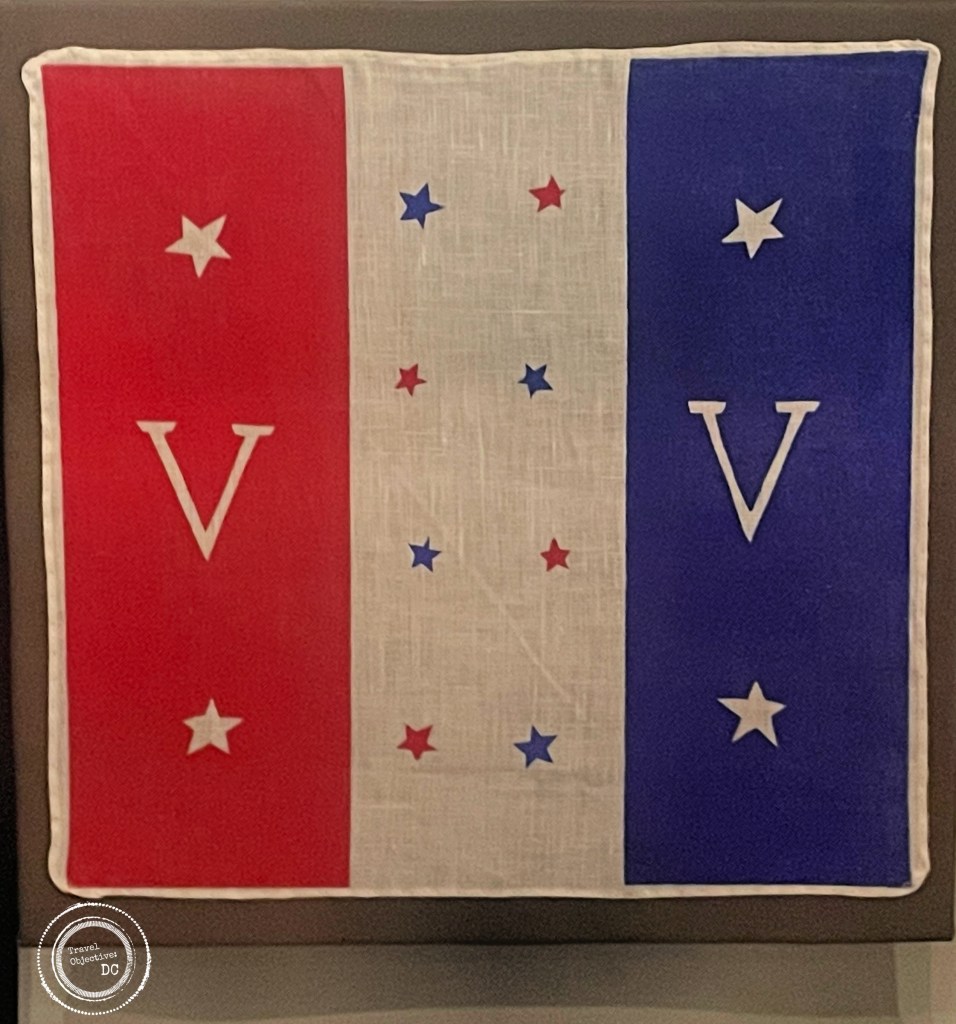
In the museum’s Community Gallery on the third floor is an exhibit entitled Double Victory: the African American Military Experience. The gallery takes its name from the Pittsburg Courier’s Double Victory campaign during World War II, which promoted America’s victory over the Axis Powers and an African American victory over discrimination at home. 

This exhibit expands on the themes first introduced in the below-ground History Galleries. Here the emphasis goes beyond historical facts of African American military service to how that service changed through the years and its impact on the larger African American community. 

A handkerchief with the emblem of the Pittsburgh Courier’s Double Victory campaign.

Also included are more artifacts, such as documents, weapons and equipment. These highlight what military service for African Americans entailed at the time, such as a seaman’s certificate issued in 1826 to a Black sailor named Robert Barnaby. Barnaby carried the certificate with him at all times to prove he was a sailor in the US Navy and avoid being seized as a runaway slave. 

This exhibits introduces the accomplishments of some notable African American units such as the 54th Massachusetts, the Buffalo Soldiers, the Harlem Hellfighters, and the Red Ball Express, among others. 

President Harry Truman officially ended segregation in the US Armed Forces in 1948, upon signing Executive Order 9981. Change came, but slowly. Racial tension continued in the following decades in parallel with the civil rights movement occurring across American society. However, the integration of the services opened new opportunities for African American service members.  

A horse saddle used by B Troop , 9th US Cavalry Regiment (A Buffalo Soldiers Regiment)

The final part of the Double Victory exhibit portrays one of the most important of those opportunities, the long rise of African Americans to senior ranks within the military. Two hundred years after the Battle of Lexington and Concord, Daniel “Chappie” James, a fighter pilot and Tuskegee Airman became the first African American four star general in history.

The exhibit includes Colin Powell’s dress uniform from his tenure as Chairman of the Joint Chiefs of Staff. It denotes the pinnacle of that long rise and attests to what is now possible in the military.

Although they might not have always been treated fairly, military service has long been an important part of African American life. Today, African Americans comprise 17% of the ranks of soldiers, sailors, airmen and Marines and continue a tradition begun over 200 years ago. Through that time, the unique relationship between African Americans and the American military was a rather complex picture. Curators have designed and assembled some revealing exhibits exploring the nuances of those complexities. It is an important collection and well worth seeing for anyone desiring a more complete picture of American military history. 

* * *

Route Recon

The Museum is located on the National Mall at Constitution Avenue, NW, between 14th and 15th Streets, Washington, D.C. The street address is 1400 Constitution Avenue, NW, Washington, DC, 20560.

Click here for a map of all the Smithsonian Institute Museums around the National Mall.

The museum is open Tuesdays – Sundays from 10:00 AM until 5:30 PM. On Monday, the museum is open from 12 Noon until 5:30 PM.

 Free timed-entry passes are required for entry.

Using public transportation is advised for those visiting the museum.

Metrorail – The closest Metro station is Federal Triangle, along the blue, orange, and silver lines.

Metrobus – Bus stops are located on Constitution Avenue. Visit the Washington Metropolitan Area Transit Authority for more information.

Circulator Bus – The National Mall Circulator Loop bus provides easy access around the National Mall and convenient connections to other Circulator buses for visits to uptown sites.

Mess Call

If your schedule allows, plan for lunch or a snack at the Sweet Home Café, the museum’s restaurant. It features a variety of food items reflective of African American culinary traditions as well as many modern day favorites. The Sweet Home Café is open daily, from 11:00 AM to 3:00 PM with the exception of Mondays (12:00 Noon – 3:00 PM).

Something is Missing at the National Air and Space Museum

It was August 1961 in the hot California desert. Jacqueline Cochran was strapped into her Northrop T-38A Talon, flying a nine mile closed loop aeronautical course. She was followed by Chuck Yeager, flying an F-100. Cochran kept the aircraft in perfect alignment around the course and topped out at 844 miles per hour, setting a new speed record for that distance. That was only one of the eight speed records the fifty-five year old Cochran would set that summer.

Cochran was no stranger to flying records. She set her first speed record in 1937 and won a number of airplane races prior to World War II. In 1943, General of the Air Force Harold “Hap” Arnold appointed Cochran the first director of the Women Airforce Service Pilots (WASPs). In 1953, she was the first woman to break the sound barrier. The T-38A she flew now hangs in the Smithsonian Institute’s “new” National Air and Space Museum (NASM). 

Northrop T-38A Talon | Jacqueline Cochran | airspeed record | National Air and Space Museum | Washington DC

The Northrop T-38A Talon flown by Jacqueline Cochran.

Since its opening on the National Mall in 1976, the NASM has been a stop for many visitors to Washington, DC. It is easy to understand why. Even for those only marginally interested in space or aviation, the museum is full of interesting artifacts and displays. The original Wright Flyer, the Spirit of St. Louis, and Neil Armstrong’s spacesuit are but a few of the items that provide not only a sense of pride in American innovation, but also in humanity’s ongoing exploration of the heavens.

In 2018, the NASM began an historic seven-year, $250 million renovation focusing on creating a more immersive and enjoyable experience. The Smithsonian holds the world’s largest collection of artifacts related to aviation and space exploration, and the renovation includes over 1,400 new items for public display.  Through this process, all the museum’s galleries are due for renovation, redesign or complete replacement.

The NASM reopened to the public on October 14, 2022 with eight new or redesigned galleries on the west end of the museum’s building. While there are certainly some interesting exhibits and displays, the museum is still a work in progress.

Wright Brothers | Wright Flyer | first airplane | Air and Space Museum
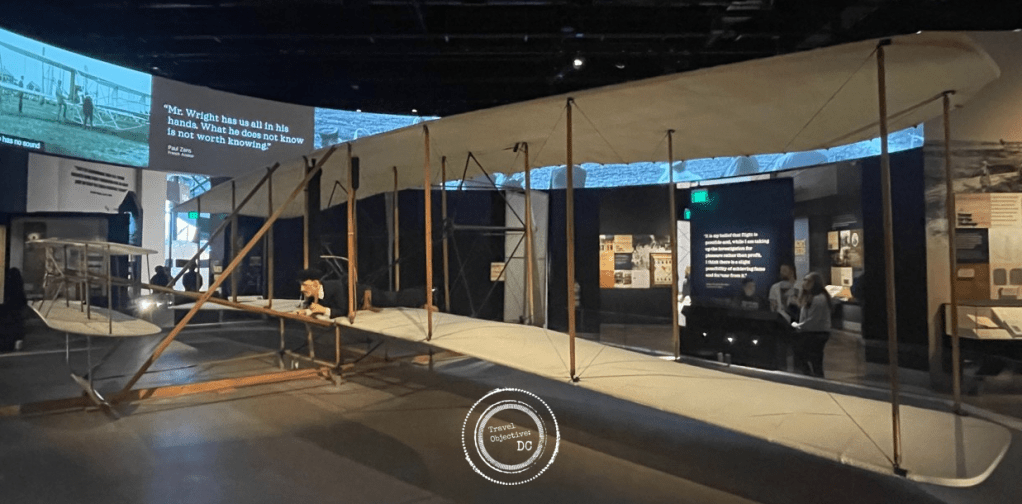
The Wright Flyer on display in the Wright Brothers gallery.

What Galleries Are Now Open?

The Wright Brothers – The centerpiece of the gallery devoted to Orville and Wilbur Wright remains the Wright Flyer, the brothers’ heavier than air machine which first took flight on December 17, 1903 in Kitty Hawk, North Carolina. The redesigned gallery adds further details to their lives before and after they achieved fame as inventors of the airplane.  There are leaflets from their printing business, tools from their bicycle shop, early models, experimental aircraft parts and furnishings from their cabin in North Carolina.

Early Flight – Following their successful flight, the Wright Brothers led many others in continued experimentation on early aircraft. A budding aviation community took hold around the world as the human passion for flying grew. The gallery highlights this earliest period of aviation innovation.

America by Air – In 1918, the U.S. Government formally initiated airmail service, a decision that led to the commercial passenger aviation industry. The America by Air gallery tracks air travel in the United States from the early days of open cockpits to the deregulated, post-9/11 era we know today.

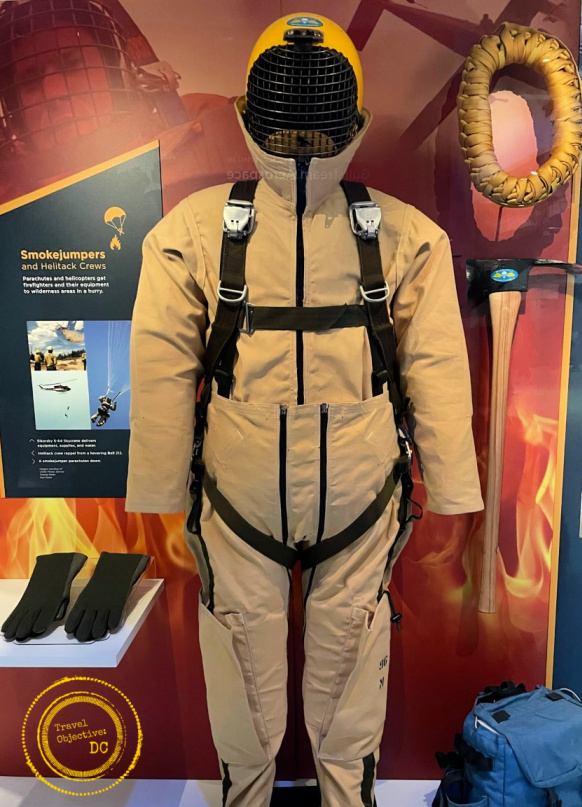
A smokejumper’s protective suit and other gear on display in the Why We Fly gallery.

Smokejumper protective suit | National Air and Space Museum | NASM | Washington DC

Why We Fly – About 80% of aircraft in the United States are considered General Aviation, meaning they are not connected to scheduled passenger service, the military or the Federal government. Why We Fly exhibits reflect the great diversity of this sector. Medical flights, crop dusting, aerial firefighting and humanitarian response are all included.

Nation of Speed – A collaborative effort with the Smithsonian’s National Museum of American History, Nation of Speed presents the American experience of the desire to move faster in the air, on the water and over land with the technology and machines that made it possible.

Destination Moon – Some of the Smithsonian Institute’s most iconic artifacts are found in Destination Moon, which traces the history of the US lunar programs and missions.

Exploring the Planets – Beyond the moonshots of the 1960s and 1970s, this gallery explores current space exploration programs and future plans for exploring our solar system.

Apollo 11 Command Module Columbia | moon landing return vehicle | Neil Armstrong | Buzz Aldrin | Michael Collins | NASM Washington DC

The Apollo 11 Command Module Columbia. The command module was the living quarters and return vehicle for Neil Armstrong, Buzz Aldrin and Michael Collins.

One World Connected – Explores how the advancements of aircraft, satellites and technology have revolutionized communications, navigation, weather forecasting and other aspects of life on earth.

Mixed Results

It is quite evident tremendous effort went into the design (or redesign) of these galleries, but the results seem mixed. On the positive side, the new features in the Wright Brothers gallery fill in more details on the lives of the two brothers, making them seem more human, while still maintaining their iconic stature. America by Air provides ample details and activities telling the story of commercial passenger aviation in America. The shiny and brightly painted early airliners suspended above the displays add a sense of majesty to the storytelling below. 

Ford-5 Tri-Motor | Douglas DC-3 | airplanes on display at National Air and Space Museum | Washington DC tourism | Smithsonian Institute
A Ford-5 Tri-Motor and a Douglas DC-3 above the American by Air gallery.

Within Destination Moon, the artifacts and displays are now neatly and chronologically arranged allowing visitors to walk through the decades of manned lunar exploration. Along the way, they get a sense of the dedication of the people involved, the power of the rocket engines, and at the same time, reckoning how all this was accomplished with less technology than the cellphones in our pockets today.

However, the Nation of Speed gallery is much more suited to the Smithsonian’s National Museum of American History. For some reason, profiles of early pilots and aviation record holders are notably absent with most of the artifacts related to auto or motorcycle racing. 

Exploring the Planets is understandably lighter on artifacts (many are still in use or irretrievable) and there are indeed some interesting examples of the Mars rovers. However, other displays simply describe the current scientific understanding of the other planets seeming more akin to a science fair rather than the immersive experience NASM’s renovation was to bring about.

The One World Connected gallery celebrates the interconnected life on planet Earth in this 21st Century. Yet the exhibits do not mention much about the the limits nor downsides of the technology that brought us this interconnectivity, such as cyber crime, disinformation or political polarization, and how we can overcome them.   

An early Global Positioning System (GPS) unit circa 1993 from the Magellan Corporation on display in the One World Connected gallery.

Smithsonian Institute | GPS on display at NASM

What’s Missing?

Notably absent from the eight renovated galleries are newly restored and presented aircraft, which is rather confounding as the Smithsonian prides itself on its collection of historically significant aircraft. My 11-year-old son summed it up best when he said: “There aren’t any cool planes to look at.”

Most of the aircraft on display were previously viewable before NASM started the renovations. Military aircraft are especially lacking. Aside from Jacqueline Cochran’s T-38A, the only other prominent military aircraft is the Wright Military Flyer, a two-seat observation aircraft built by the Wright Brothers and purchased by the US Army in 1909. 

Closed are galleries that previously included aircraft from both world wars, Legend, Memory and the Great War in the Air and WWII: Sea-Air Operations (featuring a reproduction of a carrier hanger deck from WWII). In their absence, a lone Rebel Alliance X-wing Starfighter from the movie Star Wars hangs suspended from the ceiling over one of the walkways, with little accompanying information.

Jacqueline Cochran | Jackie Cochran | female pilot | Women Airforce Service Pilots WASPS | aviation record holder

Jacqueline Cochran (circa 1943) in her Women Airforce Service Pilots uniform. When she died in 1980, Cochran held more speed, distance and altitude flying records than any other pilot.

What is also missing, with the exception of the Wright Brothers, Jacqueline Cochran and the astronauts, are the profiles of humans who took to the skies and to space, pushing themselves and their equipment to the limits to accomplish something for us all. Indeed, the redesign seems to remove the human element in aviation and space exploration, replacing it with technology and process. One leaves NASM better informed, but not inspired.

What’s Next?

These are hopefully just temporary drawbacks. NASM’s renovation is set for completion in 2025. Approximately fifteen more galleries are still under renovation. Publicly available information on the new galleries seems scarce, but one new gallery entitled Pioneers of Aviation will feature the iconic Spirt of St. Louis. Another will depict aerial combat and tactics during World War II with the North American P-51, Grumman Wildcat and Messerschmitt 109 on display. Perhaps the X-wing Starfighter suggests a Star Wars or space fantasy gallery is in the works?

Star Wars X-Wing Starfighter on display at Smithsonian
A Rebel Alliance X-Wing Starfighter from the Star Wars movies

In the meantime, those with a serious interest in military aircraft should visit the Smithsonian Institute’s Steven F. Udvar-Hazy Center in Chantilly, VA near Washington Dulles International Airport instead. At this 17-acre facility, military and civilian aircraft from World War I until today, as well as space equipment, are on display. 

* * *

Route Recon

The Smithsonian Institute’s National Air and Space Museum is located on the National Mall bordered by Independence Avenue, Jefferson Drive, and 4th and 7th Streets, SW. The entrance is on the south side of the building along Independence Avenue. You cannot access the museum from the north side along the National Mall.

Parking – Very limited metered street parking is available around the museum. Parking is available in several commercial parking lots in the neighborhood.

Public Transportation

Metrorail – The closest Metro station is L’Enfant Plaza, along the blue, orange, silver, and green lines. From the L’Enfant Plaza Station, take the exit for Maryland Avenue and 7th Street.

Metrobus – Bus stops are located on Independence Avenue, SW, and along 7th Street, SW. Visit the Washington Metropolitan Area Transit Authority for more information.

Circulator Bus – The National Mall Circulator Loop bus provides easy access around the National Mall and convenient connections to other Circulator buses for visits to uptown sites. The NASM is a short walk from the Jefferson Drive and 7th Street SW stop on the National Mall route, or the D Street SW and 7th Street SW stop on the Eastern Market – L’Enfant Plaza route.

Bicycle Sharing – Capital Bikeshare  is metro DC’s bicycle sharing service. There are Bikeshare stations around the National Mall. There is Bikeshare station on 4th Street, just south of the intersection with Independence Avenue.

Intel Brief

Free timed tickets are required for entry into NASM. Tickets can be acquired through the NASM website. Ticket holders will line up near the Independence Avenue entrance prior to their entrance time. The line can become quite long, but it moves quickly once ticket holders are allowed to enter the building.    

NASM is not currently offering guided tours for individual parties. Tours are available for school groups of 10 or more and adult groups of 20 or more. Tours should be requested 3 weeks in advance. Reservation and group visit information is available at NASMs Group Tours webpage.

Mess Call

The Mars Café is located on the “Launch Pad” (lower level) It is open daily from 10:00 am to 5:00 pm. The café has a coffee bar and sells sandwiches, salads, and pastries.  There are only twenty five tables currently available so seating is challenging at mid-day.