Navy Pride on Pennsylvania Avenue: The United States Navy Memorial


In a large open plaza stands a statue of a solitary figure.

He is a sailor in a dress unform. He stands straight and tall wearing a service “dixie cup” sailor hat. A buttoned up peacoat with a flipped up collar protects him from the chill of the ocean air. His hands are plunged deep into his pockets. His packed sea bag stands by his side. The determined look on his face denotes his readiness to deploy anywhere and perform his duty.

The statue is known as The Lone Sailor and serves as the centerpiece of the US Navy Memorial.
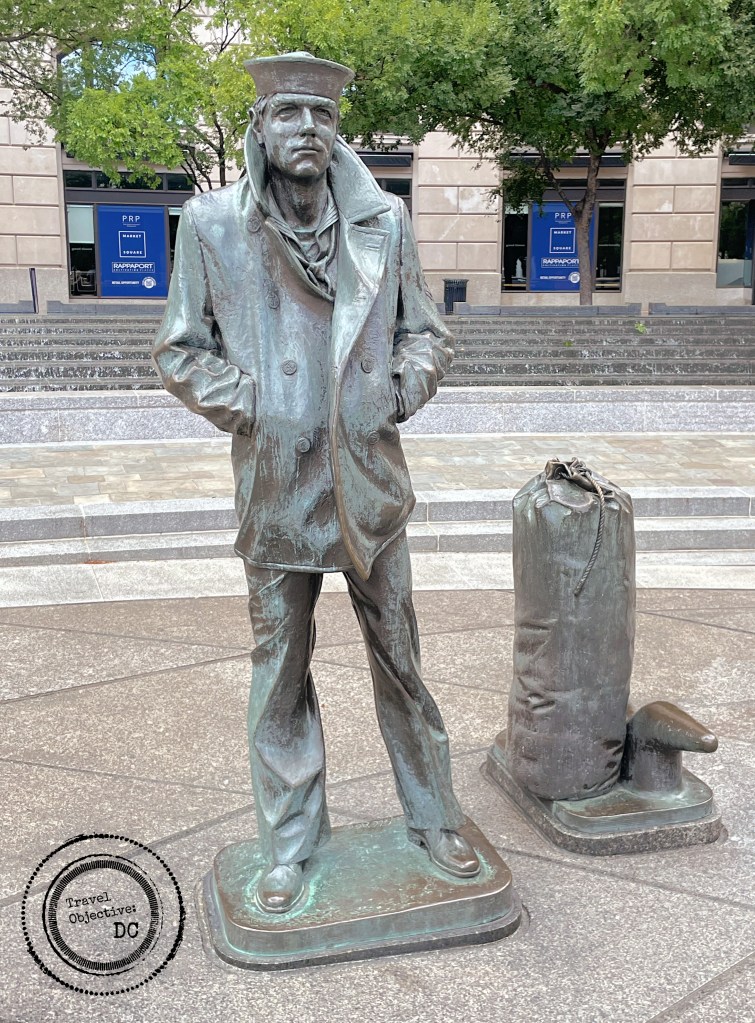
The Lone Sailor Statue at the US Navy Memorial

The Lone Sailor Statue

For centuries, considerable discussion was had regarding a suitable monument paying tribute to the United States Navy. Pierre L’Enfant had included a Memorial Column for the Navy in his original plans for Washington, DC.  Other memorials were built to honor the Navy during specific conflicts, but nothing existed to honor all American sailors. 

This all began to change in the spring of 1977 as Admiral Arleigh Burke urged Navy senior leaders and veterans to get serious by proclaiming: “We have talked long enough about a Navy Memorial, and it’s time we did something about it.”

When Admiral Burke–a distinguished World War II war hero and three-time Chief of Naval Operations–spoke, Navy personnel listened. The Navy Memorial Foundation was quickly organized and Rear Admiral William Thompson was named its first president. Admiral Thompson proved an excellent choice for the job and quickly set to work.

Rear Admiral William Thompson (ret.), on left, receiving a donation for the US Navy Memorial. Note the artist’s rendition of the Memorial.

-Department of Defense Photo
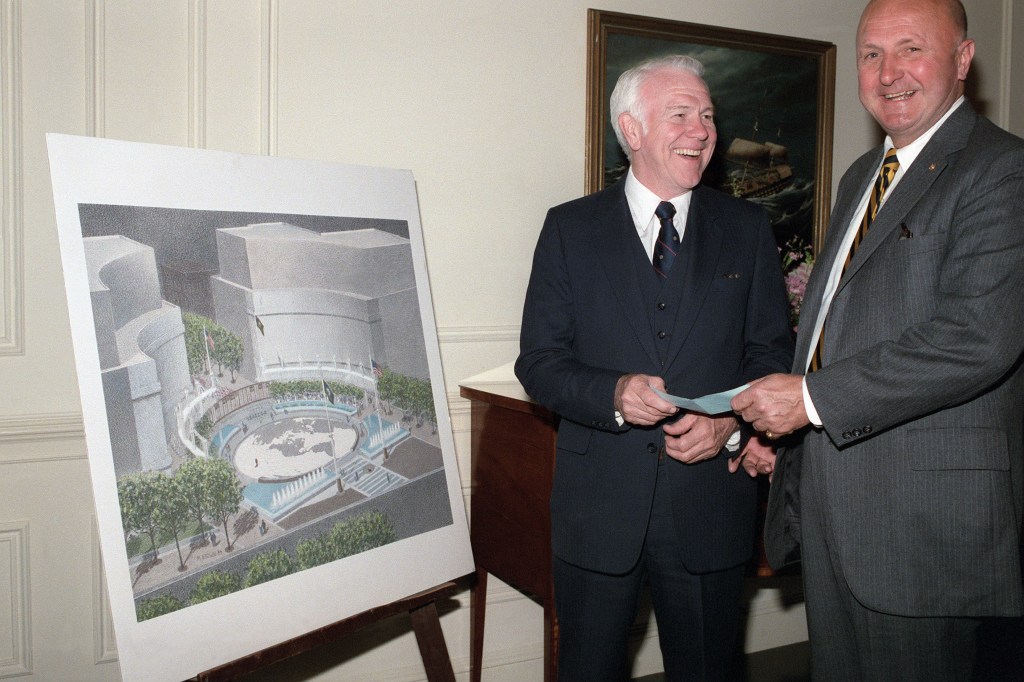
Rear Admiral William Thompson (ret.), on left, receiving a donation for the US Navy Memorial.

He first helped shape the enabling legislation Congress would pass in 1980. He then led the foundation through selecting the memorial’s designers, determining the memorial’s location, raising money and overseeing construction.

Admiral Thompson also helped select the sculptor Stanley Bleifeld to design and sculpt The Lone Sailor Statue. In recognition of Admiral Thompson’s significant contributions to building the memorial, Bleifield included Thompson’s initials on the Lone Sailor’s sea bag. 
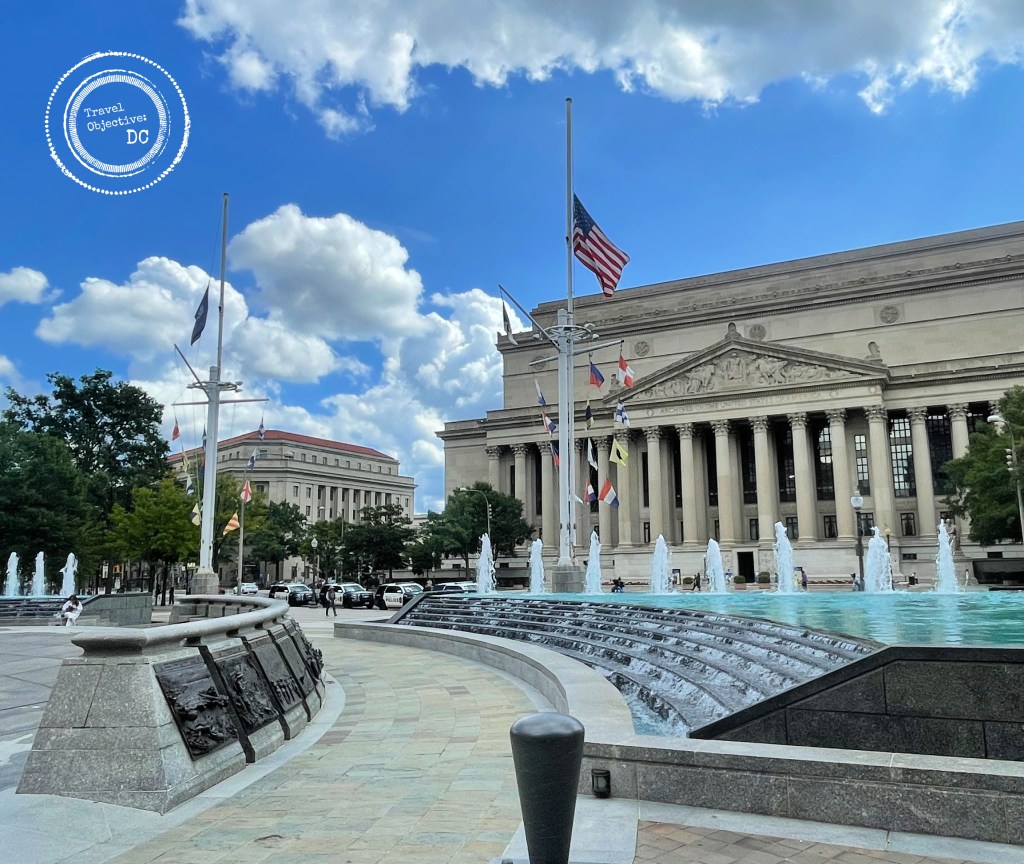
The Navy Memorial Plaza

The Navy Memorial Plaza looking south toward the National Archives

The whole process from the founding of the memorial to its completion stretched to almost a decade. The Navy Memorial was formally dedicated on October 13, 1987 by President Ronald Reagan. He devoted it to all who have served, are serving or will serve in the United States Navy, Marine Corps, Coast Guard and Merchant Marine. 

The memorial is set within a broad circular plaza to the northwest of the intersection between 7th Street and Pennsylvania Avenue. Early designs for the memorial favored a more traditional approach, but they were discarded in favor of a memorial with a more open space resembling a seascape.

The floor or base of the plaza depicts a large world map.  With a diameter of 100 feet, it is said to be the largest map in the world.

Fountains at the US Navy Memorial

A set of fountains at the US Navy Memorial

Fountains skirt the southern perimeter of the map. The water flowing through the fountains comes not from Washington DC’s water supply but is collected from the world’s oceans and the Great Lakes.

A semicircular wall inside the fountains contains a series of 26 bas-relief figures depicting scenes of Navy history and Navy life as well as the contributions of maritime partners. 

Arrayed around the memorial are quotes about the Navy from sailors at all levels. Six masts fly the flags of the United States, the Navy, Marine Corps, Coast Guard, Merchant Marine and the POW/MIA flag.
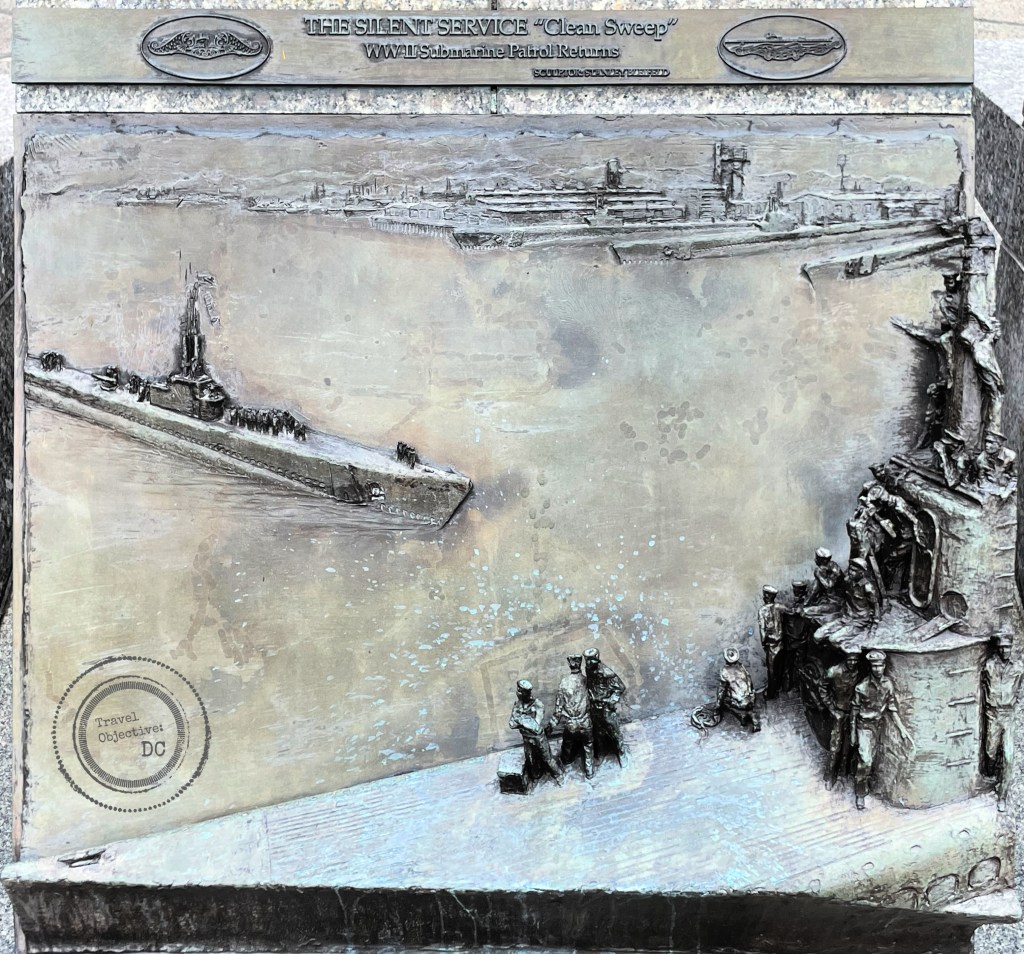
Bas Relief sculpture of Navy submarines in World War II.

Bas Relief sculpture of Navy submarines in World War II

Sweeping arches incorporated into the design of two mixed-use commerical buildings suggest a northern perimiter to the memorial, balancing the fountains and sculpture walls on the southern side. The neoclassical design of these buildings seemingly provides a sense of the shore or anchorage to the airy, open plaza.

Amidst all this stands The Lone Sailor. The statue has been so enthusiastically received by the Navy community, there are 18 more Lone Sailor statues across the United States (and one at Utah Beach in Normandy). In each location, the statue reminds the community of the dedication and professionalism of the American sailor. 

Bas Relief Sculpture of Captain John Paul Jones

Bas Relief Sculpture of Captain John Paul Jones

Early in the design phase, the Navy identified a desire to have a “living memorial,” a place where people would gather and return to time and again. The open space makes the memorial a popular venue for summer concerts, reenlistments, promotion ceremonies, wreath layings and reunions.

In keeping with the desire for a living memorial, the Navy Memorial Foundation located a visitor center in one of the adjoining buildings. Part research facility, part musuem and part community center, the visitor center brings the Navy experience alive for the landlubber while instilling pride in all Navy sailors. There are exhibits on the missions of the post 9/11 Navy, multiple Navy leaders, and the important role played by chief petty officers.

The visitor center also houses the Arleigh Burke Theater. In addition to running several short movies on Navy life throughout the day, as well as periodic feature films, the theater hosts guest speaker programs. Visitors can find a variety of mementos from all the US military services at the Ship’s Store gift shop.

A video screen displays the Navy Log.

A video screen displays the Navy Log throughout the day.

There is also a feature known as the Navy Log, an online archive with details of the men and women who have served in all the sea services. There are currently over 750,000 entries. Active members, veterans or their loved ones are invited to add to this number and enter a service member’s information as an ongong tribute to their time in uniform.

As the US Navy observes its 250th Anniversary, the US Navy Memorial is a place for everyone to discover and honor America’s rich naval heritage. Whether you are active, retired, reserve or the relative or friend of someone who has served, the Navy Memorial is an important and worthwhile destination for any visit to Washington, DC.

***

 I can imagine no more rewarding a career. And any man who may be asked in this century what he did to make his life worthwhile, I think can respond with a good deal of pride and satisfaction: ‘I served in the United States Navy.’

President John F. Kennedy

Route Recon

The US Navy Memorial is located at 701 Pennsylvania Ave, NW Washington, DC 20004. 

The Memorial is accessible 24 hours a day.

The Visitor Center is open seven days a week from 9:30 AM to 5:00 PM.

The Navy Memorial hosts numerous events throughout the year. Some events may close the Visitor Center to the public. Be sure to check the Memorial’s website and find additional information about upconing events on the calendar

The closest Metro Station is Archives-Navy Memorial-Penn Quarter on the Green and Yellow Lines.

Parking:
Validated parking is available at PMI Garage, 875 D Street, NW.
Parking can be validated for $13 inside the Ship’s Store, located in the Navy Memorial Visitor Center.

Lost and Found History at the Missing Soldiers Office


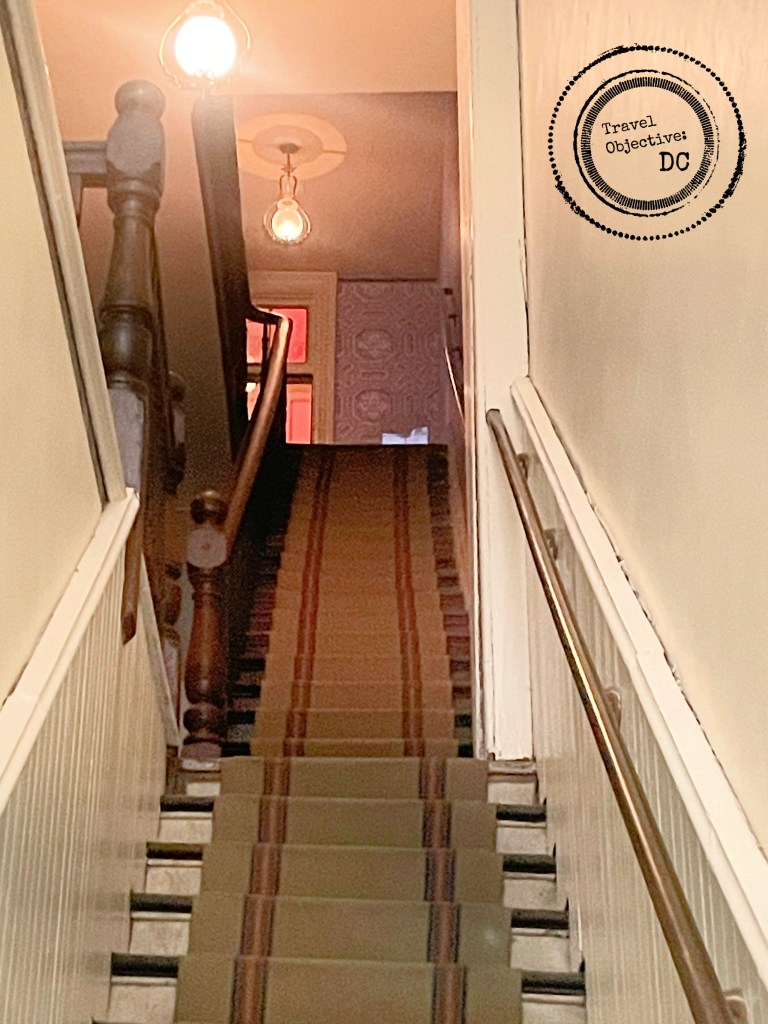
Along 7th Street in Northwest Washington, a narrow staircase takes the visitor up two flights to a suite of simple rooms restored to resemble their 19th Century appearance.

Today these rooms are often quiet, save for the tours and visitors. But from 1865 through 1868, they bustled with an extraordinary initiative led by Clara Barton. The noted humanitarian undertook the challenging but critically important mission of identifying missing Union solders from the Civil War. 

By 1865, the former teacher and Patent Office clerk had already made a name for herself. She spent the Civil War years gathering and distributing medical supplies, food and other items for the Union Army. At the same time, she assisted soldiers, nursing the sick and wounded, and comforting all those she could. 

A famous photo of Clara Barton taken my Mathew Brady.

A photograph of Clara Barton by Mathew Brady

-Library of Congress

After the war, she became aware of the large volumes of mail arriving at Army facilities either addressed to missing soldiers or seeking information on their whereabouts. Sadly, most of these letters went unanswered. At the time, the Army had no system for notifying a family upon the death or absence of a soldier.

After receiving the endorsement of President Lincoln, Barton undertook the work of identifying as many of the Union Army missing as possible. She established the Office of Correspondence with Friends of the Missing Men of the United States Army, which would later become known more simply as the Missing Soldiers Office. 

Barton based the operation on the third floor of a building then located at 488 1/2 7th Street Northwest. Originally built in the 1850’s, the three story brick building was of a typical design for Washington, DC. The first floor was dedicated to retail space along busy 7th Street. The second floor usually provided office space to local professionals while boarders rented rooms on the third floor. 

The staircase to the 3rd Floor at the Clara Barton Missing Soldiers Office Museum

The staircase to the 3rd Floor at the Clara Barton Missing Soldiers Office Museum

Barton first rented a third floor room to lodge in and store some medical supplies in June of 1861.  However, the Missing Soldiers Office would require more space. She rented additional rooms from her friend and landlord Edward Shaw, a co-worker from the Patent Office.

Today there are nine rooms on display as part of the Clara Barton Missing Soldiers Office Museum. The dimly lit rooms have pretty wallpaper, but are largely empty. Creaks emanating from the uneven hardwood floors add a sense of authenticity to the space. Each room has some period furnishings and a few artifacts on display.

Much of the work of the Missing Soldier’s Office was performed in a large room facing 7th Street. Originally three rooms, Barton and Shaw continued to expand the office my removing walls to accommodate the growing staff and workload. The room’s location made it a natural choice to be the principal working area as the westward facing windows fill the room with natural light, in contrast to the other dimly lit areas. An artist’s depiction shows what the room may have looked like with racks for storage of supplies and large tables for reading and responding to correspondence.

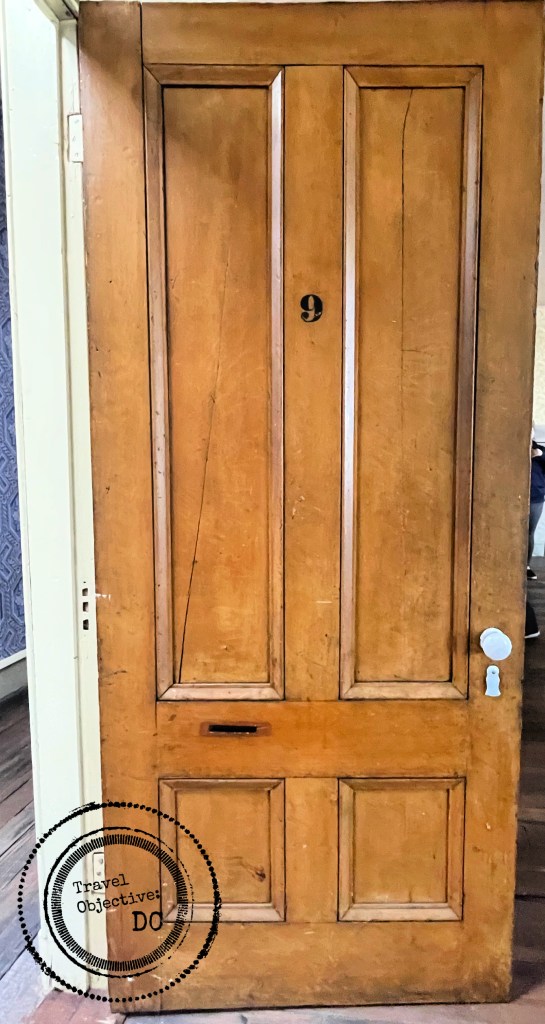
The original door to Room 9 of the Missing Soldiers Office. Note the mail slot on the lower left, cut into the door by Clara Barton.

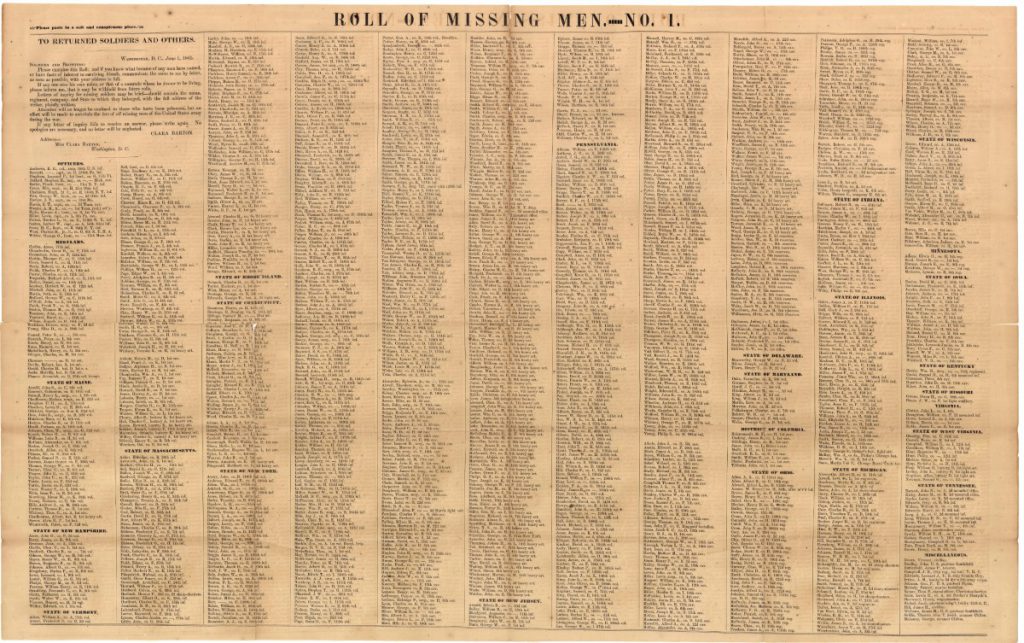
Barton implemented a straight forward and highly effective system for gathering information about the missing. After she received letters regarding the whereabouts of a missing soldier, a file was created. The names of the missing, organized by state of origin, were compiled into large lists called a Roll of Missing Men.

These rolls were printed on large broadsheet paper and distributed nationwide. They were hung prominently in post offices, government buildings and other public gathering places. The names were also published in newspapers. Returning soldiers or anyone with any information about a name on the list was invited to write the Missing Soldiers Office. Incoming letters were analyzed and collated into the files in the hopes of ultimately identifying the soldier’s fate. 

An example of a Roll of Missing Men which Clara Barton had printed and distributed nationwide.

A Roll of Missing Men. Clara Barton had these large lists printed and distributed nationwide.

-Photo courtesy of the Clara Barton Missing Soldiers Office Museum

Barton and her staff collected and scrutinized any available records from prisons, hospitals, and burial sites. Former prisoners of war were also interviewed and proved to be excellent sources of information.

Barton had some early success in her work when she met a young solider named Dorence Atwater. Atwater had been a prisoner at the notorious Andersonville prison camp in southern Georgia where he kept the camp records on the burials of deceased Union prisoners. He also secretly kept a second list of burial information, which he smuggled out of the prison at war’s end. 

Atwater and Barton accompanied an Army visit to Andersonville in the summer of 1865. Using Atwater’s list and other records, troops replaced temporary, numbered grave markers with more permanent headboards listing the solders names and units. While this work was underway, Barton and Atwater responded to letters with the updated burial information. Ultimately, Barton and Atwater were able to identify the graves of all but 450 of the 13,000 Union soldiers who had died at Andersonville.

A photo of Dorence Atwater.

A photograph of Dorence Atwater taken around 1870

-Connecticut State Library

One of the other rooms on the third floor served as Clara Barton’s bedroom, another as Shaw’s. Barton also decorated one room as a parlor where she would receive visitors. Receiving and responding to correspondence was only a portion of her role in the Missing Soldiers Office. Barton financed most of the operation herself, so she was often busy talking to donors and lobbying Congressmen. Of course, family members, those offering information, Army officials and others with an interest in her work would regularly call upon her on the 3rd floor.

As Barton wrote in her diary “…I was to leave everything else and fit up my little parlor with its cabinet of relics…I must see people if I would get their interest and I must have a suitable place to see them in…”

Barton closed the Missing Soldiers Office in late 1868. Incoming correspondence had slowed and she was suffering from exhaustion. But the results of the years long effort were most impressive. The Missing Soldier’s office received over 63,000 letters of inquiry and responded to over 42,000. It distributed over 99,000 Rolls of Missing Men and helped to identify over 22,000 soldiers.

Additionally, when Barton and her staff could positively identify a missing soldier, their letter to the family was official government correspondence. It could be used as supporting documentation for a death benefit application. As such, these letters could provide a route to material support as well as emotional consolation.  

After closing the office, Barton traveled to Europe on her doctor’s advice. She visited a friend’s family in Geneva, Switzerland. While there, Barton was first exposed to the Geneva Convention and the work of the International Committee of the Red Cross. The next chapter of her life was waiting, and she did not look back.  

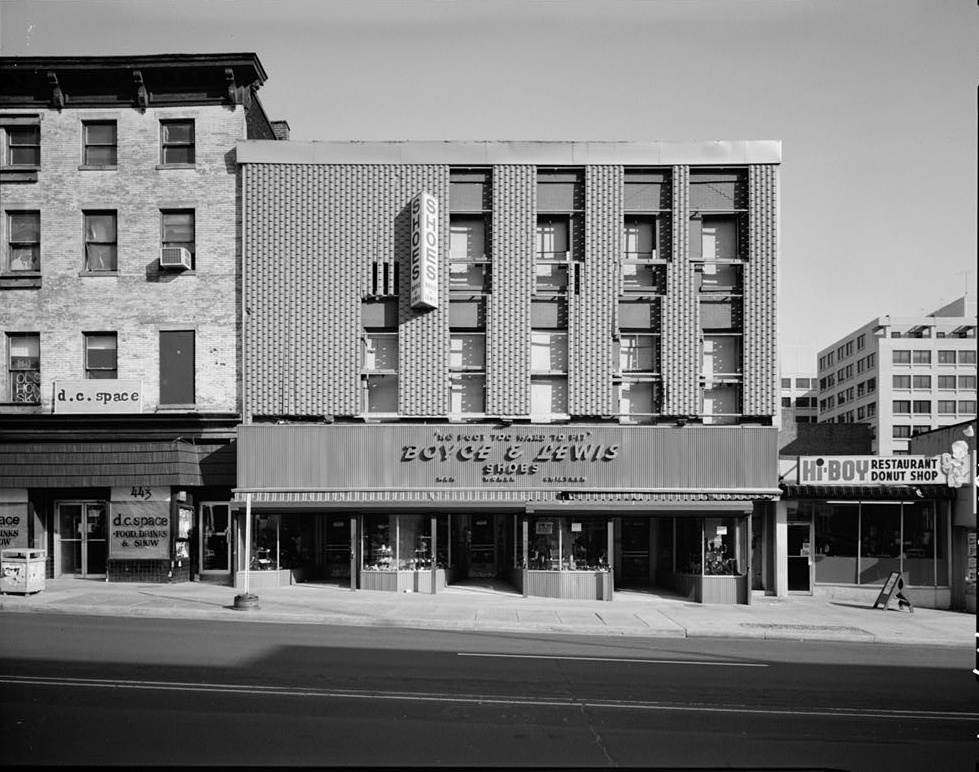
Photograph of Boyce and Lewis Shoe Store at 437 7th Street. The facade hides the original brick exterior and several windows on the 2nd and 3rd floors.

-Library of Congress

In Washington, Shaw closed the previous chapter of her life. After she left for Europe, he packed up some of her personal belongings along with a mix of other materials from the third floor and placed them in the attic. He would live on the third floor a few more years, before moving on. Other boarders would come and go. In 1913, the third floor was sealed off from the rest of the building. The Missing Soldier’s Office became a bit of a footnote, a brief interlude in Barton’s life. 

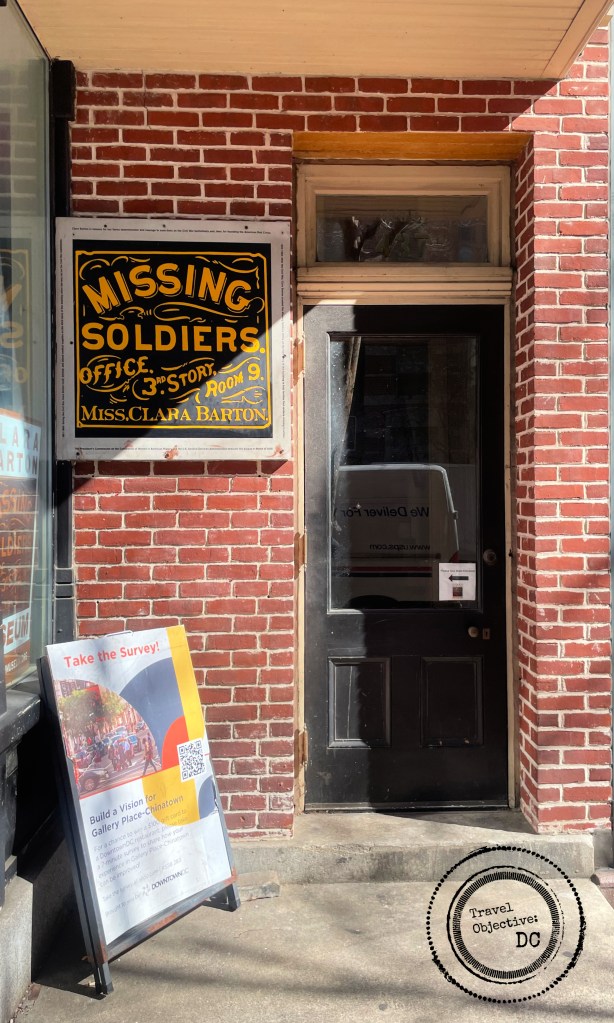
Just before Thanksgiving in 1996, a General Services Administration carpenter named Richard Lyons was inspecting the building before its scheduled demolition. While examining the unused 3rd floor, he discovered the trove of artifacts stored 120 years earlier, including the now iconic Missing Soldiers Office sign.

The iconic Missing Soldiers Office sign which identified the office location in Room 9 on the 3rd floor and its manager, Miss Clara Barton.

When a GSA carpenter discovered the Missing Soldiers Office sign in the attic, he knew he had found something significant.

Lyons began a research project that ultimately saved the building and an extensive renovation followed. The space is currently administered by the National Museum of Civil War Medicine, which partnered with the GSA in the renovation space. The Clara Barton Missing Soldiers Office Museum was opened to the public in 2015.

Today, a visit to the museum feels like a step back in time. The first floor, which for decades was used as a shoe store, is an open reception area housing the gift shop along with a large mural depicting the life of Clara Barton. 

Reproduction wallpaper hangs in a room at the Clara Barton Missing Soldiers Museum. Curators conducted extensive research on the original wallpaper samples still available to recreate the look of the rooms in Barton’s time.

Reproduction floral wallpaper hanging on one of the rooms at the Clara Barton Missing Soldiers Office

Extensive research has been done on returning the rooms to their 19th Century appearance, especially the wallpaper. Barton favored bold floral patterns for her personal space, office spaces had more muted colors in geometric designs. 

A selection of artifacts is on display through the rooms, including receipts, pens, stationery packaging, old clothing, and most impressive, a copy of the first Roll of Missing Men.

Today, of course, Barton’s work would not be necessary. The US Military has a very organized system for notifying next of kin about the loss of a service member. DNA samples are taken and stored to aid in identification. The Defense POW/MIA Accounting Agency works to identify the missing from earlier wars and conflicts. 

But before these systems were in place, it was a visionary Clara Barton who saw the need and created a structure to meet it. To make it work, she raised money, traveled the country giving speeches, lobbied Congress, issued reports, sought assistance from other Federal agencies and directed an extensive program of correspondence and outreach. 

It all happened over 150 years ago on 7th Street. Climb the stairs and see for yourself. 

The entrance door leading to the stairway at the Clara Barton Missing Soldiers Office Museum.

* * *

Route Recon

The Clara Barton Missing Soldiers Office Musuem is located at 437 7th Street NW, Washington, DC 20004. The museum is open on Fridays and Saturdays from 11:00 AM to 5:00PM. The nearest Washington Metro Station is Archives-Navy Memorial-Penn Quarter. From the station exit, make a U-Turn back toward 7th Street. Turn left on 7th Street and proceed past D Street. The Clara Barton Missing Soldiers Office Musuem will be on your right just before E Street.

Command Reading

Relics of War, the History of a Photograph by Jennifer Raab

In 1865, on her visit to Andersonville, Clara Barton collected a variety of small artifacts she found around the camp, such as dug out bowls and cups, woven reed plates and spoons made from animal horns. She arranged these pictures on a writing desk and had them photographed. Barton used the relics in her work to raise awarness and enthusiasm for her Missing Soldiers Office and its mission. In her book, Dr. Raab, a professor of the history of art at Yale University, uses artistic criticism techniques to interpret the photograph and what it came to mean for post Civil War American society.

Hancock, the Superb


Statues of military leaders on horseback are a common site in plazas and squares around Washington, DC. While the statues might seem ordinary, the men featured on them are usually not. This is certainly the case with the statue of General Winfield Scott Hancock in the Penn Quarter neighborhood near the Navy Memorial.

It is hard to imagine a military career today as the one experienced by this 19th century Army leader.

As the Union Army was quickly expanding to meet the grim realities of the Civil War, Major General George McClellan, Commander of the Army of the Potomac, promoted his long-time acquaintance Hancock from captain to brigadier general and assigned him to brigade command. 

Hancock would go onto distinguish himself during the war, earning the nickname “Hancock the Superb”. He ultimately served 42 years on active duty and 25 years as a general officer. 

The equestrian statue of Winfield Scott Hancock.
The statue of General Winfield Scott Hancock

In 1896, the equestrian statue was dedicated to Hancock portraying the famous general in his more senior years. But the simple monument does not tell the full story of this highly respected Union Army general.

Hancock hailed from Montgomeryville, Pennsylvania. He was the son of a lawyer in a locally prominent Democratic family. His parents named him after Winfield Scott, the Army’s most senior officer at the time. His name was apt. From an early age, the young Winfield demonstrated a keen interest in military affairs. He could often be found leading young boys in a “youth militia company” on marches through town.

At the age of 16, he was accepted at West Point, graduating in 1844.

Assignments followed in the west and in Mexico during the Mexican-American War. After the war, Hancock often received Quartermaster assignments which taught him important lessons in logistics, organization and how to navigate the Army’s bureaucracy. His affable nature, technical proficiency and dashing good looks earned him an excellent reputation among his soldiers, colleagues and superiors.

Photograph of Winfield Scott Hancock.

A photograph of General Winfield Scott Hancock taken sometime between 1861-1865 by Brady’s National Photographic Portrait Galleries

-Library of Congress

Militarily, Hancock is probably best remembered for his actions as a corps commander in the Union Army of the Potomac at the Battle of Gettysburg in 1863. In the prelude to the fighting, Hancock arranged Union troops in a broad defensive position along high ground south of the town. Once the fighting began in earnest, Hancock led from the front, quickly maneuvering his troops to reinforce positions along the Union line. On the third day of the battle, Hancock was severely wounded in the thigh during Confederate General George Pickett’s famous charge against the Union center. 

Hancock would not leave the field until rebel troops had been repulsed. He would take five months to convalesce and would never completely heal from the wound. 

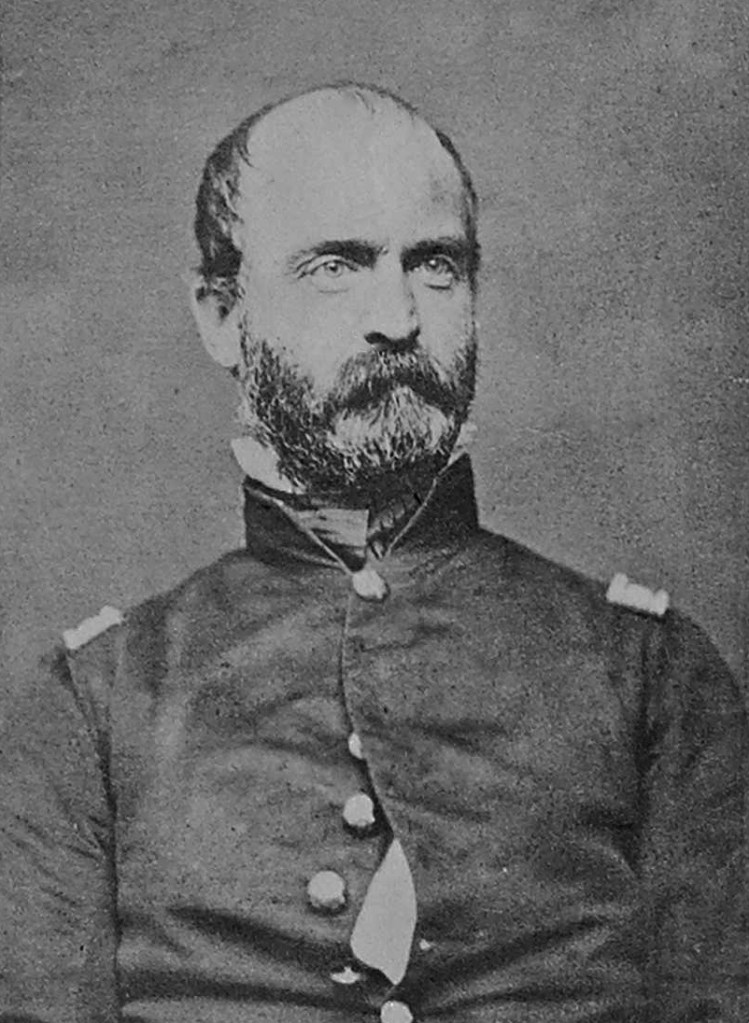
Early in his career, Hancock became very good friends with a North Carolina-born officer named Lewis Armistead. However, in 1861, while both were stationed in California, they said their good-byes and headed east, destined to fight on different sides. The two faced each other on the final day of Gettysburg when Armistead led a brigade as part of Pickett’s Charge against troops commanded by Hancock. Armistead was fatally wounded during the battle and died two days later. 

A photograph of Lewis Armistead, taken between 1861 and 1865, by an unknown photographer.

Photograph of Lewis Armistead

Both Hancock and Armistead are portrayed in Michael Shaara’s historical novel The Killer Angels and his son Jeffrey Shaara’s similar novels The Last Full Measure and Gods and Generals, as well as the films Gettysburg (1993) and Gods and Generals (2003).

There is scant historical evidence to support some of the depictions and dialog of the friendship between Armistead and Hancock portrayed in the novels and films. However, Captain John Bingham, an officer on Hancock’s staff, spoke with Armistead before he died. He would later write to Hancock with Armistead’s parting words to him: “Tell General Hancock for me that I have done him and done you all an injury, which I shall regret the longest day I live.” 

In July of 1865, it was Hancock who supervised the execution of several of John Wilkes Booth’s conspirators in the assassination of President Lincoln. He would later be assigned as military governor of Louisiana and Texas during Reconstruction. His Democratic leanings, including his endorsement of the quick return of civil authorities, put him at odds with Republicans in Washington and with his former commander (and later President) Ulysses S. Grant. 

A commemorative  handkerchief featuring the images of Democratic Presidential candidate Winfield Scott Hancock and Vice Presidential candidate William English.

A commemorative handkerchief featuring the images of Democratic Presidential candidate Winfield Scott Hancock and Vice Presidential candidate William English

-Library of Congress

While remaining in the Army, Hancock tested politics several times. After two attempts, he secured the Democratic nomination for president in 1880, but lost to a Republican (and former Union General) James Garfield. 

Hancock died at age 61 in 1886 from an infection and complications of diabetes while serving as Commander of the US Army’s Department of the Atlantic. His death surprised the country as the condition of his health was unknown to most everyone. 

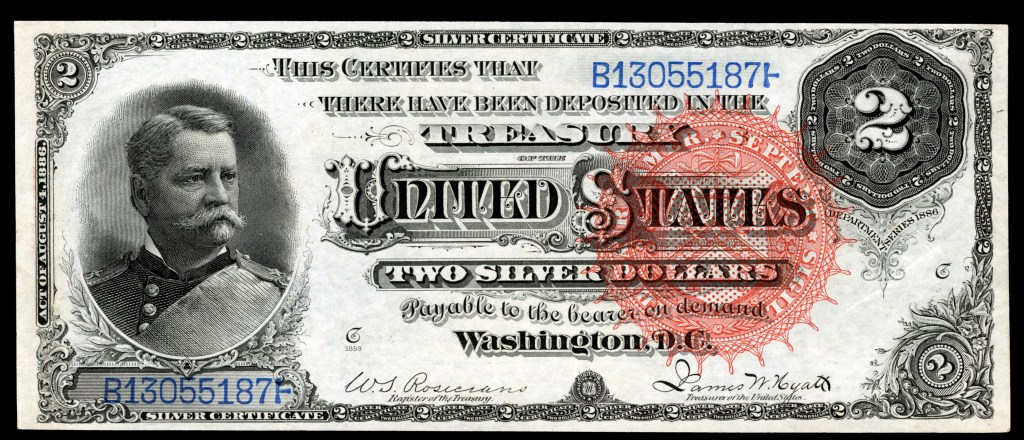
$2 Silver Certificate with portrait of Winfield Scott Hancock.
Following his death, Hancock was placed on the $2 Silver Certificate bill

Tributes to Hancock poured in from military, civic and political leaders from across the country. Perhaps the most stirring came from a political rival and former president, Rutherford B. Hayes:

“If, when we make up our estimate of a public man, conspicuous, as a soldier and in civil life, we are to think first and chiefly of his manhood, his integrity, his purity, his singleness of purpose, and his unselfish devotion, we can say truthfully of Hancock that he was through and through pure gold.”

Hancock’s statue is made of bronze, not gold, but he was the gold standard of an officer and a gentlemen.

* * *

Route Recon

The Statue of Winfield Scott Hancock is located just south of the Archives-Navy Memorial-Penn Quarter Metro Station.

Command Reading

Armistead and Hancock: Behind the Gettysburg Legend of Two Friends at the Turning Point of the Civil War by Tom McMillan. This dual biography of two leading Civil War generals provides new scholarship and analysis of their lives and careers and specifically details their friendship from its earliest days up to the Battle of Gettysburg.

The Grand Army of the Republic: the Legacy Lingers


The latter half of the 18th century saw a heyday for fraternal organizations in the United States. These associations provided their largely male memberships with opportunities to share common cultural, occupational, and religious backgrounds while often hosting social and recreational events for members and their families. 

One of the most prominent and powerful of these organizations was known as the Grand Army of the Republic (GAR). Membership in the GAR was open to all honorably discharged personnel, both officers or enlisted, from the Union Army, Navy, Marine Corps and Revenue Cutter Service (forerunner of the Coast Guard) who served during the Civil War. 

The GAR was founded in 1866 by Dr. Benjamin Stephenson who served as a surgeon with the 14th Illinois Volunteer Infantry Regiment. After the war he established a medical practice in Springfield, Illinois. Working with several veteran colleagues, he helped organize the first GAR post in nearby Decatur. 

The Grand Army of the Republic memorial in Washington, DC
A Union soldier and sailor represent Fraternity on the Grand Army of the Republic memorial at Indiana Plaza.

The GAR Memorial

One of the GAR’s principal activities was building and dedicating monuments to the sacrifices of Union forces and to the work of the GAR itself. As Union veterans aged, the GAR stepped up their efforts to build such memorials. In Washington DC, a GAR monument is located in Indiana Plaza in Washington’s Penn Quarter neighborhood. Several historic buildings frame the plaza and the Archives-Navy Memorial-Penn Quarter Metro Station brings consistent foot traffic to this busy area. 

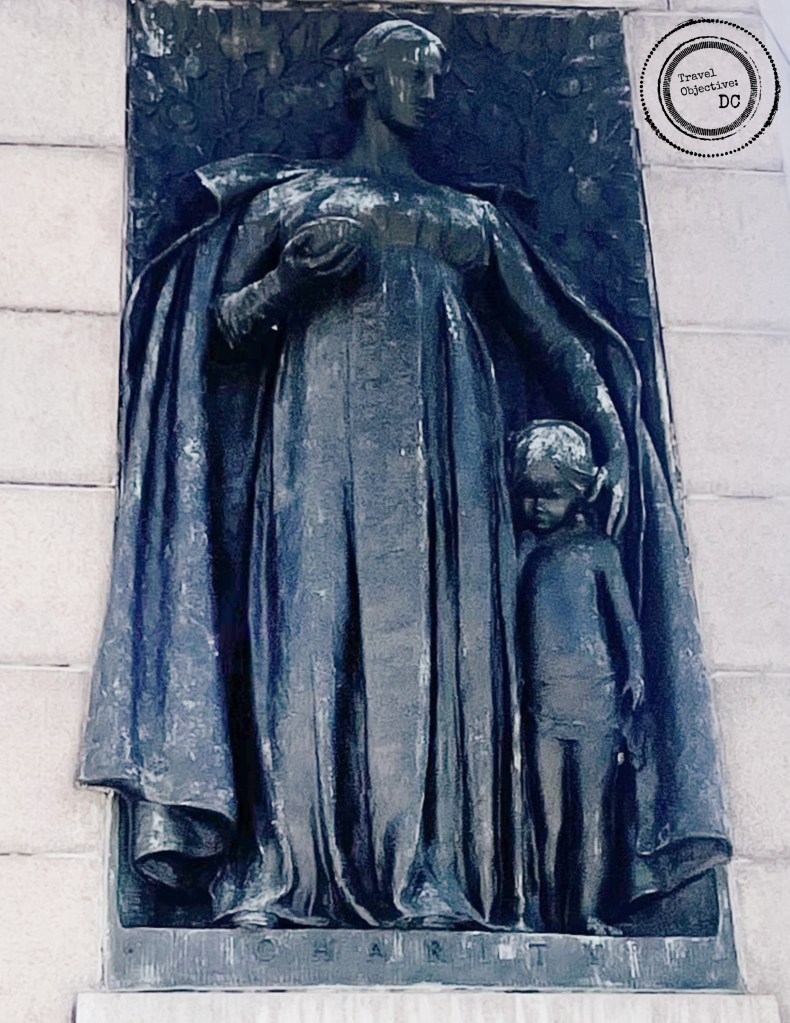
The GAR Memorial, also known as the Benjamin Stephenson Memorial, is triangularly shaped to reflect the GAR’s motto of Fraternity, Charity and Loyalty. Each side of the 25-foot high sand colored granite block has a bronze sculpture, featuring a weathered green patina. 

The southern facing side reflects Fraternity with a sculpture of a Union soldier and sailor standing side by side. Below the sculpture is an oval image of Dr. Stephenson in his Army uniform, also rendered in bronze, surrounded by a laurel wreath carved into the granite. 

The Northeast side of the Grand Army of the Republic memorial, depicting the statue of Loyalty.

A statue of a woman with a sword and a shield represents Loyalty on the Grand Army of the Republic Memorial.

Charity is portrayed on the northwest side by a woman wearing a robe and protecting a young child. Unfortunately, a thick coat of urban grime makes viewing this statue more difficult. Finally, Loyalty is represented on the northeast side by a statue of a woman bearing a sword and holding a shield.

The monument was dedicated on July 2, 1909 in a ceremony attended by President William Howard Taft and hundreds of aging Civil War veterans. The GAR Members in the crowd that day may not have realized it, but they were part of one of America’s earliest and most powerful single-issue advocacy societies.

The Legacy of the GAR

When Dr. Stephens founded the GAR, the original focus was to raise money and organize relief efforts for wounded veterans, as well as surviving widows and children. But in short order the GAR would move to lobbying State and Federal officials for expanded pensions for Union veterans, hiring preferences for government jobs, and the building of veterans homes and hospitals. Membership soared, reaching its peak in 1890, when the GAR boasted more than 400,000 members. 

A woman and small child represent Charity on the Grand Army of the Republic Memorial.

The statue depicting charity on the Grand Army of the Republic Memorial in Washington, DC.

The GAR grew politically prominent and was especially influential within the Republican Party. In the second half of the 19th century, five Republican GAR members were elected to the presidency. Many more GAR members were elected to Congress, governorships and state legislatures. 

One reason the GAR was so politically effective was its formal structure of organized components across the country. State level units were known as departments and local bodies were known as posts. Every state had a department and posts were found in communities nationwide. GAR posts were also found in US territories and international locations. 

The national headquarters, state departments and local posts operated under a common set of by-laws and had an established chain-of-command. Each year from 1868 through 1949, the GAR organized national reunions known as encampments. These encampments were so well attended they grew larger than the political conventions of the day. Encampments were moved from state to state and localities welcomed the gatherings for the positive economic impact they provided. 

The bronze relieve figure of Dr. Benjamin Stephenson, founder of the Grand Army of the Republic.

The bronze relief of Dr. Benjamin Stephenson, founder of the Grand Army of the Republic.


Locally, posts raised money, built memorials, organized commemorations and ceremonially buried deceased veterans. They also assumed important civic functions not always tied to veterans, directing fundraising to local causes, organizing the broader community to address local issues, and sponsoring recreational events open to all. The GAR’s organizational model and many of its practices were later adopted by the Veterans of Foreign Wars (founded in 1899) and the American Legion (founded in 1919) and are still in use today.  

At at time when membership in fraternal organizations was often limited by race, GAR membership was open to all veterans, including the African Americans who fought as U.S. Colored Troops or had enlisted in the other services.

Membership in the GAR was exclusive to veterans and therefore only open to men. However, there were at least three female members: Kady Bromwell, who served along with her husband in two different Rhode Island Infantry Regiments; Sarah Edmond, who disguised herself as a man and fought with the 2nd Michigan Infantry Regiment; and Dr. Mary Edward Walker who served as a Union Army surgeon. 


The GAR formally disbanded in 1956 upon the death of its last member, Albert Woolson. Woolson, whose father had died of his combat wounds, enlisted in the 1st Minnesota Heavy Artillery Company as a drummer boy in 1864. He was about 14 years old the time. After his death, Life magazine ran a seven page story about his life.

While the GAR has been gone for over seventy years, its legacy remains. Many patriotic acts we practice today, such as placing flags on veterans graves, observing Memorial Day each May, standing for the National Anthem and saluting the flag all originated with the GAR. 

While the GAR may only be seen today through its monuments, its boot steps still echo through our stadiums, cemeteries, Legion posts and veterans homes. 

* * *

Route Recon

The memorial is located at Indiana Plaza in the Penn Quarter neighborhood. The small public plaza, located across the street from the Archives-Navy Memorial-Penn Quarter Metro station, is bounded by 7th Street to the west, Indiana Avenue to the north, and Pennsylvania Avenue to the south.