They Answered the Call to Arms

As the smoke cleared at Lexington and Concord on that fateful April day in 1775, supporters of American independence relished in the successes of the brave militia forces. 

But they well understood the cause for independence would take a well-trained regular army capable of defeating the British on an open battlefield. Furthermore, this army needed to represent all of America and not dominated by a single colony or region. 

On June 14, 1775, the Continental Congress established the Continental Army and appointed George Washington as its commander in chief. In recognition of the Army’s 250th Anniversary, the National Museum of the US Army, at Fort Belvoir, Virginia has opened a special exhibit entitled Call to Arms: The Soldier and the Revolutionary War. 

A pair of epilettes belonging to Jeddidiah Huntington of Connecticut.

This pair of major general epilettes belonged to Jeddidiah Huntington of Connecticut. Huntington had encouraged George Washington to adopt this design for general officers’ epilettes.

To tell their stories, museum curators sought and received an abundance of unique and important Revolutionary War era pieces from state governments, private collectors and international organizations. The resulting assemblage of weapons, uniforms, colors and everyday articles includes items that have not before been on public display in the United States. 

The 5,000 square foot exhibit is laid out in roughly chronological order. Two innovative topographical battle maps–one of Bunker Hill, the other of Yorktown–bookend the exhibit representing the first and the final battles for the Continental Army.  Similar to the twinkle light maps of the past, these three dimensional representations depict the operational plans and troop movements of each battle, accompanied by slick videos providing additional context. 

Other battles and campaigns are briefly described with corresponding artifacts, maps and illustrations to connect the visitor to the period. The early struggles in New York and Pennsylvania, the successes in New Jersey, the turning point at Saratoga and the Southern Campaign are put in context and placed in a timeline. Videos enhance these displays describing aspects of 18th century warfare, such as weapons and battlefield tactics.

These displays with brief summaries are a reminder that these battles were fought by soldiers from across the new country. In an era when few people traveled very far from their homes, New Englanders fought in South Carolina and Virginians fought in Pennsylvania. The seeds of our national identity were planted on the battlefields of the Revolutionary War.

A British 3-Pounder gun tube captured at the Battle of Saratoga

A British 3-Pounder gun tube captured at the Battle of Saratoga

Those interested in 18th century weaponry will not be disappointed in their visit. There are many splendid muskets, rifles, carbines, pistols, swords and bayonets. However, the real focus of Call to Arms is the lives of Continental Army soldiers, their motivations, successes, experiences and how they emerged as an effective fighting force.

The lot of a soldier in the Continental Army was a difficult one. Living conditions were challenging, pay was inconsistent, rations and supplies were usually in short supply. These rigors of military life were shared by soldiers from every state.

Still, Americans from the north and south, coastal cities and frontier homesteads answered the call. Then, as now, soldiers enlisted for different reasons. They fought for independence, but also for their communities, comradery, pay, a sense of adventure or because other family members or friends also enlisted.

A plaster casting of Anna Maria Lane, wife of Private John Lane.

A plaster casting of Anna Maria Lane, wife of Private John Lane. She followed her husband to camp when he enlisted in the Continental Army in 1776. She took up arms herself and was wounded at the Battle of Germantown in 1777.

Over the eight years of Revolutionary War, about 231,000 men (and some women) served in the Continental Army.  Enlistments would ebb and flow based on any number of factors, such as the time of year, local economic conditions and success of the army in the field. The maximum size of the army at any one time was about 48,000 troops.

A portion of the exhibit entitled Camp Life explores the life of the Continental Army soldier away from the battlefield. What soldiers ate, where they lived and their daily activities, such as drill, guard duty and the building of fortifications, are all examined.

A notebook belonging to British Major John Andre. His capture in 1780 led to the identification of General Benedict Arnold as a traitor.
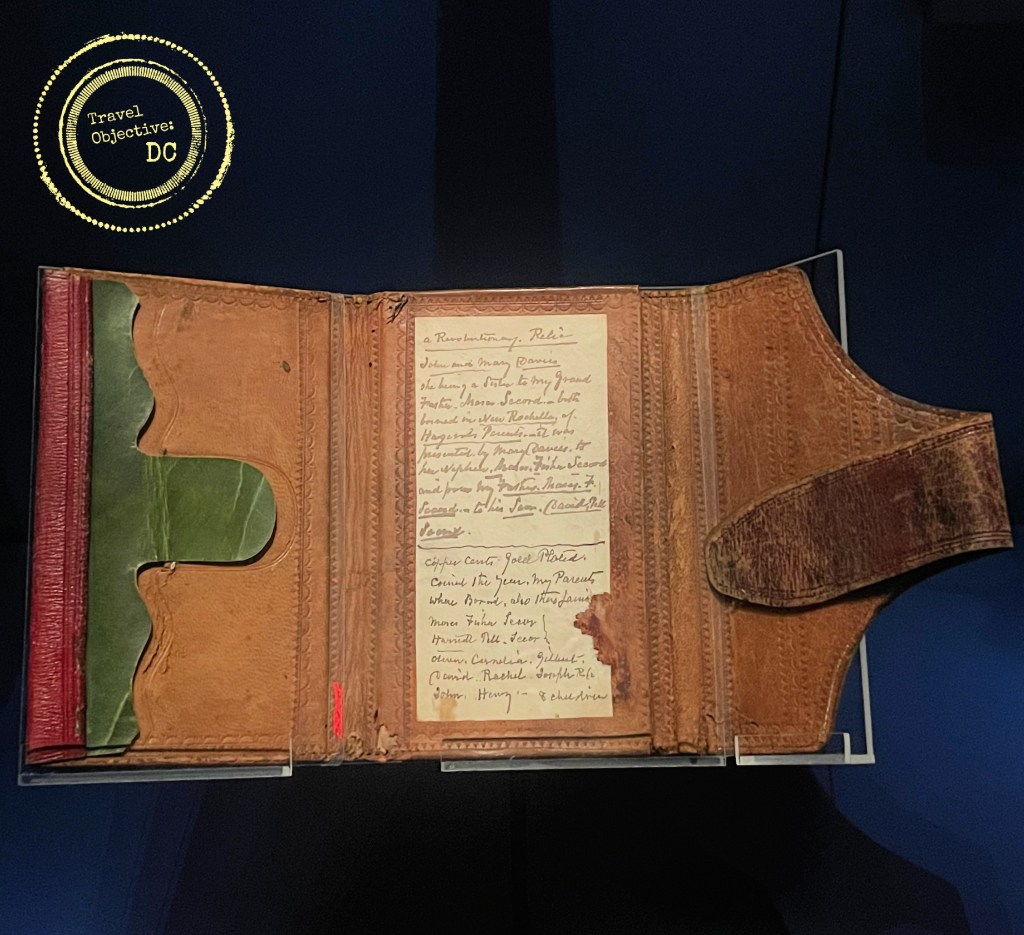
A notebook belonging to British Major John Andre.

One of the more intriguing group of artifacts are a display of powder horns. These hollowed-out animal horns were essential kit for 18th century soldiers, allowing them to quickly add gunpowder to the flashpans of their flintlock muskets.  Soldiers often decorated their powder horns or used them to record important dates or locations.

Accompanying the display is a video screen where digitized images of the complete powder horns can be viewed by visitors to more clearly see the intricate designs. Information about the original owner is also available. The richly decorated powder horns remind us these early soldiers were more than faded names on yellowed muster rolls, but real people fighting for something they believed in. 

A powder horn belonging to Private John Bond of Massashusetts.

A powder horn belonging to Private John Bond of Massachusetts. Bond enlisted in the Continental Army on July 4, 1775 and served for five years. He fought at the Battle of Bennington in 1777.

Also included in the exhibit are several very detailed cast figures representing specific individuals who served with the Continental Army. There is southern aristocrat, a Native American tribal chief, even a married couple who served together. They add an important human element to the exhibit’s interesting array of artifacts, well-designed graphics and use of technology.

Continental Army soldiers met many struggles during their service. Sadly, they encountered more upon returning home.

At the end of the exhibit is a collection of documentation which mark the beginning of the process well known to today’s veterans and their families, applying for benefits.  At the end of the war, many soldiers went home with promissory notes in lieu of their pay and they struggled economically. Legislation to provide pensions to veterans was slow in coming.

Congress did not pass legislation providing pensions to common soldiers until 1818, thirty-five years after the end of the Revolutionary War. By this time, many veterans had died or lost important records that proved their service.  This display though shows pension applications and examples of the documents that Continental Army veterans or their survivors would provide, such as muster roles, discharge papers, and pay records.

The discharge document of Drummer Benjamin Loring of the 2nd New York Artillery.

Discharge document of Drummer Benjamin Loring

Call to Arms artfully tells the story of the Continental Army, with its wonderful artifacts and state of the art technology. It reminds us of an important lesson first demonstrated by the Continental Army and continued in today’s United States Army.

George Washington reflected on it in his farewell message to his troops as he wrote: Who that was not a witness would imagine … that Men who came from different parts of the Continent … would become but one patriotic band of Brothers.

Washington well understood the unity forged among his soldiers was crucial for achieving their shared goal of victory.

250 years later, it is still a lesson to remember.

* * *

Route Recon

Call to Arms is on display at the National Musuem of the United States Army until June 2027. The musuem is open daily from 9:00 AM – 5:00 PM except on Christmas Day. Visit the museum’s website for free entry tickets.

The musuem is located in a publically accessible portion of Fort Belvoir, Virginia. The museum address is 1775 Liberty Drive, Fort Belvoir, VA 22060, but be aware not all GPS systems recognize the Museum’s street address.

You can download a map with directions here.

Every Soldier Has A Story At The National Museum of the US Army

Levi Gassett enlisted in the Northborough Minutemen at age 28 in April 1775. He answered the alarm on April 19 for Lexington and Concord, and would serve through the summer and fall in the American colonists’ siege of Boston. While on Dorchester Heights, an area of Boston on high ground with views of the harbor, Gassett took time to personalize his powder horn. He inscribed the date, the name Dorchester, made reference to the war and engraved pictures of trees and soldiers, leaving a short and very personal record of his service. His powder horn is now one of hundreds of artifacts on display at the National Museum of the United States Army that reveal intriguing stories of what it means to be an American soldier.   

The powder horn of Levi Gassett

Every soldier has a story is more than just a slogan here. Telling the stories of American soldiers, such as Sergeant Gassett, is the purpose, the reason, the rationale for this museum. It is a hallmark of how the museum goes about its mission, spread through eleven galleries over three floors.

The Army currently operates many museums in various locations on Army facilities around the world. Indeed, preserving its history has been an Army mission since 1814 when Congress passed a law directing both the Army and the Navy to “provide for the collection and preservation of flags, standards and colours…”.

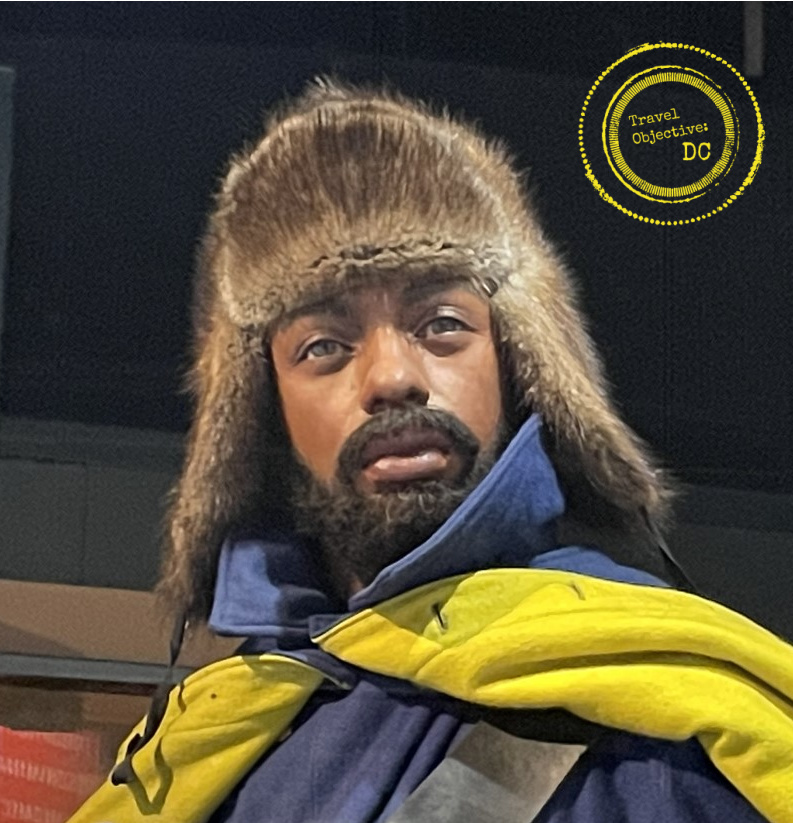
A casting of a Buffalo Soldier, a sergeant from the 9th United States Cavalry Regiment. The faces and the hands for the castings were made from the likenesses of modern day US Army soldiers.

But this museum, sitting south of Washington, DC on Fort Belvoir, Virginia, is unique. While other Army museums preserve and convey the history of particular units, branches, posts or portions of the Army, this is the first museum to take a whole-of-Army approach and comprehensively tell some of the stories of the 30 million men and women who have donned the uniform of the U.S. Army, while also recognizing their service and sacrifices.  

Upon entering the museum, the black granite Campaign Wall dominates the gleaming white two-story entrance hall. Along the wall are listed the 191 separate campaigns that the U.S. Army has participated in since 1775. Across the ceiling are rows of colored glass panels depicting campaign ribbons represented on the Campaign Wall. Across the floor is a 21-foot wide inlaid seal of the U.S. Army.

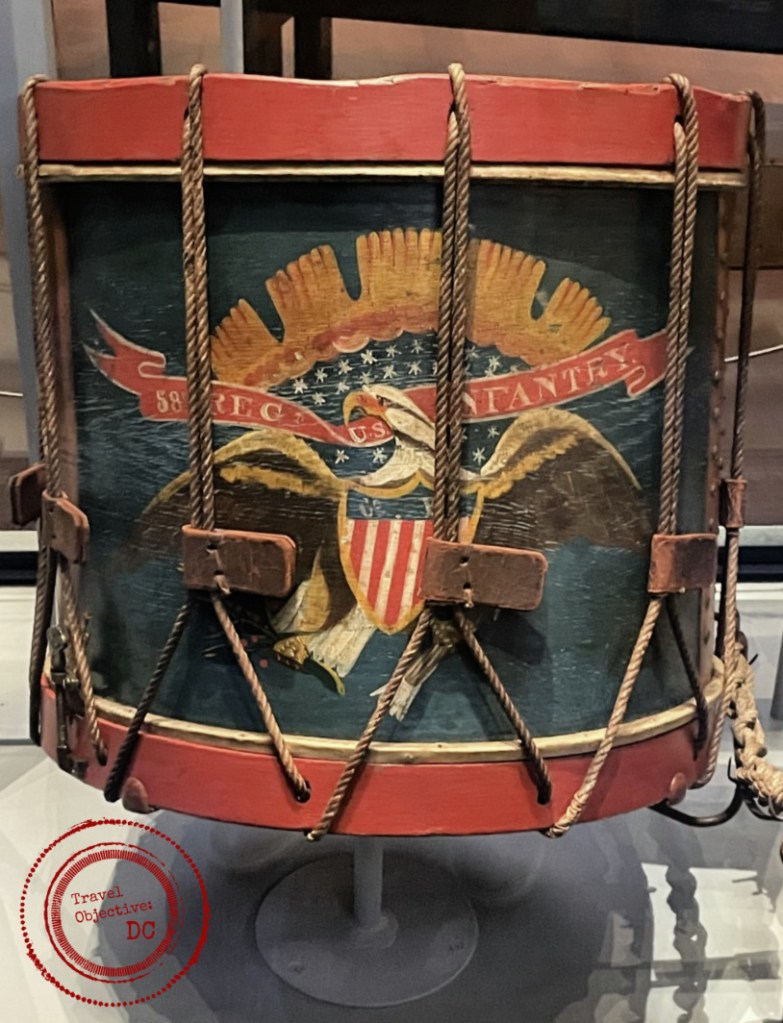
A Civil War-era snare drum used to keep cadence as soldiers marched and relay commands.

From the Entrance Hall a corridor leads to the first floor galleries, where seven-foot tall steel pylons begin telling soldier stories. The pylons are all inscribed with a soldier’s name, portrait, and a brief account of their service in their own words. They represent all types of soldiers from all walks of life throughout the Army’s history. They greet the visitor, almost like an honor guard in formation, presenting themselves for inspection.

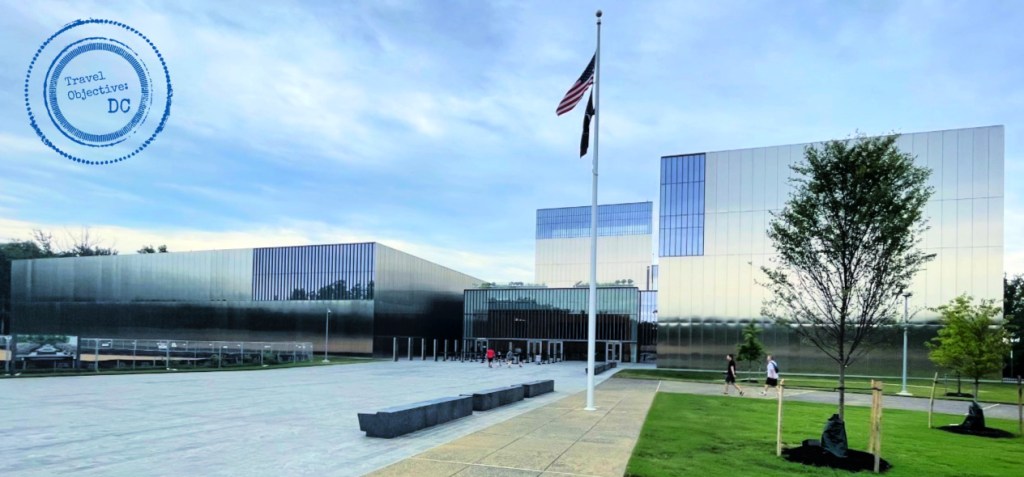
Entrance Hall of the National Museum of the United States Army at Fort Belvoir, Virginia

The corridor opens up to the Army Concourse which provides access to the seven first-floor galleries. Six of the seven are referred to as the Fighting for the Nation* galleries. These galleries describe how the Army has evolved through the experiences of individual soldiers, expanding to fight major conflicts, adapting new technologies and responding to or sometimes leading changes found across America. The seventh gallery is entitled The Army and Society, which illustrates the interactions between the Army and the broader American civilian population and its culture.

To complete the galleries, museum planners, curators, and designers scoured through the 580,000 available artifacts from the Army’s 247+ year history and selected approximately 1,400, which were then integrated with authentically detailed reproductions, maps, dioramas, life-like cast figures and other vestiges of Army life to produce some very eye-catching multi-media displays.

Electronic map of the General Defense Plan for Western Europe from the Cold War

The artifacts are not just weapons and uniforms, although there are many of those, but other objects such as musical instruments, mess kits, radios, surgical tools, books and other routine articles that were part of soldier experiences. A display found in most galleries is entitled A Soldier’s Load, which exhibits the gear, weapons and personal items a typical soldier would have used or carried through each conflict. Museum staff will periodically set up displays with reproductions, describing the equipment and allowing visitors to handle the items for themselves.

Cobra King, an M4 Sherman Tank, led the armored column which broke through German lines and relieved the 101st Airborne Division at Bastogne, Belgium on December 26, 1944 during the Battle of the Bulge.

Large artifacts, such as restored cannons, tanks, helicopters and jeeps are present as well. Taken in total, the artifacts provide a picture of what life was like for soldiers of all ranks and provide compelling context for the soldiers’ stories.

On the second and third floors are galleries devoted to rotating exhibits. One of these galleries is currently dedicated to the experiences of the Nisei Soldiers, the first generation of Japanese-American soldiers who fought valiantly during World War II.  Initially prevented from serving because of their Japanese origins, young Japanese-American men and women responded overwhelmingly once authorized to join the military. In 2010, Congress recognized the contributions of the Nisei, awarding them the Congressional Gold Medal for their outstanding achievements and service to the United States.

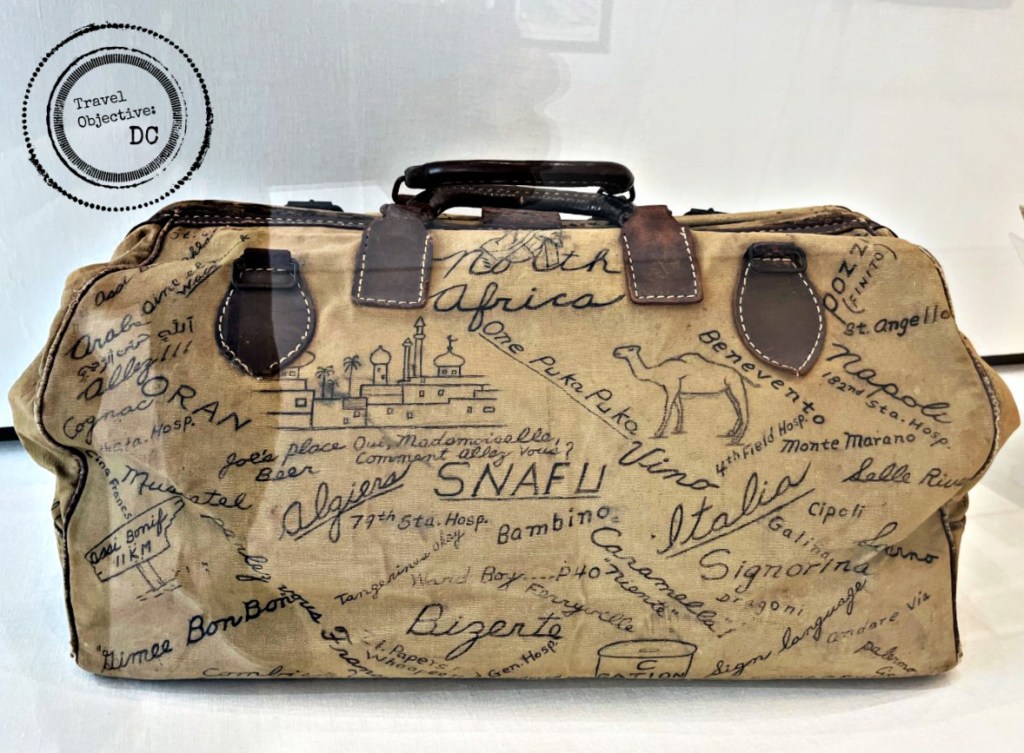
The travel bag owned by Sergeant Gary Uchida, a Nisea soldier of the 100th Infantry Battalion. He recorded his travels around Europe and North Africa on the bag.

A unique mixed-use space on the third floor is devoted to a permanent exhibit about the Medal of Honor, the nation’s highest military award. The display examines the Army version of the medal (the Navy and Air Force have their own versions), the history of the decoration and the circumstances under which it is awarded. Adjoining the exhibit space is a large, outdoor garden with a granite wall bearing the names of all the soldiers who have been awarded the Medal. Overlooking the museum’s grounds, the garden is a serene place to consider not only the selflessness and sacrifices of the Medal of Honor awardees, but on all of the many stories told throughout the Museum.

The Experiential Learning Center (ELC) allows visitors of all ages to experience some of the current technical skills required for today’s solders. Visitors in organized groups can then test these skills in a simulated response to a humanitarian crisis. A portion of the ELC especially designed for the younger visitors called Fort Discover explains about Army life by following the adventures of two Army mules, Spartacus and Buckshot. 

A diorama of modern day U.S. Army Brigade’s Tactical Operations Center

Additionally, the Museum hosts book talks, battle briefs, field trips and staff rides with authors and other speakers from the military history community.  Options for virtual participation in many of these events are also included.

Sitting on a quiet corner of Fort Belvoir, the Museum’s highly reflective steel exterior is meant to represent the Army’s strength and how the Army reflects American society. American society certainly has its controversies, and the Army does too. Descriptions of Mai Lai and Wounded Knee massacres, and what happened there, are depicted at the Museum. Some critics may argue they are not addressed comprehensively enough. However, they are included and invite further discussion among museum visitors as well as through the Museum’s educational program.

Officer’s gauntlets belonging to Colonel Joshua Lawrence Chamberlain, who commanded the 20th Maine Volunteer Infantry during the Civil War.

Museums serve many purposes. They inform, entertain, and educate their visitors. The National Museum of the US Army does all these things. It would be hard for even the most casual visitor to leave the museum without even a slightly better understanding of what it means to be an American soldier. But by telling soldiers’ stories and artfully displaying their artifacts, the Museum is also a place for reflection about service and sacrifice. It is a place for connection, to friends or to relatives from the present or past generations. It can also be a place to resolve, to reconcile and to heal.

If you have an interest in military history or have a personal connection to the Army–but especially if you do not–the National Museum of the US Army is well worth a visit.

The National Museum of the United States Army

* * *

Visit the National Museum of the U.S. Army website for more information about the museum and its educational programs.

Are you a current US Army soldier or veteran who would like to share stories about your experiences? The Army Historical Foundation established the Registry of the American Soldier to gather the stories and experiences of the entire Army community. More information is available at armyhistory.org/the-registries

Route Recon

The National Museum of the United States Army is located on a publicly accessible portion of Fort Belvoir, Virginia. The address is 1775 Liberty Drive, Fort Belvoir, VA 22060. (Please note that not all GPS systems may recognize the address. The Museum’s GPS coordinates are 38.7242806/-77.177874)

By Car:

If driving from Washington (traveling south)

Follow Interstate 395 South toward Richmond, VA. Merge onto Interstate 95 South. Take exit 166A toward VA-286 South/Fairfax County Parkway. Continue for 2.5 miles and turn left onto Liberty Drive.

If driving from Baltimore, Maryland (traveling south)

Follow MD-295 South, Baltimore-Washington Parkway. Exit onto Interstate 495 South/Interstate 95 South toward Richmond Va./Andrews Air Force Base. Follow signs for Interstate 95 South toward Richmond, VA. Take exit 166A toward VA-286 South/Fairfax County Parkway. Continue for 2.5 miles and turn left onto Liberty Drive.

If driving from Richmond, Virginia (traveling north)

Follow Interstate 95 North toward Washington. Take exit 166A toward VA-286 South/Fairfax County Parkway. Continue for 2.5 miles and turn left onto Liberty Drive.

By Metro:

On weekdays – The Franconia-Springfield Metro Station, on the blue line, is the closest station to the Museum. From Franconia-Springfield Metro Station, take Fairfax County Connector Bus Route 334, which includes a stop at the Museum. Please note: Bus Route 334 is available Monday-Friday only and does not currently operate on the weekends.

On weekends – The Huntington Metro Station, on the yellow line, is the next closest station to the Museum. From Huntington Metro Station, take Fairfax County Connector Bus Route 171, which includes a stop at the Museum. Please note: Bus Route 171 only stops at the Museum on the weekends.

By Bus: The Fairfax Connector bus service travels to the Museum via two different routes:
Route 171 : Weekends ONLY
Route 334: Monday – Friday ONLY
Please check the Fairfax County Website for the most current bus schedules.

Mess Call

The Army Historical Society manages the Museum Café, which offers a selection of grab-and-go items, boxed lunches and grilled entrees along with beverages and other snacks. Museum visitors can order through a quick access app or via the web. Café hours are 9:00 AM to 2:00 PM.

* Fighting for the Nation Galleries

Founding the Nation – Traces the Army’s origins from the earliest Colonial militias, through the formation of the Continental Army and into the War of 1812.  

Preserving the Nation – Considers the divided loyalties of Army soldiers and officers in the earliest days of the conflict to how the Army would expand, fight and win the Civil War. 

Nation Overseas – Introduces the early clashes of the 20th Century where the Army first deployed beyond the United States and the how the Army prepared for and fought in World War I.

Global War – Examines how the Army would quickly mobilize and fight to win a two front war against fascism.

Cold War – Discusses the wars in Korea, Viet Nam and the defense of Western Europe from the threat of invasion by the Soviet Union.

Changing World – Recounts the end of the Soviet Union, the Persian Gulf War, the attacks of September 11, and the wars in Iraq and Afghanistan.