They Answered the Call to Arms

As the smoke cleared at Lexington and Concord on that fateful April day in 1775, supporters of American independence relished in the successes of the brave militia forces. 

But they well understood the cause for independence would take a well-trained regular army capable of defeating the British on an open battlefield. Furthermore, this army needed to represent all of America and not dominated by a single colony or region. 

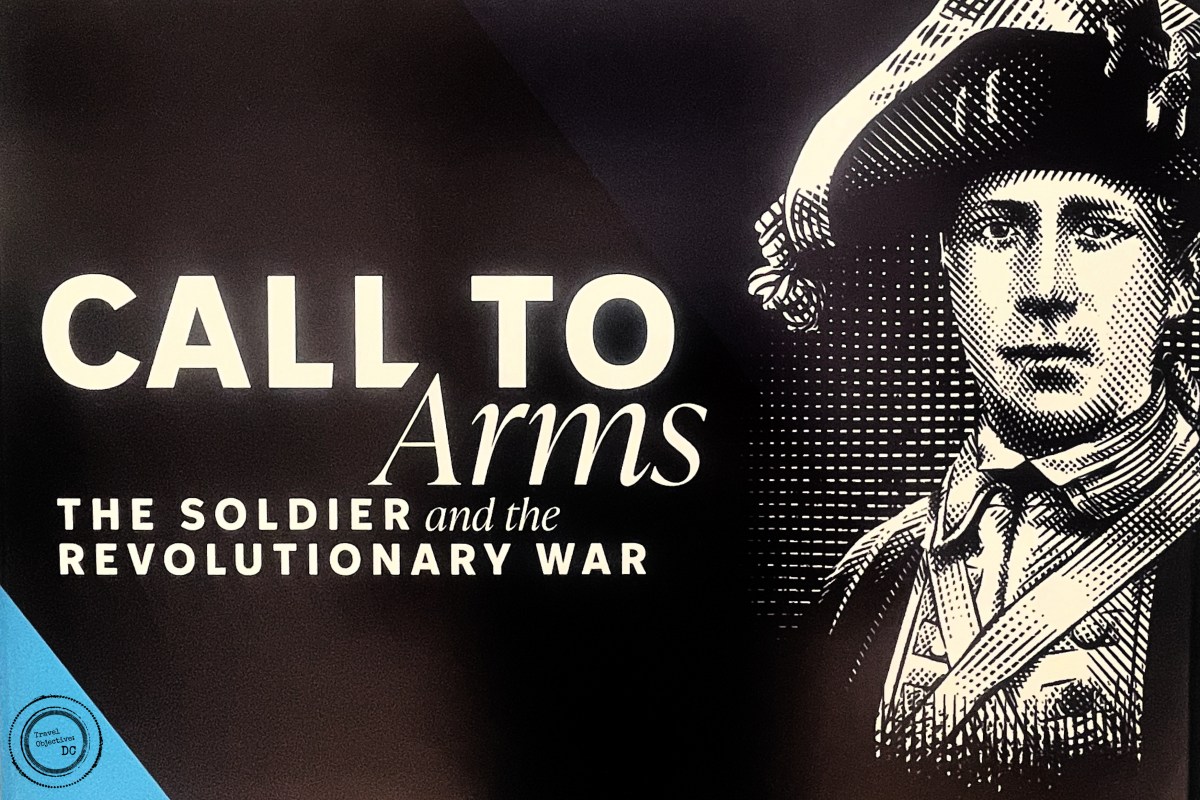
On June 14, 1775, the Continental Congress established the Continental Army and appointed George Washington as its commander in chief. In recognition of the Army’s 250th Anniversary, the National Museum of the US Army, at Fort Belvoir, Virginia has opened a special exhibit entitled Call to Arms: The Soldier and the Revolutionary War. 

A pair of epilettes belonging to Jeddidiah Huntington of Connecticut.

This pair of major general epilettes belonged to Jeddidiah Huntington of Connecticut. Huntington had encouraged George Washington to adopt this design for general officers’ epilettes.

To tell their stories, museum curators sought and received an abundance of unique and important Revolutionary War era pieces from state governments, private collectors and international organizations. The resulting assemblage of weapons, uniforms, colors and everyday articles includes items that have not before been on public display in the United States. 

The 5,000 square foot exhibit is laid out in roughly chronological order. Two innovative topographical battle maps–one of Bunker Hill, the other of Yorktown–bookend the exhibit representing the first and the final battles for the Continental Army.  Similar to the twinkle light maps of the past, these three dimensional representations depict the operational plans and troop movements of each battle, accompanied by slick videos providing additional context. 

Other battles and campaigns are briefly described with corresponding artifacts, maps and illustrations to connect the visitor to the period. The early struggles in New York and Pennsylvania, the successes in New Jersey, the turning point at Saratoga and the Southern Campaign are put in context and placed in a timeline. Videos enhance these displays describing aspects of 18th century warfare, such as weapons and battlefield tactics.

These displays with brief summaries are a reminder that these battles were fought by soldiers from across the new country. In an era when few people traveled very far from their homes, New Englanders fought in South Carolina and Virginians fought in Pennsylvania. The seeds of our national identity were planted on the battlefields of the Revolutionary War.

A British 3-Pounder gun tube captured at the Battle of Saratoga

A British 3-Pounder gun tube captured at the Battle of Saratoga

Those interested in 18th century weaponry will not be disappointed in their visit. There are many splendid muskets, rifles, carbines, pistols, swords and bayonets. However, the real focus of Call to Arms is the lives of Continental Army soldiers, their motivations, successes, experiences and how they emerged as an effective fighting force.

The lot of a soldier in the Continental Army was a difficult one. Living conditions were challenging, pay was inconsistent, rations and supplies were usually in short supply. These rigors of military life were shared by soldiers from every state.

Still, Americans from the north and south, coastal cities and frontier homesteads answered the call. Then, as now, soldiers enlisted for different reasons. They fought for independence, but also for their communities, comradery, pay, a sense of adventure or because other family members or friends also enlisted.

A plaster casting of Anna Maria Lane, wife of Private John Lane.

A plaster casting of Anna Maria Lane, wife of Private John Lane. She followed her husband to camp when he enlisted in the Continental Army in 1776. She took up arms herself and was wounded at the Battle of Germantown in 1777.

Over the eight years of Revolutionary War, about 231,000 men (and some women) served in the Continental Army.  Enlistments would ebb and flow based on any number of factors, such as the time of year, local economic conditions and success of the army in the field. The maximum size of the army at any one time was about 48,000 troops.

A portion of the exhibit entitled Camp Life explores the life of the Continental Army soldier away from the battlefield. What soldiers ate, where they lived and their daily activities, such as drill, guard duty and the building of fortifications, are all examined.

A notebook belonging to British Major John Andre. His capture in 1780 led to the identification of General Benedict Arnold as a traitor.
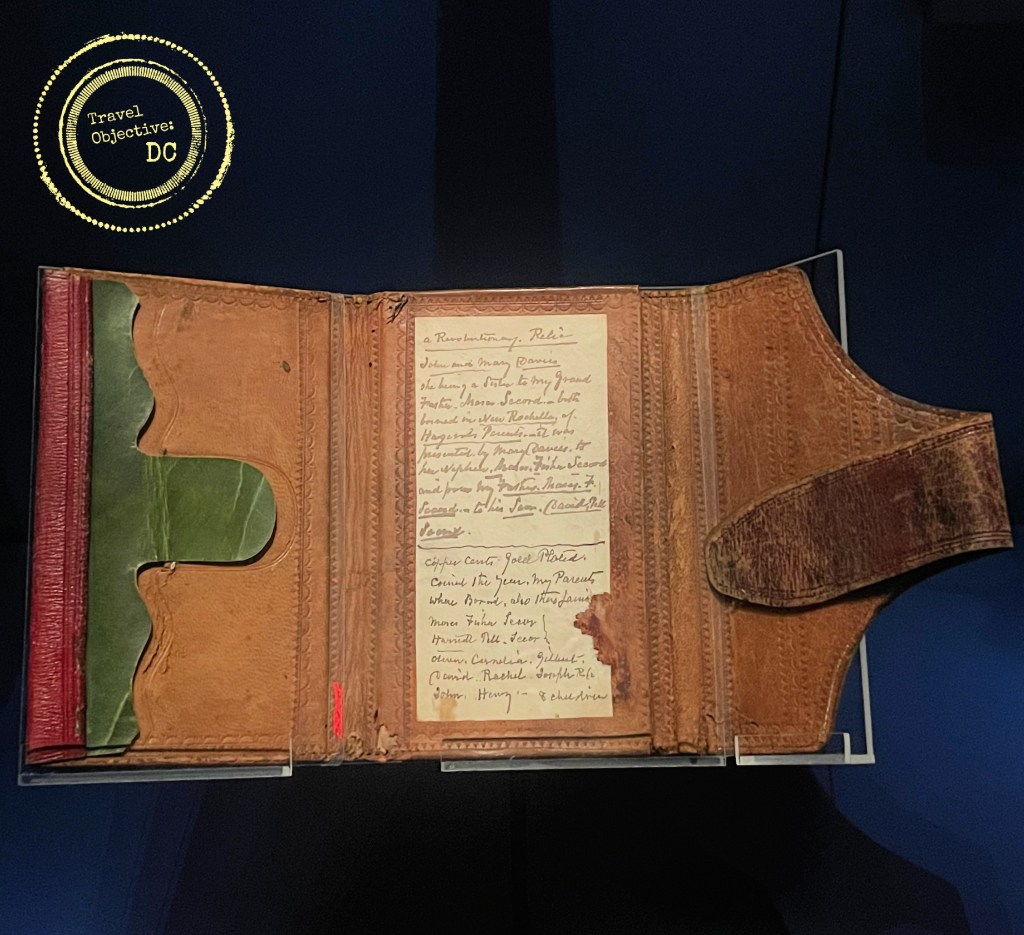
A notebook belonging to British Major John Andre.

One of the more intriguing group of artifacts are a display of powder horns. These hollowed-out animal horns were essential kit for 18th century soldiers, allowing them to quickly add gunpowder to the flashpans of their flintlock muskets.  Soldiers often decorated their powder horns or used them to record important dates or locations.

Accompanying the display is a video screen where digitized images of the complete powder horns can be viewed by visitors to more clearly see the intricate designs. Information about the original owner is also available. The richly decorated powder horns remind us these early soldiers were more than faded names on yellowed muster rolls, but real people fighting for something they believed in. 

A powder horn belonging to Private John Bond of Massashusetts.

A powder horn belonging to Private John Bond of Massachusetts. Bond enlisted in the Continental Army on July 4, 1775 and served for five years. He fought at the Battle of Bennington in 1777.

Also included in the exhibit are several very detailed cast figures representing specific individuals who served with the Continental Army. There is southern aristocrat, a Native American tribal chief, even a married couple who served together. They add an important human element to the exhibit’s interesting array of artifacts, well-designed graphics and use of technology.

Continental Army soldiers met many struggles during their service. Sadly, they encountered more upon returning home.

At the end of the exhibit is a collection of documentation which mark the beginning of the process well known to today’s veterans and their families, applying for benefits.  At the end of the war, many soldiers went home with promissory notes in lieu of their pay and they struggled economically. Legislation to provide pensions to veterans was slow in coming.

Congress did not pass legislation providing pensions to common soldiers until 1818, thirty-five years after the end of the Revolutionary War. By this time, many veterans had died or lost important records that proved their service.  This display though shows pension applications and examples of the documents that Continental Army veterans or their survivors would provide, such as muster roles, discharge papers, and pay records.

The discharge document of Drummer Benjamin Loring of the 2nd New York Artillery.

Discharge document of Drummer Benjamin Loring

Call to Arms artfully tells the story of the Continental Army, with its wonderful artifacts and state of the art technology. It reminds us of an important lesson first demonstrated by the Continental Army and continued in today’s United States Army.

George Washington reflected on it in his farewell message to his troops as he wrote: Who that was not a witness would imagine … that Men who came from different parts of the Continent … would become but one patriotic band of Brothers.

Washington well understood the unity forged among his soldiers was crucial for achieving their shared goal of victory.

250 years later, it is still a lesson to remember.

* * *

Route Recon

Call to Arms is on display at the National Musuem of the United States Army until June 2027. The musuem is open daily from 9:00 AM – 5:00 PM except on Christmas Day. Visit the museum’s website for free entry tickets.

The musuem is located in a publically accessible portion of Fort Belvoir, Virginia. The museum address is 1775 Liberty Drive, Fort Belvoir, VA 22060, but be aware not all GPS systems recognize the Museum’s street address.

You can download a map with directions here.

Mount Vernon: An Admiral’s Namesake, A General’s Home

First in war, first in peace, first in the hearts of his countrymen…

So wrote General “Light Horse Harry” Lee in tribute to his colleague George Washington. And this is how George Washington is usually thought of: lofty, dignified, and somewhat remote.

Flag
A flag with 13 six-pointed stars is said to be George Washington’s personal standard as Commander-in-Chief of the Continental Army. The flag and its bearer would follow General Washington wherever he would go.

Folklore repeats the familiar stories of Washington as Commander-in-Chief of the Continental Army, heroic and virtuous crossing the Delaware, valiantly leading his troops at freezing Valley Forge and in the final victory at Yorktown. As our country’s first president, he set the tenor and established customs still adhered to today.

But a visit to his home at Mount Vernon in Alexandria, Virginia portrays George Washington the man–rather than the myth–with insight into his roles as a planter, businessman and private citizen as well as the military and political leader.

George Washington loved his home at Mount Vernon and it is easy to see why. The graceful manor house, symmetrically arrayed outbuildings, tended gardens, rolling landscape and beautiful vistas of the Potomac River would appeal to any founding father (or mother!)

MtV West
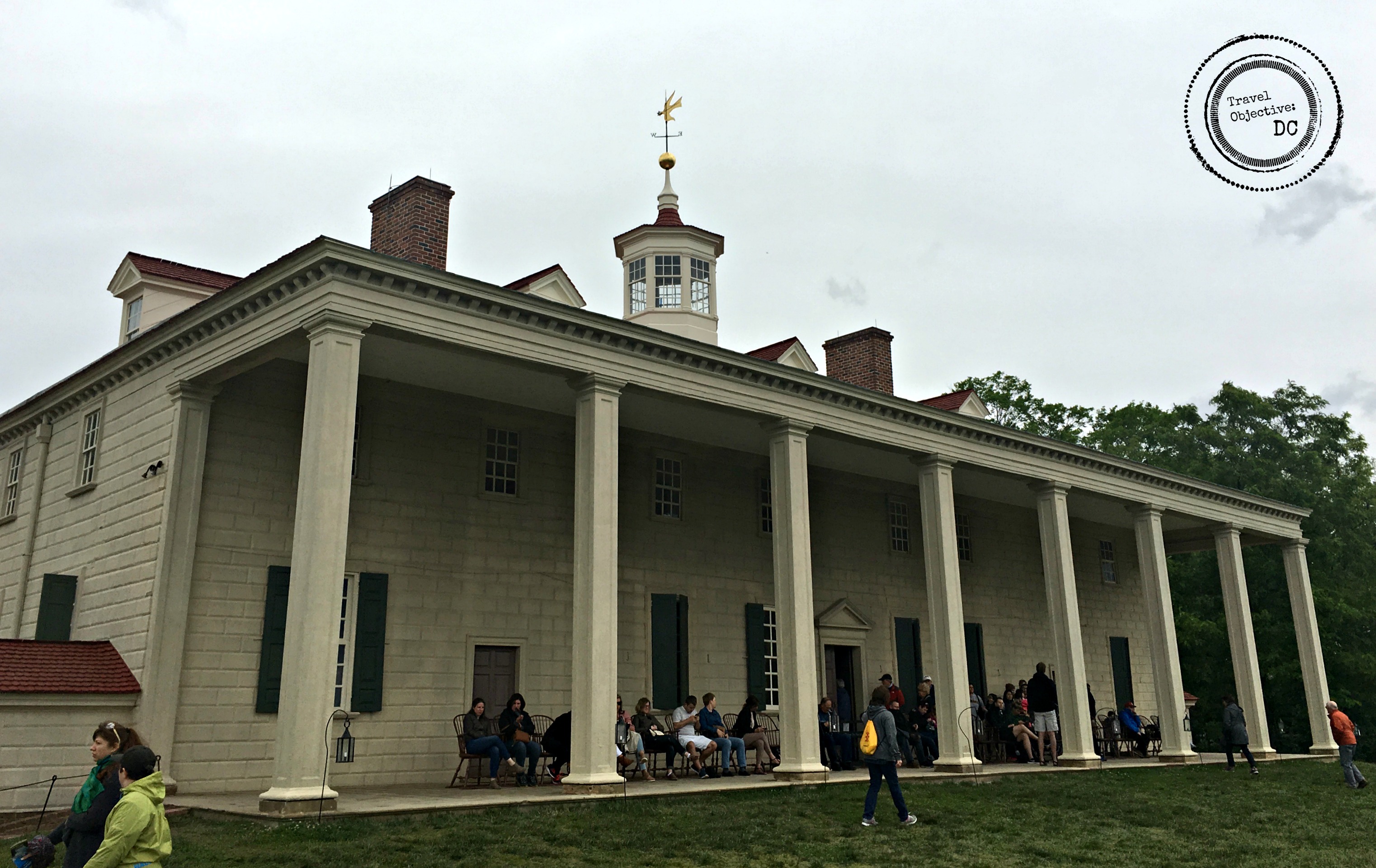
The historic mansion’s two story piazza facing the Potomac River to the east.

The Washington family had owned the land comprising Mount Vernon since 1674, when George Washington’s great-grandfather, John, was granted a right to the property. It would pass to George’s father Augustine in 1726. George’s half-brother Lawrence inherited the property in 1743. It was Lawrence who gave it the name Mount Vernon after his commanding officer in the Royal Navy, Vice Admiral Edward Vernon.

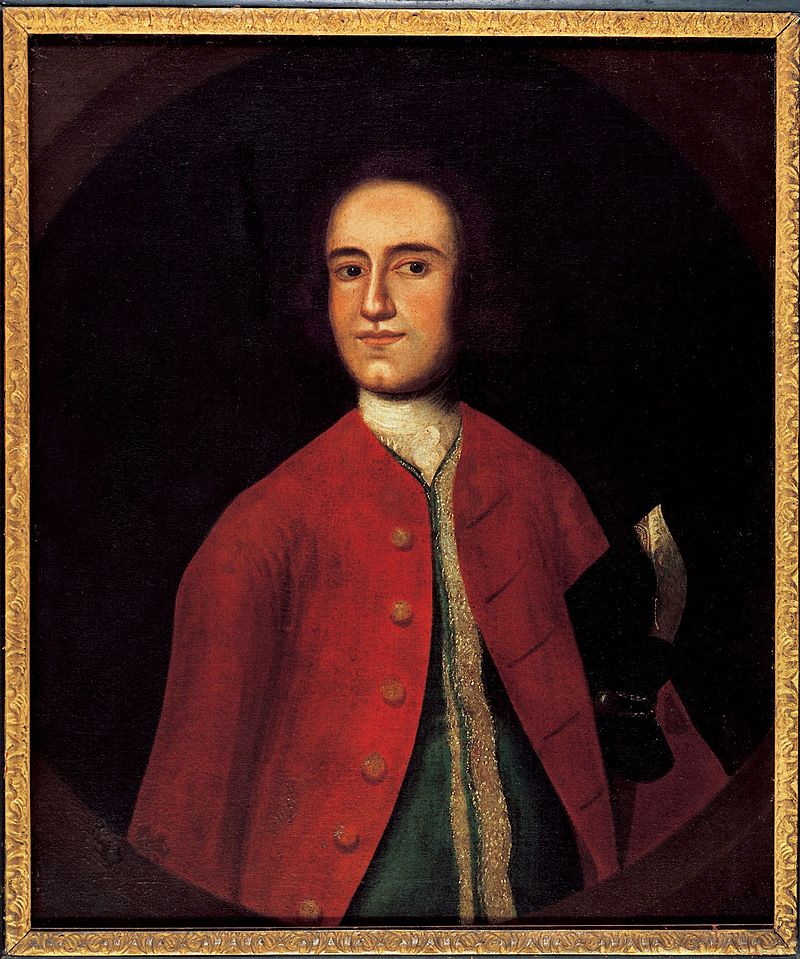
Lawrence_Washington
Lawrence Washington, circa 1738. After their father died in 1743, Lawrence became a mentor and close friend to his younger half-brother, guiding him toward a military career.

Lawrence served under Vernon’s command in an attack on a Spanish fortress in present day Columbia in 1741. During the engagement, Lawrence commanded a regiment of volunteers from Virginia. It was the first time a regiment of Americans fought as a component of the British Regular Army outside of North America. George would command the same regiment from 1755 through 1758, when he resigned and moved to Mount Vernon. He would inherit Mount Vernon in 1761 upon the death of Lawrence’s widow.

Through his adult life, George Washington was devoted to Mount Vernon’s development and commercial growth. As a plantation, Washington relied on income from the plantation’s operations to support himself and his family.

Today’s Mount Vernon is comprised of approximately 500 acres, but in Washington’s time his estate occupied close to 8,000 acres, organized into four farms producing a variety of agricultural products for resale. Washington also raised livestock, milled grains, fished commercially and distilled whiskey. He was an entrepreneur, not afraid to take risks or invest in new technologies.

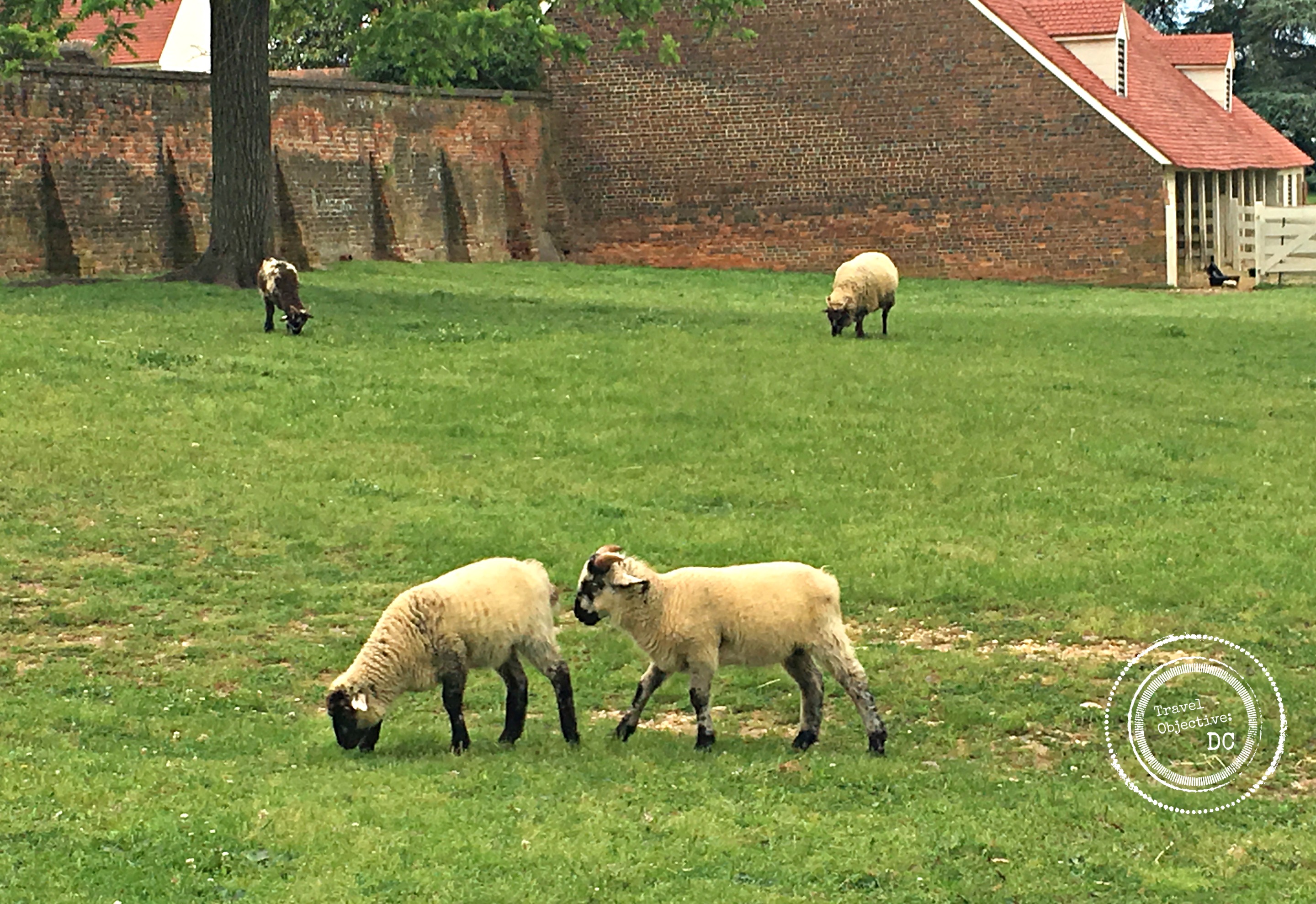
Sheep
Washington was an enthusiastic breeder of animals. Many of the same breeds of animals, such as these sheep, can be found at Mount Vernon today.

A walk through the manor house is the centerpiece of a visit to Mount Vernon. Through the years, Washington fashioned an ennobled mansion from the more modest farm house his father built, befitting his stature as a wealthy Virginia planter. Though he made improvements over time, Washington’s keen eye and attention to detail made the property, its buildings and landscaping seem consistent and whole. Today’s manor house has been carefully restored to resemble how it looked in 1799, the year Washington died.

MtV West copy
The Manor House at Mount Vernon facing west. The door is slightly off center to accommodate for a staircase added by Washington in 1758.

The tour enters through the “New Room”, the last room added to the house and completed around 1787. This large, double-story room, papered and painted in elegant and fashionable greens, was meant to impress Washington’s guests.

“When it was completed”, the docent explains, “most houses in Virginia could fit into this room.”

The New Room served as a reception room, ballroom, and dining room, as well as a studio for portrait sitting. The room’s decorations reflect Washington’s love of the land. Farm instruments decorate the mantel piece, molding and plaster ceiling while paintings of pastoral river scenes dot the walls.

Cuppola
Washington added the cupola to help draw hot air out the mansion in the summer time. Note the dove shaped weathervane, representing peace, atop the cupola.

On the opposite side of the house is Washington’s study. Unlike the New Room, this was a private space where Washington would manage his personal, public and business affairs. Washington brought the chair from his presidential office back to Mount Vernon and installed it here (where it is now on display). The room also houses a portion of his library; Washington was self-taught, and a voracious reader. His library collection reflected his many interests: agriculture, political philosophy, government, and military history, to name a few.

The Washingtons maintained six bedrooms at Mount Vernon, with additional attic rooms available as well. The Washingtons were accustomed to hosting many house guests and even more daily visitors. Washington openly welcome them. In a letter to his farm manager Washington wrote: “I have no objection to any sober or orderly person’s gratifying their curiosity in viewing the buildings, Gardens, & ca. about Mount Vernon.”

The year after his presidency he and Martha received some 600 guests. Not all would stay in the mansion. This required a certain social standing or letter of introduction from a friend, relative or well-known acquaintance. But all visitors were provided with Martha’s trademark hospitality and overnight accommodations somewhere on the grounds, if necessary.

Kitchen
Mount Vernon’s kitchen is the closest outbuilding to the mansion. The kitchen was kept separate to limit the impact of heat and the threat of fire in the house.

The Mount Vernon Ladies Association, which has owned and maintained Mount Vernon for over 150 years, opened the Donald Reynolds Museum and Education Center in 2006 for a more in depth examination of Washington’s life. Here Washington moves beyond the two dimensional figure read about in history books.

The museum skillfully employs modern display technologies with life sized dioramas, professionally produced films, and over 700 artifacts to tell Washington’s story as a surveyor, military officer, husband, stepfather, grandfather, slave owner and president. His brief retirement and untimely death at Mount Vernon are also portrayed.

Valley Forge
This statue of Washington at Valley Forge is part of a special research project to present Washington’s appearance as realistically as possible. Scientists and researchers examined artifacts, archives, and artistic renderings in order to depict Washington at three different ages: as a young man, at age 45 at Valley Forge, and as he assumed the Presidency.

If your visit to Washington, DC involves learning more about George Washington, then time at Mount Vernon will make your trip complete. Join the legions of guests who have visited Mount Vernon over the centuries. Walk the grounds, tour the mansion, explore the many exhibits or take part in some of the special events hosted each year. After all, General Washington would want you to!

* * *

Route Recon:

Mount Vernon is open every day, although hours do vary by season. The estate is located at 3200 Mount Vernon Memorial Highway, Mount Vernon, VA 22121, approximately 15 miles south of Washington, DC, at the end of the George Washington Memorial Parkway. Parking is free, but if you visit during a busy time, you may be directed to more remote overflow parking.

You can also reach Mount Vernon by public transportation. Take the Metro Yellow Line to Huntington. Exit downstairs to Huntington Avenue. Take a Fairfax Connector Bus #101 to Mount Vernon.

More information on the Fairfax Connector System can be found here.

Please note: Photography is not permitted in the mansion or the museum.

* * *

Mess Call:

There are two dining options at Mount Vernon. The Food Court offers a variety of sandwiches, pizza, salads, snacks, desserts and beverages. Breakfast is also available during the morning.

A more formal dining experience can be had at the Mount Vernon Inn Restaurant which provides sit-down meal service with a menu including both contemporary and colonial era dishes.

Both are located in the vicinity of the main entrance.