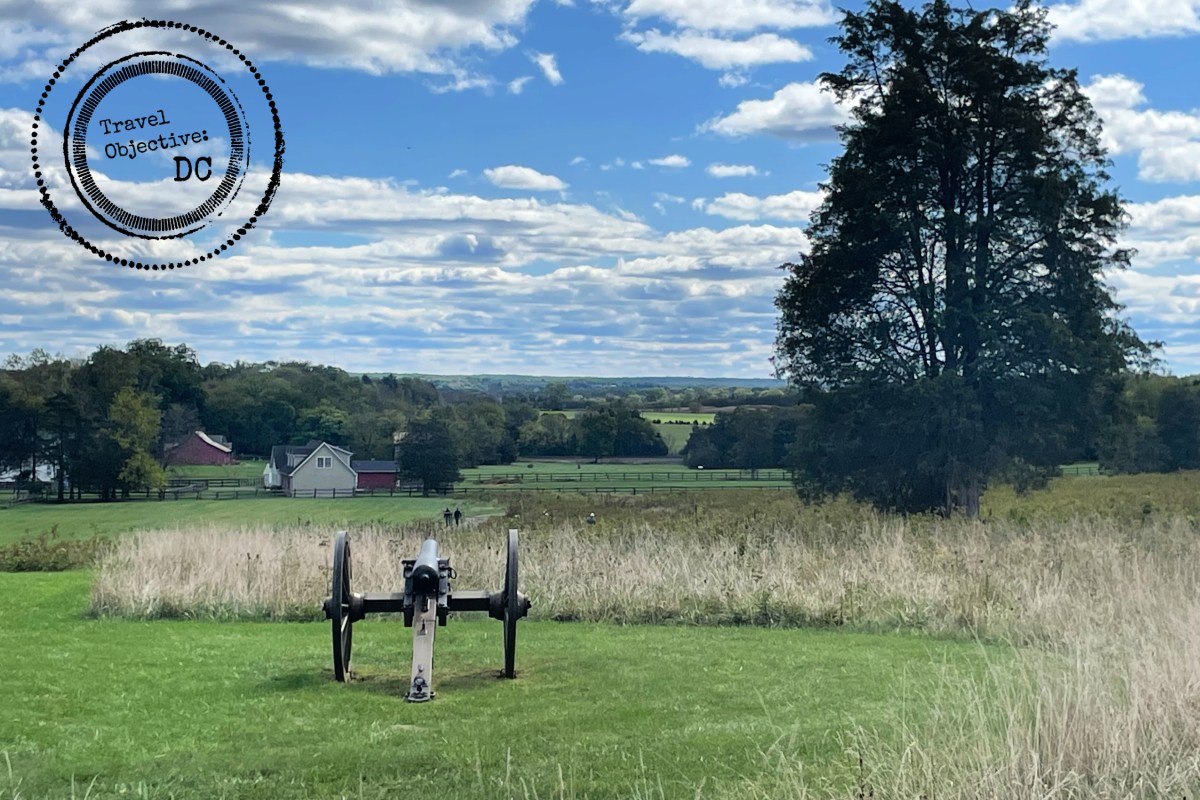
In Virginia, American Civil War history is never far away. Battlefields, cemeteries and monuments dot every part of the State. In some communities, population growth encroaches on these historic places and few have any Federal protection as do the battlefields of Manassas or the Wilderness.
In the 1980’s, development engulfed land in Fairfax County where the Battle of Chantilly was fought in August 1862. A small five acre portion of that battlefield was preserved and can be visited today as Ox Hill Battlefield Park in Fairfax, Virginia. Yet the potential loss of the entire battlefield spurred an organized movement of academics, historians, local governments and private citizens to conserve historic ground.
Bristoe Station Battlefield Heritage Park is a successful example of this important effort. The park is located in central Prince William County, Virginia, an exurb of Washington, DC, which has seen expansive growth over the past two decades.
Opened in 2007 after an agreement between a local real estate developer, the county and preservationists, the park’s 144 acres encompass rolling hills, open meadows, and stands of evergreen and hardwood trees. With its sweeping vistas and bucolic setting, a visitor might easily imagine themselves in the 1860’s.

A wooded section of the 1861-1862 Trail at Bristoe Station Battlefield Heritage Park in Prince William County, Virginia.
Railroad tracks border the park and the sounds of train whistles and rumbling railcars are frequent. Fittingly, it was the railroad that first led the northern and southern armies here. Two interpretive trails through the park tell the stories of the troop encampments and bloody engagements that distinguish the park as a historical site worthy of preservation.
The 1861-1862 Trail
I arrived at the park on a pleasant Sunday morning. A bright October sun powered its way through high, thin clouds. Only a handful of cars were in the parking lot, yet the trails were busy with joggers, bikers and dog walkers. I started my park tour on the aptly named 1861-1862 Trail. The 1.4 mile trail begins off the parking lot, then moves through some of the park’s wooded areas and grassy fields.
Interpretive signage is plentiful along the trails at Bristoe Station Heritage Park.

Along the trail, interpretive signs describe how after the First Battle of Bull Run in June 1861, rebel units established large bivouac areas around the town of Manassas Junction. Regiments from Alabama, Mississippi, North Carolina, Tennessee and Virginia all had camps in the vicinity of Bristoe Station.
Unfortunately, the sanitary conditions of the camps were poor and disease rampant, killing many soldiers. Burial details were constant and the graveyards designated by states as well as by regiments.

The cemetery of the 10th Alabama Infantry Regiment.
A short spur off the main trail leads to the cemetery of the 10th Alabama Infantry Regiment.
A small memorial stone and an interpretive sign mark the 10th Alabama’s cemetery in an open area, cleared of brush, under some tall deciduous trees. Early records indicate 82 soldiers may be buried here. While the graves of soldiers from other units are undoubtedly in the park, only the confines of this graveyard have been definitively identified.

Returning to the main trail from the final resting place of the 10th Alabama’s soldiers, I am led towards areas where portions of the Battle of Kettle Run were fought on August 27, 1862.
The battle was a prelude to the Second Battle of Manassas. In July 1862, Robert E. Lee had just defeated Union General George McClellan and his Army of the Potomac in a series of battles defending Richmond, Virginia. Now Lee was ready to lead an offensive campaign.
Lee ordered Major General Thomas “Stonewall” Jackson to march north and move around the Army of the Potomac’s right flank. Jackson moved towards Manassas Junction, an important transportation hub and Federal supply depot. As part of his plan, Jackson would cut the Union-held railroad lines at the lightly defended Bristoe Station.
Major General Thomas “Stonewall” Jackson

Bristoe Station was a stop on the Orange and Alexandria Railroad, which was an important link between the bustling port of Alexandria, Virginia and the settlements of the Shenandoah Valley.
Today’s railroad tracks run along the same ground as in the 1860’s. Modern tracks however, run on the surface of the ground, while in the 19th century, they ran through a narrow conduit dug into the ground.
At Bristoe Station, Jackson’s forces quickly overwhelmed a small contingent of Federal troops. The rebels sabotaged several railcars and left them crosswise on the track. Before departing for Manassas, Jackson ordered a division under Major General Richard Ewell to remain near Bristoe Station and guard against any further Union action.
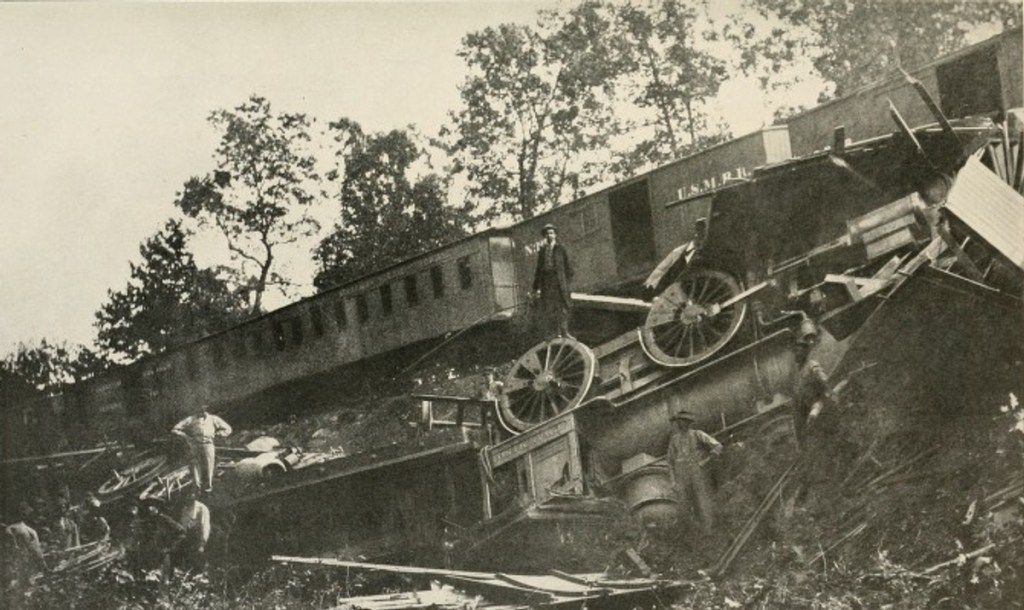
Train derailed by Confederate cavalry on August 26, 1862
-By Unknown author – File from The Photographic History of The Civil War in Ten Volumes: Volume Four, The Cavalry. The Review of Reviews Co., New York. 1911
Union division commander Major General Joe Hooker had been ordered to move along the rail lines and retake Bristoe Station. His division engaged Ewell’s in a costly battle that stretched from about 2:00 pm until dusk on August 27th.
The trail progresses through the open field where regiments from New Jersey, New York, and Pennsylvania engaged Georgians and Louisianans. The momentum switched sides several times through the afternoon. The small, but deadly engagement left 330 Union soldiers dead or wounded, while the Confederates suffered 176 casualties. Ewell had accomplished his mission of delaying Union troops. Having received orders from Jackson, he withdrew his forces after dark and and rejoined Jackson north of Manassas.
The 1861-1862 Trail crossed the field where the Battle of Kettle Run took place. The battle was the opening engagement of the Second Battle of Bull Run.

A little over a year later, these same two armies would return to Bristoe Station for a final engagement.
After the Battle of Gettysburg in July of 1863, both the Army of Northern Virginia and the Army of the Potomac returned to central Virginia. As the armies refitted, both sides sent significant forces to bolster counterpart armies in the Western Theater of the war. Knowing his enemy was not at full strength, Lee saw an opportunity to attack and defeat a diminished Union enemy. For five days, beginning on October 9, 1863, Robert E. Lee and his counterpart George Meade fought a series of engagements in Virginia’s Piedmont region. Each time Meade evaded Lee’s traps.
After several days of chasing Meade’s army, Lee’s Third Corps Commander Lieutenant General Ambrose Powell (A.P.) Hill identified a Union force at a distance and ordered three brigades to attack before the Yankees could once again evade him.
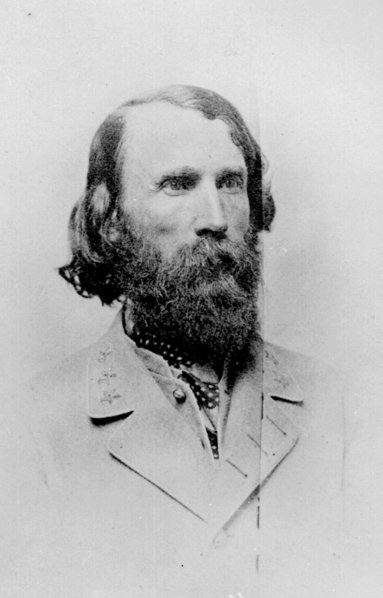
Lieutenant General Ambrose Powell (A.P.) Hill
The 1863 Trail
The second trail, dubbed The 1863 Trail, traces this final action at Bristoe Station on the afternoon of October 14, 1863. The 1.3 mile trail stretches over rolling fields onto a broad grassy slope where a North Carolina brigade commanded by Brigadier General John Cooke attacked the Union line positioned along the railroad tracks. Unfortunately for the Confederates, Hill ordered no reconnaissance mission and did not realize the strength of the Union force.
After a gallant charge, the brigade was engulfed by heavy artillery and musket fire from well positioned Union troops along the railroad embankment and they hastily retreated back up the slope.
Subsequent rebel reinforcements could not dislodge the Union line. Under cover of darkness, the Union troops slipped away for more fortified positions around Centreville, Virginia. Although the Southerners commanded the field, the battle had been costly. The Confederates lost 1,400 men who were killed, wounded or captured; men who could not be replaced. Union losses were around 300. Lee had lost his chance to strike an offensive blow against the Army of the Potomac.
“Bury these poor men and let us say no more about it.”
-General Robert E. Lee to Lt. Gen. A.P. Hill
Following the battle, Lee is said to have dismissed Hill’s explanations for the loss saying, “Bury these poor men and let us say no more about it”.
The Bristoe Station Battlefield Heritage Park is maintained by the Prince William County Parks, Recreation, & Tourism, Office of Historic Preservation. Staff members and volunteers offer tours of the park on designated weekends in the spring and summer. The site also hosts periodic reenactments and living history programs.
While the battles fought at Bristoe Station were not as large nor as well known as other Civil War engagements, they were important pieces of two significant Civil War campaigns. A visit here provides important insights into how the two battles of Bull Run developed and how their outcomes impacted both armies.
Uniformed reenactors depict a portion of the 1863 Battle of Bristoe Station.

Bristoe Station is a tremendous example of the many benefits of successful preservation efforts. The park allows present and future generations to learn from the past and enjoy a natural setting amongst the tangle of suburban development.
Although the immediate park is preserved, the pressure to develop near historic sites in Virginia, including Bristoe Staton remains strong. Even now a large project to build data centers and warehouses on neighboring properties where portions of the 1863 battle took place threatens sight lines and will bring increased noise and traffic to the area.
Preservationists are pursuing a variety of measures to balance development around the park and throughout the region, raising funds to purchase historic properties, filing petitions and engaging with public officials. Success can be elusive, but areas such as Bristoe Station represent an irreplaceable part of our heritage.
So the “third battle” of Bristoe Station–to keep the area’s natural setting–continues.
* * *
Route Recon
The main parking lot for Bristoe Station Battlefield Heritage Park is located at the intersection of Iron Brigade Avenue and 10th Alabama Way, Bristow, Virginia, 20136.
From Interstate 95: Take Rt. 234 North (Exit 152B); travel 7.5 miles and make a left onto Independent Hill Drive. Then make your immediate right onto Rt. 619 (Bristow Road). Travel 7 miles and turn left onto Iron Brigade Unit Avenue. The parking lot is located on your left at the traffic circle.
From Interstate 66: Take Rt. 234 South (Exit 44). Travel 4.5 miles and turn right onto Rt. 28 (Nokesville Road). Travel 1.5 miles and turn left onto Rt. 619 (Bristow Road). Travel .25 miles and turn right onto Iron Brigade Unit Avenue. The parking lot is located on your left at the traffic circle.
The 140+ acre suburban park has more than 2.7 miles of walking and equestrian trails.
NOTE: There are NO restroom facilities at the park.
Guided Tours are offered May-October on the second and fourth weekends of each month. Visit the Prince William County Parks, Recreation and Tourism, Office of Historic Preservation website for more information.
Prince William County has curated a driving tour of regional landmarks related to the entire Bristoe Station Campaign of October 1863. Visit the website for more information.
 Travel Objective DC